If you can’t measure it, you can’t manage it. And if you can’t see your progress, you’ll assume there isn’t any. For seniors, tracking fitness progress serves a purpose beyond vanity metrics: it proves that your effort is working (motivating you to continue), identifies when you’ve plateaued (signaling a need to adjust), catches early warning signs (like declining performance that may indicate overtraining or a health issue), and gives your doctor concrete data about your physical function.
The right tracking methods for seniors are different from the metrics that younger exercisers use. Here’s what to measure, how to measure it, and how often.
The 6 Metrics That Matter for Seniors
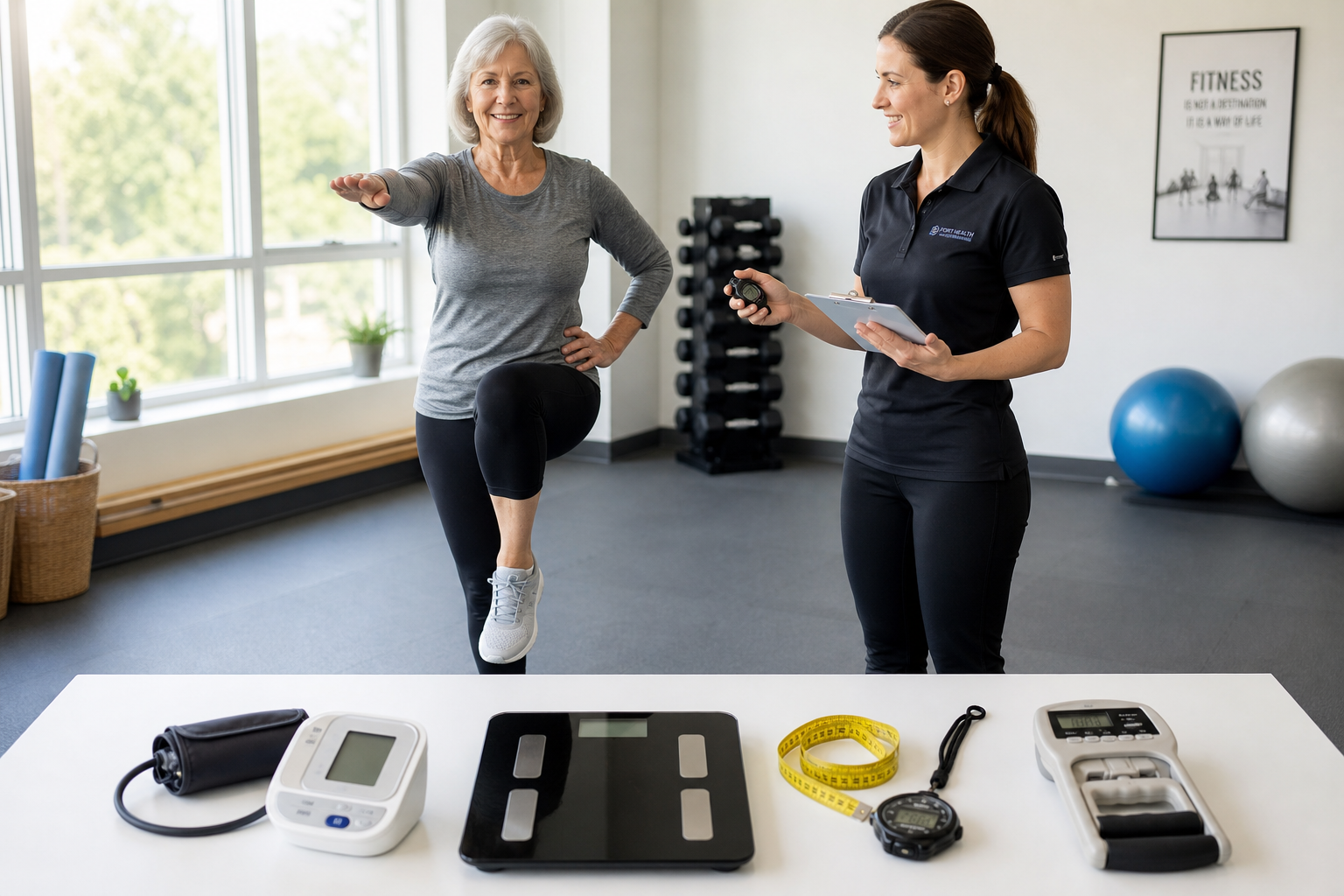
1. Walking Endurance
What to track: How far you can walk continuously at a moderate pace before needing to stop.
How to measure: Use a pedometer, phone step counter, or GPS watch to measure distance. Walk at your normal brisk pace until you need to stop or significantly slow down. Record the distance and time.

Simple Pedometer for Seniors
Basic step counters with large displays make tracking walks effortless without complicated features
How often: Test once per month. Your daily walks don’t need measuring; just note the formal test result monthly.
What to expect: Improvement of 10-20% per month for the first 3 months if you’re walking consistently. The rate of improvement slows after 3 months as you approach your cardiovascular ceiling.
Why this matters for seniors specifically: Walking endurance predicts your ability to handle errands, travel, and social activities without exhaustion. It’s a direct measure of cardiovascular health and stamina for real-world tasks. A decline in walking endurance often shows up before you notice it in daily life, giving you early warning to adjust your routine or check in with your doctor.
Testing tips: Pick the same route each month so conditions stay consistent. A flat path works best for comparison. Note weather conditions in your log; extreme heat or cold affects performance and isn’t a true measure of fitness change. If you use a treadmill, keep the incline at zero for testing.
For more guidance on building walking endurance from scratch, check out our walking program for complete beginners.
2. Lower Body Strength
What to track: The 30-second chair stand test: how many times you can stand up from a standard chair in 30 seconds (arms crossed over your chest, no hand assistance).
How to measure: Use a firm chair against a wall. Set a 30-second timer. Stand up fully and sit down fully as many times as possible. Count the completed stands.
How often: Test once per month.
Benchmarks: Average for age 60-64 is 12-17 stands. Age 65-69: 11-16. Age 70-74: 10-15. Age 75-79: 10-14. Age 80+: 8-13. If you’re below your age range, lower body strengthening should be a priority.
Why this test is reliable: The chair stand test correlates strongly with fall risk and independent living ability. It measures the exact movement pattern you use dozens of times daily: getting out of a chair, off the toilet, up from bed. Improving this number translates directly to easier daily function.
Common mistakes during testing: Bouncing off the chair to gain momentum (doesn’t count), not standing fully upright before sitting back down (doesn’t count), using a chair that’s too low or too high (stick with standard dining chair height, about 17 inches). If you’re significantly below the benchmark for your age, consider having a physical therapist evaluate your form and suggest exercises to build strength safely.
Building lower body strength after hip or knee surgery requires special care. See our guides on post-hip replacement exercise and post-knee replacement exercises.
3. Balance
What to track: Single-leg stance time: how long you can stand on one foot with eyes open, near a counter (for safety, not for support).
How to measure: Stand on your preferred leg. Lift the other foot slightly off the floor. Start timing when the foot lifts. Stop when you touch the counter, put the foot down, or 60 seconds elapses. Record the best of 3 attempts per leg.
How often: Test once per month.
Benchmarks: Under 5 seconds indicates high fall risk. 5-20 seconds is below average for most seniors. 20-30 seconds is good. Over 30 seconds is excellent.
Safety note: Always perform this test near a stable counter or wall. If you’ve had a fall in the past 6 months or have been told you have balance issues, ask a family member or friend to stand nearby during the test. Some people are surprised by how challenging single-leg balance becomes after 60, even when they feel steady during normal activities.
When to test both legs: Most people have a dominant leg with better balance. Test both and record both. A large gap between legs (more than 10 seconds difference) suggests one-sided weakness worth addressing. Physical therapists often see this pattern after hip or knee issues on one side.
4. Flexibility
What to track: Sit-and-reach test (seated version): how far past your toes you can reach while seated with legs extended.
How to measure: Sit on the floor (or edge of a chair with one leg extended). Reach toward your toes. Have someone measure the distance between your fingertips and your toes. Past the toes is positive (record as +2 inches, for example). Short of the toes is negative (-3 inches).
How often: Test once per month.
Modified version for limited floor mobility: If getting down to the floor is difficult, sit on the edge of a firm chair or bench. Extend one leg straight out in front of you, heel on the ground. Keep the other foot flat on the floor for stability. Reach toward the extended leg’s toes and measure the gap. Test both legs.
What flexibility loss signals: Tight hamstrings and lower back muscles contribute to poor posture, back pain, and difficulty bending to pick things up. Flexibility typically declines with age, but regular stretching slows or reverses that decline. Even small improvements (closing a 2-inch gap over three months) reduce injury risk and make daily movements easier.
Realistic expectations: You won’t regain teenage flexibility. Reducing the gap from -5 inches to -3 inches is real progress.
Many seniors make common stretching errors that limit their flexibility gains. Learn about 5 flexibility mistakes seniors make during stretching to avoid these pitfalls.
5. Grip Strength
What to track: Grip strength measured with a hand dynamometer or, practically, by timing how long you can hold a moderately heavy object (like a full water bottle) with an extended arm.
How to measure: Hold a full 16-ounce water bottle at arm’s length in front of you. Time how long you can hold it before your grip gives out. Record the time for each hand.
How often: Test once per month.
Why grip strength matters more than you’d think: Weak grip correlates with higher risk of disability, slower recovery from illness, and reduced overall strength. Grip strength declines faster than most other strength measures as you age, but it responds well to training. Everyday activities that become harder with weak grip: opening jars, carrying grocery bags, using hand tools, holding a phone, turning doorknobs.
Alternative test method: If you have arthritis or hand pain that makes gripping a water bottle uncomfortable, try a squeeze test instead. Use a soft foam ball or rolled towel. Squeeze as hard as you can and hold for 5 seconds. Rate the effort on a scale of 1-10. Track whether the same squeeze feels easier over time (lower effort rating means improved strength).
When grip strength declines: A sudden drop in grip strength sometimes signals a health issue unrelated to fitness (like a medication side effect, vitamin deficiency, or neurological change). If your grip strength drops 20% or more in a single month without an obvious cause (like a hand injury), mention it to your doctor.
For specific exercises to improve hand function and grip strength, visit our dedicated guide to grip strength exercises.
6. Consistency
What to track: The number of exercise sessions completed per week and per month.
How to measure: Mark each exercise day on a wall calendar, in a notebook, or in a phone app. At the end of each month, count the total days exercised.
How often: Daily check-off, monthly total.
Why it matters: Consistency is the strongest predictor of long-term fitness outcomes. Tracking it reveals patterns (do you exercise less on weekends? during winter? when stressed?) that you can address proactively.
What counts as a session: Any intentional movement: a 20-minute walk, a strength routine, a stretching session, a balance practice, yard work that gets your heart rate up, a fitness class. The session doesn’t need to be long or intense. Fifteen focused minutes counts.
How to use consistency data: Look for your baseline. If you average 12 exercise days per month, that’s your current habit. To improve fitness, aim for 14-15 days the next month. A 10-15% increase in consistency is manageable and sustainable. Jumping from 12 days to 20 usually doesn’t stick.
Spotting motivation patterns: Track not just whether you exercised, but briefly note how you felt afterward (“energized,” “tired but good,” “knee hurt”). Over time, you’ll notice that you almost always feel better after exercising, even on days when starting felt hard. That pattern becomes evidence you can use to push through future resistance.
Simple Tracking Tools
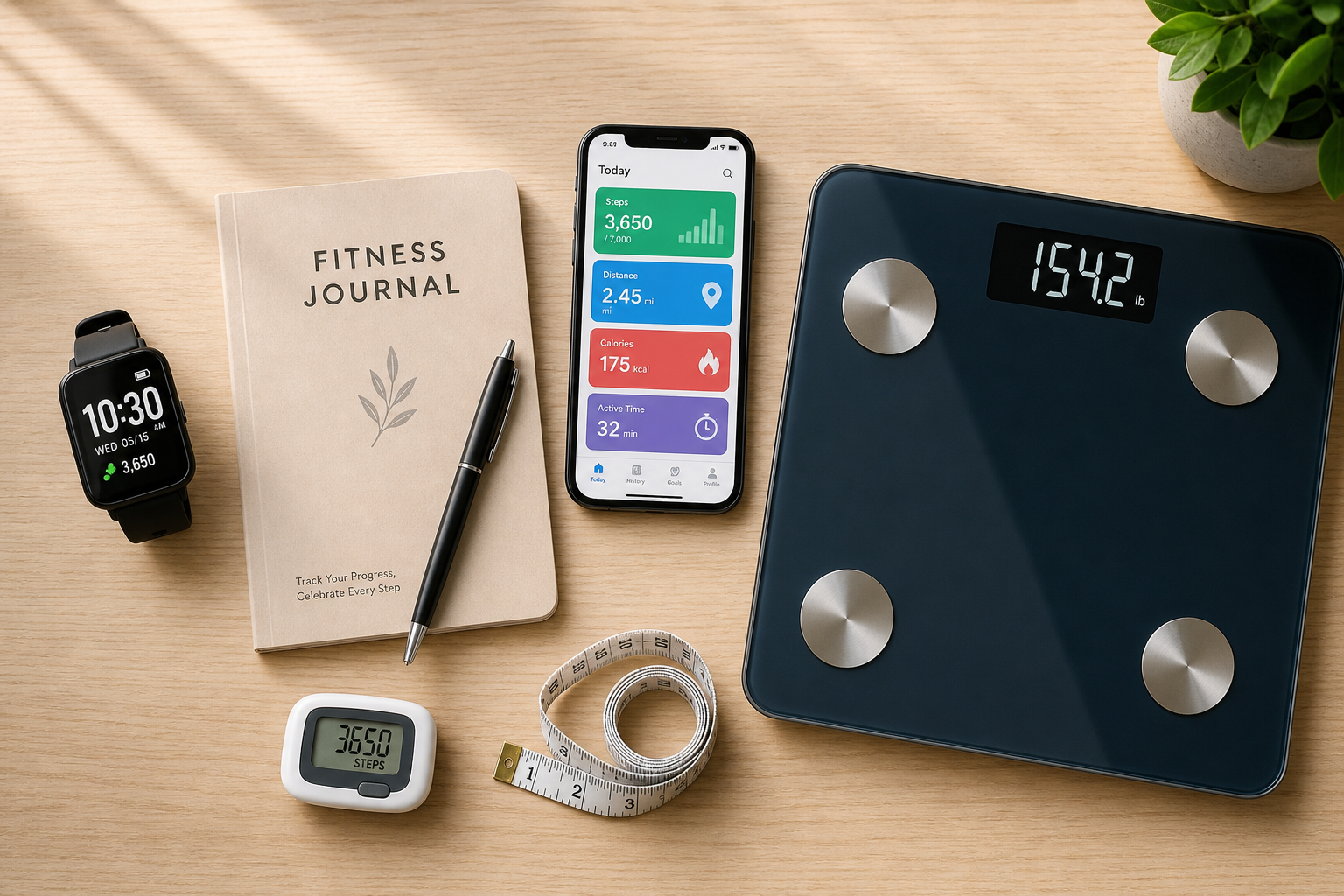
Wall calendar: The simplest method. Mark each exercise day with an X. Monthly tests get written in the margin. The visual streak is motivating. Hang it where you’ll see it daily (bathroom, kitchen, bedroom).
Notebook or journal: Write the date, what you did, how long, how it felt, and any test results. A small notebook by your exercise area takes 1 minute to update after each session. The physical act of writing reinforces the accomplishment.
Phone app: Fitness tracking apps (many are free) log your sessions, chart your progress over time, and send reminders. Look for apps with simple interfaces and large text. Apps like MyFitnessPal or Fitbit work, but simpler options exist designed specifically for older adults with fewer features and clearer displays.
For detailed reviews of the best options available, see our guide to fitness tracking apps for seniors in 2026.
Fitness tracker or smartwatch: Automatically logs steps, heart rate, and active minutes. Provides passive tracking without daily effort. A simple fitness tracker handles the basics without overwhelming complexity. Skip trackers with dozens of metrics and tiny screens. You want step count, heart rate, and maybe sleep tracking.

Fitness Tracker with Large Display
Trackers with simplified interfaces and large screens make daily monitoring effortless for seniors who want automatic tracking
Spreadsheet: If you’re comfortable with computers, a simple spreadsheet lets you chart progress visually. Create columns for date, activity, duration, and each monthly test. Graph your walking distance or chair stands over six months to see trends clearly.
Reading Your Progress
Improving numbers: You’re progressing. Continue your current program and add small challenges every 2-3 weeks (an extra 5 minutes of walking, one more set of exercises, a slightly heavier resistance band).
Stable numbers for 4+ weeks: You’ve plateaued. Increase intensity, add new exercises, or change your routine to provide a fresh stimulus. Plateaus are normal. Your body adapted to the current challenge and needs a new one. This doesn’t mean overhauling everything. Small changes work: walk a hilly route instead of flat, add balance exercises to your strength routine, try a new class.
Declining numbers: Something has changed. Possible causes include overtraining (reduce volume), illness (allow recovery), medication changes (discuss with doctor), inadequate sleep, poor nutrition, or simply needing more rest days. One month of decline is a flag; two months in a row warrants investigation.
The importance of context: Don’t panic over one bad test day. Maybe you slept poorly, tested at a different time of day, or were recovering from a cold. Look at the three-month trend, not individual data points. Fitness progress isn’t linear. You’ll have good weeks and off weeks.
When to adjust your program: If you see consistent improvement for three months, then a plateau, you’ve likely maximized the benefit of your current routine. Time to add variety. If you’re still improving after six months on the same program, keep going. Change for the sake of change isn’t necessary when progress continues.
For structured progression over time, consider our 12-week progressive resistance training program.
Environmental Considerations for Testing
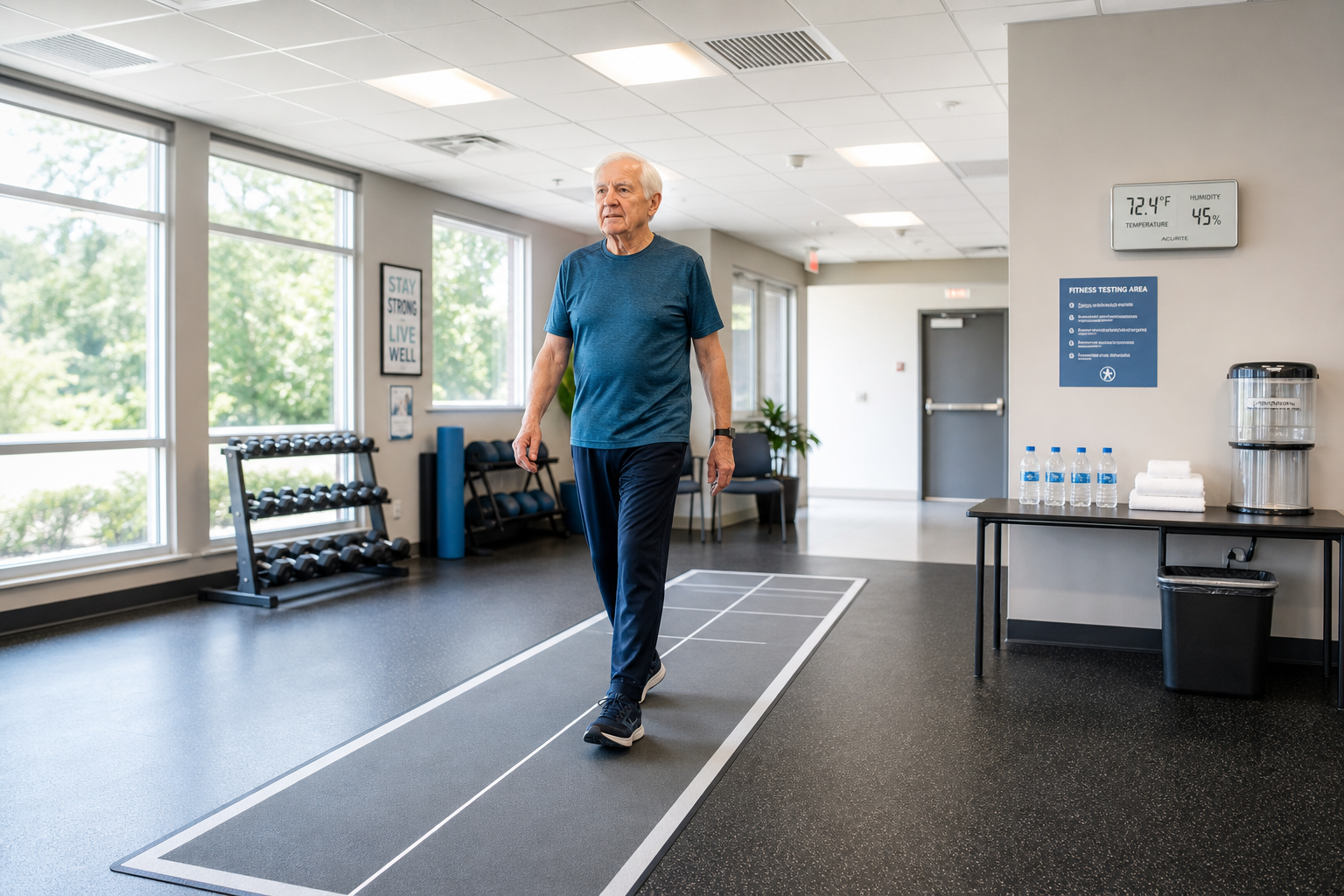
Testing conditions affect your results. Note weather and environmental factors in your tracking log.
Extreme temperatures: Heat and humidity slow you down. Cold stiffens muscles. Test in moderate conditions when possible for accurate comparisons. During hot summer months, test early morning or evening. In winter, test indoors if outdoor conditions are harsh.
For guidance on exercising safely year-round, see our articles on hot weather workout safety and cold weather exercise tips.
Time of day: Most people perform better later in the day after warming up through normal activities. Morning stiffness affects test results. Pick a consistent time for monthly tests.
Recent meals and hydration: Test at least 90 minutes after eating. Being slightly hungry is fine. Dehydration impairs performance more than you’d expect.
Frequently Asked Questions
Should I track my weight?
Weight is a poor fitness metric for seniors