You might not think much about your grip strength until you struggle to open a jar of pickles or find your hands getting tired during yard work. But here’s something most people don’t realize: the strength of your grip is one of the most reliable predictors of your overall health and longevity. Research has consistently shown that people with stronger grips tend to live longer, have better cardiovascular health, and maintain independence well into their later years.
Your hands are involved in nearly everything you do, from carrying groceries to playing with grandchildren. When your grip weakens, daily activities become more difficult, and your quality of life suffers. The encouraging news is that grip strength responds incredibly well to training, regardless of your age or current fitness level.
The Science Behind Grip Strength and Longevity
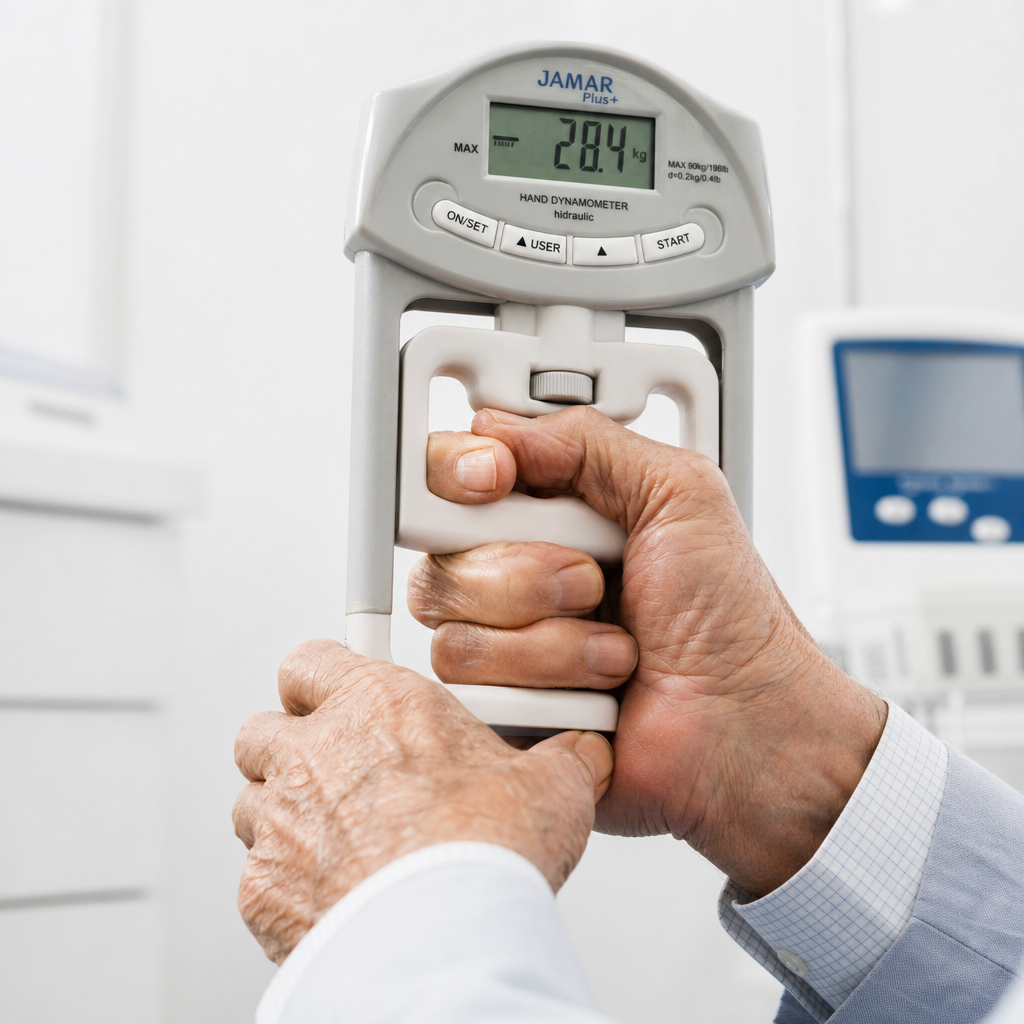
Multiple large-scale studies have identified grip strength as a biomarker for aging and health outcomes. A 2015 study published in The Lancet followed nearly 140,000 adults across 17 countries and found that grip strength was a stronger predictor of all-cause mortality than systolic blood pressure. For every 5-kilogram decrease in grip strength, participants showed a 16% increased risk of death from any cause.
The connection isn’t mysterious when you think about it. Grip strength reflects your overall muscle mass and neurological function. When your nervous system and muscles work efficiently, you maintain better balance, coordination, and metabolic health. These factors all contribute to longevity and independence as you age. Understanding the comprehensive benefits of strength training helps explain why grip strength serves as such a powerful health indicator.
Beyond predicting lifespan, grip strength correlates strongly with cognitive function. Research published in the Journal of Alzheimer’s Disease found that declining grip strength was associated with faster cognitive decline and increased risk of dementia. Your hands and brain are intimately connected through complex neural pathways, and maintaining that connection matters.
Essential Grip Strength Exercises
Hand Grippers
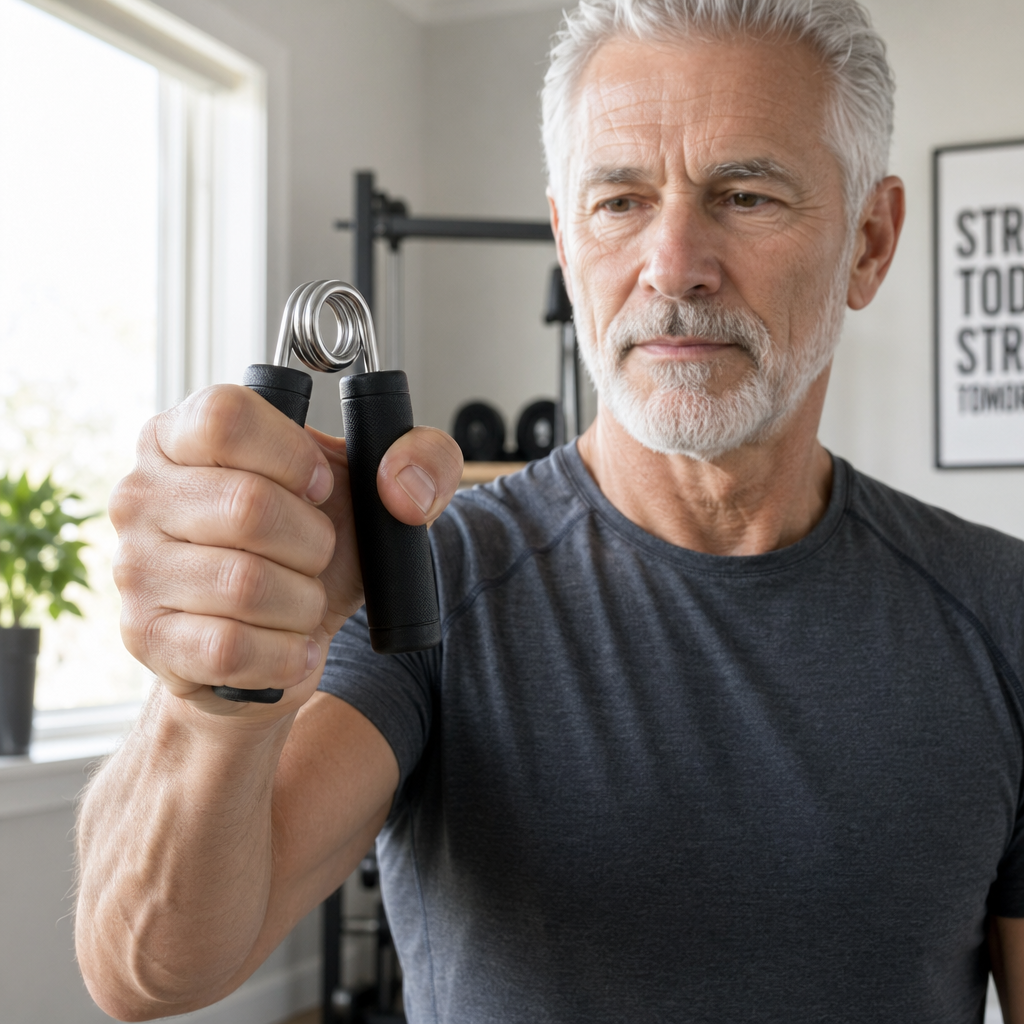
The most direct approach to building grip strength is using hand grippers. These simple devices provide adjustable resistance and allow you to train each hand independently. Start with a resistance level that allows you to complete 10-15 repetitions with good form. You should feel challenged by the last few reps but not be straining to the point of pain.

Hand Grip Strengthener
Adjustable resistance models let you progress gradually as your strength improves
Perform 3 sets of 10-15 squeezes per hand, 3-4 times per week. Hold the final squeeze for 5 seconds to build isometric strength. As you get stronger, increase the resistance rather than dramatically increasing repetitions. Progressive overload is key to continued improvement.
Therapy Putty and Hand Exercises
Therapy putty offers a gentler approach that’s perfect if you’re recovering from hand injuries or dealing with arthritis. The putty provides variable resistance and allows for creative exercises. You can squeeze it, pinch it between your fingers, spread it with your fingertips, or roll it into a ball.
Putty comes in different resistance levels, typically color-coded from extra soft to extra firm. Start with a softer resistance and work for 5-10 minutes per session. The beauty of therapy putty is that you can use it while watching TV or during other downtime activities.
Try these specific putty exercises: pinch strengthening (pinch the putty between your thumb and each finger), finger spreads (insert your fingers into the putty and spread them apart), and full fist squeezes. Each exercise targets different muscles in your hands and forearms.
Towel Wringing
One of the most functional grip exercises requires nothing more than a dish towel. Wet the towel, then wring it out using a twisting motion. This exercise builds rotational strength and works your forearms intensely. Start with a thinner towel and progress to thicker, heavier towels as you get stronger.
Perform 3 sets of 10 wrings in each direction. This exercise mimics real-world movements like opening jars, wringing out mops, or turning door handles. The functional carryover to daily activities is immediate and noticeable.
Dead Hangs and Farmers Carries
For those with access to a pull-up bar or suitable overhead structure, dead hangs build incredible grip endurance. Simply hang from the bar with your arms extended, supporting your full body weight. Start with 10-20 seconds and gradually work up to a minute or more.
Farmers carries involve walking while holding heavy objects at your sides. Pick up a pair of dumbbells, kettlebells, or even heavy grocery bags. Walk for 30-60 seconds while maintaining good posture. This exercise builds grip endurance while also improving core stability and overall functional strength.
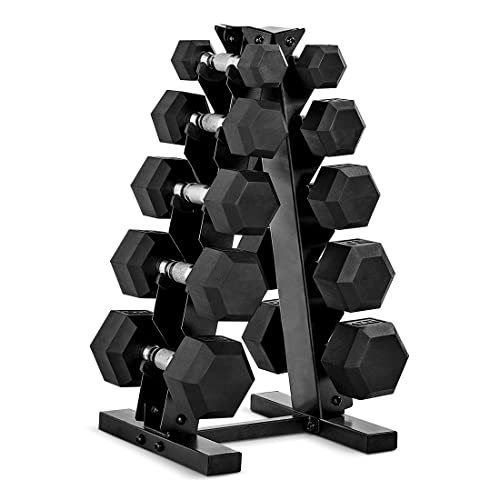
Hex Dumbbells
Perfect for farmers carries and other functional grip training exercises
Everyday Activities That Build Grip Strength

You don’t need to set aside dedicated training time to improve your grip. Many daily activities naturally build hand strength when done mindfully. Gardening, especially digging, weeding, and pruning, provides excellent grip training. The varied movements and resistances work your hands in different ways.
Cooking offers multiple opportunities for grip work. Kneading bread dough is particularly effective. Chopping vegetables with a chef’s knife, whisking ingredients vigorously, and even grating cheese all engage your grip muscles. Make it a point to open jars and containers without assistance when possible.
Household tasks like wringing out cleaning cloths, scrubbing surfaces with a brush, and hand-washing dishes all contribute to grip strength. Even simple activities like crumpling newspaper for recycling or squeezing excess water from laundry engage your hand muscles. The key is to approach these tasks as mini-workouts rather than just chores.
Tracking Your Progress
Measuring your grip strength helps you track improvements and stay motivated. You can use a hand dynamometer to get precise measurements in kilograms or pounds. Test your grip strength monthly using the same device and technique for consistency.
For the average adult male, a grip strength between 40-50 kg is typical, while females average 25-30 kg. These numbers decline with age, but training can slow or even reverse that decline. Even small improvements of 2-3 kg over several months indicate your training is working.
Keep a simple log of your exercises, including the resistance level you’re using, number of repetitions, and any activities that feel easier than before. You’ll likely notice functional improvements before the numbers change significantly. Being able to open jars effortlessly or carry groceries without hand fatigue are real-world victories worth celebrating.
Grip Strength Trainer Kit
Complete sets typically include grippers, finger trainers, and resistance bands for varied workouts
Common Mistakes to Avoid
The most frequent error people make is training grip strength too often. Your hands need recovery time just like any other muscle group. Training 3-4 times per week with rest days in between produces better results than daily training. Overtraining can lead to tendonitis, particularly in the elbow flexors and extensors.
Another mistake is neglecting finger extension exercises. Most grip training focuses on closing your hand, but you also need to train the muscles that open your hand. Use rubber bands around your fingers and spread them apart, or try finger extension exercises with therapy putty. This balance prevents muscle imbalances and reduces injury risk. When building a comprehensive fitness routine, remember that grip strength should complement, not replace, other important exercises for balance, flexibility, and cardiovascular health.
Don’t ignore pain signals. Some muscle fatigue and mild soreness is normal, but sharp pain or persistent discomfort indicates a problem. Back off the intensity and allow proper healing. Pushing through pain can lead to chronic issues that take months to resolve.
Frequently Asked Questions
How long does it take to see improvements in grip strength?
Most people notice functional improvements within 2-3 weeks of consistent training. You’ll find jars easier to open and tasks requiring hand strength less tiring. Measurable strength gains on a dynamometer typically appear after 4-6 weeks. Significant improvements of 10-20% are realistic after 3 months of dedicated training.
Can grip training help with arthritis pain?
Yes, gentle grip training can reduce arthritis symptoms in many people. The key is using appropriate resistance and avoiding painful ranges of motion. Therapy putty and low-resistance grippers work well for arthritic hands. The increased blood flow and muscle support around arthritic joints often leads to reduced pain and improved function. Always consult your doctor before starting a new exercise program if you have arthritis.
Should I train both hands equally even if one is dominant?
Absolutely. Most people have a 10-15% strength difference between their dominant and non-dominant hands, but you should train both equally. Balanced grip strength reduces injury risk and improves overall function. Start each training session alternating which hand goes first to ensure equal attention to both sides.
This article contains affiliate links. We may earn a small commission at no extra cost to you.
Related Articles
- 15-Minute Interval Strength Training for Older Adults
- Step Aerobics Workout for Seniors: A Complete Guide