Bladder control problems affect roughly 50% of women and 25% of men over 65, yet most people never mention it to their doctor, and fewer still know that targeted exercise is one of the most effective treatments available. Stress incontinence (leaking when you cough, sneeze, laugh, or exercise), urge incontinence (a sudden, overwhelming need to urinate that you can’t always make it to the bathroom in time), and mixed incontinence (both types) all respond to pelvic floor strengthening and specific exercise modifications.
The changes can be significant: clinical studies show that 70-80% of people with stress incontinence see meaningful improvement with consistent pelvic floor training, and about 60% of those with urge incontinence gain better control. You don’t need surgery, medication, or expensive treatments to start seeing results.
Before starting any new exercise program, especially one targeting bladder control, talk with your doctor. They can rule out underlying causes like urinary tract infections, medication side effects, or neurological issues that need different treatment.
How Exercise Improves Bladder Control
Pelvic Floor Strengthening
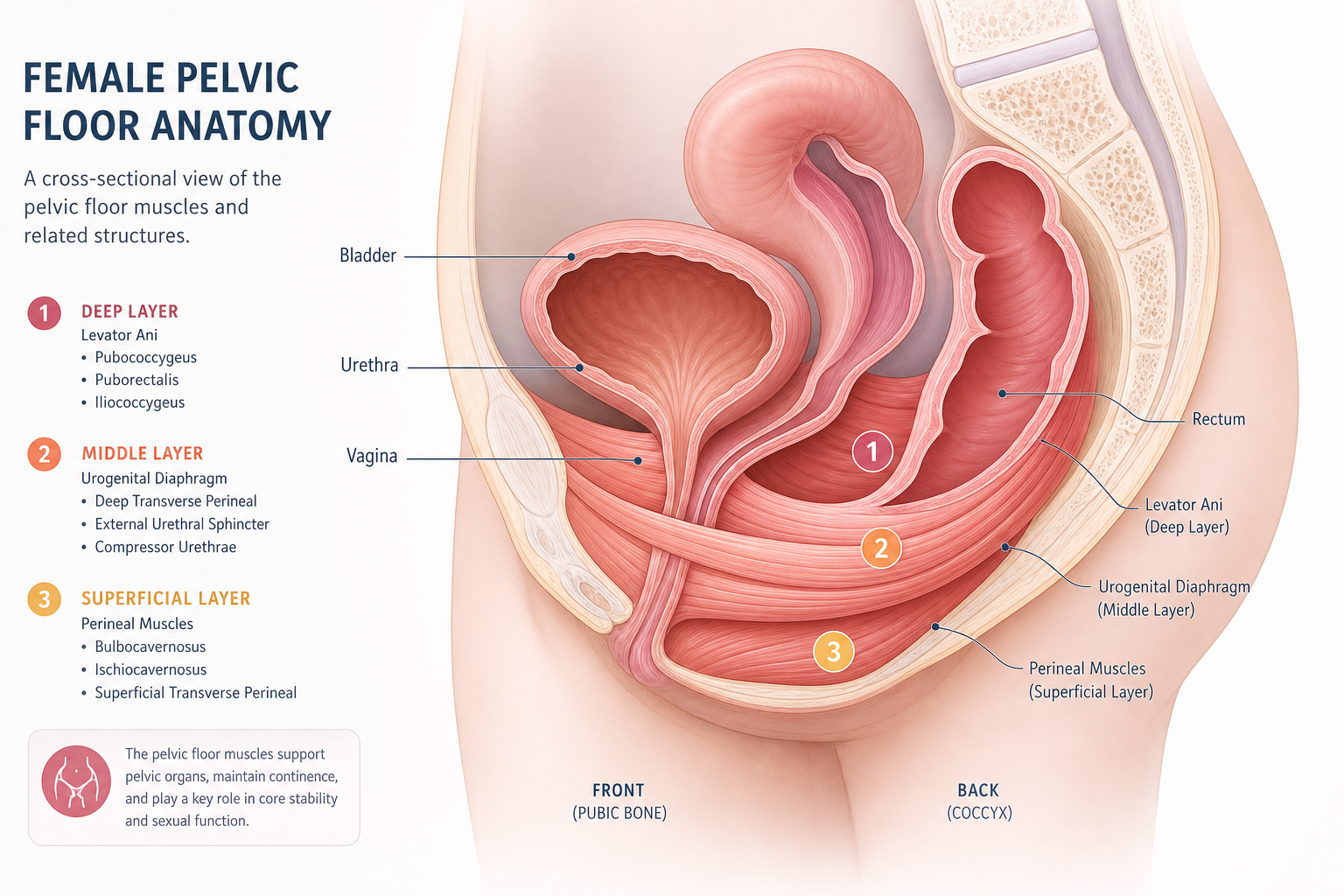
The pelvic floor muscles form the base of support for the bladder and urethra. When these muscles are strong, they clamp the urethra shut during activities that increase abdominal pressure (coughing, laughing, lifting, exercising). When they’re weak, the urethra opens slightly under pressure, and urine escapes. Strengthening these muscles through Kegel exercises restores the closing force that prevents leakage.
Think of your pelvic floor as a hammock stretched between your pubic bone in front and your tailbone in back. This hammock supports your bladder, urethra, and other pelvic organs. When you contract these muscles, you lift the hammock upward and inward, which pulls the urethra closed.
The stronger the hammock, the tighter the seal, and the less likely you are to leak during activities that push down on your bladder.
Bladder Training
For urge incontinence, the bladder muscle (detrusor) contracts involuntarily, creating urgency. Pelvic floor contractions can suppress these involuntary bladder contractions. Combined with scheduled voiding (going to the bathroom on a timed schedule rather than in response to every urge), pelvic floor exercises teach the bladder to hold more urine for longer periods.
The mechanism is neurological. When you contract your pelvic floor during an urge, signals travel up your spinal cord and tell the bladder muscle to relax. This reflex pathway is called the guarding reflex.
Strengthening your pelvic floor makes this reflex more reliable. Over time, you gain the ability to postpone urination when a bathroom isn’t immediately available, which reduces accidents and gives you back control.
Core and Postural Support
Weak core muscles and poor posture increase downward pressure on the pelvic floor. When you slouch, your internal organs shift forward and press down harder on your bladder and pelvic floor muscles. Strengthening your deep core muscles (transverse abdominis, multifidus) and maintaining better alignment reduces this chronic pressure, allowing your pelvic floor to function without being constantly overloaded.
Better posture also improves how your diaphragm and pelvic floor coordinate during breathing. Your diaphragm and pelvic floor move together: when you inhale, both descend; when you exhale, both lift. If your posture is collapsed, this coordination breaks down, and your pelvic floor can’t generate as much upward lift.
Sitting and standing taller improves this coordination and makes your Kegels more effective.
The Core Exercises for Bladder Control
Kegel Exercises (Sustained Holds)
Contract your pelvic floor muscles (the muscles you’d use to stop urinating midstream) and hold for 5 seconds. Relax completely for 5 seconds. Repeat 10 times. Perform 3 sets daily.
Over 4 weeks, gradually increase hold time to 10 seconds with 10-second rests. These sustained holds build the endurance of the slow-twitch pelvic floor fibers that provide continuous bladder support.
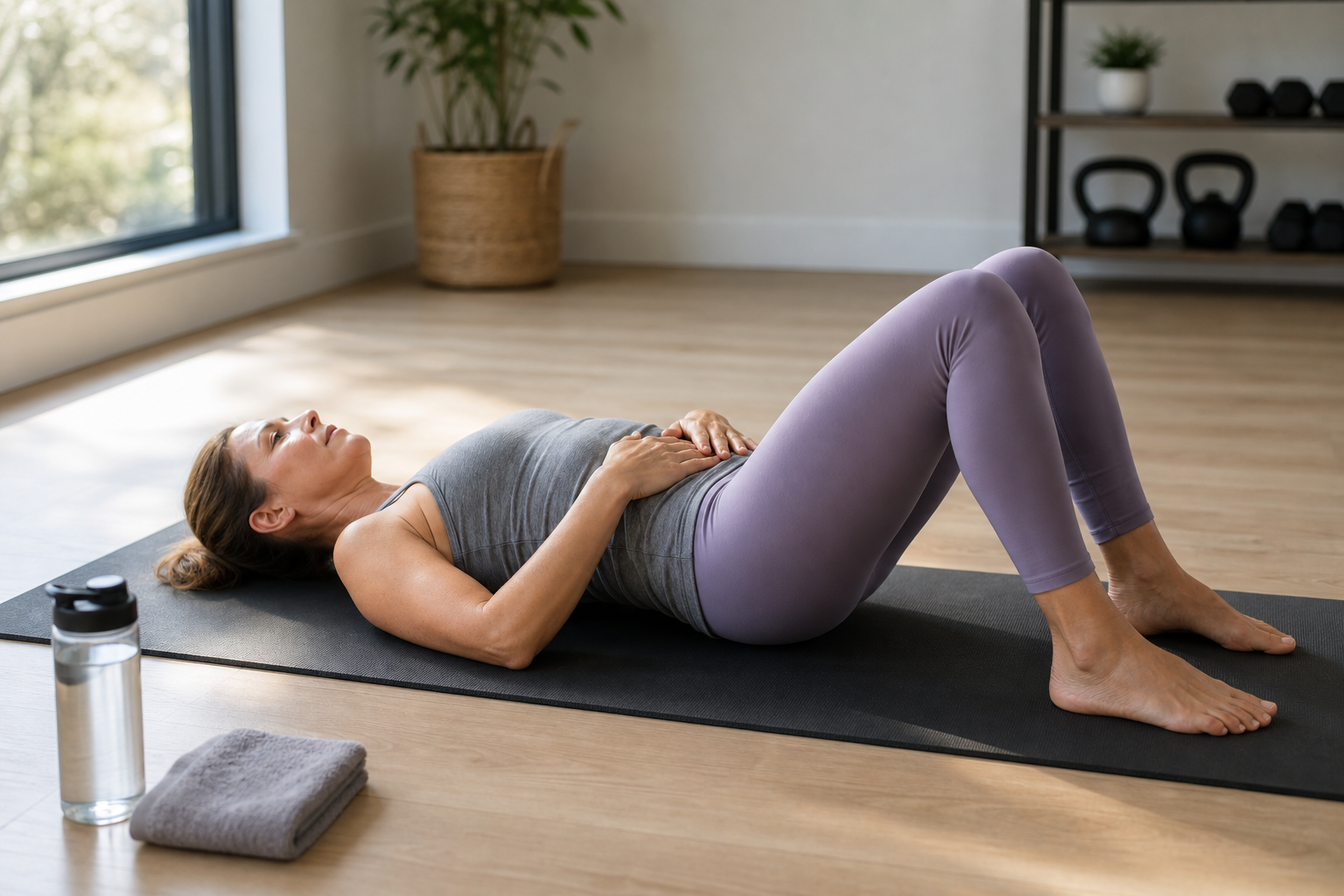
How to find the right muscles: Sit or lie down in a comfortable position. Imagine you’re trying to stop urinating midstream or hold back gas. You should feel a gentle lift and squeeze inside your pelvis. Don’t clench your buttocks, squeeze your thighs together, or hold your breath.
Your belly should stay relaxed. If you’re not sure you’re doing it right, place one hand on your lower belly to make sure it’s not tightening.
The relaxation phase is as important as the contraction. If you don’t fully release between reps, your muscles fatigue quickly and you won’t build strength effectively. Count the full 5 seconds of rest before starting the next rep.
Quick Flicks
Contract your pelvic floor as quickly and strongly as possible, then release immediately. Repeat 10 times rapidly. Perform 3 sets daily.
Quick flicks train the fast-twitch fibers that clamp the urethra shut during sudden pressure spikes (a cough, a sneeze, a laugh). These are the fibers that prevent stress incontinence.
The rhythm should feel like rapid on-off pulses, not sustained squeezes. Think “squeeze-release, squeeze-release” at about one per second. These fast contractions recruit different muscle fibers than the sustained holds. Both types of training are necessary for complete bladder control.
The Knack
Practice contracting your pelvic floor just before and during any activity that causes leakage. Before you cough: contract. Before you sneeze: contract. Before you stand up: contract. Before you lift something: contract.
Hold the contraction through the activity, then release. This preemptive pelvic floor engagement is the most functionally important skill for preventing day-to-day leakage.
The timing matters. You need to engage your pelvic floor a split second before the pressure spike, not during or after. This takes practice. Start by deliberately coughing or standing up slowly while you practice the timing.
Once you’ve got it, the knack becomes automatic. Many people find that mastering the knack gives them more immediate relief from leaking than any other single technique.
Bridge with Pelvic Floor Activation
Lie on your back, knees bent, feet flat on the floor hip-width apart. Contract your pelvic floor, then lift your hips into a bridge. Hold 5 seconds. Lower slowly while maintaining the pelvic floor contraction. Release at the bottom. 3 sets of 10.
This integrates pelvic floor activation with glute and core strengthening, teaching the muscles to work together during functional movements.
Form notes: Keep your core engaged so your lower back doesn’t arch excessively. Press through your heels. Your weight should be on your shoulder blades and feet, not your neck. If you can’t hold the pelvic floor contraction while bridging, lower the bridge height until you can maintain both.
Bridges strengthen the glutes and hamstrings, which indirectly support the pelvic floor by improving hip stability and reducing compensatory strain on the pelvic muscles during walking and standing. Just as targeted exercises support bone density, consistent pelvic floor training builds the foundational strength needed for daily activities.
Deep Diaphragmatic Breathing with Pelvic Floor Coordination
Sit or lie comfortably. Inhale deeply, feeling your belly and pelvic floor relax and expand downward. Exhale slowly while gently lifting your pelvic floor upward and inward. Repeat 10 breaths.
This breath-pelvic floor coordination is the foundation of effective pelvic floor training. Many people hold their breath during Kegels, which creates downward pressure that opposes the upward lift you’re trying to achieve.
Place one hand on your chest and one on your belly. As you inhale, the belly hand should rise more than the chest hand. This indicates you’re breathing with your diaphragm rather than shallow chest breathing. On the exhale, feel your pelvic floor lift naturally as your diaphragm rises.
Once you feel this natural coordination, add a conscious, gentle pelvic floor contraction during the exhale to enhance the lift.
This breathing pattern also calms the nervous system, which can reduce urge incontinence. Stress and anxiety activate the sympathetic nervous system, which increases bladder sensitivity and urgency. Slow, deep breathing activates the parasympathetic nervous system, which helps calm the bladder.
Wall Squats with Pelvic Floor Engagement
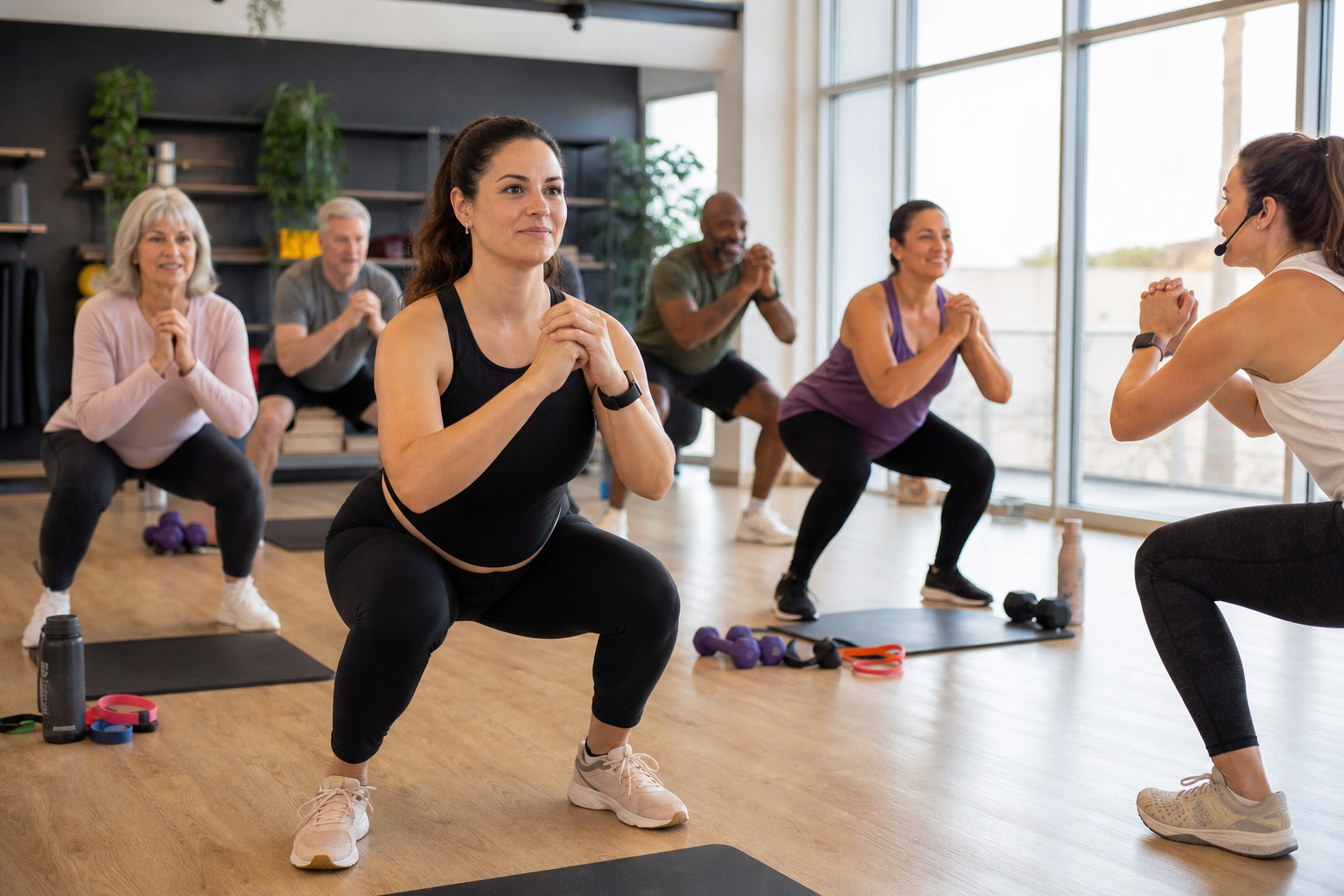
Stand with your back against a wall, feet about 12 inches away from the wall. Contract your pelvic floor, then slide down into a partial squat (knees bent to about 45 degrees, not a full 90-degree squat). Hold 5-10 seconds while maintaining the pelvic floor contraction. Slide back up. Repeat 8-10 times.
This builds leg strength while training pelvic floor engagement during a common daily movement pattern.
Modification: If a 45-degree squat is too challenging, start with a smaller bend, even just a few inches. The goal is to maintain the pelvic floor contraction throughout the movement without holding your breath. As you get stronger, gradually increase the depth of the squat.
Heel Slides
Lie on your back, knees bent. Contract your pelvic floor. Keeping the contraction, slowly slide one heel away from you until your leg is straight, then slide it back. Repeat 10 times each leg, 2 sets.
This trains pelvic floor stability during leg movement, which translates to better control during walking and other daily activities.
Keep the movement slow and controlled. If you lose the pelvic floor contraction as you slide your leg out, you’re moving too fast or extending too far. Shorten the range of motion until you can keep everything engaged.
Exercise Modifications to Prevent Leaking During Workouts
- Pre-contract before high-pressure exercises. Use the knack (contract pelvic floor) before every squat, step-up, or standing exercise that creates abdominal pressure.
- Exhale during exertion. Holding your breath during effort (Valsalva maneuver) dramatically increases intra-abdominal pressure and bladder stress. Exhale during the effort phase of every exercise. If you’re lifting something heavy, exhale as you lift. If you’re standing up from a chair, exhale as you rise.
- Reduce impact. If jumping, running, or vigorous walking causes leaking, switch to lower-impact alternatives (swimming, cycling, elliptical) while you build pelvic floor strength. Reintroduce higher-impact activities gradually as your pelvic floor gets stronger. Start with 5-10 minutes of the higher-impact activity and add a few minutes each week if you remain dry.
- Empty your bladder before exercise. A partially full bladder is more likely to leak during activity. Use the bathroom within 15 minutes of starting your workout.
- Reduce fluid intake in the hour before exercise. You still need adequate hydration, but timing matters. Drink most of your water earlier in the day rather than chugging 16 ounces right before a workout.
- Wear absorbent protection. Light incontinence pads provide a safety net that removes the anxiety of leaking during exercise. Anxiety about leaking actually worsens leaking (stress activates the bladder), so the confidence from wearing protection can improve, not just mask, the problem.
- Adjust exercise intensity. If you leak during moderate-intensity cardio, drop to low intensity while you strengthen your pelvic floor. You can still get a good workout at lower intensity, and you’ll be able to increase intensity again in a few weeks without leaking.
For those concerned about joint stress during exercise, water-based workouts offer excellent alternatives that minimize impact while still allowing you to build strength and maintain cardiovascular fitness without bladder pressure.
Building a Routine That Sticks
Consistency matters more than intensity. Doing 3 sets of Kegels every single day beats doing 10 sets sporadically. Most people find success by anchoring their pelvic floor exercises to an existing daily habit. Some options:
- Morning coffee. Do sustained holds while your coffee brews, quick flicks while you drink it.
- Brushing teeth. Quick flicks while brushing in the morning, sustained holds while brushing at night.
- Commute or errands. Practice Kegels at every red light or stop sign.
- TV time. Do a full routine (sustained holds, quick flicks, bridges) during one show episode each evening.
Set a phone reminder for the first two weeks until the habit forms. After that, the routine should feel automatic.
Track your progress in a simple way. Note how many times you leaked each day. After a few weeks, compare. Seeing the frequency drop reinforces the habit and proves the exercises are working.
When to See a Specialist
See a pelvic floor physical therapist or urologist if Kegel exercises don’t improve your symptoms after 8-12 weeks of consistent daily practice (you may be contracting the wrong muscles, and