Staying behind the wheel means staying independent, and that independence matters more than you might think. Driving connects you to friends, family, medical appointments, and the activities that make life worth living. But here’s what many older drivers don’t realize: the physical demands of safe driving require specific fitness abilities that naturally decline with age.
The good news is that targeted exercises can maintain and even improve the physical skills you need for safe driving. We’re talking about neck rotation for checking blind spots, shoulder flexibility for looking behind you, core strength for vehicle control, and reaction time that keeps you safe in unexpected situations. Let’s explore the specific exercises that help senior drivers stay safe, confident, and independent on the road.
Why Physical Fitness Matters for Driving Safety

Your car doesn’t require much physical strength to operate anymore, but safe driving demands more from your body than you might expect. Every time you check your blind spot, you’re rotating your neck and torso through a significant range of motion. When you need to brake suddenly, your core muscles stabilize your body while your legs respond quickly to the pedals.
Research from the AAA Foundation for Traffic Safety shows that drivers over 65 are more likely to be injured in crashes, partly because of reduced flexibility and strength. But this isn’t about age alone. It’s about maintaining the specific physical abilities that driving requires.
Your neck needs to rotate at least 60 degrees to each side for proper blind spot checks. Your shoulders should be flexible enough to reach the seatbelt without strain and turn to see behind you when reversing. Your core strength affects how well you can control the steering wheel and maintain proper posture during long drives. Each of these abilities can be improved with functional exercises designed for seniors.
Neck Rotation Exercises for Blind Spot Awareness

Checking your blind spots properly requires smooth, pain-free neck rotation. Many drivers develop limited neck mobility over time and compensate by relying too heavily on mirrors or simply not checking thoroughly. This creates dangerous gaps in awareness.
Start with gentle neck rotations while sitting in a chair with good back support. Turn your head slowly to look over your right shoulder, hold for five seconds, then return to center. Repeat on the left side. Do ten repetitions on each side, twice daily. You should feel a gentle stretch, never pain.
The chin tuck exercise strengthens the deep neck flexors that support proper head positioning. Sit or stand with good posture, then draw your chin straight back like you’re making a double chin. Hold for five seconds, release, and repeat ten times. This exercise helps counteract the forward head posture that many people develop from years of desk work or reading.
Side neck stretches improve lateral flexibility. Sit upright and tilt your head toward your right shoulder, bringing your ear closer to your shoulder without raising the shoulder itself. Hold for 20 seconds, feeling the stretch along the left side of your neck. Repeat on the other side. Do this three times per side, daily.
Shoulder Flexibility for Reaching and Turning
Stiff shoulders make everything harder in a car. You struggle to reach the seatbelt, can’t turn far enough to see behind you, and find parking maneuvers more difficult. Shoulder flexibility exercises address these practical driving challenges directly.
The doorway stretch opens up your chest and front shoulders. Stand in a doorway with your forearm against the door frame at a 90-degree angle. Step forward with one foot until you feel a stretch across your chest and front shoulder. Hold for 30 seconds, then repeat on the other side. Do this twice daily.
Shoulder rolls improve mobility in all directions. Sit or stand with arms at your sides. Roll your shoulders forward in a circular motion ten times, then backward ten times. Make the circles as large as comfortable. This simple exercise keeps the shoulder joints mobile and reduces stiffness.
The cross-body shoulder stretch targets the muscles you use when turning to look behind you. Bring your right arm across your chest, using your left hand to gently pull it closer to your body. Hold for 20 seconds, feeling the stretch in your right shoulder. Repeat on the other side. Do three repetitions per side daily.
Wall angels improve overall shoulder mobility and posture. Stand with your back against a wall, feet a few inches out. Press your lower back, shoulders, and head against the wall. Raise your arms to form a “W” shape, then slide them up the wall to form a “Y” shape. Lower back down slowly. Repeat ten times. This exercise is challenging but excellent for maintaining the shoulder flexibility you need for driving.
Core Strength for Vehicle Control
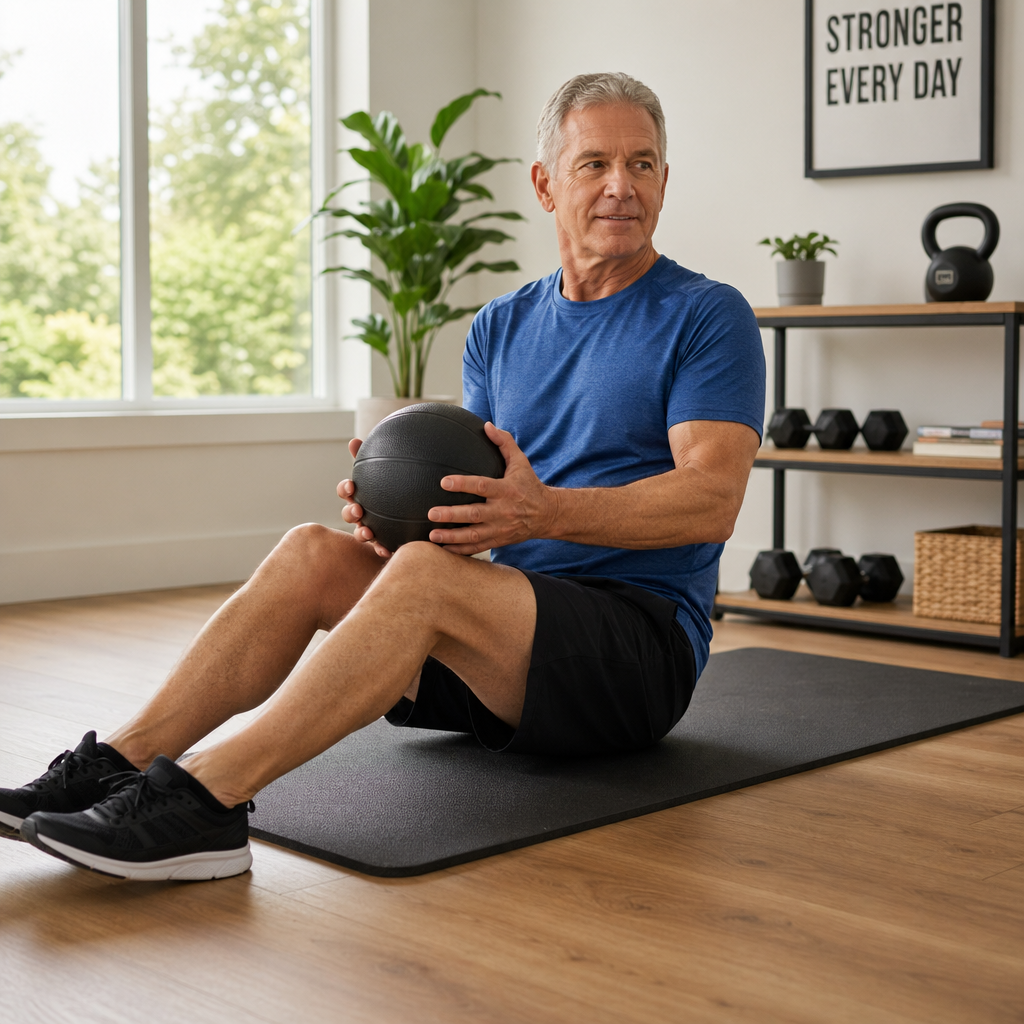
Your core muscles do more than prevent back pain. They stabilize your body when you steer, help you maintain proper posture, and enable you to respond effectively in emergency situations. A strong core also makes getting in and out of your car much easier.
Seated marches build core strength without getting on the floor. Sit in a sturdy chair with your back straight. Lift your right knee a few inches off the seat, hold for three seconds, then lower it. Repeat with the left leg. Do ten repetitions per leg. As this becomes easier, hold each lift for longer or lift your knee higher.
The pelvic tilt strengthens your lower abdominal muscles. Sit in a chair with your feet flat on the floor. Tighten your abdominal muscles and tilt your pelvis forward, flattening your lower back against the chair. Hold for five seconds, release, and repeat ten times. You can do this exercise while sitting at stoplights.
Modified planks provide excellent core strengthening if you’re comfortable getting on the floor. Place your forearms on a couch or sturdy chair and walk your feet back until your body forms a straight line. Hold this position for 10 to 30 seconds, keeping your core tight. Work up to holding for one minute. This exercise strengthens all the core muscles that stabilize you while driving.
Standing side bends improve lateral core strength. Stand with feet hip-width apart, hands on hips. Slowly bend to your right side, sliding your right hand down your thigh. Return to center and repeat on the left. Do ten repetitions per side. This exercise helps with the twisting motions you make while driving.
Getting In and Out of Your Car Safely
The simple act of entering and exiting your vehicle challenges your balance, flexibility, and strength. Many seniors find this increasingly difficult, which can lead to falls or reluctance to drive. Specific exercises address these movement patterns directly.
Sit-to-stand exercises build the leg strength you need. Sit in a sturdy chair with arms crossed over your chest. Stand up without using your hands, then sit back down slowly. Repeat ten times. This mirrors the motion of getting out of your car and strengthens your quadriceps and glutes.
Single-leg stands improve the balance you need when stepping in and out of your vehicle. Stand near a counter or wall for safety. Lift one foot off the ground and balance on the other for 30 seconds. Switch legs. Work up to one minute per leg. Better balance reduces your fall risk around your vehicle.
Hip flexibility exercises make the twisting motion of entering your car easier. Sit in a chair and cross your right ankle over your left knee. Gently press down on your right knee to feel a stretch in your right hip. Hold for 20 seconds, then switch sides. Do this three times per side daily.
Step-ups simulate the height change when entering SUVs or trucks. Use a sturdy step or low platform. Step up with your right foot, bringing your left foot to meet it, then step back down. Do ten repetitions, then switch to leading with your left foot. This builds the leg strength needed for higher vehicles.
Reaction Time and Coordination Exercises
Quick reaction time can mean the difference between a close call and a collision. While reaction time naturally slows with age, specific exercises can maintain and improve your reflexes for driving situations.
The ball drop exercise sharpens hand-eye coordination and reaction speed. Have someone hold a tennis ball at shoulder height. They drop it without warning, and you catch it before it bounces twice. This simple drill improves visual tracking and response time. Do 20 catches daily.
Heel-toe tapping improves foot coordination for pedal control. Sit in a chair with feet flat on the floor. Tap your right heel on the ground ten times quickly, then your right toe ten times. Repeat with the left foot. This exercise maintains the foot agility you need to move between gas and brake pedals smoothly.
The coin pickup drill combines balance, coordination, and reaction. Place several coins on the floor in different locations. Walk to each one, balance on one leg, and pick up the coin with your free hand. This challenges multiple systems that driving requires simultaneously.
Visual tracking exercises keep your eyes sharp for spotting hazards. Follow a moving object with your eyes while keeping your head still. You can track a pet, a person walking, or even a ball someone tosses back and forth. Do this for five minutes daily to maintain visual response capabilities.
Creating Your Driving Fitness Routine
You don’t need to do every exercise every day. Instead, create a sustainable routine that addresses your specific needs. Most seniors benefit from exercising five to six days per week, with each session lasting 20 to 30 minutes.
Start your routine with neck and shoulder exercises as a warm-up. These are gentle and get your upper body ready for movement. Move to core strengthening exercises in the middle of your session when you have the most energy. Finish with reaction time and coordination drills.
Consistency matters more than intensity. It’s better to do 15 minutes daily than to push hard for an hour once a week. Your body adapts to regular movement patterns, and the driving-specific skills you’re building require frequent practice. If you prefer exercising outside, consider outdoor fitness activities that can complement your driving-focused routine.
Track your progress in a simple notebook. Write down which exercises you did and how many repetitions. Note improvements like being able to turn your head farther or holding a plank longer. These small victories motivate you to keep going.
Consider working with a physical therapist initially, especially if you have existing limitations or health conditions. They can assess your specific needs and modify exercises appropriately. Many insurance plans cover physical therapy for older adults working on fall prevention and mobility.
When to Reassess Your Driving Abilities
Exercise helps maintain driving fitness, but honest self-assessment remains important. If you notice yourself avoiding certain driving situations, having more close calls, or feeling anxious behind the wheel, these signal that you need to address something.
Your doctor can perform a comprehensive driving assessment that includes vision tests, cognitive screening, and physical ability checks. Many hospitals also offer driving rehabilitation programs through occupational therapy departments. These programs work specifically with older adults to maintain safe driving skills.
Take a driving refresher course designed for seniors. AARP offers the Smart Driver course, and AAA provides similar programs. These classes update you on current traffic laws and help you identify any areas where you need additional practice or adaptation.
Some limitations can be addressed with vehicle modifications or adaptive equipment. Hand controls, swivel seats, and extended mirrors help many seniors continue driving safely despite physical changes. An occupational therapist specializing in driving rehabilitation can recommend specific adaptations for your needs.
Frequently Asked Questions
How long before I see improvement in my driving-related flexibility and strength?
Most people notice some improvement within two to three weeks of consistent exercise. Your neck rotation might increase by 10 to 15 degrees, and you’ll feel less stiffness when checking blind spots. Significant strength gains typically take six to eight weeks. The key is doing these exercises at least five days per week. Don’t get discouraged if progress seems slow at first. Small improvements in flexibility and strength translate to noticeable differences in driving comfort and safety.
Can I do these exercises if I have arthritis or other joint problems?
Most of these exercises can be modified for arthritis and joint conditions. Start with gentler ranges of motion and fewer repetitions. Never push through sharp pain, though mild discomfort during stretching is normal. Apply heat to stiff joints before exercising to improve mobility. Consider doing exercises in a warm shower or after a heating pad application. Work with your doctor or physical therapist to identify which exercises are safe for your specific condition and which modifications you should make. For gentler options, water-based exercises can be especially helpful for those with joint concerns.
Should I exercise on the same days I plan to drive long distances?
Light to moderate exercise before driving is fine and may actually improve your alertness and flexibility. Avoid intense workouts right before long drives, as fatigue could affect your concentration. A better approach is to do your full exercise routine on most days, then do a quick five-minute stretching session focusing on neck and shoulder mobility before long trips. This warms up the specific muscles you’ll use while driving without tiring you out.
What if I can’t do floor exercises because of knee or balance issues?
All of these exercises can be adapted for people who can’t safely get on the floor. Chair-based core exercises work just as well for driving fitness. You can do modified planks against a wall or countertop instead of on the floor. Focus on the seated marches, pelvic tilts, and sitting core exercises. Standing exercises can be done near a counter or wall for balance support. The specific movement patterns matter more than whether you’re on the floor. If you’re looking for gentler alternatives, low-intensity workouts can still build the strength you need without floor work.
Related Articles
- Functional exercises that improve everyday movements and driving abilities
- Outdoor fitness activities to complement your driving exercise routine
- Pool exercises for joint-friendly strength and flexibility training
- Low-intensity workouts for building strength safely