Wrist pain shouldn’t force you to abandon upper body strength training. The right wrist support can absorb stress, stabilize the joint, and let you continue pressing, curling, and rowing without the pain that’s been holding you back. But wrist supports come in several styles, and the wrong choice can actually make things worse. Here’s how to match the right support to your specific problem.
Types of Wrist Supports
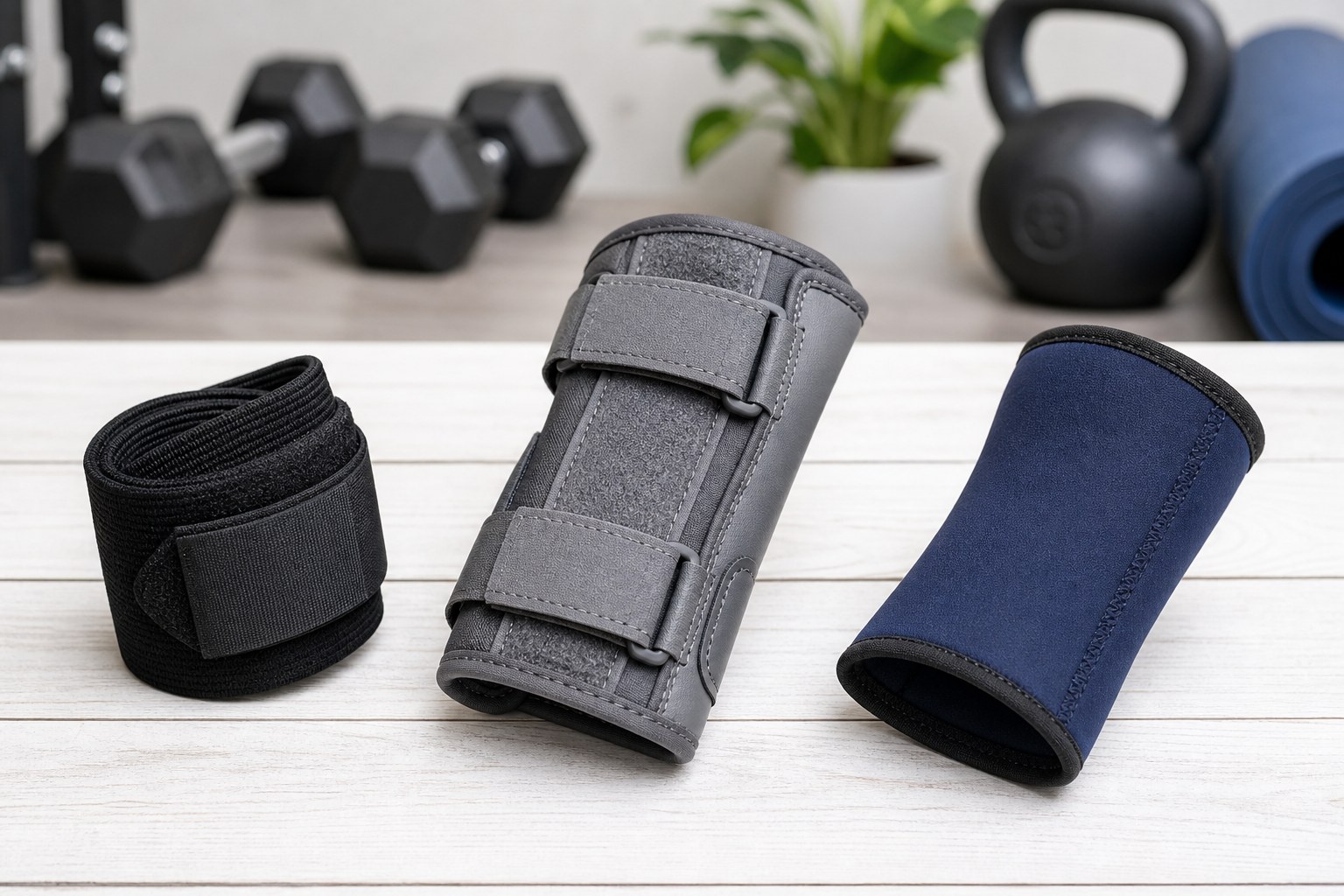
Wrist Wraps
Wrist wraps are strips of elastic fabric (usually 12-24 inches long) that wind around the wrist and tighten with Velcro. They compress and stiffen the wrist joint, preventing the hyperextension that causes pain during push-ups, presses, and planks. They’re the most versatile option for weightlifting.
The key difference between wraps and other supports is adjustability. You control exactly how tight they are for each exercise. A lighter wrap works fine for dumbbell curls. Tighten them more for heavy pressing movements. This flexibility matters when arthritis flares vary day to day.
Best for: Push-ups, bench presses, overhead presses, and any exercise where the wrist bends backward under load.
Wrist Splints (Braces)
Rigid or semi-rigid splints with a metal or plastic stay that holds the wrist in a neutral position. They provide more support than wraps but restrict range of motion more. Splints are the better choice for carpal tunnel-related wrist pain because they prevent the wrist flexion that compresses the median nerve.
Most braces use a removable stay, which gives you options. Keep the stay in for exercises that load the wrist heavily (overhead press, heavy rows). Remove it for lighter work where you need a bit more mobility. The fabric portion still provides compression and warmth even without the rigid insert.
One caution: braces can slip during exercise if they’re not fitted correctly. The wrist strap should sit snug but not tight. If the brace rotates or bunches up during a set, it’s either too loose or positioned wrong. Take time to adjust it properly before you start lifting.
Best for: Carpal tunnel syndrome, post-injury recovery, and exercises where the wrist needs to stay perfectly straight.
Compression Gloves with Wrist Support
These combine finger and hand compression (helpful for arthritis) with a built-in wrist strap that provides moderate stabilization. They address both grip weakness and wrist instability simultaneously.
The compression improves proprioception, which is your sense of where your hand is in space. That awareness matters when you’re gripping dumbbells or barbells. Better proprioception often translates to better control and less compensatory movement that stresses the wrist.
Most compression gloves leave the fingertips open. This design preserves tactile feedback so you can feel the bar or dumbbell properly. Full-finger gloves exist, but they reduce grip sensitivity and can feel slippery on certain equipment.
Best for: Seniors with both hand arthritis and wrist pain who need comprehensive support during dumbbell exercises.
Top Wrist Supports for Senior Lifters
Rip Toned Wrist Wraps

Rip Toned Wrist Wraps
Consistent top performer with 18-inch length providing firm compression without bulk, great for heavy pressing and curling movements
The Rip Toned wrist wraps are a consistent top performer for lifting support. The 18-inch length provides enough material to wrap 2-3 times around the wrist for firm compression without being bulky. The thumb loop keeps them positioned correctly, and the Velcro closure holds securely through multiple sets. They’re stiff enough to support heavy pressing but flexible enough for curling movements.
The fabric blend includes some cotton, which absorbs sweat better than pure synthetic wraps. That matters during longer sessions when moisture buildup can make Velcro slip. They wash well and maintain tension after repeated use, unlike cheaper wraps that stretch out after a few weeks.
One practical note: the 18-inch length works for most people, but if you have particularly large wrists or want maximum support, the 24-inch version gives you extra wrapping layers. Smaller wrists do fine with the standard length.
Mueller Fitted Wrist Brace
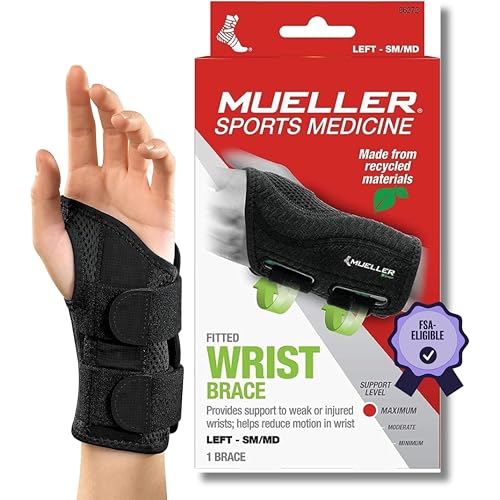
Mueller Fitted Wrist Brace
Semi-rigid support with removable metal stay, dual-strap design prevents rotation during exercise, excellent for carpal tunnel protection
The Mueller Fitted Wrist Brace offers semi-rigid support with a removable metal stay. It’s comfortable enough for extended wear during a full workout session and provides the neutral wrist positioning that carpal tunnel sufferers need. The adjustable straps allow you to customize the compression level.
The brace uses two straps: one around the wrist and one around the forearm. This dual-strap design distributes pressure more evenly than single-strap models, which can dig into the skin during exercise. The extra stability also prevents the brace from rotating when you twist your arm.
The metal stay keeps the wrist from bending in either direction. That’s exactly what you want for carpal tunnel protection, but it does limit mobility. If you need to do wrist curls or flexibility work, remove the stay first. The fabric support alone still helps with minor instability.
Best for: Carpal tunnel-related wrist pain, post-sprain recovery, and exercises that require the wrist to stay straight.
Copper Compression Arthritis Gloves

Copper Compression Arthritis Gloves
Full-hand compression with wrist wrap extension, excellent for seniors with rheumatoid or osteoarthritis affecting fingers and wrist
The Copper Compression gloves combine full-hand compression with a wrist wrap extension. The copper-infused fabric provides gentle compression that many arthritis sufferers find soothing, and the open fingertips maintain grip sensitivity. The wrist extension adds moderate stabilization without the rigidity of a full brace.
The compression level is light to moderate, not heavy. These won’t replace a dedicated wrist wrap for maximal loads, but they work well for dumbbell exercises in the 5-25 pound range. The warmth from compression can ease morning stiffness, which helps if you prefer to lift earlier in the day.
Sizing matters more with compression gloves than with wraps or braces. Too tight and they restrict circulation. Too loose and they don’t provide meaningful compression. Measure your hand circumference at the widest part (usually across the knuckles) and follow the manufacturer’s size chart carefully.
Best for: Seniors with rheumatoid or osteoarthritis affecting both the fingers and wrist, similar to the conditions covered in our arthritis-friendly exercises guide.
When to Wear Wrist Support
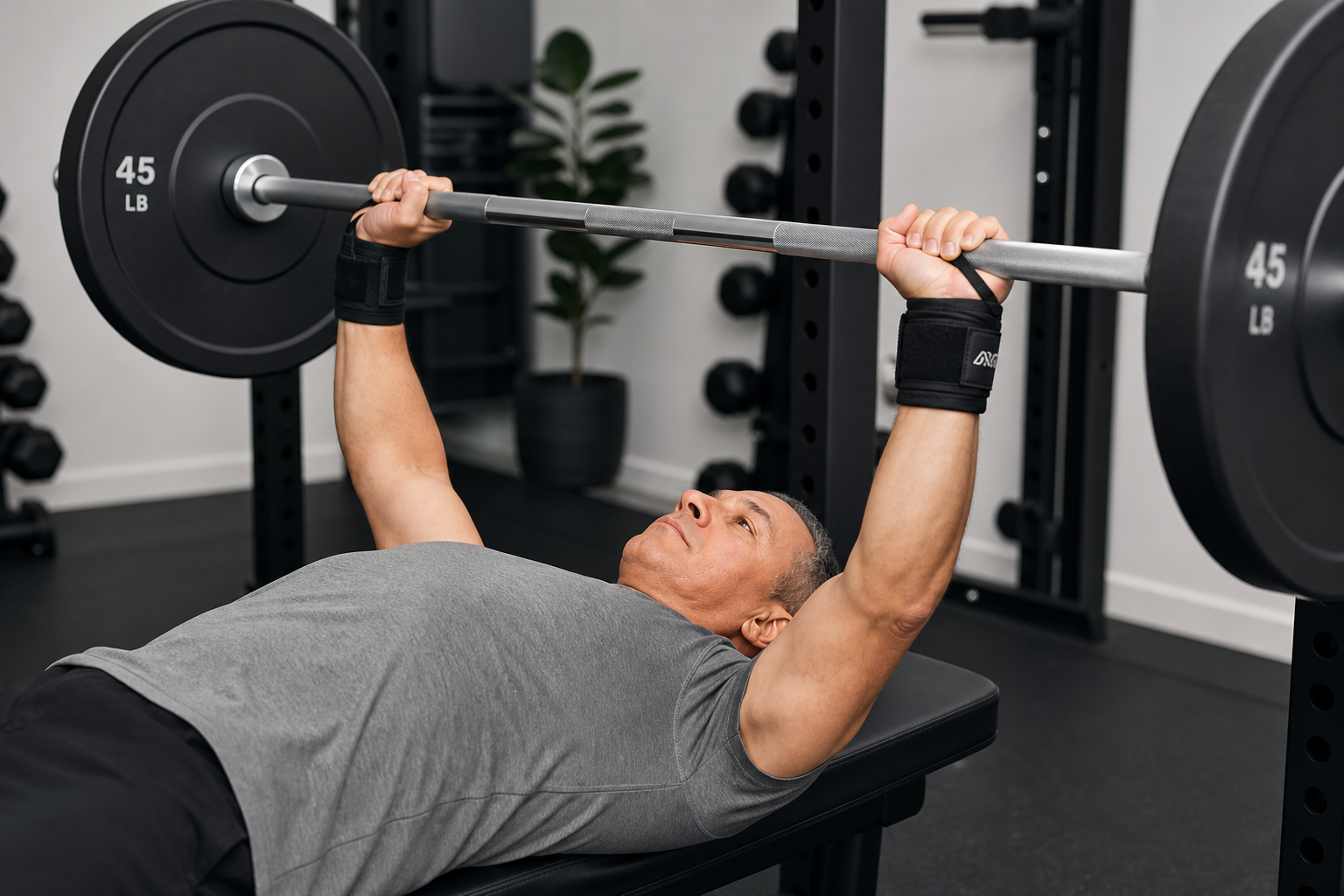
- During pressing exercises: Bench press, overhead press, push-ups. These place the wrist in extension under load, which is the most common pain-producing position.
- During heavy gripping: Heavy dumbbell rows, farmer’s carries, and deadlifts if wrist fatigue causes the grip to fail before the target muscles.
- During flare-ups: If you have an arthritis or tendinitis flare affecting the wrist, wear support for all upper body exercises until the flare subsides.
Support becomes more important as weight increases. A 10-pound dumbbell press might not require a wrap, but a 25-pound press probably does if you have existing wrist issues. Listen to your body. If you feel strain or discomfort in the wrist joint (not the working muscle), add support for that exercise.
When not to wear support: During exercises that require wrist mobility (wrist curls for strengthening, stretches for flexibility). Wearing support during rehabilitation exercises prevents the very adaptation you’re trying to achieve.
Also skip support during warm-up sets with light weight. Your wrists need some unsupported work to maintain baseline strength and stability. Reserve the wraps or braces for working sets where the load actually challenges the joint.
Choosing the Right Support for Your Pain Type
Different wrist problems respond better to different supports. Matching the support to the cause matters.
For hyperextension pain (pain when the wrist bends backward): Wrist wraps work best. They limit how far back the wrist can bend while still allowing the forward motion needed for most lifts. This is the most common wrist complaint during pressing exercises.
For carpal tunnel symptoms (numbness, tingling in thumb through ring finger): A rigid or semi-rigid brace keeps the wrist neutral and takes pressure off the median nerve. Wraps don’t provide enough structure to prevent the wrist flexion that aggravates carpal tunnel.
For arthritis pain (aching, stiffness, pain with gripping): Compression gloves that cover both hand and wrist provide warmth and gentle support. The compression reduces joint swelling and the warmth improves mobility. Add a wrist wrap over the glove if you need extra stabilization for heavier loads.
For tendinitis (sharp pain along the thumb side or pinky side of the wrist): A brace with forearm support works better than wraps alone. Tendinitis often involves muscles that cross the wrist joint, so supporting the forearm reduces strain on the tendons.
If you’re not sure what’s causing your wrist pain, see a doctor or physical therapist before investing in supports. Self-diagnosis leads to buying the wrong product, which won’t help and might delay proper treatment.
Strengthening Your Wrists Long-Term
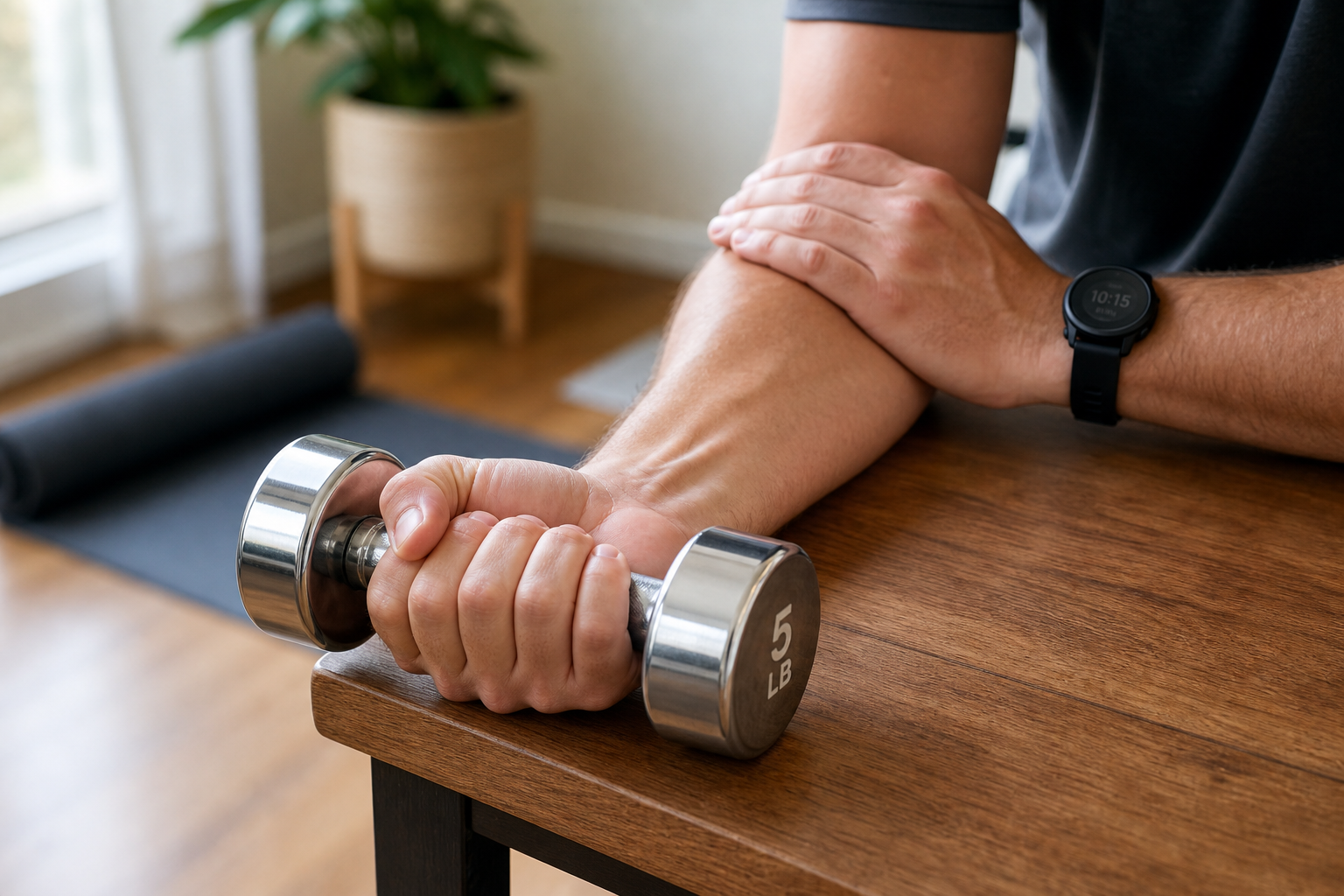
Wrist supports are valuable aids, but strengthening the muscles that stabilize the wrist reduces your dependence on them over time. These exercises pair well with the principles in our progressive resistance training program.
- Wrist curls (palm up): Rest your forearm on your thigh, hand over the edge of your knee. Curl a light dumbbell (2-3 pounds) upward. 2 sets of 15 per hand.
- Reverse wrist curls (palm down): Same position, palm facing the floor. Lift the back of your hand upward. 2 sets of 15 per hand. This strengthens the often-neglected wrist extensors.
- Radial and ulnar deviation: Hold a light dumbbell vertically (like a hammer). Tilt the weight left, then right, moving only at the wrist. 2 sets of 10 each direction.
- Grip squeezes: Squeeze a hand gripper or tennis ball for 5 seconds, release. 2 sets of 10 per hand. Learn more about grip training in our complete grip strength guide.
Start these exercises with minimal weight. Two to three pounds is enough. Wrist muscles are small and fatigue quickly. Form matters more than load. If your wrist deviates sideways or your forearm lifts off your thigh during wrist curls, the weight is too heavy.
Do these exercises on non-lifting days or after your main workout. Fresh muscles are more likely to compensate with larger muscle groups (like the biceps during wrist curls), which defeats the purpose. Fatigued from lifting, those larger muscles are less likely to take over.
Expect slow progress. Wrist strength builds gradually. You might add one rep per set every few weeks. That’s normal. Rapid increases in weight or reps usually mean you’re using momentum or compensating with other muscles.
Common Mistakes with Wrist Supports
Wearing them too tight. This is the most common error. Tight wraps or braces restrict blood flow, cause numbness, and increase swelling. The support should feel snug and secure, not painful. If your fingers tingle or turn pale, loosen it immediately.
Keeping them on between sets. Take wraps off during rest periods. Constant compression without breaks can impair circulation. Braces can stay on if they’re not overly tight, but wraps should come off.
Using support as a substitute for proper form. A wrist wrap won’t fix a pressing technique that puts the wrist in a mechanically disadvantaged position. If your wrist hurts even with support, the exercise form likely needs adjustment. Work with a trainer if you’re unsure.
Relying on support for every exercise. This leads to progressive weakening of the stabilizing muscles. Use support strategically for exercises that cause pain, not universally for all upper body work.
Ignoring pain that support doesn’t fix. If wrist pain persists despite proper support and good form, something else is wrong. Don’t push through it. See a healthcare provider. Continuing to lift with unresolved pain risks turning a minor issue into a chronic problem.
Adjusting Your Lifting Program Around Wrist Issues
Sometimes the best solution isn’t a better support, it’s modifying the exercise itself.
Switch grip positions. Neutral grip (palms facing each other) often feels better than pronated grip (palms down) for pressing movements. Many seniors find neutral-grip dumbbell presses cause less wrist strain than barbell bench press.
Use different equipment. Dumbbells allow your wrists to find their natural position. A barbell locks both wrists into the same angle, which might not match your anatomy. Kettlebells work well for some people because the offset center of mass changes wrist loading. Consider checking our guide to space-saving adjustable dumbbells for versatile home gym options.
Reduce range of motion. A partial-range bench press that stops a few inches from the chest can eliminate the wrist hyperextension that happens at the bottom of a full press. You still work the chest and triceps, just without the painful bottom position.
Substitute exercises. Push-ups hurt your wrists but chest flies don’t? Do flies. Cable presses with handles often feel better than free weight pressing because the cable maintains constant tension that doesn’t spike at specific wrist angles.
These modifications aren’t admissions of weakness. They’re smart programming that keeps you lifting safely and consistently. A modified exercise you can do pain-free beats a “perfect” exercise that forces you to stop training.