You’ve probably seen the “10,000 steps a day” number thrown around so many times it feels like a medical fact. It isn’t. That figure came from a 1960s Japanese marketing campaign for a pedometer, not from research on what older adults actually need for health benefits. The real answer to how far you should walk depends on your fitness level, your joints, and what you’re trying to get out of the walk.
Instead of chasing a distance that might not fit your body, it helps to think about walking in terms of effort, time, and progression. That approach works whether you’re walking around the block or building up to a longer daily route.
Why a Fixed Distance Doesn’t Work for Everyone

A 65 year old who’s been walking daily for years and a 78 year old recovering from a hip replacement have completely different starting points. Telling both of them to hit two miles a day ignores that reality entirely.
What matters more than the number on your tracker is how your body responds during and after the walk. A better framework looks at three things: effort level, time on your feet, and how consistently you can repeat it.
Use Effort, Not Mileage, as Your Guide
A simple way to judge effort is the talk test. If you can chat in full sentences while walking, you’re in a comfortable, sustainable zone. If you’re breathing hard enough that talking becomes difficult but you’re not gasping, that’s a moderate pace worth aiming for on most days.
If you can only get out a word or two at a time, you’re pushing into a harder zone. That’s fine occasionally if your doctor has cleared you for more vigorous activity, but it shouldn’t be your default pace for daily walks.
Aim for a total of somewhere between 20 and 45 minutes of walking most days, broken up however works for your schedule and joints. Three 10-minute walks spread through the day count just as much as one 30-minute walk, and splitting it up is often easier on the knees and lower back.
Building Up Distance Safely Over Time

If you’re just getting back into walking after an injury, illness, or a long stretch of inactivity, start with what feels easy and add time gradually. A common and safe approach is increasing your total walking time by about 10 percent per week, rather than jumping from 10 minutes to 30 minutes overnight.
Your footwear matters more than people realize once you start increasing time on your feet. If your feet or knees ache after walks, it’s worth checking whether your shoes are actually built for it. Our guide to the best walking shoes for seniors with arthritis covers what to look for in terms of cushioning and support.
If you deal with numbness or tingling in your feet, standard walking shoes may not cut it. Take a look at the best shoes for neuropathy to protect your feet as you build up your walking routine.
Some people find that adding light resistance helps them get more out of shorter walks without needing to cover more ground. If that sounds appealing, our weighted vest walking guide explains how much weight is appropriate and how to fit one correctly.
If balance is a concern, especially on uneven sidewalks or trails, walking poles can add stability without slowing you down. Our article on walking poles for seniors breaks down whether they’re worth adding to your routine.
When to Stop and Check In With a Doctor
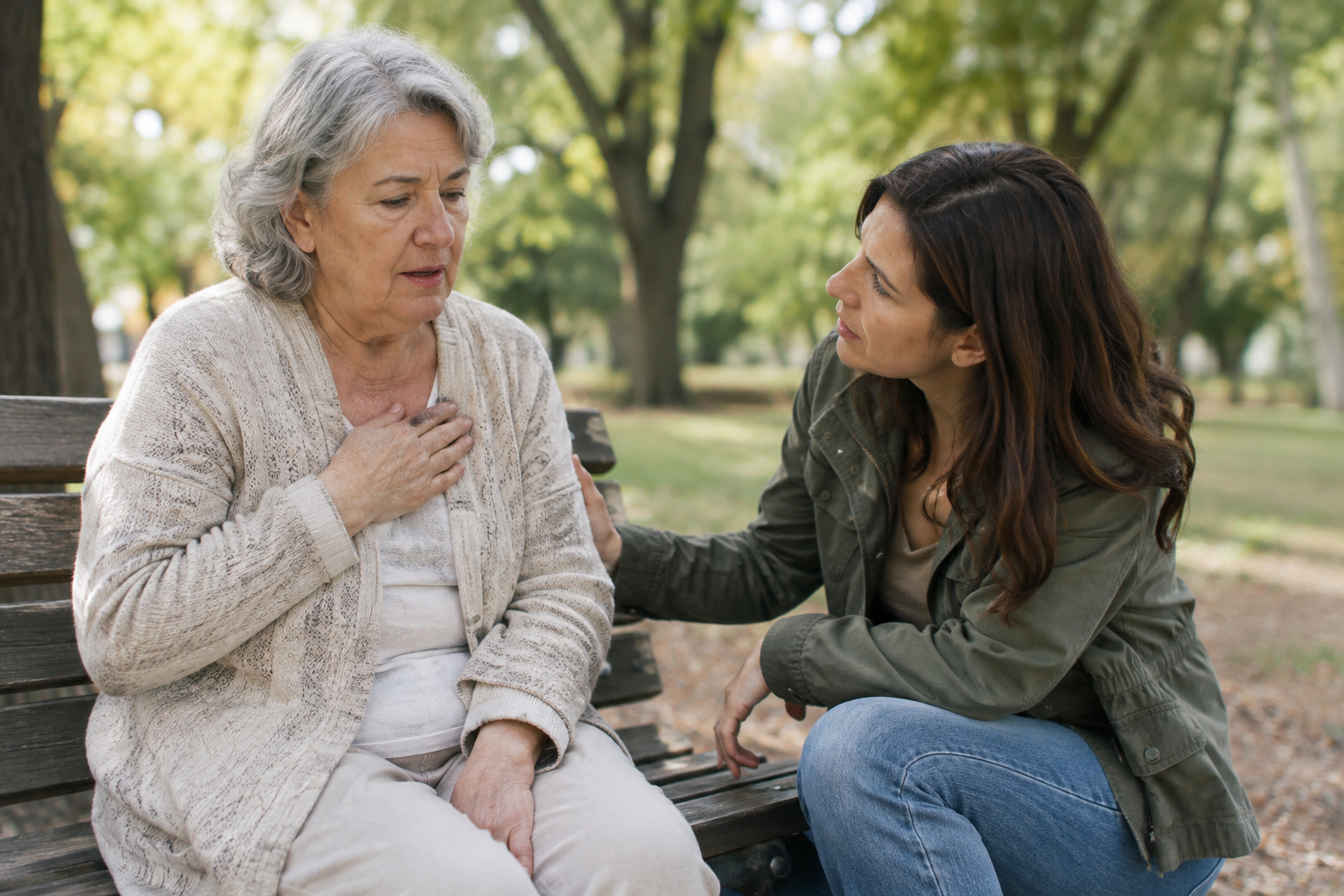
Pushing through mild fatigue during a walk is normal. Pushing through certain warning signs is not, and knowing the difference matters more than any distance goal.
- Chest pain or pressure, even if it’s mild or seems to come and go
- Fainting or feeling like you’re about to pass out
- Severe shortness of breath that doesn’t ease up when you slow down or stop
- Sudden dizziness or a spinning sensation
- Unusual heart palpitations or a racing heartbeat that doesn’t settle
If any of these happen during a walk, stop immediately and sit down if possible. Chest pain, fainting, or severe shortness of breath in particular should be treated as reasons to seek medical attention right away, not symptoms to walk off.
If dizziness is a recurring issue for you even outside of walking, it’s worth reading our piece on dizziness and balance exercises for seniors, since some balance issues can be improved with targeted movement rather than avoided altogether.
Frequently Asked Questions
Is it better to walk fast for a short time or slow for a long time?
Both have value, and the right choice depends on your goals. Brisk walking for shorter periods does more for cardiovascular fitness, while longer walks at an easy pace are gentler on joints and easier to sustain daily. Most people benefit from mixing both across the week rather than picking one exclusively.
Should I walk every day or take rest days?
Walking is low impact enough that most seniors can do it daily without needing dedicated rest days, unlike strength training where recovery time matters more. If you’re combining walking with strength workouts, check out our guide on how many rest days seniors need between strength workouts to balance the two properly. Listen to your joints though, if a walk leaves you sore the next day, ease off the pace or distance rather than skipping it entirely.