Skipping the warm-up is one of the most common mistakes active seniors make, and it’s usually not laziness. It’s that nobody ever explained why five minutes of gentle movement makes such a big difference. When you’re over 60, your connective tissue is less pliable, your joints produce synovial fluid more slowly, and your muscles take longer to reach working temperature. Jump straight into exercise without addressing that, and you’re asking for a pulled muscle or a tweaked knee.
The good news is that a proper warm-up doesn’t need to be complicated or time-consuming. A focused five-minute dynamic routine raises your core temperature, gets blood moving into working muscles, and lubricates your joints before you ask them to do anything demanding. Here’s exactly how to do it.
Why Dynamic Warm-Ups Work Better Than Static Stretching
For decades, people were told to hold stretches before exercise. Research has since flipped that advice on its head. Static stretching before a workout can actually reduce muscle power and increase injury risk by temporarily loosening tissues that need to be taut and responsive. Dynamic warm-ups, where you move through a range of motion rather than holding still, are far more effective at preparing your body for real exercise.
Dynamic movement does several things at once. It raises muscle temperature, which improves contraction speed and reduces the chance of tearing. It stimulates the nervous system, so your balance and coordination sharpen. And it increases synovial fluid production in your joints, which is especially important if you deal with stiffness from arthritis. If joint pain is already part of your daily life, check out the best arthritis-friendly exercises for seniors for more guidance on keeping movement comfortable.
Your 5-Minute Dynamic Warm-Up Routine
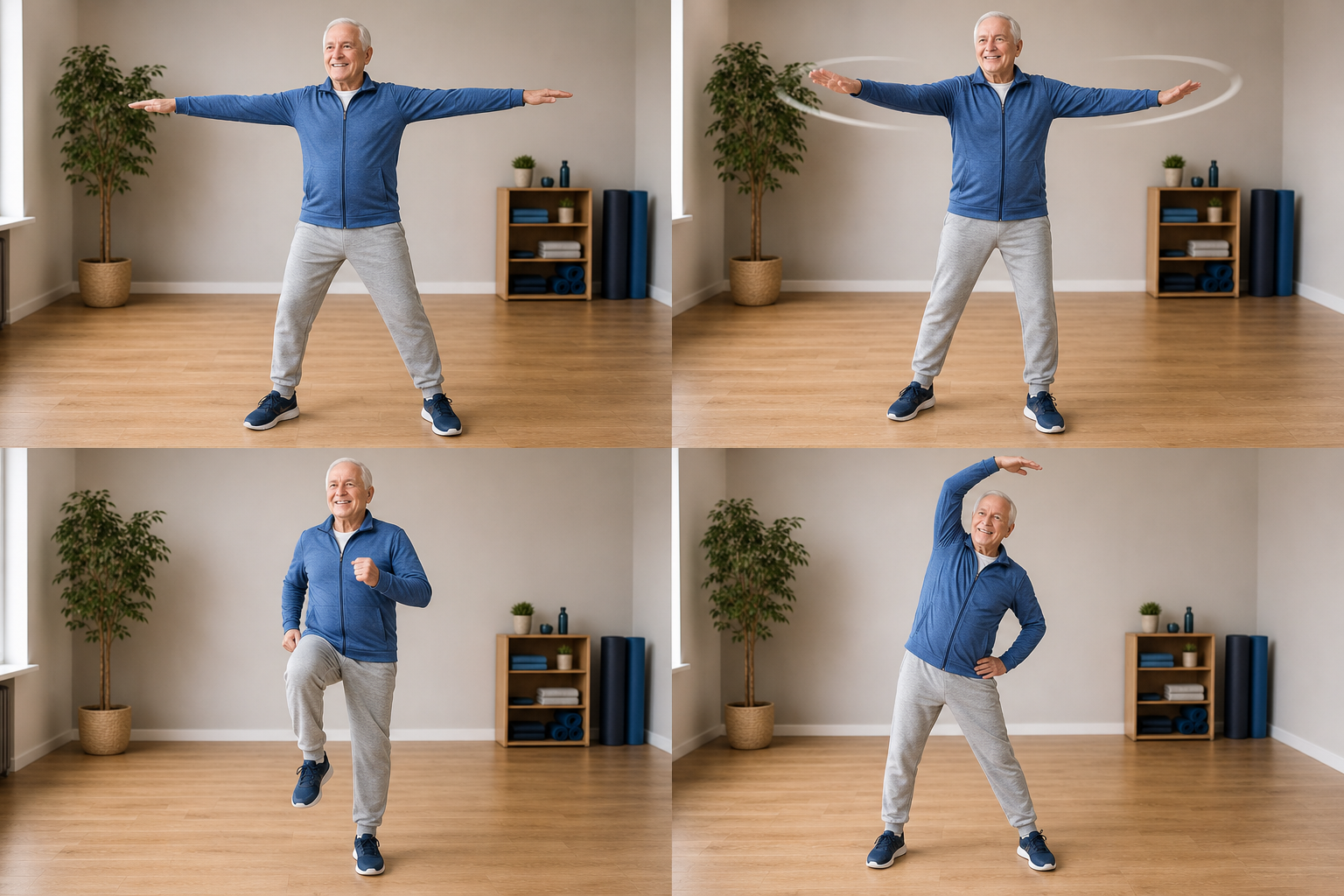
Do each of these movements for about 45 to 60 seconds. Move slowly and deliberately. This isn’t cardio. The goal is controlled range of motion, not speed or intensity.
1. Marching in Place
Lift your knees to about hip height while swinging your arms naturally. This gets blood moving immediately and wakes up your hip flexors. Start slow and gradually increase your pace over the 60 seconds. If balance is a concern, stand near a wall or sturdy chair.
2. Arm Circles
Extend both arms to your sides and make slow, controlled circles, starting small and gradually getting larger. Do 30 seconds forward, then 30 seconds backward. This opens up the shoulder joint and loosens the rotator cuff before any pressing or pulling movements.
3. Hip Circles
Stand with feet shoulder-width apart, hands on your hips, and slowly rotate your hips in a wide circle, as if you’re tracing a large oval. Do 30 seconds each direction. This is one of the best things you can do for your lumbar spine and hip joint capsule before strength training or walking.
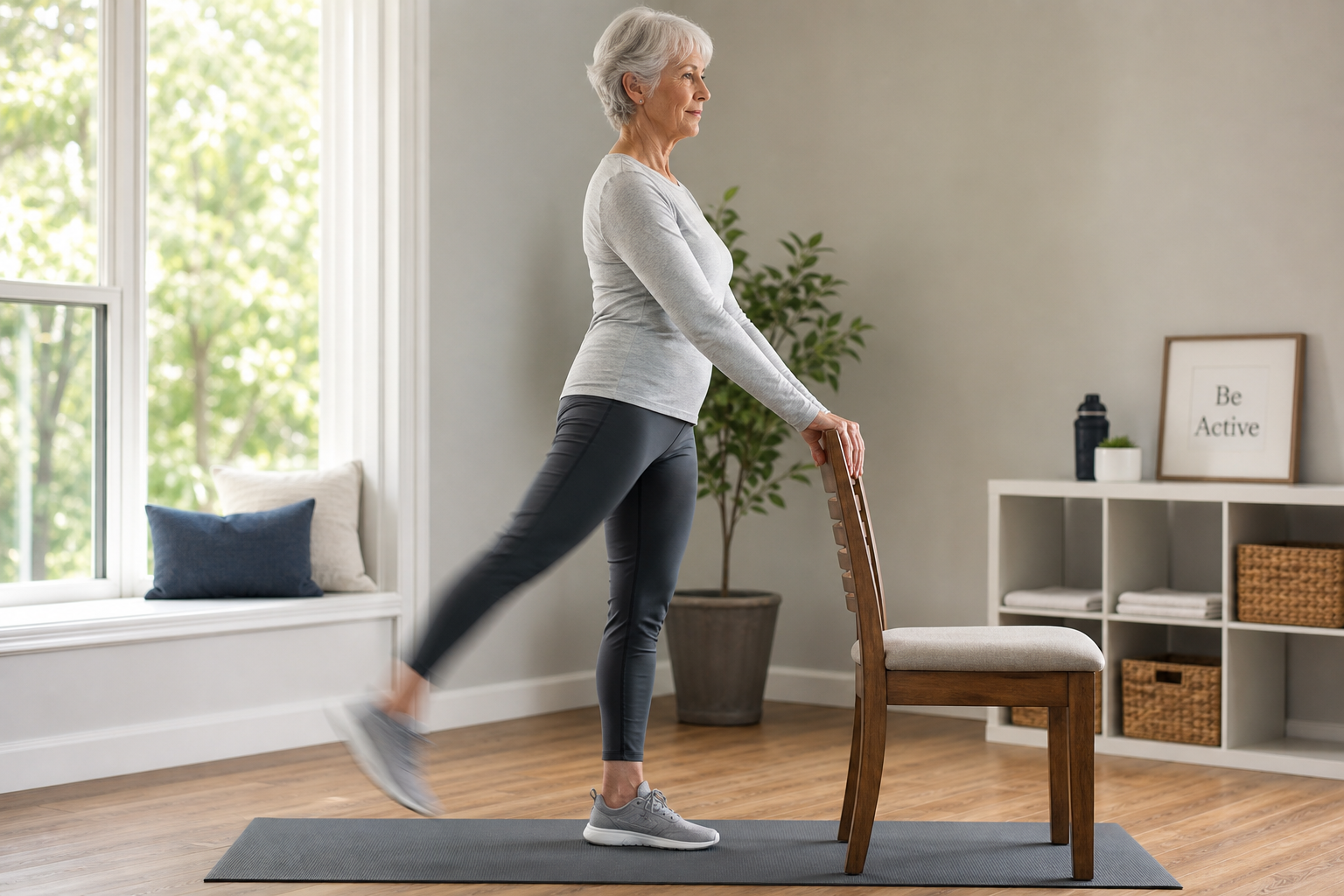
4. Leg Swings
Hold a wall or chair for support and swing one leg forward and back in a controlled pendulum motion. Keep your core gently engaged. Do 10 to 12 swings per leg. This dynamically stretches your hamstrings and hip flexors, which tend to tighten from sitting and are common culprits in lower back strain.
5. Ankle Rolls and Heel Raises
Sit or stand and roll each ankle slowly in circles, 10 rotations each direction. Then stand and do 15 slow heel raises, lifting your heels fully off the ground and lowering with control. This primes the ankles and calves, which play a major role in balance and injury prevention. If you’ve been dealing with balance issues, the exercises in this guide on vertigo and balance exercises for seniors pair well with this routine.
6. Torso Rotations
Stand with feet hip-width apart, arms crossed over your chest, and slowly rotate your upper body left and right. Move through your full comfortable range, not pushing into pain. This wakes up your thoracic spine and core stabilizers before any bending or twisting movements in your workout.
Making the Warm-Up a Non-Negotiable Habit

The simplest way to build this into your routine is to treat it as part of the workout itself, not a separate optional step. Set your timer for five minutes before you ever pick up a weight or step onto a treadmill. That mental reframe helps a lot.
Timing your workout also matters more than most people realize. Your joints tend to be stiffer in the morning, so your warm-up may need to be a minute or two longer if you exercise early. For more on how time of day affects your performance and recovery, the article on morning vs. evening exercise for seniors covers this well.
After your workout, what you eat matters just as much as what you did in the gym. Pairing a solid warm-up habit with smart nutrition on both ends of your session speeds recovery and keeps you consistent. The guide to post-workout recovery meals for seniors is a practical place to start on that front.
Frequently Asked Questions
Can I do this warm-up if I have bad knees or have had a knee replacement?
Yes, with a few modifications. Skip the leg swings if they feel unstable, and keep the marching in place low-impact by not lifting your knee quite so high. The heel raises and ankle rolls are especially beneficial for knee health because they improve lower-leg circulation. If you’ve recently had surgery, review the guidance in this post-knee replacement exercise guide before adding anything new.
Is five minutes really enough, or should I warm up longer?
For most seniors doing moderate strength training or cardio, five minutes of focused dynamic movement is genuinely sufficient. If you’re exercising in cold weather, bump it to seven or eight minutes because your muscles take longer to warm up when the ambient temperature is low. The article on cold weather exercise tips for seniors explains exactly how to adjust your routine when temperatures drop.