If you’re managing blood pressure as an active senior, a reliable home monitor isn’t optional anymore. It’s part of how you stay on top of your health between doctor visits, especially if you’re exercising regularly and want to know how your numbers respond before and after workouts. The problem is that the market is flooded with monitors ranging from genuinely excellent to surprisingly unreliable, and the differences aren’t always obvious from the box.
This guide cuts through the noise. We’ll look at what actually matters when choosing a home blood pressure monitor, compare upper-arm and wrist cuffs honestly, and highlight specific models worth your attention. Whether you’re tracking numbers around your morning walk or monitoring how strength training affects your cardiovascular health, you’ll come away knowing exactly what to buy and why.
Why Home Monitoring Matters for Active Seniors
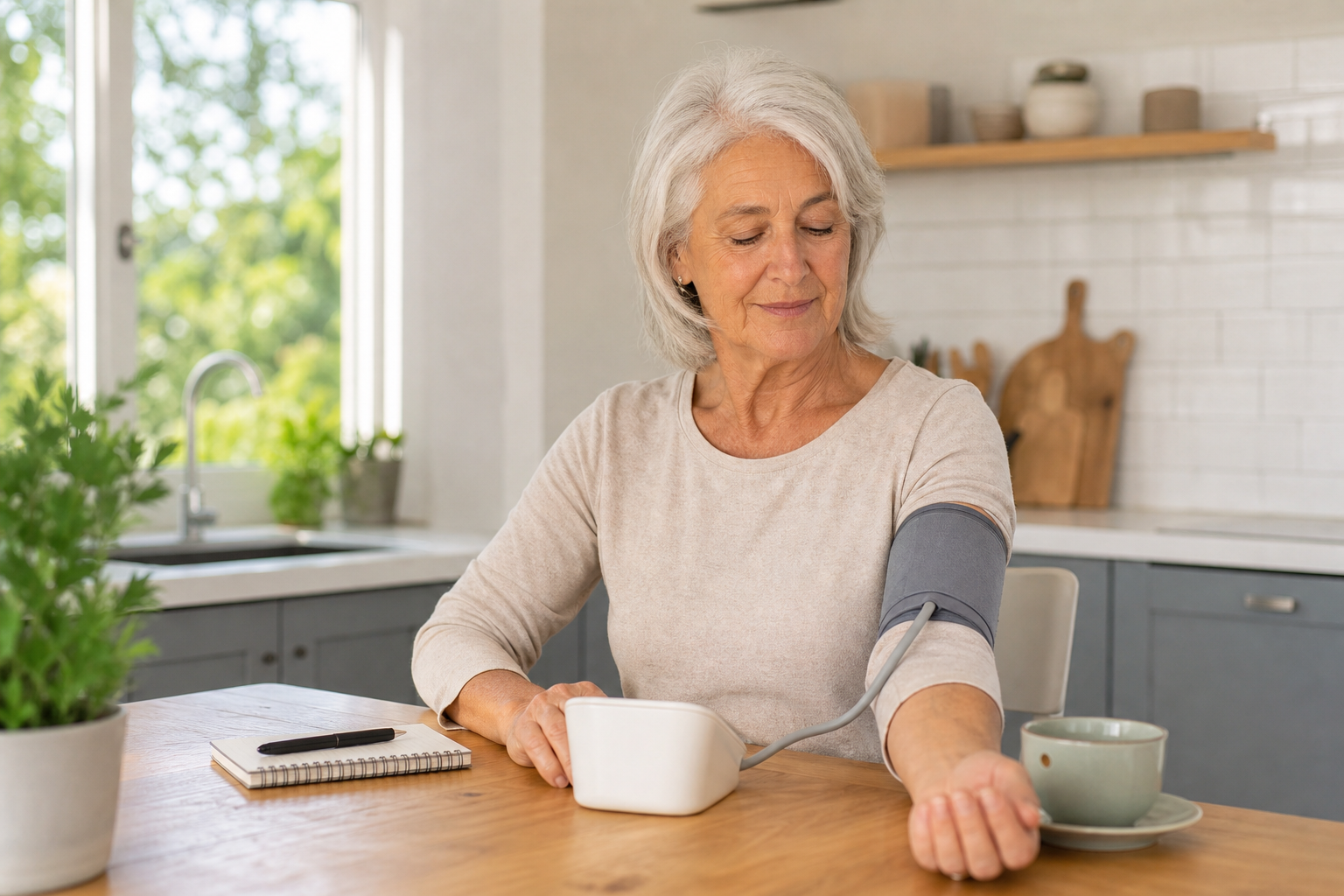
Exercise has a well-documented effect on blood pressure, both in the short term during activity and over time as cardiovascular fitness improves. But that relationship can be complicated if you’re on medication. Knowing your baseline before a workout and checking your recovery numbers afterward gives you real data to share with your doctor, not just a snapshot from a clinic visit every few months.
If you’re on beta-blockers or other antihypertensives, it’s especially important to understand how your readings shift around exercise. Our article on blood pressure medication and exercise precautions covers this in detail and pairs well with what you’re tracking at home. Similarly, if you’re timing medications around workouts, the guidance in medication and exercise timing for seniors is worth reading alongside your monitoring routine.
The American Heart Association recommends taking readings at the same time each day, ideally in the morning before medication and in the evening. A home monitor makes that routine practical.
Upper-Arm vs. Wrist Monitors: Which Is More Accurate?
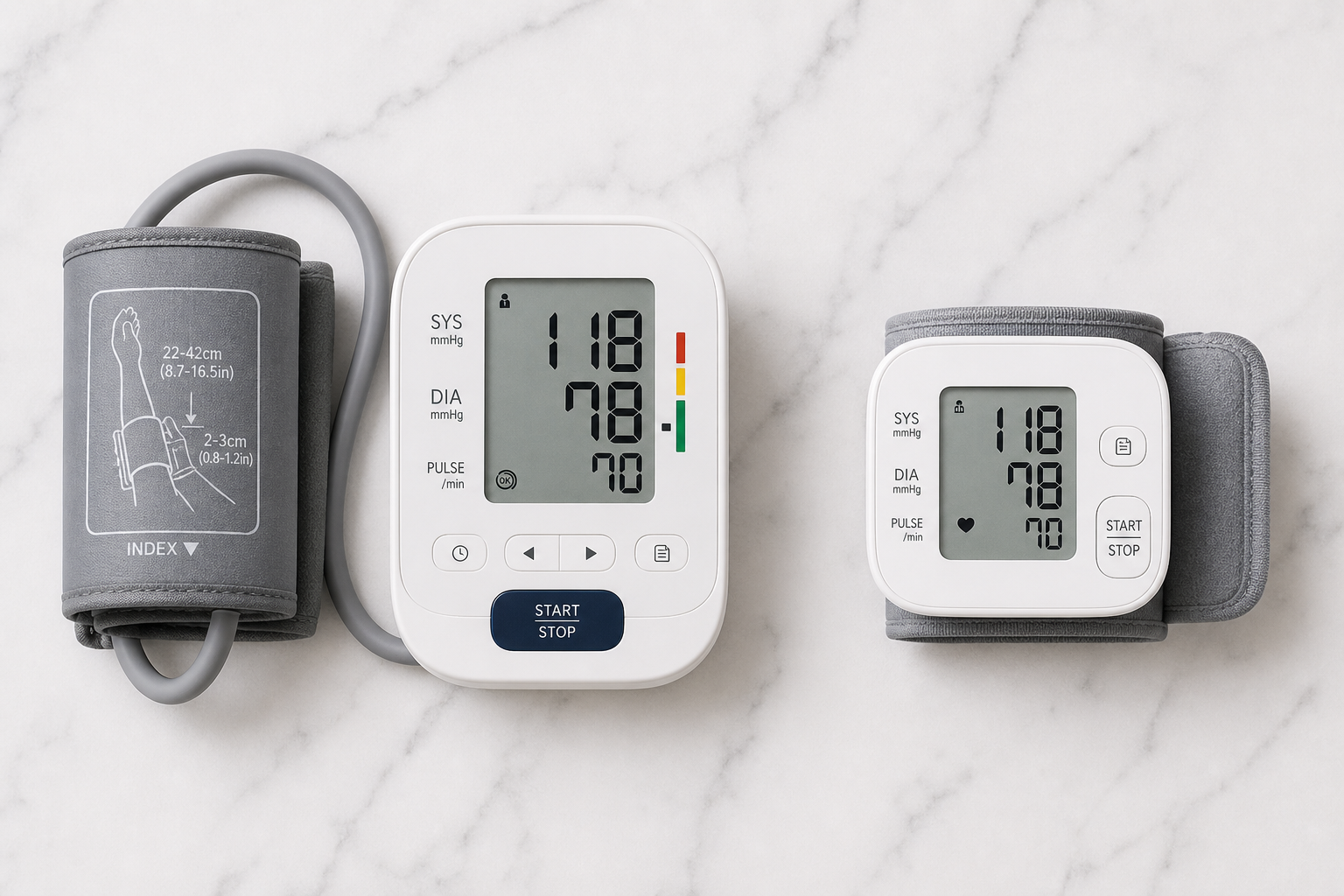
Upper-arm monitors win this comparison, and it’s not particularly close. Clinical validation studies consistently show that upper-arm cuffs produce more accurate readings because the measurement point is at heart level. Wrist monitors are sensitive to position, and even a slight tilt of your wrist can throw off the reading by several points.
That said, wrist monitors aren’t useless. They’re more comfortable for people with larger arms, easier to travel with, and genuinely convenient if mobility or arthritis makes wrapping an upper-arm cuff difficult. If wrist monitors are your only realistic option, they can still give you useful trend data as long as you’re consistent about positioning your wrist at heart level every time.
For most people, an upper-arm blood pressure monitor is the better starting point, especially if you’re using readings to make decisions about exercise intensity or medication timing.
A Note on Cuff Fit
Cuff size matters more than most people realize. A cuff that’s too small will read high, and one that’s too large will read low. Measure your upper arm circumference before buying. Standard cuffs typically fit arms between 22 and 32 centimeters, while large cuffs extend to 42 or 45 centimeters. Many monitors now come with a wide-range cuff that handles most arm sizes, but always verify before purchasing.
Key Features to Look For
Display Size and Readability
If you’re using a monitor independently at home, you need to be able to read the numbers clearly without squinting. Look for monitors with large digit displays, ideally with high contrast between the numbers and the background. Backlit screens are a bonus for low-light conditions. Some monitors also use color indicators (green, yellow, red) to give you an instant visual cue about where your reading falls.
Memory and Multi-User Storage
Memory capacity is one of the most underrated features. A monitor that stores 60 or more readings per user lets you see trends over time rather than relying on individual snapshots. Many monitors support two users, which is practical if you and a partner are both tracking numbers. Some higher-end models store 100 readings per user and can calculate your average over the last 7, 14, or 30 days automatically.
If you’re using a fitness tracking app to log your health data, look for monitors that sync via Bluetooth to iOS or Android. Several models connect directly to apps like Apple Health or Google Fit, which makes trend analysis much easier over time.
Irregular Heartbeat Detection
Most quality monitors now include an arrhythmia detection feature that flags readings where an irregular heartbeat was detected during the measurement. This doesn’t replace an ECG, but it can alert you to something worth discussing with your doctor. For active seniors, this is a useful safety feature, not a gimmick.
Ease of Use
One-button operation is ideal. Monitors with confusing multi-step setups tend to get used inconsistently, which defeats the purpose. Look for a device that inflates, measures, and displays results with a single button press. Auto-deflation is standard on most models now, but verify it before buying.
Top Blood Pressure Monitors Worth Considering
Omron Series Monitors
Omron is consistently the most recommended brand by pharmacists and cardiologists, and for good reason. Their monitors are clinically validated, widely available, and built to last. The Omron Platinum and Omron Gold series both offer two-user memory, Bluetooth connectivity, and irregular heartbeat detection. The displays are clear and easy to read, and the cuff fitting guide takes the guesswork out of positioning.
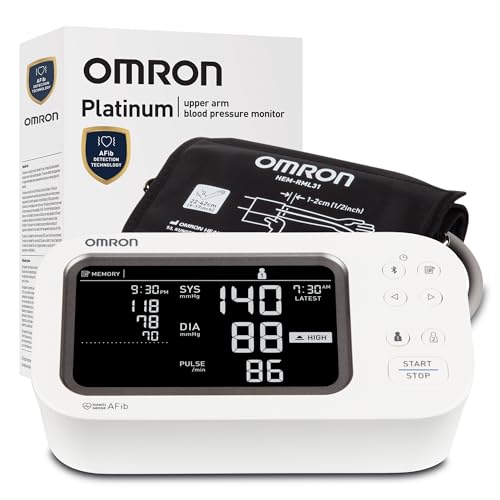
Omron Platinum Upper Arm Blood Pressure Monitor
Clinically validated, stores 200 total readings across two users, and syncs wirelessly to the Omron Connect app for easy trend tracking.
The Omron Gold is a slightly more affordable option that still hits all the important marks: large display, multi-user memory, and Bluetooth. It’s a solid choice if you want Omron reliability without the premium price tag of the Platinum. Check current pricing on Amazon to compare the two models side by side.
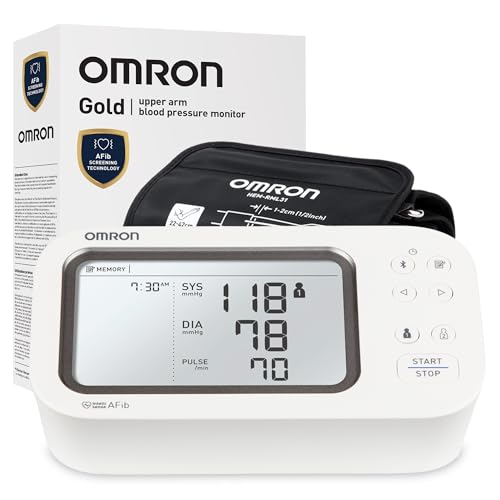
Omron Gold Upper Arm Blood Pressure Monitor
A dependable mid-range option with large display, two-user memory, and Bluetooth app syncing at a more accessible price point than the Platinum.
Withings BPM Connect
If you want something that integrates deeply with a smartphone ecosystem, the Withings BPM Connect is worth a look. It connects via Wi-Fi and Bluetooth, syncs automatically to the Withings Health Mate app, and has a clean, minimal design. The display is smaller than Omron’s, which can be a drawback for users who prefer to read results directly on the device rather than a phone screen.
Greater Goods Balance Blood Pressure Monitor
The Greater Goods Balance is a budget-friendly upper-arm option that delivers surprising accuracy for the price. It’s clinically validated, has a two-user memory capacity, and includes a large, easy-to-read display. It doesn’t have Bluetooth, which is a limitation if you want app syncing, but for seniors who prefer a simple device without tech complexity, it’s a genuinely good pick.
A-D Medical Multi-User Blood Pressure Monitor
The A&D Medical monitors are often overlooked but have strong clinical validation and a loyal following among healthcare professionals. Their upper-arm models feature large displays, multi-user memory, and a clinically accurate oscillometric measurement method. Worth checking out if Omron is out of stock or you want a second opinion brand.
Wrist Monitors: When They Make Sense
For seniors with limited arm mobility, significant upper-arm obesity, or conditions like lymphedema that make upper-arm cuffs uncomfortable, wrist monitors are a legitimate alternative. The key is using them correctly every time.

Omron 3 Series Wrist Blood Pressure Monitor
A compact and affordable wrist option with a positioning sensor that alerts you if your wrist isn’t at heart level during measurement.
The Omron wrist series includes a “positioning sensor” that beeps and shows an indicator when your wrist is at the correct height during the reading. That feature alone makes Omron’s wrist monitors more reliable than most competitors. If you’re going the wrist route, this is the brand to stick with.
How to Get the Most Accurate Readings at Home
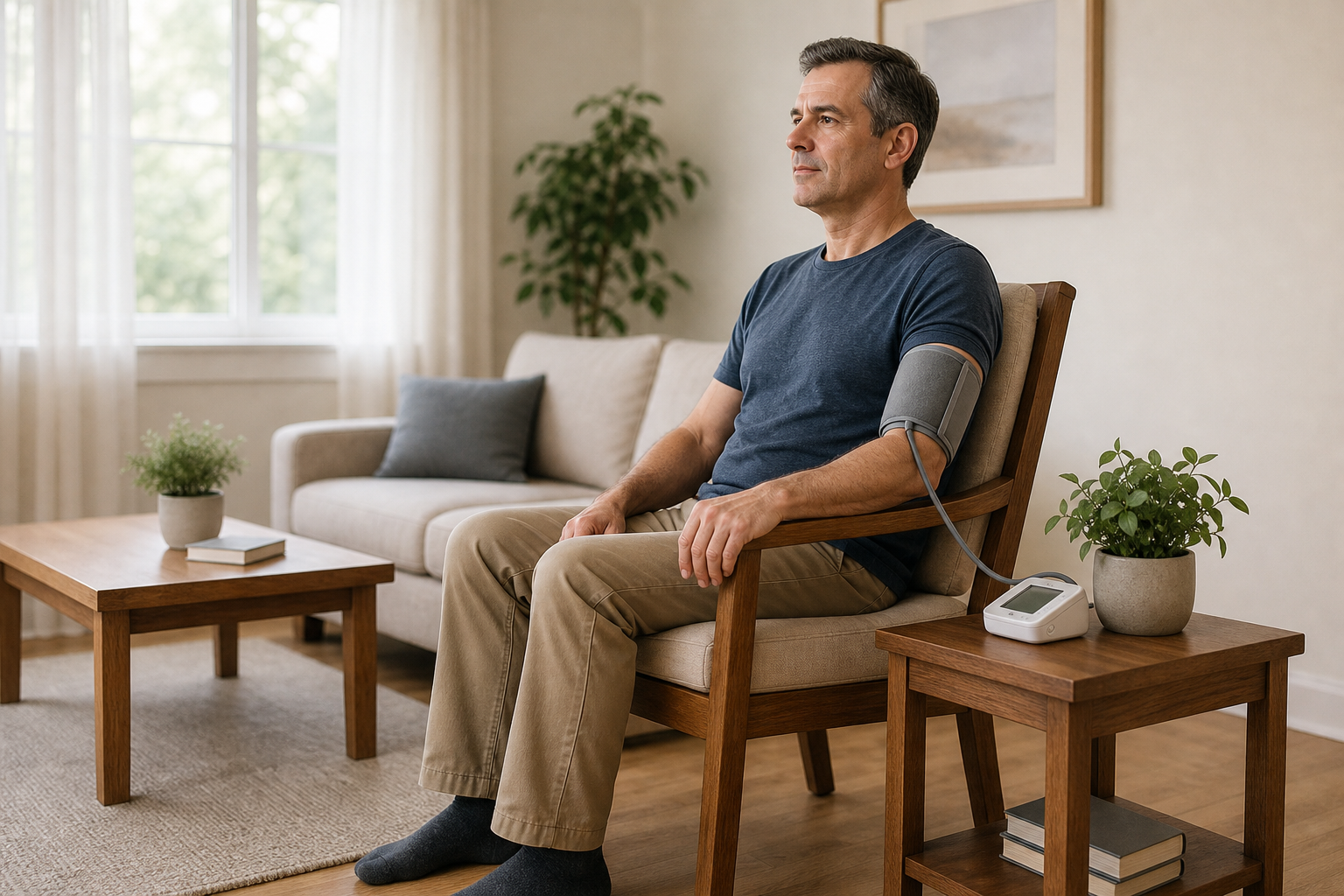
Even the best monitor will give you unreliable numbers if you’re using it incorrectly. Here are the habits that make the biggest difference:
- Sit quietly for at least five minutes before measuring. Don’t take a reading right after exercise.
- Sit with your back supported, feet flat on the floor, and your arm resting at heart level on a table.
- Don’t talk, check your phone, or watch TV during the measurement.
- Take two or three readings one minute apart and average them. Single readings can vary significantly.
- Take readings at the same time each day for consistent comparisons.
- Avoid caffeine, exercise, and smoking for at least 30 minutes before measuring.
If you’re specifically tracking how exercise affects your numbers, take a resting reading in the morning before any activity, then check again about 30 minutes after your workout has ended and your heart rate has settled. Tracking this over several weeks gives you genuinely useful data to bring to your doctor.
For seniors doing strength training or high-intensity exercise, your post-workout nutrition can also influence cardiovascular recovery. The post-workout recovery meals for seniors article is worth reading alongside your monitoring routine, since what you eat after exercise affects blood pressure recovery as well as muscle repair.
Frequently Asked Questions
How accurate are home blood pressure monitors compared to what a doctor uses?
Clinically validated home monitors from reputable brands like Omron and A&D Medical are accurate within a few mmHg of professional equipment when used correctly. The bigger variable is usually technique, not the device itself. The American Heart Association maintains a list of validated devices, and any monitor you’re considering should be on it or equivalent. Look for the term “clinically validated” on the product listing.
Should I bring my home monitor to my doctor’s appointment?
Yes, and many cardiologists and primary care doctors actually encourage this. Bringing your monitor lets your doctor compare it against the office reading to check for accuracy. If there’s a significant difference, it could be white-coat hypertension, an equipment issue, or a technique problem. Having a month’s worth of your home readings also gives your doctor far better data than a single clinic measurement.
How often should seniors take their blood pressure at home?
For general monitoring, once in the morning and once in the evening is the standard recommendation from the American Heart Association. If you’ve recently changed medications or are tracking how exercise affects your numbers, your doctor may suggest more frequent readings temporarily. Don’t take more than three readings in a row in a single session, as repeated inflation can cause bruising and doesn’t improve accuracy.
Can exercise lower blood pressure over time?
Regular aerobic exercise is one of the most effective lifestyle interventions for reducing blood pressure. Studies show that consistent moderate-intensity exercise can lower systolic blood pressure by 5 to 8 mmHg in people with hypertension. That’s comparable to the effect of some medications. Activities like walking, swimming, cycling, and pickleball are particularly well-suited for seniors. If you’re new to exercise or managing hypertension, check out our guide on pickleball for seniors for a fun, heart-healthy option that’s easy on the joints.
The Bottom Line on Choosing a Monitor
For most seniors, an Omron upper-arm monitor is the right choice. The Omron Platinum is the top pick if you want maximum memory and app connectivity, and the Omron Gold hits the same key features at a more accessible price. If simplicity matters most, the Greater Goods Balance delivers solid accuracy without any tech complexity.
Wrist monitors work in specific situations, but only if you’re disciplined about positioning. The Omron wrist series is the one to choose if you go that route.
Pick a monitor, build a consistent measuring habit, and share your data with your doctor regularly. That combination, more than any single device feature, is what actually improves outcomes. If you’re building out a home setup for senior fitness more broadly, our budget-friendly home gym setup for seniors has more ideas for equipping yourself well without overspending.
This article contains affiliate links. We may earn a small commission at no extra cost to you.