If your hips feel stiff when you first get up in the morning, or you notice your stride has gotten shorter over the years, you’re not imagining things. Hip mobility naturally decreases with age, and it shows up in subtle ways: slower walking, more effort climbing stairs, or that familiar ache after sitting too long. The good news is that targeted hip mobility work can genuinely reverse a lot of this stiffness, and you don’t need to be flexible or athletic to start.
This guide covers gentle hip openers and dynamic stretches that have actually been shown to improve stride length and reduce joint stiffness in older adults. You’ll find both seated and standing options, so you can pick what works best for your current fitness level and any limitations you’re managing.
Why Hip Mobility Matters for Walking

Your hip joint is a ball-and-socket joint designed for a wide range of motion. When the muscles and connective tissue around it tighten up, your body compensates by shortening your stride, rotating your torso more, or putting extra stress on your lower back and knees. Over time, those compensations can lead to real pain and fall risk.
The hip flexors (which run along the front of your hip), the hip rotators (deep muscles that turn your leg inward and outward), and the glutes all play a role in how smoothly you walk. Stretching and mobilizing these muscles doesn’t just feel good. It directly improves your gait pattern.
For anyone managing a related condition, these exercises pair well with the guidance in our best arthritis-friendly exercises for seniors and can complement a broader approach to chronic pain management through movement.
What You’ll Need
You don’t need much equipment. A sturdy chair for the seated exercises, and a yoga mat or padded surface if you plan to do any floor work. If you’re doing floor exercises, a thicker mat makes a real difference for comfort on your hips and knees.
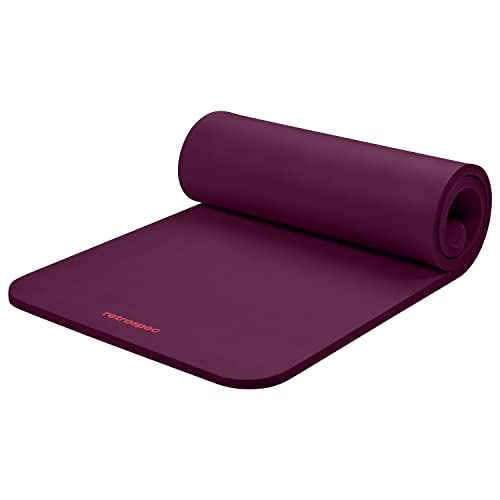
Extra Thick Yoga Mat for Seniors
A thick, non-slip yoga mat is worth having for floor-based hip stretches, especially if your knees or hips are sensitive to hard surfaces.
A foam roller is optional but useful before you stretch. Rolling out your hip flexors and IT band for a minute or two can make the stretches more effective. We’ve reviewed options specifically for older adults in our best foam rollers for senior muscle recovery guide.
Seated Hip Mobility Exercises
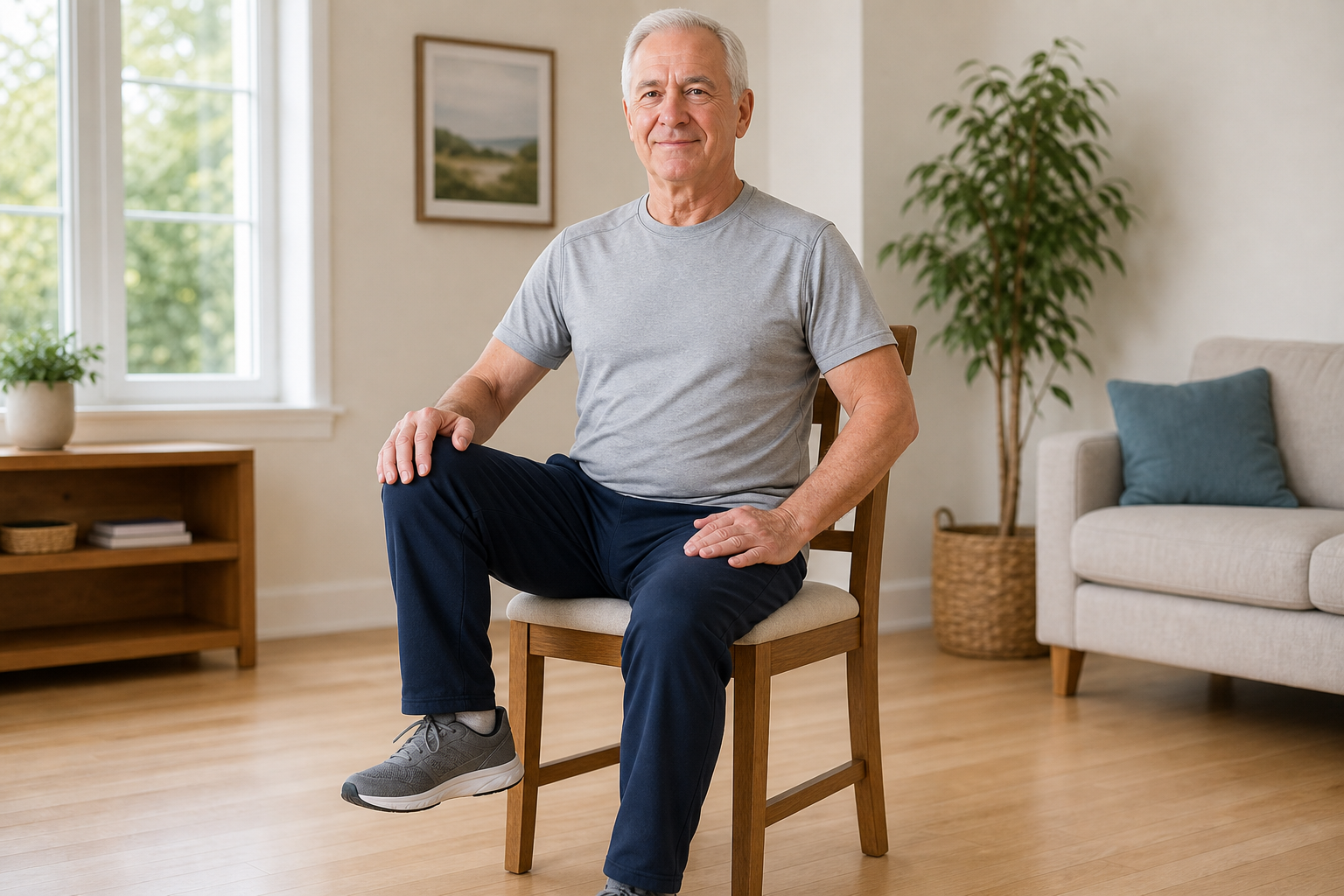
These are ideal if you’re just getting started, recovering from an injury, or managing balance concerns. You’ll need a firm chair with no armrests, or at least enough room to move your legs freely.
Seated Hip Circles
Sit near the edge of your chair with feet flat on the floor, hip-width apart. Lift one knee slightly and draw slow circles with it, rotating from the hip. Do 5 circles in each direction, then switch legs. This loosens the hip socket and warms up the surrounding tissue before you move into deeper stretches.
Seated Figure-Four Stretch
Cross your right ankle over your left knee so your right leg forms a “4” shape. Sit tall and gently press down on your right knee with your hand. You’ll feel a stretch in your outer hip and glute. Hold for 20 to 30 seconds, then switch sides. If this causes any knee discomfort, skip it and try the next option.
Seated Hip Flexor Stretch
Sit sideways on your chair so your right hip is near the edge. Slide your right leg back and let it hang off the side, keeping your foot on the floor. Sit up tall and you’ll feel a stretch along the front of your right hip. Hold 20 to 30 seconds, then switch. This directly targets the tight hip flexors that shorten your stride.
Standing Hip Mobility Exercises
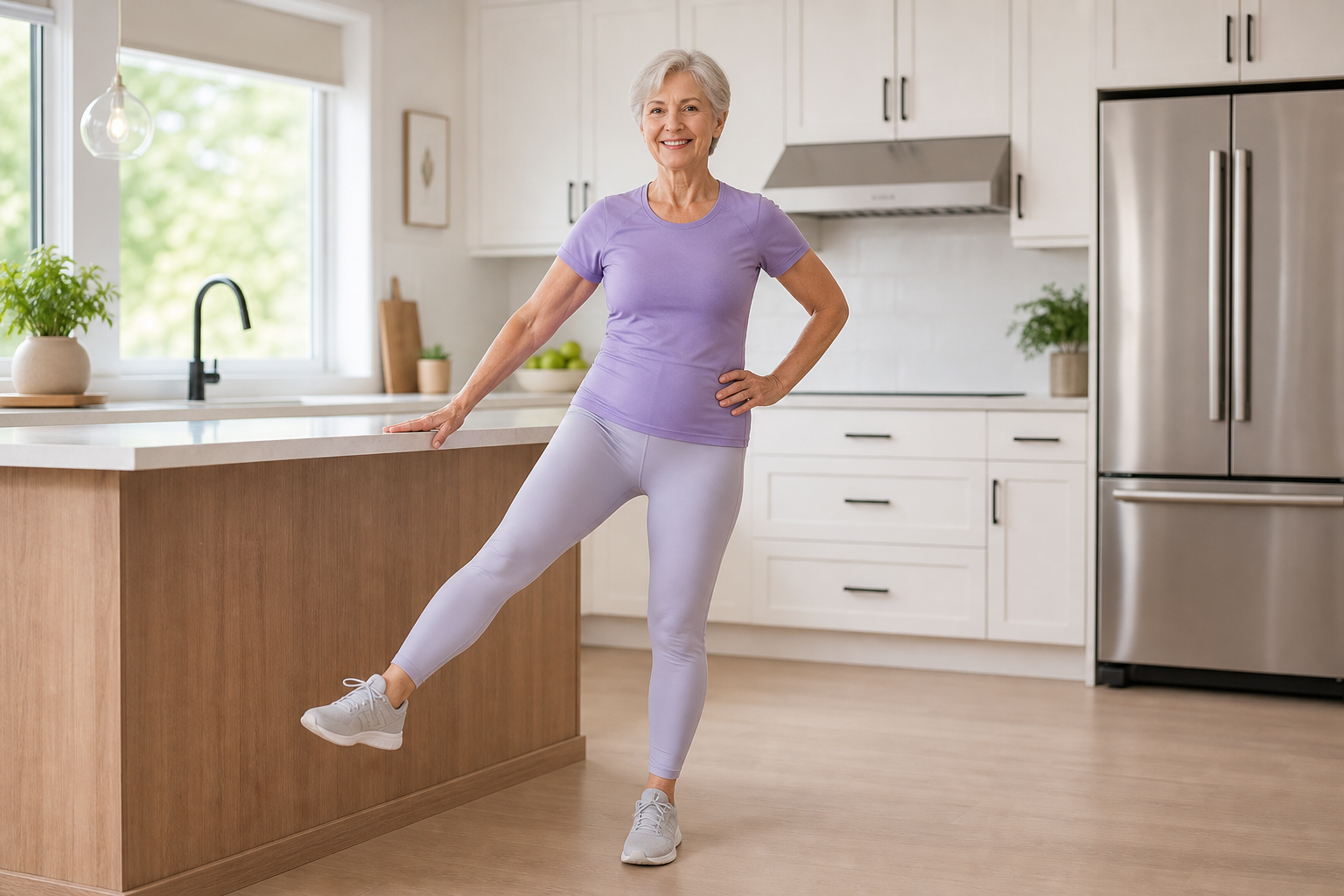
Once you’re warmed up or if you’re already reasonably comfortable on your feet, these standing movements are where real improvement in your walking pattern happens. Keep one hand on a wall or sturdy surface if you need support.
Hip Circles Standing
Stand with feet hip-width apart and hands on your hips. Slowly draw big circles with your hips, like a slow hula hoop movement. Do 8 to 10 circles in each direction. This is a gentle dynamic warm-up that works all the muscles around the hip joint at once.
Side-to-Side Hip Sway
Stand with feet slightly wider than hip-width. Shift your weight slowly to the right, bending your right knee and letting your left leg straighten. Then sway to the left. Move in a smooth, controlled rhythm for 10 to 12 repetitions per side. This improves the lateral mobility you need for a stable, balanced walking stride.
Standing Hip Flexor Lunge Stretch
Stand near a wall for balance. Step your right foot back into a gentle lunge position. Keep your back leg as straight as comfortable and your front knee over your ankle. Tuck your pelvis slightly forward and hold for 20 to 30 seconds. Switch sides. If lunging is too much right now, start with just the seated hip flexor stretch and build from there.

Resistance Bands for Hip Mobility
Light resistance bands add a gentle challenge to standing hip exercises and help activate the glutes more effectively.
Dynamic Leg Swings
Hold a wall with one hand. Swing your outside leg forward and backward in a controlled arc, keeping your core engaged. Start small and let the range of motion increase naturally over 10 to 12 swings. Switch to the other leg. Leg swings are one of the best ways to improve stride length because they train the hip through its full range of motion dynamically.
Building This Into Your Routine
Consistency matters more than intensity here. Even 10 minutes of hip mobility work five days a week will produce noticeable changes in how you walk within a few weeks. You can do these exercises first thing in the morning when stiffness tends to be worst, or before a walk to prepare your hips for movement.
Pairing your mobility work with good nutrition supports the process. Omega-3 supplements for senior joint health have solid evidence behind them for reducing joint inflammation, and making sure you’re getting enough Vitamin D for bone and muscle health supports the tissue you’re working to restore.
After your sessions, even short ones, a light snack with protein helps your muscles recover and adapt. Our guide on post-workout recovery meals for seniors has practical options that don’t require much prep.
If you’ve had hip surgery, work through this progression slowly and check with your physical therapist first. Our post-hip replacement exercise guide covers exactly when and how to reintroduce mobility work after surgery.

Stretch Strap for Flexibility
A stretching strap lets you guide your leg through a greater range of motion without straining, making it especially useful for seated and floor hip stretches.
Frequently Asked Questions
How long does it take to notice improvement in hip mobility?
Most people feel some reduction in stiffness within one to two weeks of consistent daily work. More meaningful changes in stride length and walking ease typically show up within four to six weeks. The key is doing something every day, even if it’s just five minutes of seated exercises on harder days.
Is it normal for hip stretches to feel uncomfortable at first?
A gentle pulling or stretching sensation is completely normal. Sharp pain, clicking with pain, or discomfort that lingers after you stop are different, and those are signs to ease off and check with your doctor. Mild muscle soreness the next day is fine and usually fades as your body adapts.
Can I do these exercises if I have sciatica or lower back pain?
Many of these exercises are actually helpful for sciatica because tight hip flexors and piriformis muscles are common contributors to sciatic nerve irritation. Start with the seated options and move slowly. We cover more specific techniques in our guide to managing sciatica through exercise. If your symptoms are significant, get clearance from your doctor before adding new exercises.
This article contains affiliate links. We may earn a small commission at no extra cost to you.