If you’ve ever watched someone hike with poles and thought it looked unnecessary, you might want to reconsider. Walking poles aren’t just for mountain trails. For seniors, they can make a real difference in everyday stability, confidence, and even how much your body gets out of a walk. The research backs this up, and so does the experience of millions of older adults who’ve made poles a regular part of their routine.
Whether you’re dealing with joint pain, recovering from surgery, or simply want to feel more secure on uneven terrain, a good pair of poles could be one of the most practical investments you make in your active lifestyle.
How Walking Poles Actually Improve Stability
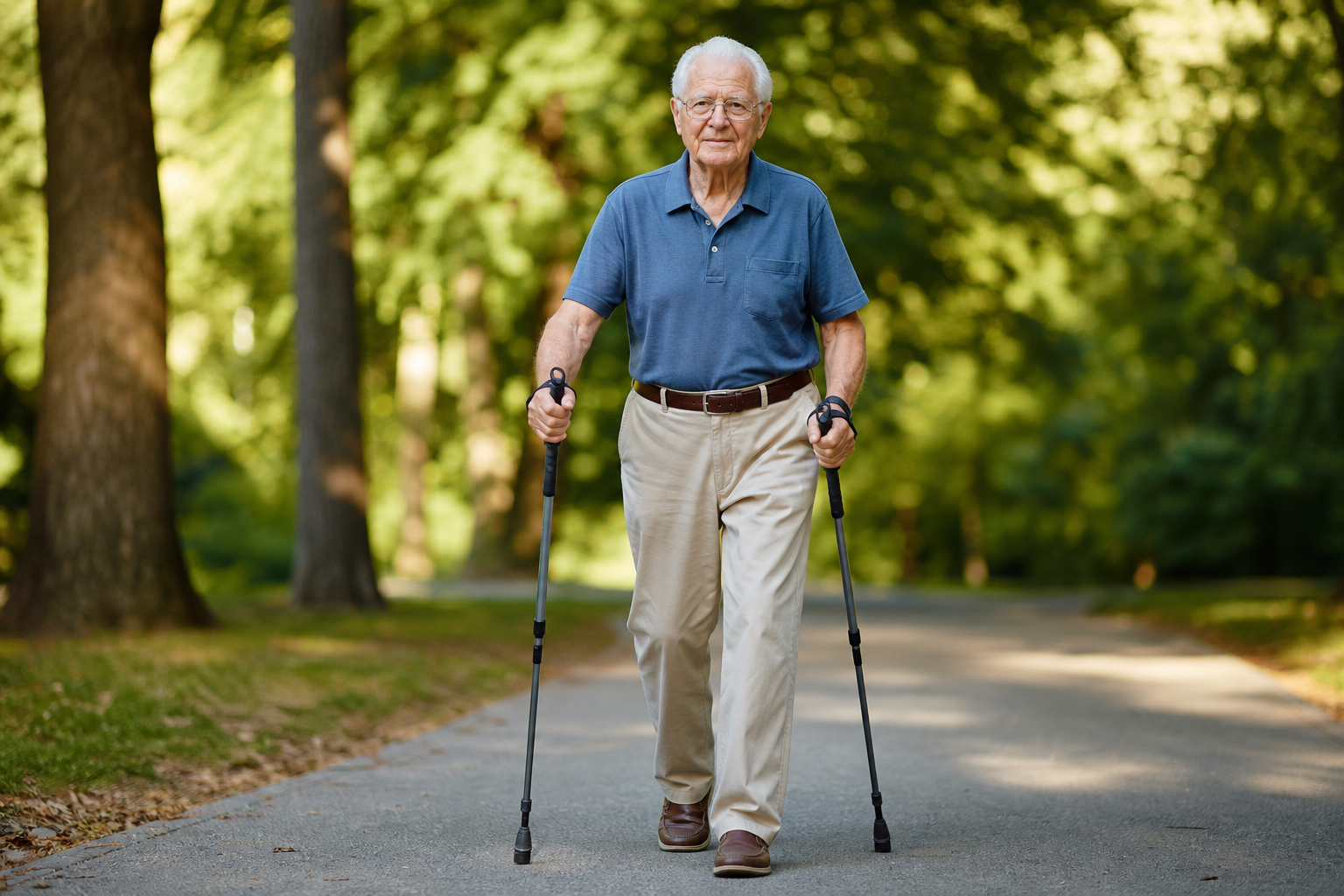
Walking poles work by giving you two additional contact points with the ground. That sounds simple, but the effect is significant. Studies have shown that Nordic walking poles can reduce the load on your knees and hips by as much as 25%, while also improving your gait and balance.
When you plant a pole with each step, you’re creating a wider base of support. This is especially valuable on slopes, gravel, wet pavement, or any surface that isn’t perfectly flat. For seniors who experience vertigo or balance issues, that extra point of contact can be the difference between a confident walk and a scary stumble.
Poles also engage your core automatically. Reaching forward slightly with each plant activates your abdominals, obliques, and lower back muscles without any extra thought on your part. Over time, this adds up to genuine functional strength gains.
Who Benefits Most From Using Poles
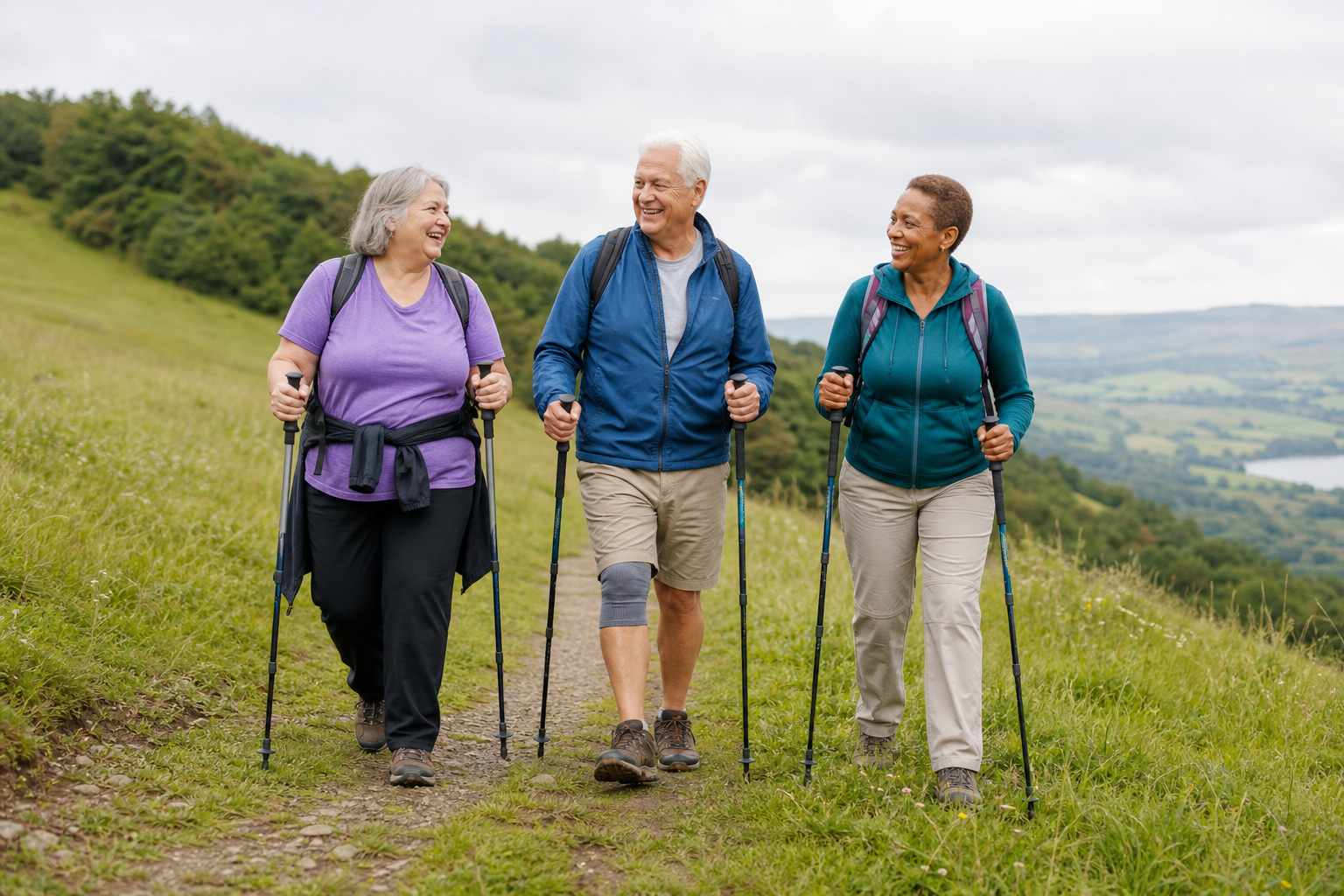
Almost any senior who walks regularly can benefit, but some groups see especially dramatic results.
- Seniors with arthritis: Poles redistribute weight away from inflamed joints. If you manage arthritis, poles let you walk longer with less pain.
- Post-surgery recovery: If you’re returning to activity after a hip or knee procedure, poles offer controlled support. Check with your doctor, and also read our post-hip replacement exercise guide for more context.
- Those with Parkinson’s or neuropathy: Poles can help compensate for reduced proprioception and tremor-related instability. Our neuropathy-safe exercise guide covers this in more detail.
- Anyone concerned about falling: Fear of falling often leads to inactivity, which leads to weaker muscles, which increases fall risk. Poles break that cycle.
Nordic walking, which uses a specific arm-swing technique with angled poles, takes things a step further. It’s been shown to improve cardiovascular fitness more than regular walking because it recruits your upper body muscles throughout the entire stride. Think of it as turning your walk into a full-body workout without adding any perceived effort.
If you’re interested in keeping joints healthy from the inside out, pairing regular pole walking with good nutrition matters too. Omega-3 supplements and adequate vitamin D both support the bones and muscles you’re putting to work on every outing.
How to Choose the Right Pair
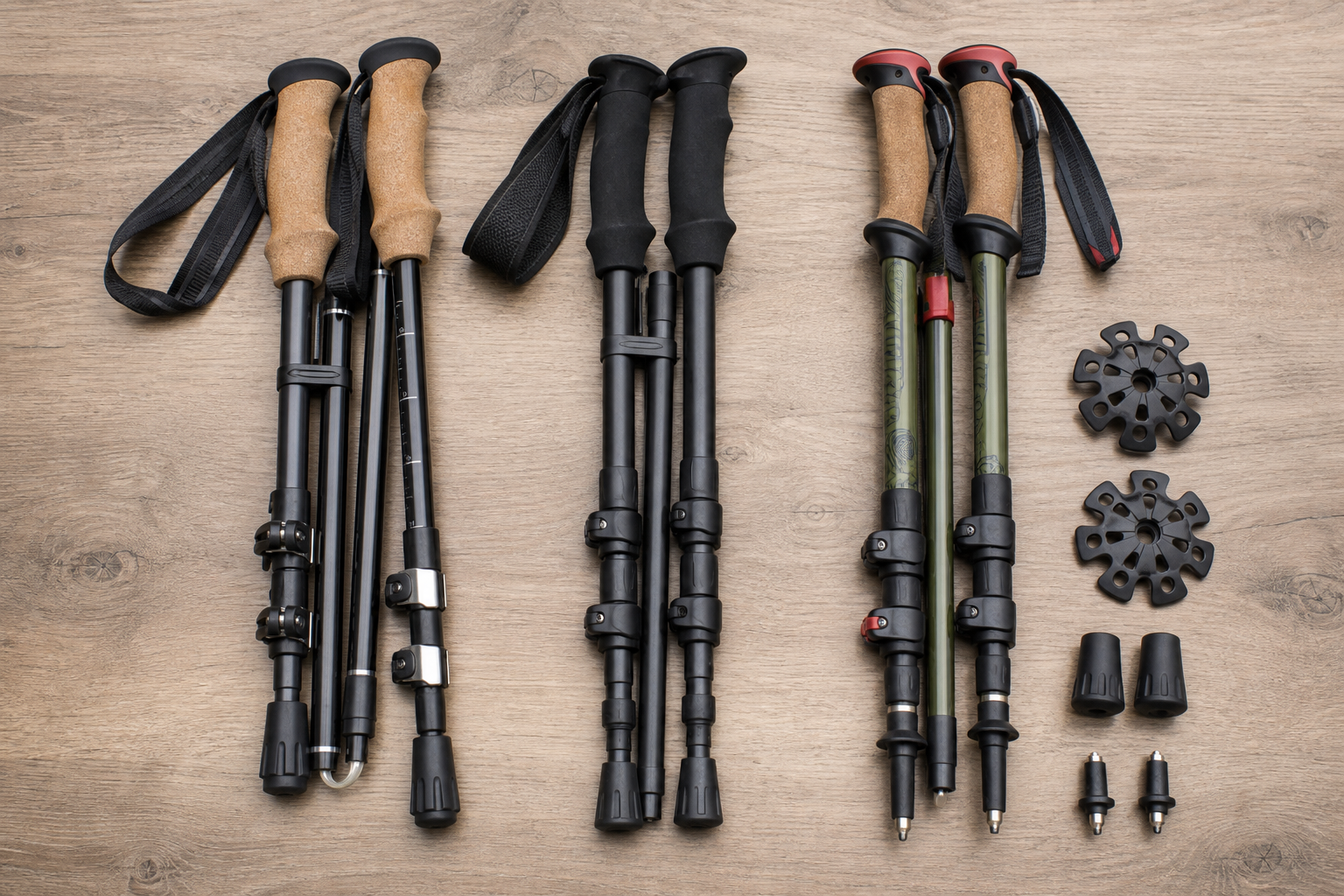
Not all poles are created equal, and the wrong pair can cause more frustration than help. Here’s what actually matters.
Adjustability
You want adjustable poles, full stop. Your height changes when you’re going uphill versus downhill, and different users in the same household may share a pair. Look for twist-lock or flip-lock mechanisms. Flip-lock (also called external locking clips) tends to be easier for seniors with limited grip strength or arthritis in their hands.
Grip Material
Cork grips are the gold standard for comfort. They absorb moisture, mold slightly to your hand over time, and don’t cause the hot spots that foam or rubber can create on longer walks. Foam is softer initially but wears down. Rubber is fine for cold weather use since it insulates against the chill of the pole shaft.
Wrist Straps
Good wrist straps take pressure off your grip so you’re not white-knuckling every step. Nordic walking poles typically have angled straps designed to let you push off without gripping tightly. This is a genuine ergonomic advantage for seniors with hand fatigue or carpal tunnel concerns. Speaking of hand function, you might find our article on grip strength exercises useful as a complement to pole walking.
Tip Type
Most poles come with carbide tips for traction on dirt and rock, plus rubber tip covers for pavement. Make sure any pair you consider includes those rubber caps, especially if you’ll be walking in urban or suburban environments.
For a solid all-around option that checks all these boxes, consider the LEKI Nordic walking poles, which are well-regarded for their strap system and build quality.
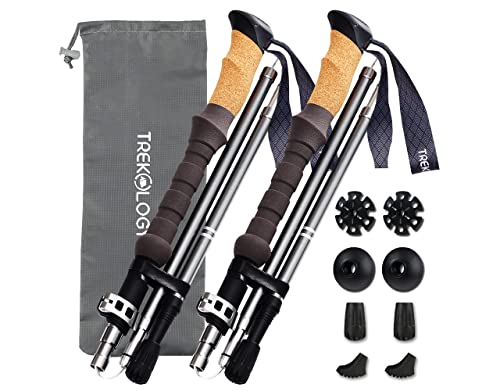
Trekking Poles Adjustable for Seniors
Adjustable trekking poles with cork grips and flip-lock mechanisms are ideal for seniors who want stability and comfort on any terrain.
If you’re specifically interested in Nordic walking as a fitness method rather than just trail support, dedicated Nordic poles have a different design with forward-angled grips and specialized straps that encourage the full arm-swing technique.

Nordic Walking Poles Adjustable
Designed for the full Nordic walking technique, these poles engage your upper body and turn your daily walk into a more complete workout.
Frequently Asked Questions
Do walking poles really reduce fall risk for seniors?
Yes, and the evidence is fairly consistent. Multiple studies have found that using walking poles improves gait stability and reduces the sway associated with balance problems. They won’t eliminate fall risk entirely, but they provide both physical support and psychological confidence, which both matter. Pairing poles with targeted balance training gives you the best results.
Is there a difference between trekking poles and Nordic walking poles?
There is. Trekking poles are designed primarily for support and weight distribution on trails. They’re typically used more passively, planted near your foot for stability. Nordic walking poles are shorter, have angled grips and specialized straps, and are designed to be used actively with a specific arm-swing technique that engages your chest, shoulders, and back. For general trail use or casual walking, trekking poles work great. For a fitness-focused walking workout, Nordic poles are worth learning to use properly.
This article contains affiliate links. We may earn a small commission at no extra cost to you.