You don’t need a fancy gym membership or a spare room full of expensive machines to stay strong and active. A well-chosen handful of pieces — things you can store in a closet or stack in a corner — can give you a safe, effective workout right at home. For seniors especially, that kind of convenience often means the difference between exercising consistently and not exercising at all.
This guide walks you through exactly what to buy, how to set it up safely, and how to get started without wasting money on equipment you’ll never use.
Start With the Four Essentials
You only need four things to build a functional home gym that covers strength, flexibility, and balance. Everything else is optional.
- Resistance bands — for upper and lower body strength work
- Light dumbbells — for targeted muscle building
- A sturdy chair — for seated exercises and balance support
- An exercise mat — for floor work and stretching
That’s it. These four items can support a full-body routine several days a week, and they all store easily. If you’re drawn toward more structured programming once you get started, our Progressive Resistance Training 12-Week Strength Building Program is a great next step.
Choosing the Right Equipment
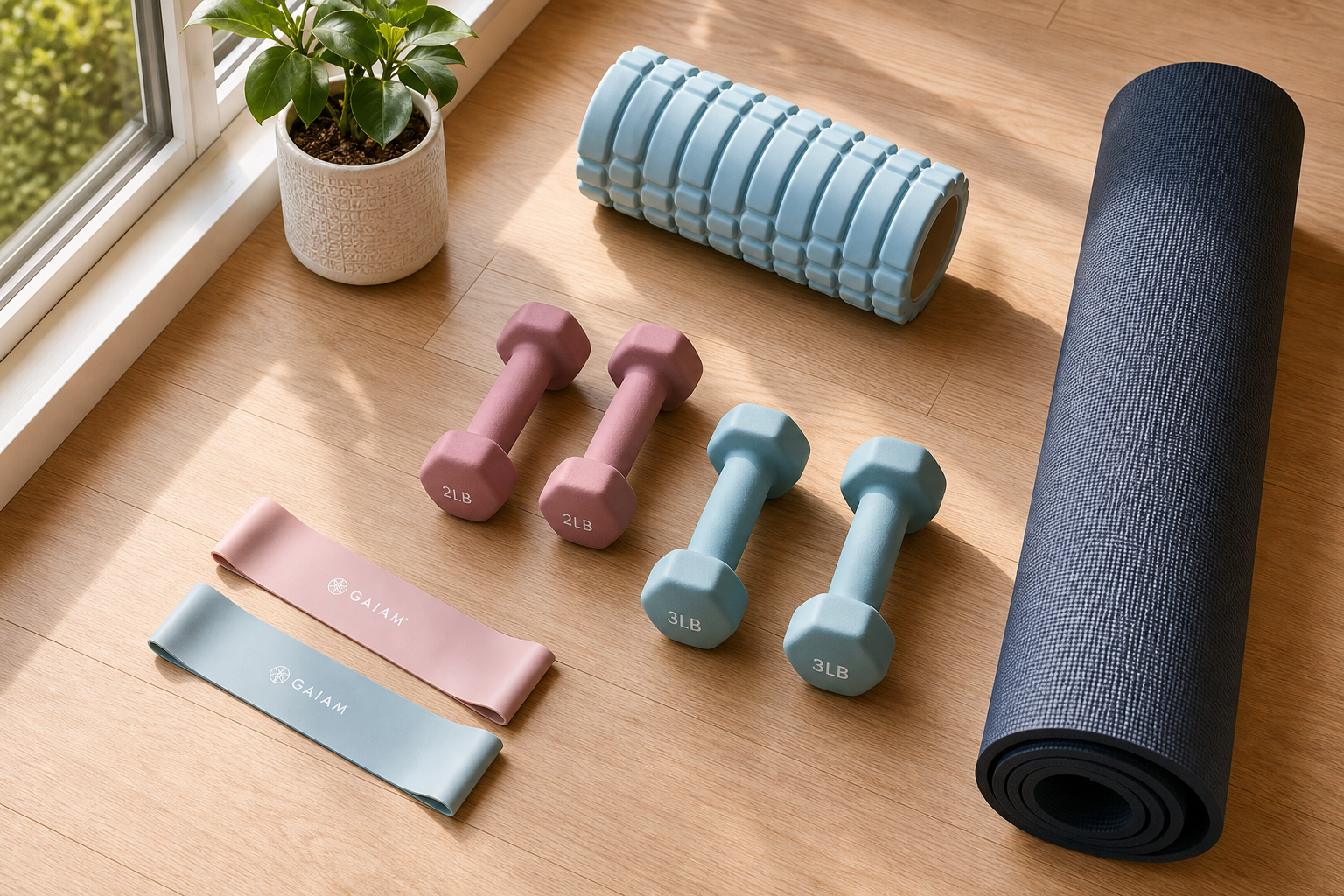
Resistance Bands
Resistance bands are probably the best value in fitness equipment for seniors. They’re gentle on joints, easy to grip, and you can adjust the challenge just by changing your hand position or stepping farther from the anchor point.
Look for a set that includes multiple resistance levels, typically labeled light, medium, and heavy. Flat loop bands and tube bands with handles both work well. Tube bands with handles are often easier to grip if you have any stiffness in your hands.
Resistance bands for seniors are widely available and budget-friendly on Amazon. Check current pricing to compare sets.

Resistance Bands Set with Handles
A multi-level set with comfortable handles is the most versatile starting point for senior home workouts.
Light Dumbbells
For most seniors just getting started, a pair of 3 lb and a pair of 5 lb dumbbells covers a wide range of exercises. If you’re already reasonably active, add an 8 lb pair as well.
Neoprene-coated dumbbells are worth the small extra cost because they’re easier to grip and softer if you accidentally set them down too quickly. Avoid metal hex dumbbells if your grip strength is a concern — they can be slippery. You can read more about why grip matters in our guide to grip strength exercises for hand function and independence.
Neoprene dumbbell sets are easy to find and store neatly on a small shelf or in a basket.
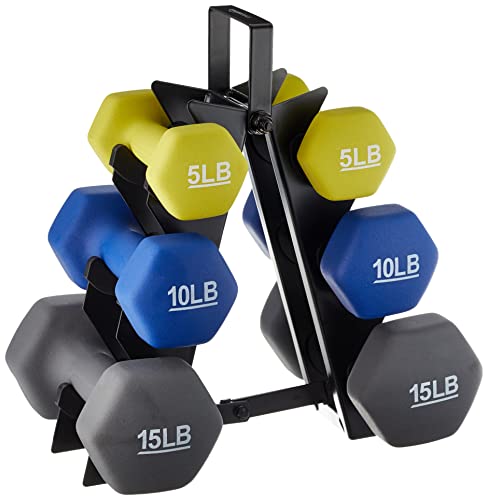
Neoprene Dumbbell Set
Neoprene coating gives you a secure grip and protects your floors, making these the practical choice for home use.
The Chair You Already Own
You don’t need to buy anything special here. A solid dining chair or sturdy armchair works perfectly. The key is that it doesn’t wobble and doesn’t have wheels. You’ll use it for seated overhead presses, chair squats, standing balance holds, and seated core work.
If you have any concerns about balance, a chair with armrests gives you an extra safety margin during standing exercises.
Exercise Mat
A mat with some thickness (at least half an inch) makes floor exercises far more comfortable on knees, hips, and your spine. It also keeps you from slipping. Look for a non-slip surface on both sides.
Thick non-slip exercise mats are one of the best things you can buy for home workouts. A mat that rolls up and stores behind a door takes up almost no space at all.
Setting Up Safely
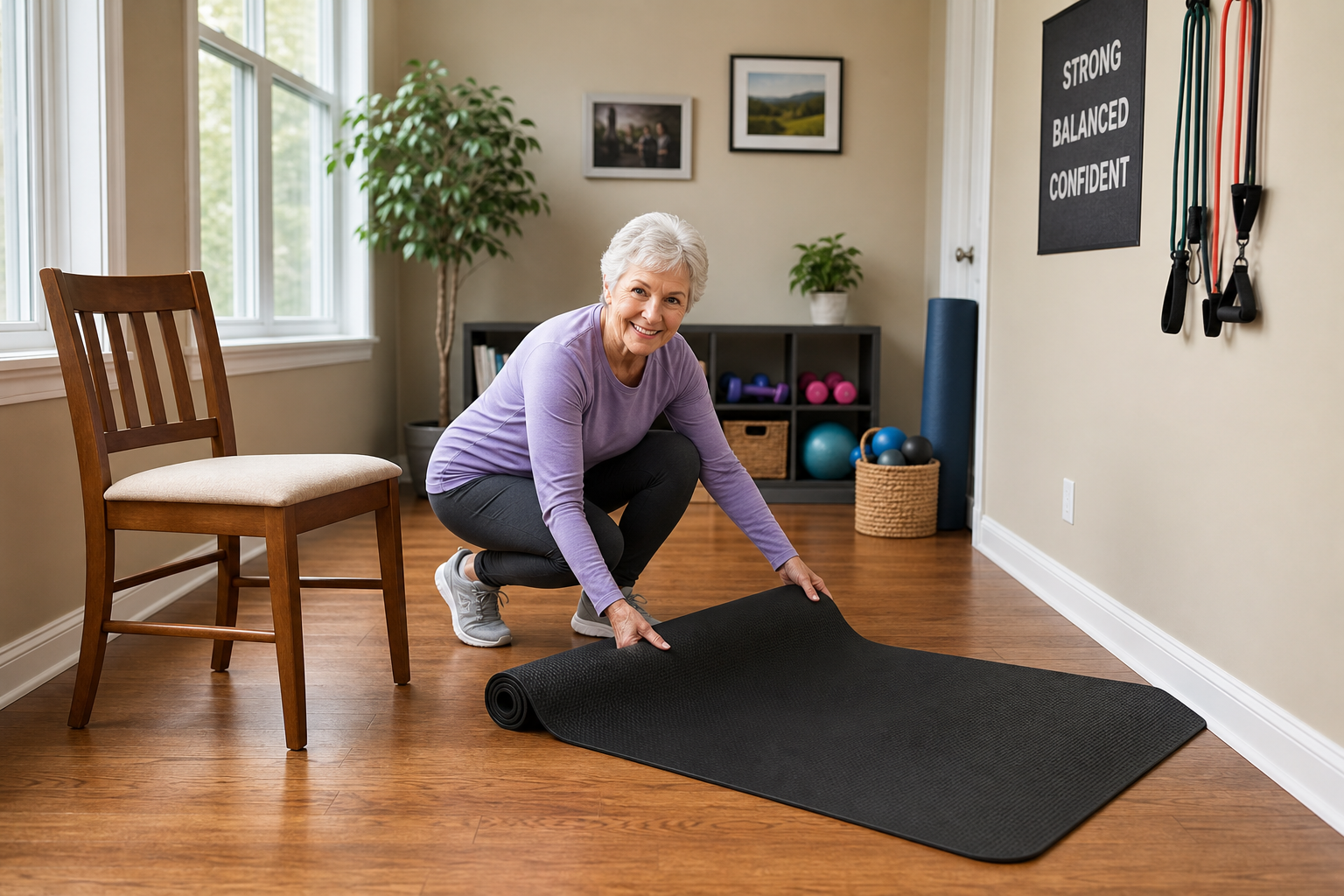
The space you work out in matters as much as the equipment. Before your first session, take five minutes to prep the area.
- Clear at least a 6×6 foot area of floor space
- Remove throw rugs or anything you could trip on
- Make sure you have good overhead lighting
- Keep your phone nearby in case you need help
- Work near a wall or sturdy furniture during balance exercises
If you take blood pressure medication or other heart-related medications, it’s worth reading about blood pressure medication and exercise precautions before starting a new routine. Some medications affect how your heart responds to exertion, and knowing that upfront keeps you safe.
Also pay attention to your footwear. Even at home, wear supportive sneakers rather than socks or bare feet. Grip and ankle support matter more than you might expect, especially during standing exercises.
A Simple Starter Routine
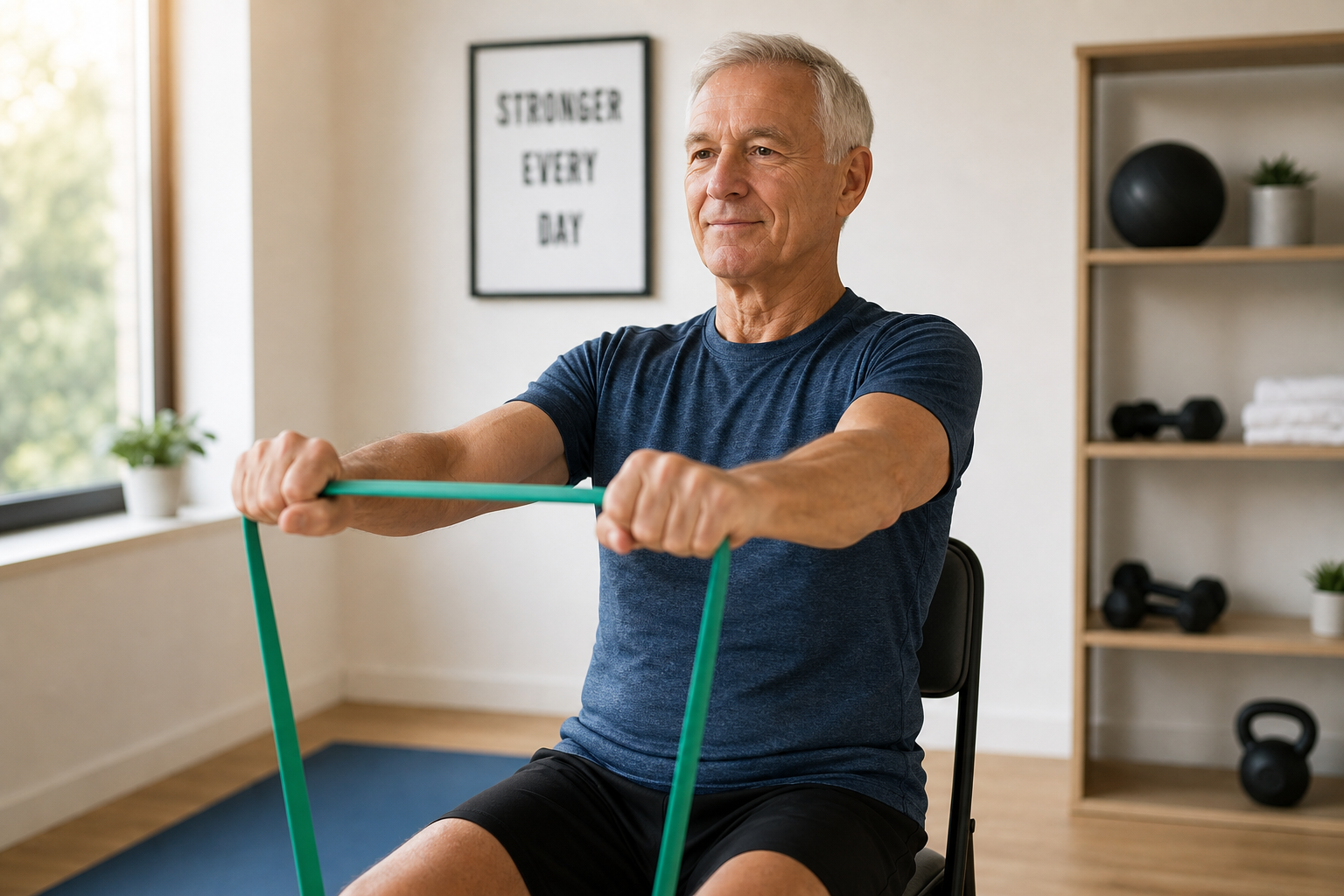
You don’t need a complicated program on day one. Three days a week, 20 to 30 minutes per session, is plenty to start building strength and improving your balance.
A basic session might look like this:
- 5 minutes of gentle walking in place or marching to warm up
- Chair squats — 10 to 12 reps, using the chair as a target
- Resistance band rows — 10 reps per side
- Dumbbell bicep curls — 10 reps
- Standing calf raises near the chair — 15 reps
- Band pull-aparts for posture — 12 reps
- 5 to 10 minutes of gentle stretching on your mat
For better posture during your workouts and in daily life, pair this routine with our guide to posture correction exercises for seniors. Rounded shoulders are one of the most common issues that home exercise can actually fix over time.
After your workout, what you eat makes a real difference in how well you recover. A small protein-rich snack within an hour of finishing helps your muscles repair. Our article on post-workout recovery meals for seniors has some practical, easy options.
Storage Tips for Small Spaces
One of the biggest reasons home gym equipment ends up unused is that it becomes clutter. Make storage part of your plan from day one.
- Hang resistance bands on a hook inside a closet door
- Store dumbbells on a small two-tier shelf or in a wicker basket near your workout space
- Roll your mat and lean it in a corner or store it in a tall kitchen trash can (it works perfectly)
- Keep everything in one spot so setup takes less than a minute
If things are easy to get out and put away, you’ll actually use them. If they’re buried in a closet or scattered around, they become obstacles.
Frequently Asked Questions
How heavy should dumbbells be for a senior beginner?
Start lighter than you think you need. For most seniors, 3 lb and 5 lb pairs are a sensible starting point. You can always move up once you’re comfortable with the movements and can complete 12 reps with good form without straining. There’s no benefit to going heavy before your muscles and joints are ready for it.
Is it safe to exercise at home alone as a senior?
Yes, with a few reasonable precautions. Always have your phone nearby, work in a well-lit area, and stay close to a wall or sturdy furniture during balance exercises. If you have a significant health condition like Parkinson’s disease or neuropathy, check with your doctor first, and take a look at condition-specific resources like our guide to neuropathy-safe exercises for tailored advice.
How often should seniors work out at home?
Three days a week with a rest day between sessions is a good starting target. That gives your muscles time to recover and adapt. Once you’ve built a solid base over four to six weeks, you can add a fourth day if you feel ready. Consistency over months matters far more than intensity in any single session.
Final Thoughts
Building a home gym as a senior doesn’t require a big budget or a lot of space. A set of resistance bands, a couple pairs of light dumbbells, your own sturdy chair, and a good mat are genuinely all you need. Set up a clear, safe space, keep your equipment organized, and commit to three short sessions a week. That’s the whole plan.
The hardest part is getting started. Once you do, most people find that working out at home is easier and more consistent than they expected, because it fits into real life without the commute, the cost, or the crowded locker rooms.
This article contains affiliate links. We may earn a small commission at no extra cost to you.