Staying active when standing is difficult or painful isn’t easy, but it’s far from impossible. Pedal exercisers, those compact little machines that sit on the floor or a table in front of you, have become one of the most practical tools for seniors who need low-impact movement without leaving their chair. They work for both legs and arms, they’re quiet enough to use while watching TV, and they don’t require balance or coordination to operate safely.
This guide focuses on what actually matters when you’re shopping for one: stability so the unit doesn’t slide around, adjustable resistance so you can progress over time, and a readable digital display so you know how long you’ve been moving. Whether you’re recovering from surgery, managing a chronic condition, or simply finding it harder to get up and go, the right pedal exerciser can help you keep your circulation going and your joints moving every single day.
Why Pedal Exercisers Are a Smart Choice for Seniors With Limited Mobility
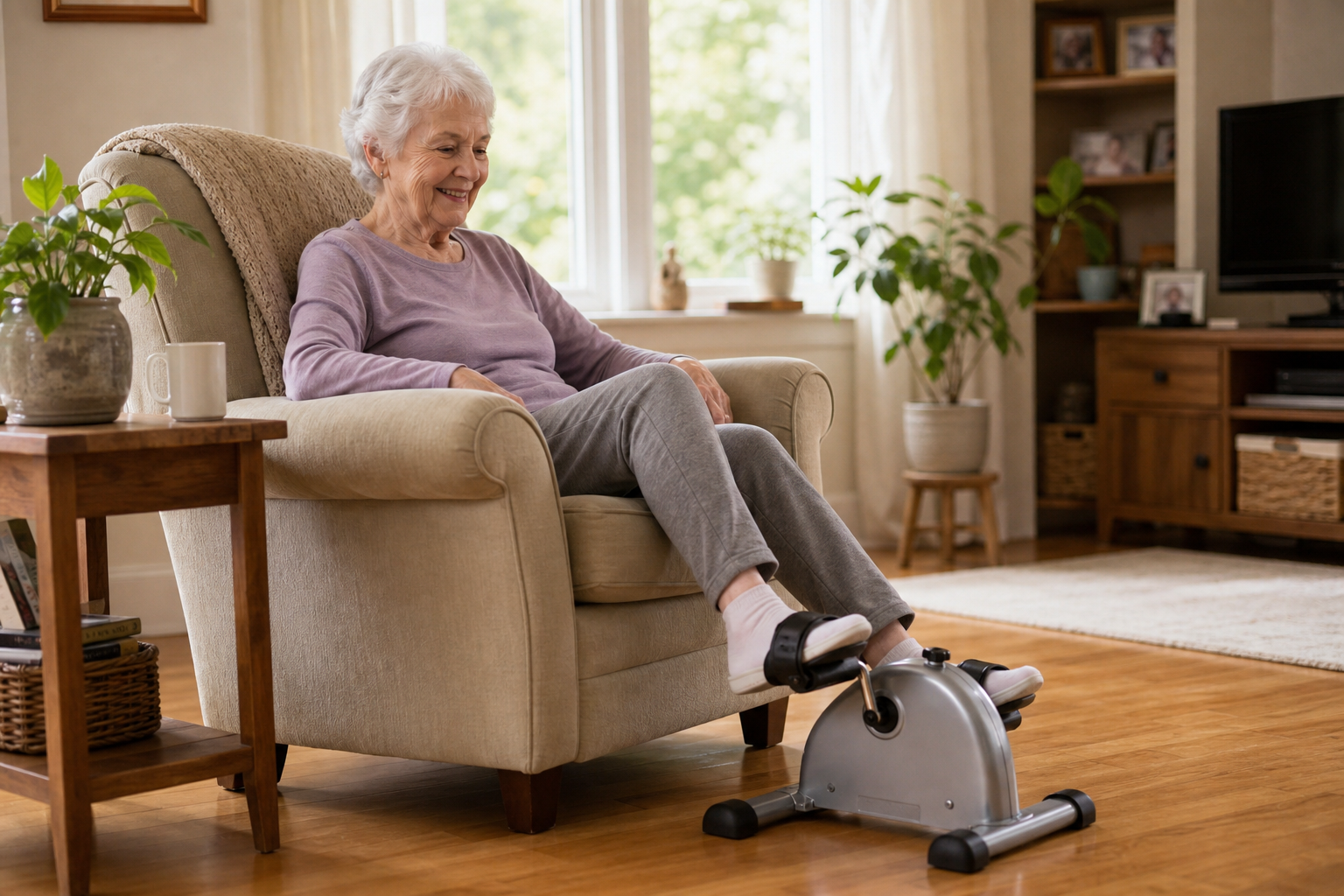
Mini pedal machines aren’t just a consolation prize for people who can’t use a full exercise bike. They offer genuine cardiovascular and muscular benefits when used consistently. Research on seated pedaling in older adults has shown improvements in leg strength, circulation, and even cognitive function with regular use.
For seniors dealing with conditions like arthritis, neuropathy, or post-surgical recovery, this kind of gentle, rhythmic movement is often exactly what a physical therapist recommends. If you’re managing nerve-related discomfort, our guide to neuropathy-safe exercises for seniors covers other options that pair well with pedal training. And if you’re post-surgery, you’ll want to check our guide to safe return to activity after hip or knee replacement before starting any new routine.
What to Look For Before You Buy
Stability and Non-Slip Feet
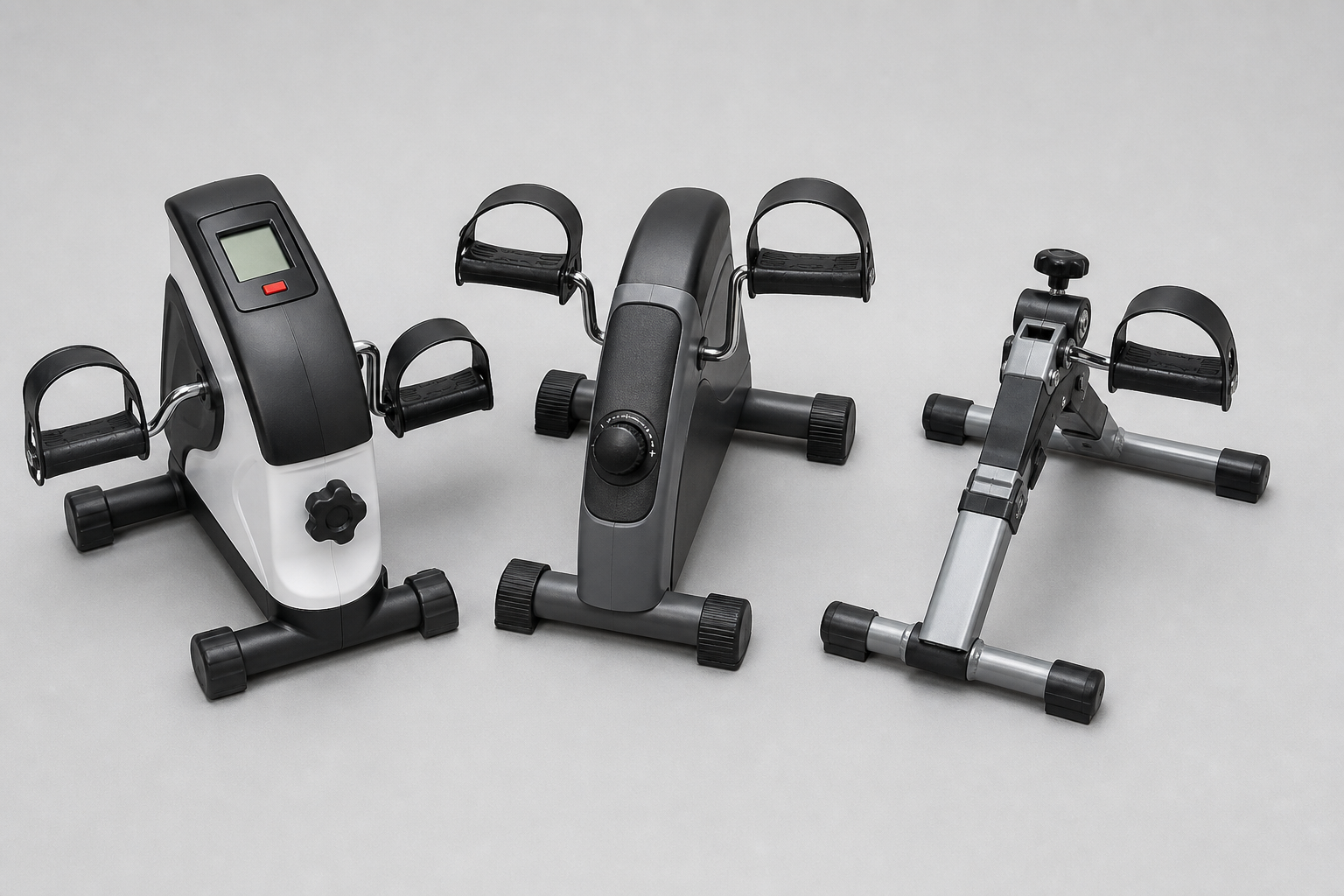
This is the most overlooked feature, and it’s the most important. A pedal exerciser that scoots across the floor mid-session is both frustrating and potentially dangerous. Look for models with rubber non-slip feet and a wide, low base. Heavier units (in the 7 to 10 pound range) tend to stay put better than ultralight models.
If you’re using it on carpet, a thin yoga mat or piece of shelf liner underneath can make a big difference for lighter models.
Adjustable Resistance
You want a knob or dial that lets you increase resistance as you get stronger. A machine with only one tension level will feel too easy within a few weeks. Most decent models offer 8 levels of resistance. Some magnetic resistance units are smoother and quieter than friction-based ones, which matters if you’re pedaling for 20 to 30 minutes at a time.
Digital Display
A clear LCD screen showing time, speed, distance, and calories (or RPM) makes a big difference for staying motivated and tracking progress. The display should be readable without bending forward or squinting. Some models have a scan function that cycles through all metrics automatically, which is convenient if you’re not trying to press buttons mid-pedal.
Arm Use vs. Leg Use
Most compact pedal exercisers can technically be used on a table for arm pedaling, but not all of them are stable or comfortable in that position. If you need upper body exercise specifically, look for a model with a dedicated non-slip pad and a lower profile that works well at table height. Arm pedaling is excellent for shoulder mobility and circulation, and it’s a good option for anyone with significant leg limitations.
Top Pedal Exercisers Worth Considering
The DeskCycle 2 consistently earns high marks from seniors and physical therapists alike. It has a magnetic resistance system with 8 levels, an accurate digital display, and an extremely low profile (about 10 inches tall) that makes it comfortable to use under a desk or dining table without raising your knees awkwardly. It’s a premium option, but it pedals smoothly and quietly, and it holds its position well on most floor surfaces.
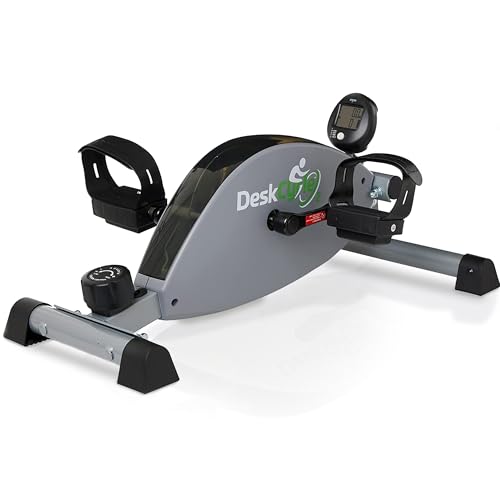
DeskCycle 2 Under Desk Bike Pedal Exerciser
Low-profile magnetic pedaler with 8 resistance levels and a precise digital display, a favorite among physical therapists for seated use.
For a more budget-friendly option, the Vive Pedal Exerciser is a solid pick. It’s lightweight but comes with good rubber feet, adjustable tension, and an easy-to-read display. It works well for both arms and legs, and the pedal straps are adjustable enough to fit different foot sizes comfortably. It won’t be as whisper-quiet as a magnetic model, but for casual daily use it performs reliably.
The Cubii Pro is a different style entirely. It’s technically a mini elliptical rather than a traditional pedaler, which means it has a slight gliding motion instead of a circular one. Some seniors find this gentler on the knees. It’s also heavier and more stable than most compact pedal machines, and it connects to a smartphone app if you want to track your workouts digitally alongside a tool like those listed in our fitness tracking apps for seniors guide.

Cubii Pro Seated Under Desk Elliptical
A heavier, more stable mini elliptical with a smooth gliding motion that many seniors find easier on arthritic knees than traditional pedal machines.
For arm-specific pedaling, the Stamina Mini Exercise Bike is worth a look. It has a sturdy base that sits flat on a table, and the pedal height is comfortable for seated arm use without straining the shoulders. Pairing arm pedaling sessions with grip strength work is a great combination. Our article on grip strength exercises for hand function and independence has practical routines you can do right alongside your pedaling session.
How to Get the Most Out of Your Pedal Exerciser
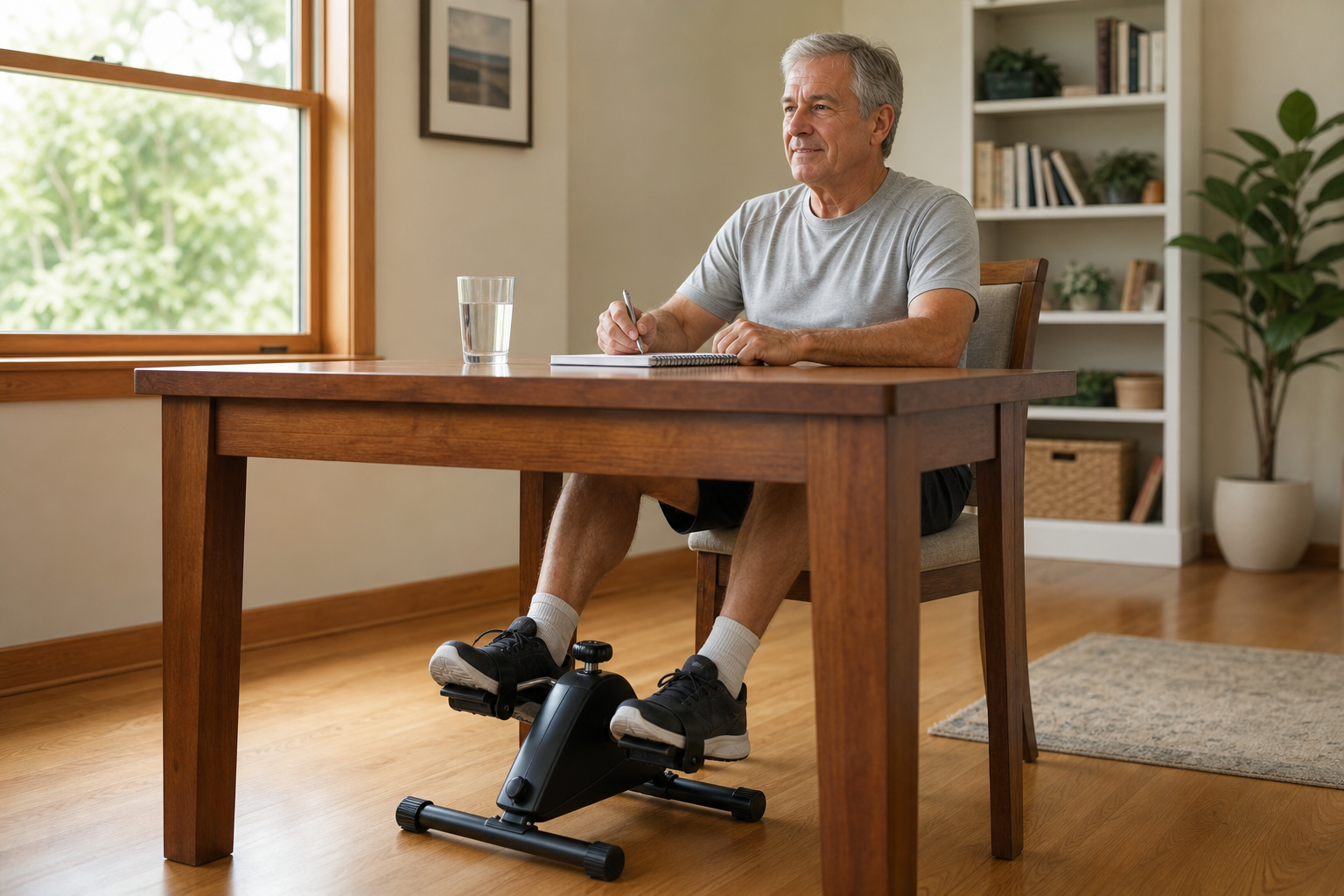
Start with 10 minutes per session, once or twice a day. That’s enough to get circulation going without overdoing it. Gradually work up to 20 to 30 minutes as your endurance improves. Consistency matters more than duration, so don’t skip days trying to squeeze in a long session.
Keep resistance low enough that you can maintain a comfortable pace and hold a conversation. If you’re breathing so hard you can’t talk, you’ve cranked it up too high. If it feels completely effortless after a few weeks, bump up one resistance level.
Fueling your body properly supports any exercise routine, even gentle seated cycling. A small snack with protein and carbohydrates beforehand can help with energy. Our guide on pre-workout nutrition for senior athletes is worth reading, and afterward, a light recovery-focused meal as described in our post-workout recovery meals for seniors article helps your muscles respond well over time.
Frequently Asked Questions
Can a pedal exerciser help with arthritis pain?
Gentle pedaling can actually reduce stiffness and mild joint pain by increasing circulation and keeping the joints moving through a controlled range of motion. Start with low resistance and a slow pace. Many seniors with arthritis find that 10 to 15 minutes of pedaling in the morning helps them feel more mobile throughout the day. For more specific guidance, our article on arthritis-friendly exercises for seniors goes deeper on this topic.
Is it safe to use a pedal exerciser after knee or hip replacement?
Often yes, but always get clearance from your surgeon or physical therapist first. In many cases, gentle cycling motion is actually part of the rehab protocol after joint replacement because it supports range of motion without bearing weight. Timing and resistance level matter, so don’t start on your own without professional guidance in the early recovery weeks.
Do I need to anchor the pedal exerciser so it doesn’t slide?
It depends on the model and your floor surface. Heavier magnetic models tend to stay put on hard floors without extra help. Lighter friction-based units on smooth floors will often scoot forward. Placing a non-slip mat or a rubberized shelf liner underneath usually solves the problem without any permanent modification to the machine or floor.
This article contains affiliate links. We may earn a small commission at no extra cost to you.