The yoga mat you used in your 30s probably won’t cut it after 60. Standard 4mm mats offer next to nothing for creaky knees, sensitive wrists, and hip bones that protest every time you lie face-down. Seniors need thicker cushioning, a surface that won’t slip when your balance wavers, and a mat that doesn’t make getting up from the floor any harder than it already is.
Here’s how to find the right balance between cushioning, stability, and ease of use.
How Thick Should Your Mat Be?
6mm (Standard Thick)
Provides moderate cushioning. Fine for standing poses and seated work, but not enough protection for knee-down poses like tabletop, cat-cow, or lunges on a hard floor. Your kneecap makes direct contact with the floor through 6mm of foam, which means you’ll feel the pressure on hard surfaces like tile, concrete, or hardwood.
If you primarily do standing yoga or spend most of your practice upright in warrior sequences, chair-assisted poses, and balancing work, 6mm may be sufficient. The firmer surface gives you better ground feedback, which helps with proprioception and stability during one-legged poses.
8mm (Extra Thick)
The sweet spot for most seniors. Enough cushioning to protect knees, hips, and spine during floor work, while still firm enough to maintain balance during standing poses. An 8mm mat doesn’t compress completely under your body weight, which means your joints stay supported throughout your practice.
This thickness works well for mixed routines that include both standing sequences and floor-based stretches. When you move from downward dog to child’s pose to a seated forward fold, the mat provides consistent support without feeling mushy. Your knees get actual protection during extended holds in tabletop position, and lying on your back for bridge pose or legs-up-the-wall doesn’t leave your tailbone aching.
The trade-off is weight and bulk. An 8mm mat weighs more and rolls into a thicker cylinder than a standard mat. If you’re taking it to a class, you’ll notice the extra heft. For home practice, it’s not an issue.
12mm+ (Ultra Thick)
Maximum cushioning for extremely sensitive joints. If you have arthritis in your knees, recent hip replacement recovery, or osteoporosis that makes hard surfaces painful, this level of padding makes floor work possible when it otherwise wouldn’t be.
The downside is that ultra-thick mats create a soft, squishy surface that can make balance poses harder and floor-to-standing transitions more difficult. When you press down to stand up, the mat compresses and shifts under your hands. During tree pose or standing splits, your standing foot sinks into the foam, reducing the stable platform you need for balance.
If you do primarily seated or lying-down exercises, a 12mm mat is comfortable. For mixed routines that include standing work, stick with 8mm. Some seniors keep both: a thick mat for gentle floor-based stretching days and a thinner mat for more active standing practices.
Top Yoga Mats for Seniors
Manduka PRO

Manduka PRO 6mm
Premium mat with high-density cushioning and lifetime guarantee, best for primarily standing yoga
The Manduka PRO is a premium mat that lasts for years. At 6mm thick, it’s at the thinner end of the senior range, but its high-density cushioning provides more joint protection than cheaper 8mm mats. The closed-cell surface won’t absorb sweat or bacteria and is easy to clean. It’s heavy (about 7 pounds), so it’s best as a stay-at-home mat.
The surface starts slick out of the box and needs a break-in period. Some users scrub it with coarse salt and water or practice on it for a few weeks before the grippy texture develops fully. Once broken in, the grip holds through sweaty hands and bare feet without degrading.
The mat comes with a lifetime guarantee. If it develops tears, compression issues, or separation between layers, Manduka replaces it. For seniors who practice regularly at home, this mat is a long-term investment that outlasts multiple cheaper replacements.
Best for: Seniors who do primarily standing yoga and want a mat that will last 5+ years without degrading.
BalanceFrom GoYoga

BalanceFrom GoYoga Extra Thick
Budget-friendly option available in 12mm for maximum cushioning during floor work
The BalanceFrom GoYoga is the best value option. Available in multiple thickness levels (including a popular 12mm version), it provides excellent cushioning at a budget-friendly price. The double-sided non-slip texture works well on hard floors. It comes with a carrying strap, though at 12mm it’s bulkier to roll than thinner mats.
The foam has some give to it, which makes it comfortable for extended floor work but slightly unstable for balance poses. If you spend 20 minutes lying on your back doing gentle leg lifts, hip stretches, and modified crunches, the soft surface feels supportive. If you transition to standing balance work, you’ll notice the mat shifts slightly underfoot.
Durability is moderate. The mat holds up fine for daily gentle use but may show compression marks and surface wear faster than premium options. For seniors who practice a few times per week and want maximum cushioning without spending much, it’s a solid choice.
Best for: Budget-conscious seniors, floor-based exercises, and anyone who needs maximum joint protection.
Gaiam Essentials Thick Yoga Mat
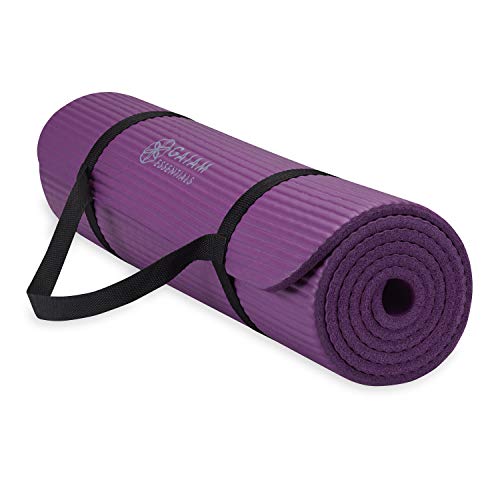
Gaiam Essentials 8mm
Hits the 8mm sweet spot with good cushioning, lighter weight, and works well on both carpet and hard floors
The Gaiam Essentials hits the 8mm sweet spot with good cushioning and a non-slip surface. It’s lighter than the Manduka (about 3.5 pounds) and rolls tightly for storage. The textured top surface provides grip during standing poses, and the bottom layer grips the floor to prevent sliding.
This mat works well on both carpet and hard floors. Some thicker mats slide around on carpet, but the Gaiam bottom texture anchors it in place. If your practice space is a carpeted bedroom or living room, this feature prevents the mat from bunching up during sun salutations or transitions.
The material is standard PVC foam. It has the new-mat chemical smell that takes a few days of airing out to dissipate. Once that clears, the mat performs reliably for mixed routines that include both floor work and standing sequences.
Best for: Seniors who want the best balance of cushioning, portability, and stability for mixed routines.
ProsourceFit Extra Thick Mat
The ProsourceFit Extra Thick is available in 8mm and 12mm, with a ribbed surface that adds grip. The NBR foam is softer than standard PVC mats, which is more comfortable on bony joints but slightly less stable for balance work. It includes carrying straps built into the mat rather than a separate accessory.
The ribbed texture provides a tactile guide for hand and foot placement. Some seniors find this helpful for maintaining alignment during poses without needing to look down constantly. The ribs run lengthwise, so your hands and feet naturally settle into the grooves.
This mat is softer and more cushioned than similarly thick PVC options, which makes it excellent for restorative yoga, gentle stretching, and floor-based strength work. The trade-off is reduced firmness for standing balance poses. If your routine is 80% floor work and 20% standing, the extra softness is an advantage. If it’s the reverse, consider a firmer option.
Best for: Home use on hard floors, seated and lying exercises, gentle stretching routines.
The Thickness-Balance Trade-Off
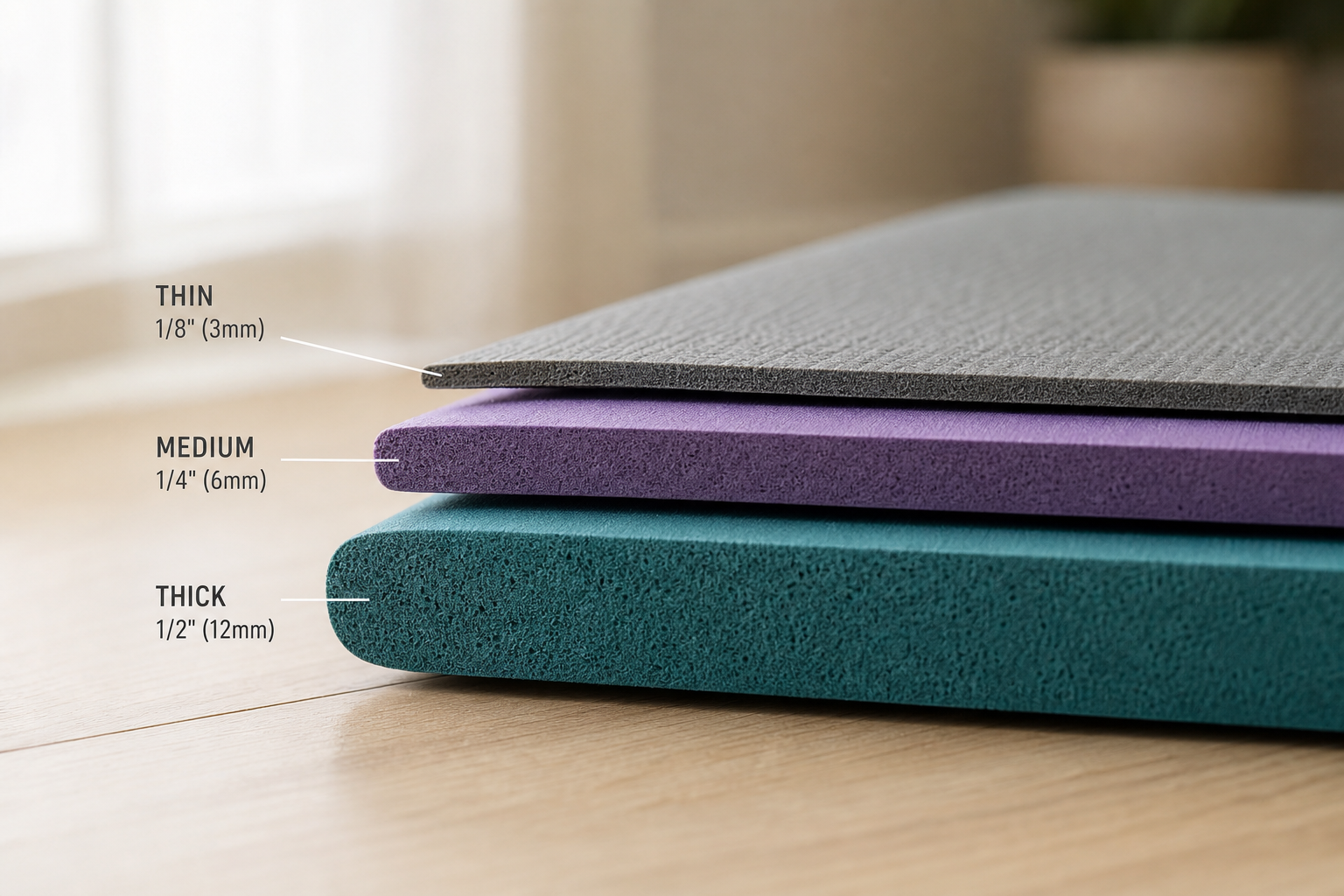
Here’s the dilemma: thicker mats cushion joints better but create an unstable surface that makes balance poses harder. When you stand on a thick, soft mat, your feet sink in slightly, reducing the ground feedback your balance system relies on. This is the same reason balance trainers use foam pads to challenge stability.
Your proprioceptive system (the sense that tells you where your body is in space) depends partly on pressure signals from the soles of your feet. On a firm surface, you get clear feedback about weight shifts and alignment. On a soft surface, those signals get muffled. For someone working to maintain or improve balance, a too-soft mat can make the task unnecessarily difficult.
For seniors who do balance-focused yoga (tree pose, warrior sequences, half-moon), an 8mm mat is the maximum recommended thickness. For seated, lying, and gentle stretching routines where balance isn’t challenged, 12mm is fine.
If balance is a concern but you need cushioning for floor work, consider using a folded towel or blanket under your knees during kneeling poses instead of relying entirely on mat thickness. This lets you use a thinner, more stable mat for standing work while still protecting your joints during floor sequences.
Getting Up from the Floor
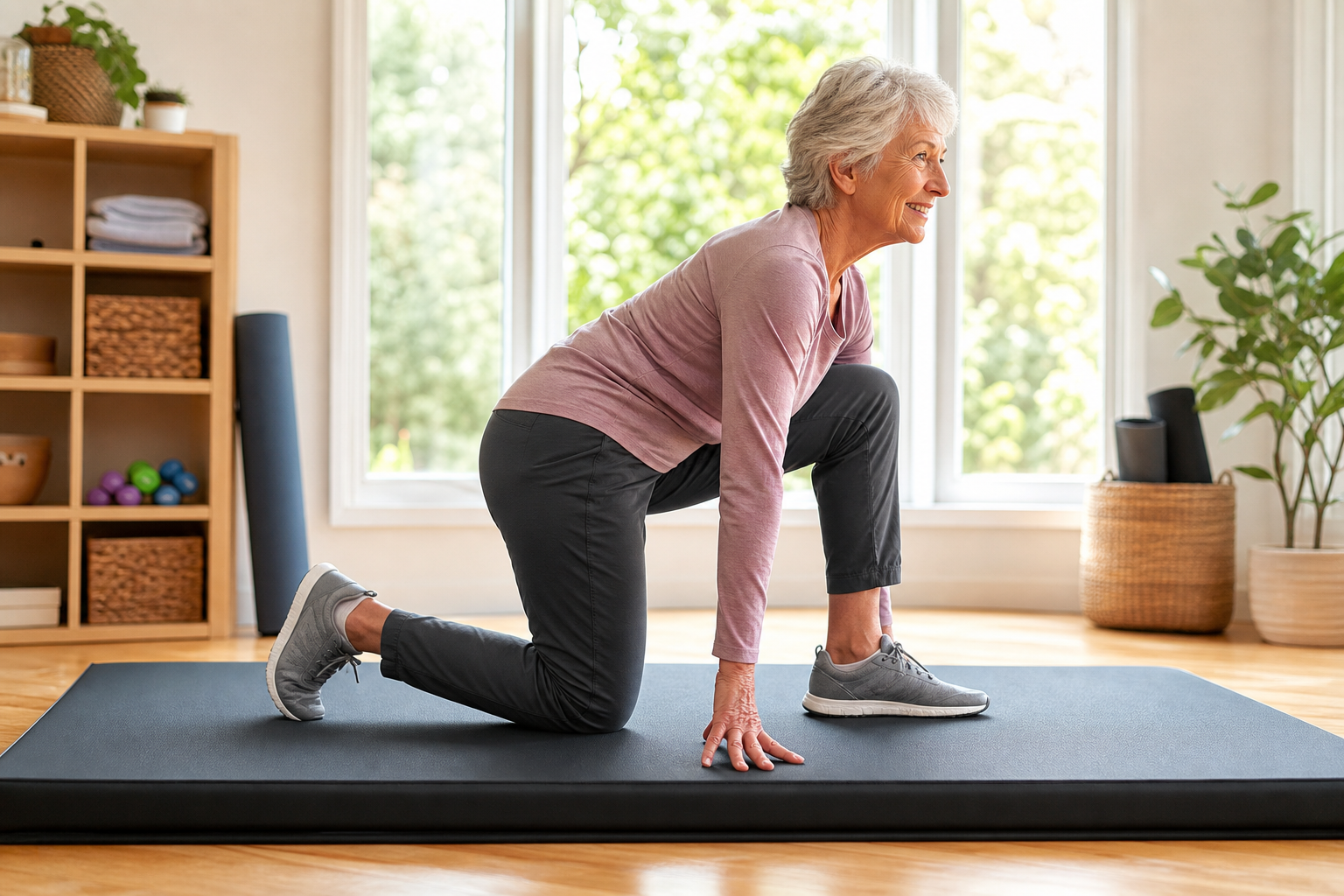
A thick mat can actually make floor-to-standing transitions harder because the soft surface shifts under your hands and feet as you push up. If getting up from the floor is difficult, here are some strategies:
- Place the mat next to a sturdy piece of furniture you can use to pull yourself up.
- Roll to your side, push up to a kneeling position, then use the furniture to stand.
- Consider a mat with alignment lines that help you position yourself close to your support furniture consistently.
- If floor work is too difficult, chair yoga eliminates the need for a mat entirely.
The rolling-to-side method puts less strain on your knees and wrists than trying to push straight up from a seated position. Practice the movement a few times with your support furniture in place so the pattern becomes automatic. Many seniors find that positioning the mat parallel to a couch or sturdy coffee table gives them the best leverage for the kneeling-to-standing transition.
If you have significant mobility limitations, discuss floor-based exercise with your doctor or physical therapist before attempting it. Some seniors benefit from working with a trainer for a few sessions to learn safe, effective ways to get down and up. Others find that chair-based routines provide all the stretch and strength work they need without the floor transfer challenge.
Non-Slip Features That Actually Work
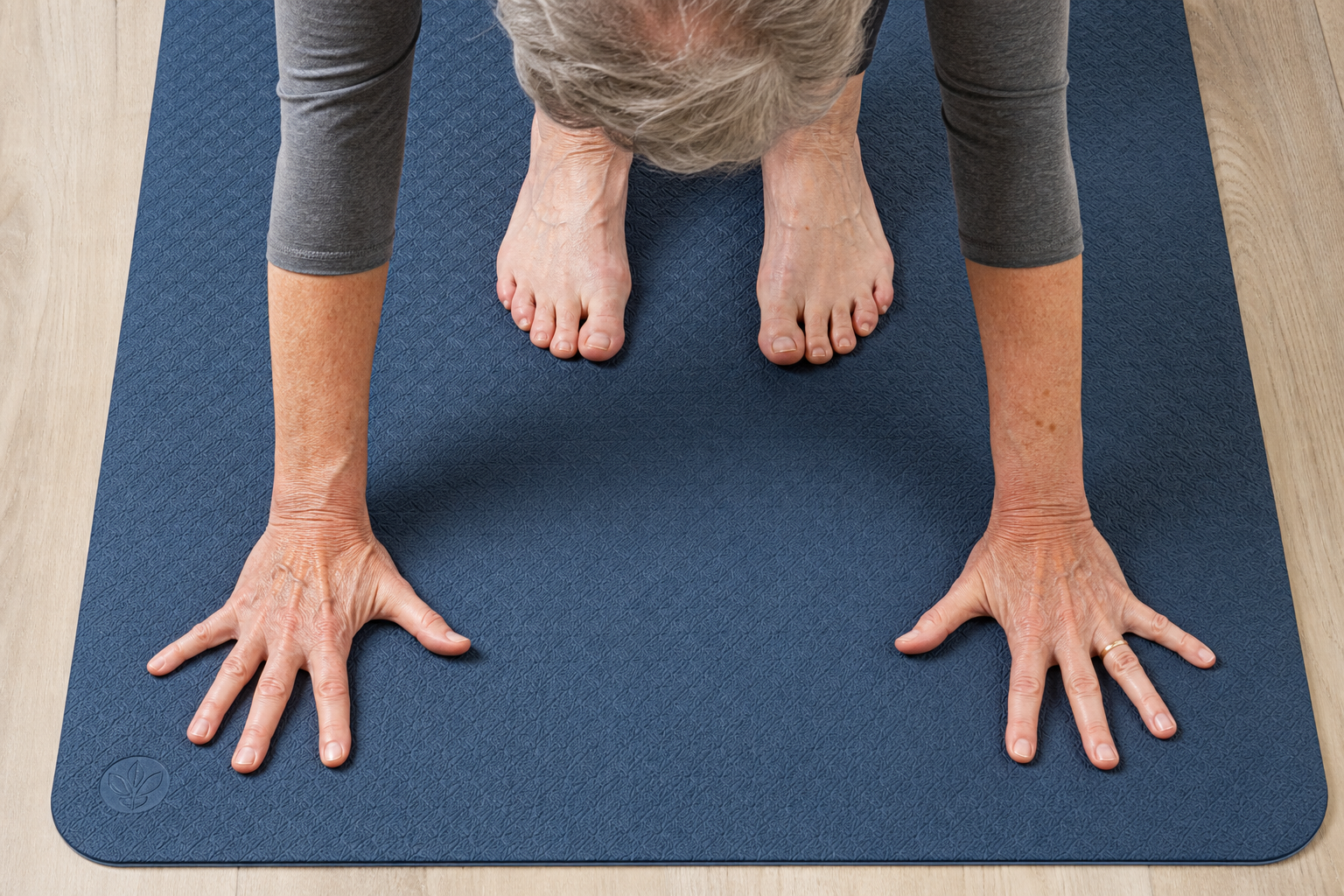
A mat that slides on the floor creates a fall risk during standing poses and makes transitions jerky and unstable. Look for mats with textured bottom surfaces, not smooth rubber. The texture grips the floor through micro-suction rather than relying on weight alone.
Some mats include corner grips or full-length tacky strips on the bottom. These work well on hardwood, tile, and laminate. On carpet, texture matters more than tackiness. The bottom surface needs to grab carpet fibers, which requires a rougher, more aggressive texture than what works on smooth floors.
If your mat slides on your floor type, try these fixes before buying a new mat:
- Wipe down both the floor and the mat bottom with a damp cloth before practice. Dust and oils reduce grip.
- Use a non-slip rug pad under the mat. These thin mesh pads anchor the mat to the floor without adding bulk.
- Practice on a yoga towel placed over the mat. The towel absorbs moisture and adds friction, which helps during sweaty sessions.
Some seniors find that the same mat behaves differently on different floor surfaces. A mat that’s perfectly stable on tile may slide on hardwood. If you practice in multiple locations, test the mat on each surface before committing to long sessions that include standing balance work.
When to Replace Your Mat
Mats don’t last forever. Foam compresses, surfaces wear smooth, and grip degrades over time. Replace your mat when:
- You can see through it in spots (the foam has worn away completely).
- Kneeling poses hurt even on a thick mat (compression has reduced cushioning).
- You slip during standing poses that used to feel stable (the top texture has worn smooth).
- The mat won’t lie flat after unrolling (permanent creases or warping).
- It smells funky even after cleaning (bacteria has penetrated the material).
Most quality mats last 1-3 years with regular use. Premium mats like the Manduka can go 5+ years. Budget mats may need replacement within a year if used daily. Rotate your mat end-for-end periodically so wear distributes evenly rather than concentrating in high-traffic spots like where your hands and feet land during downward dog.
If the mat is still structurally sound but has lost some cushioning, repurpose it as a kneeling pad for gardening or a floor cushion for stretching rather than tossing it immediately. A mat that’s too compressed for yoga can still protect your knees during other activities.
Portability Considerations
If you take classes at a studio, gym, or community center, portability matters. An 8mm mat is manageable for most seniors. A 12mm mat rolled up is bulky and awkward to carry, especially if you’re also managing a bag, water bottle, and other gear.
Carrying straps help, but they don’t reduce the bulk. Some studios provide mats, which eliminates the portability issue but means you’re using a shared mat that may not have the thickness or cushioning you need. If the studio mats are standard 4mm versions, bring your own even if it’s inconvenient.
For home-only practice, portability doesn’t matter. Get the mat that works best for your body and routine, regardless of size or weight. You can leave it unrolled in a dedicated practice space or roll it and store it next to furniture where you won’t trip over it.
Frequently Asked Questions
How do I clean a yoga mat?
Wipe it down after each use with a damp cloth or a diluted vinegar spray (1 part white vinegar to 3 parts water). Let it air dry completely before rolling. Most mats can be machine-washed on a gentle cycle a few times per year for a deeper clean. Avoid leaving mats in direct sunlight, which degrades the material.
For deeper cleaning between machine washes, fill a bathtub with a few inches of cool water,