A GPS watch does more than track your route. For senior walkers, it provides safety features (location sharing, fall detection, emergency SOS), fitness data (distance, pace, heart rate), and the motivational feedback that turns casual strolls into intentional exercise. The challenge is finding a watch that delivers these features with a display large enough to read, a battery that lasts more than a day, and an interface simple enough to use without frustration.
Features That Matter Most for Senior Walkers
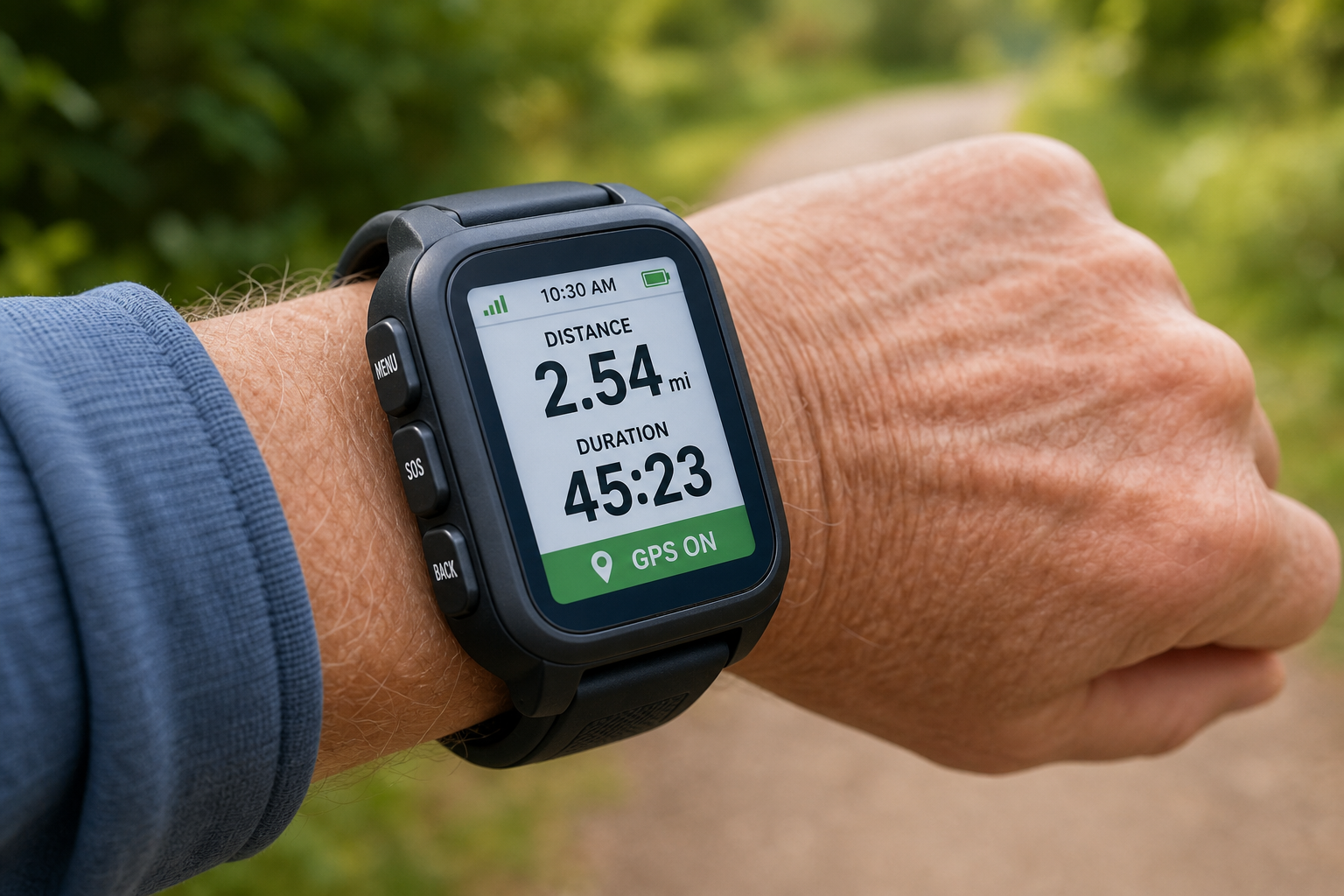
Display Readability
The display needs to be readable at arm’s length in bright sunlight. This means a screen at least 1.2 inches across with high-contrast text. AMOLED screens are the brightest and most vibrant. Some watches offer an always-on display that shows the time and basic stats without requiring a wrist raise or button press, which is easier for seniors who don’t want to master gesture controls.
Screen size matters more than you might think. A 1.4-inch display provides noticeably more readable text than a 1.1-inch screen, especially if you have presbyopia or need reading glasses. The difference is measurable: a 1.4-inch screen can display 3-4 readable data fields simultaneously, while a smaller screen forces you to scroll or squint.
Text contrast is equally important. Look for watches that offer customizable watch faces with large numerals and high contrast between text and background. White text on black background typically reads best in direct sunlight. Backlit LCD screens work well outdoors but can be harder to read indoors without good ambient light. AMOLED screens maintain visibility in both conditions.
Button navigation beats touchscreen-only interfaces for many older adults. Physical buttons work reliably in rain, with gloves, or when hands are sweaty. Touchscreens can be finicky if you have tremors or reduced fine motor control. Watches with both options give you flexibility.
Battery Life
A watch that dies mid-walk is useless and potentially dangerous if you rely on it for safety features. Look for at least 5-7 days of battery life in smartwatch mode and 10+ hours of continuous GPS tracking. Garmin leads in battery longevity, with some models lasting 2+ weeks between charges.
Battery specs vary significantly based on usage. GPS mode drains batteries faster than smartwatch mode. If you walk for 30-45 minutes daily with GPS tracking active, a watch rated for 20 hours of GPS time will last about 25-30 walks before needing a charge. That translates to charging roughly twice per month instead of daily.
Always-on display features cut battery life by 20-30%. If you prefer seeing the time without lifting your wrist, factor this into your battery expectations. Most watches let you disable always-on mode to extend battery life.
Cold weather reduces battery performance. If you walk in temperatures below 40°F regularly, expect 15-20% less battery life than the manufacturer’s rating. Lithium-ion batteries simply perform worse in cold conditions. This is especially important for seniors who follow cold weather exercise guidelines during winter months.
GPS Accuracy
Multi-band GPS (using GPS, GLONASS, and Galileo satellite systems simultaneously) provides the most accurate distance and route tracking. Single-band GPS is adequate for open-area walking but struggles in urban canyons (tall buildings) and dense tree cover.
Accuracy affects more than bragging rights about your mileage. If you’re using walking as prescribed exercise and your doctor recommends hitting specific distance targets, inaccurate GPS can leave you under or over your target. A 5% error on a prescribed 2-mile walk means you might walk 1.9 miles or 2.1 miles without knowing it.
Multi-band GPS connects to 20-30 satellites simultaneously instead of 8-12 with single-band systems. This redundancy means the watch can ignore weak or bounced signals and use only the strongest connections. The result is a smoother route map with fewer jagged zigzags and better mile-split accuracy.
Some watches offer expedition GPS mode, which samples your location less frequently to save battery. This works fine for tracking a general route but won’t give you accurate pace data or mile splits. Standard GPS mode is better for fitness walking where you care about pace and distance.
Safety Features
Incident detection (automatic alerts if the watch senses a fall), live tracking (sharing your real-time location with a contact), and SOS buttons (manually triggering an emergency alert) are the most valuable safety features for seniors who walk alone.
Incident detection uses accelerometers and gyroscopes to detect sudden deceleration followed by lack of movement. When the watch thinks you’ve fallen, it waits 30-60 seconds for you to respond before automatically sending an alert with your GPS location to pre-programmed emergency contacts. False positives happen occasionally (dropping your arm quickly while catching something), but most systems let you cancel the alert before it sends.
Live tracking works differently. When you start a walk, the watch automatically shares your location with chosen contacts. They see a live map showing where you are and your route. This is useful for family members who worry but don’t want to hover. They can check your progress without calling to interrupt your walk.
Manual SOS buttons require you to press and hold a button for 3-5 seconds to trigger an emergency alert. This works if you’re conscious and able to reach the button but doesn’t help if you’re unconscious or immobilized. Incident detection covers that gap.
Heart Rate Monitoring
Wrist-based heart rate monitors on GPS watches use optical sensors to measure blood flow. They’re adequate for general fitness tracking during walking but less accurate than chest strap monitors. For walking, where heart rate stays relatively steady, wrist monitors provide useful data for tracking effort level and recovery.
Heart rate zones help you understand whether your walks are aerobic exercise or just casual strolls. Most watches calculate zones automatically based on your age and resting heart rate. Walking in zone 2 (moderate effort, able to talk in full sentences) provides cardiovascular benefits without excessive strain. Walking in zone 3 (harder effort, can only talk in short phrases) builds more fitness but might not be appropriate depending on your current condition.
Talk to your doctor about appropriate heart rate targets before relying on zone recommendations. Some medications (like beta-blockers) suppress heart rate, making standard zones irrelevant. Your doctor can give you specific targets that account for your medications and conditions.
Irregular heart rate alerts notify you if the watch detects an abnormal rhythm. This can catch atrial fibrillation early. These alerts aren’t diagnostic and can’t replace medical monitoring, but they can prompt you to see your doctor for evaluation.
Top GPS Watches for Senior Walkers
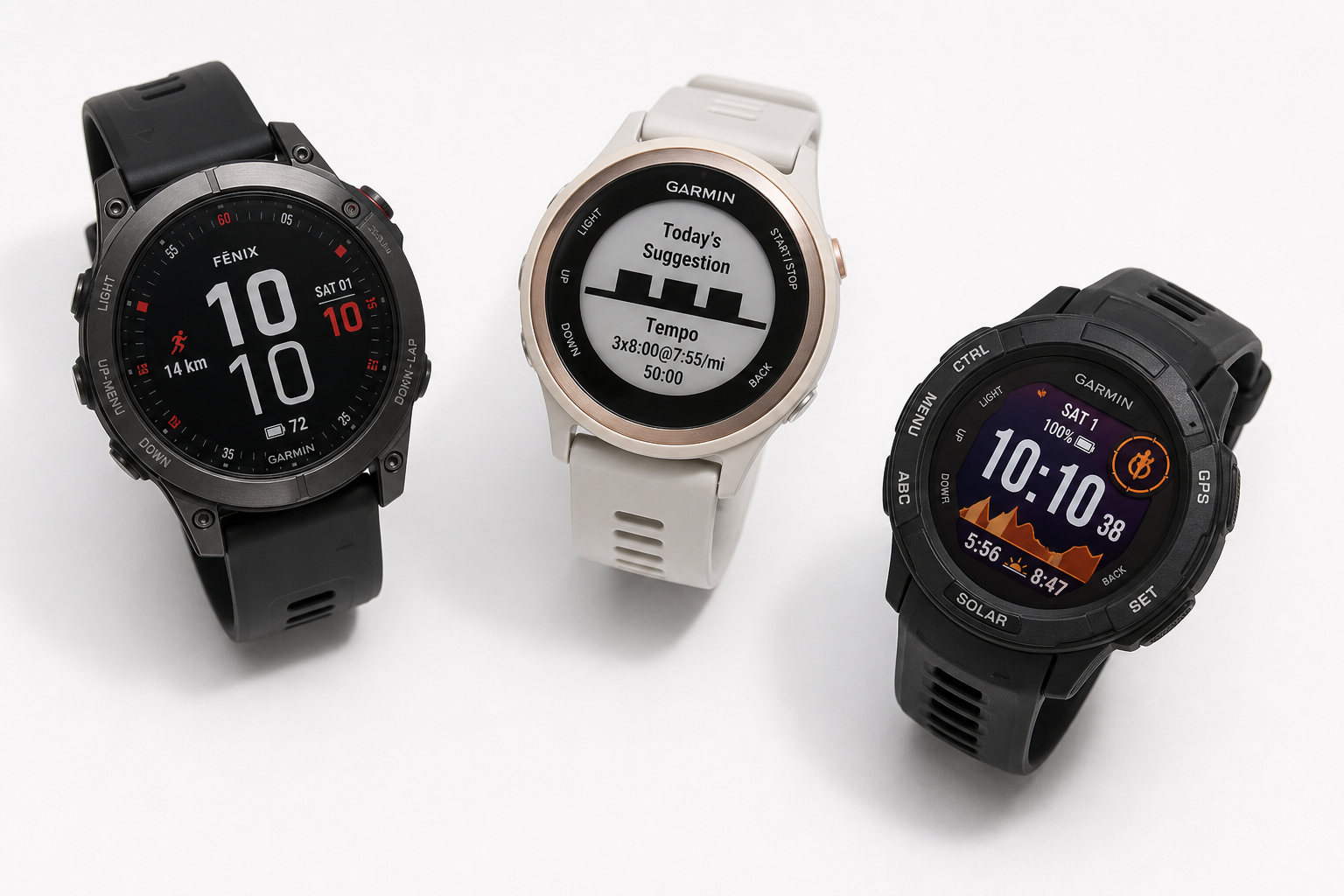
Garmin Venu Sq 2

Garmin Venu Sq 2
Best balance of features, readability, and battery life for most senior walkers
The Garmin Venu Sq 2 offers the best balance of features, readability, and battery life for senior walkers. The bright AMOLED display is easy to read outdoors, and the battery lasts up to 11 days in smartwatch mode or 26 hours with continuous GPS. It includes incident detection, LiveTrack (shares your location with chosen contacts during walks), heart rate monitoring, and a Health Snapshot feature that assesses key health metrics in 2 minutes.
The square face fits more text on screen than round watches. Garmin’s interface uses large icons and simple menus that don’t require navigating through multiple nested screens. Five physical buttons handle most functions, reducing reliance on the touchscreen.
The watch weighs 38 grams (1.3 ounces), light enough that you forget you’re wearing it after a few days. The silicone band is soft and doesn’t irritate skin, but it’s easy to swap for a different band if you prefer leather or fabric.
Sleep tracking provides detailed data about sleep stages and offers a Body Battery score that estimates your energy reserves. This can help you schedule walks when you have the most energy rather than forcing yourself out the door when you’re depleted.
Best for: Most senior walkers who want long battery life, safety features, and a readable display without premium pricing.
Apple Watch (Latest Series)
The Apple Watch provides the most complete health and safety ecosystem, including fall detection with automatic emergency calling, ECG capability, blood oxygen monitoring, and crash detection. The integration with iPhone is easy to use, and the interface is the most intuitive for people already in the Apple ecosystem. The main drawback is battery life (1-2 days), requiring daily charging.
Fall detection on Apple Watch can call 911 automatically if you don’t respond after a detected fall. This is unique among consumer smartwatches and potentially lifesaving for seniors who walk alone in areas without other people nearby.
The ECG feature takes a medical-grade electrocardiogram reading in 30 seconds by touching the digital crown. The watch can detect atrial fibrillation, a common heart rhythm disorder that increases stroke risk. AFib detection works passively in the background, checking your rhythm periodically without you needing to do anything.
Blood oxygen monitoring isn’t diagnostic but provides another data point about your health. Consistently low readings may indicate sleep apnea or other respiratory issues worth discussing with your doctor.
The Apple Watch also excels at medication reminders, calendar integration, and communication features. If you use your watch for more than fitness tracking, the Apple ecosystem integration is valuable.
Daily charging is the real trade-off. You’ll need to establish a routine, like charging while you shower or read before bed. For some seniors, this is a dealbreaker. For others who charge their phone nightly anyway, it’s just another device on the charger.
Best for: iPhone users who want the most complete health monitoring and are willing to charge daily.
Garmin Forerunner 55
The Garmin Forerunner 55 is lighter and simpler than the Venu Sq 2, focused specifically on GPS tracking for walking and running. Battery lasts up to 2 weeks in smartwatch mode or 20 hours with continuous GPS. The display is a traditional LCD (not as vibrant as AMOLED but excellent in sunlight). Includes incident detection and LiveTrack.
The Forerunner 55 strips away features you might not need: music storage, contactless payments, detailed sleep tracking, animated workouts. What remains is a no-frills GPS watch that tracks distance, pace, heart rate, and routes without complexity.
The interface is simpler than Venu models. Fewer menu options mean less hunting for the features you actually use. You can start a walk with two button presses: Up button to access activities, Start button to begin tracking.
The watch vibrates and beeps at each mile completed, giving you immediate feedback without checking the screen. This pacing awareness helps you maintain consistent speed and makes time pass faster by breaking your walk into manageable segments.
PacePro feature (available on outdoor walks) gives you target split times for each mile if you’re trying to complete a route in a specific time. This is useful for seniors working with physical therapists who prescribe specific walk durations and distances, similar to structured programs like those in post-hip replacement exercise plans.
Best for: Seniors who primarily want GPS distance and pace tracking without the bells and whistles of a full smartwatch.
Samsung Galaxy Watch (Latest)
The Samsung Galaxy Watch is the best option for Android phone users. It includes fall detection, GPS tracking, heart rate monitoring, and body composition analysis. The rotating bezel (on some models) provides an intuitive way to scroll through menus without squinting at a tiny touchscreen. Battery lasts 1-3 days depending on GPS usage.
The rotating bezel is a standout navigation feature. Turn the bezel clockwise to scroll through screens, counterclockwise to go back. This physical control is easier to use while walking than swiping on a small touchscreen. Not all Galaxy Watch models have the rotating bezel, so check specifications before buying.
Body composition analysis estimates body fat percentage, skeletal muscle mass, and body water percentage using bioelectrical impedance. Accuracy is moderate (within 3-5% of professional measurements) but trends over time are useful. If you’re walking to improve body composition as part of a safe weight loss plan, watching these numbers shift can provide motivation beyond scale weight.
Samsung Health app integration is strong, tracking daily activity, providing guided workouts, and syncing with popular fitness apps. The watch counts flights of stairs climbed, which is useful if your walking route includes hills or steps.
Bixby voice assistant can set timers, check weather, and control smart home devices from your wrist. Voice control is helpful if you have limited dexterity or find small buttons difficult to press.
Samsung’s sleep tracking includes snoring detection and blood oxygen monitoring during sleep. Combined data can identify potential sleep apnea patterns worth investigating with your doctor.
Best for: Android users who want a smartwatch with health and safety features.
Fitbit Sense 2
The Fitbit Sense 2 sits between full GPS watches and basic fitness trackers. It includes built-in GPS, stress management tools, irregular heart rhythm notifications, and skin temperature sensing. Battery lasts 6+ days with daily GPS use. The interface is simpler than Apple or Samsung watches, with fewer features to learn.
Stress management tracking uses heart rate variability, skin temperature, and other metrics to estimate stress levels. The watch prompts you with breathing exercises when it detects elevated stress. For seniors managing anxiety or recovering from cardiac events, this awareness can be valuable.
Daily Readiness Score combines sleep quality, heart rate variability, and recent activity to recommend whether you should push hard with exercise or take it easy. This prevents overtraining and reduces injury risk by encouraging rest when your body needs it.
Fitbit’s strength is behavior change. The app provides educational content, challenges with friends, and badges for hitting milestones. If you respond well to gamification and social motivation, Fitbit’s ecosystem supports that approach alongside tools like fitness tracking apps designed for seniors.
ECG app requires Fitbit Premium subscription (additional monthly cost) but provides similar AFib detection to Apple Watch. The subscription includes guided programs for walking, stress management, and sleep improvement.
The watch is lighter than Garmin or Apple models, weighing just 28 grams. The thin profile doesn’t catch on sleeves or feel bulky under clothing.
Best for: Seniors who want guided health programs and stress management features alongside basic GPS tracking.
Setting Up Safety Features
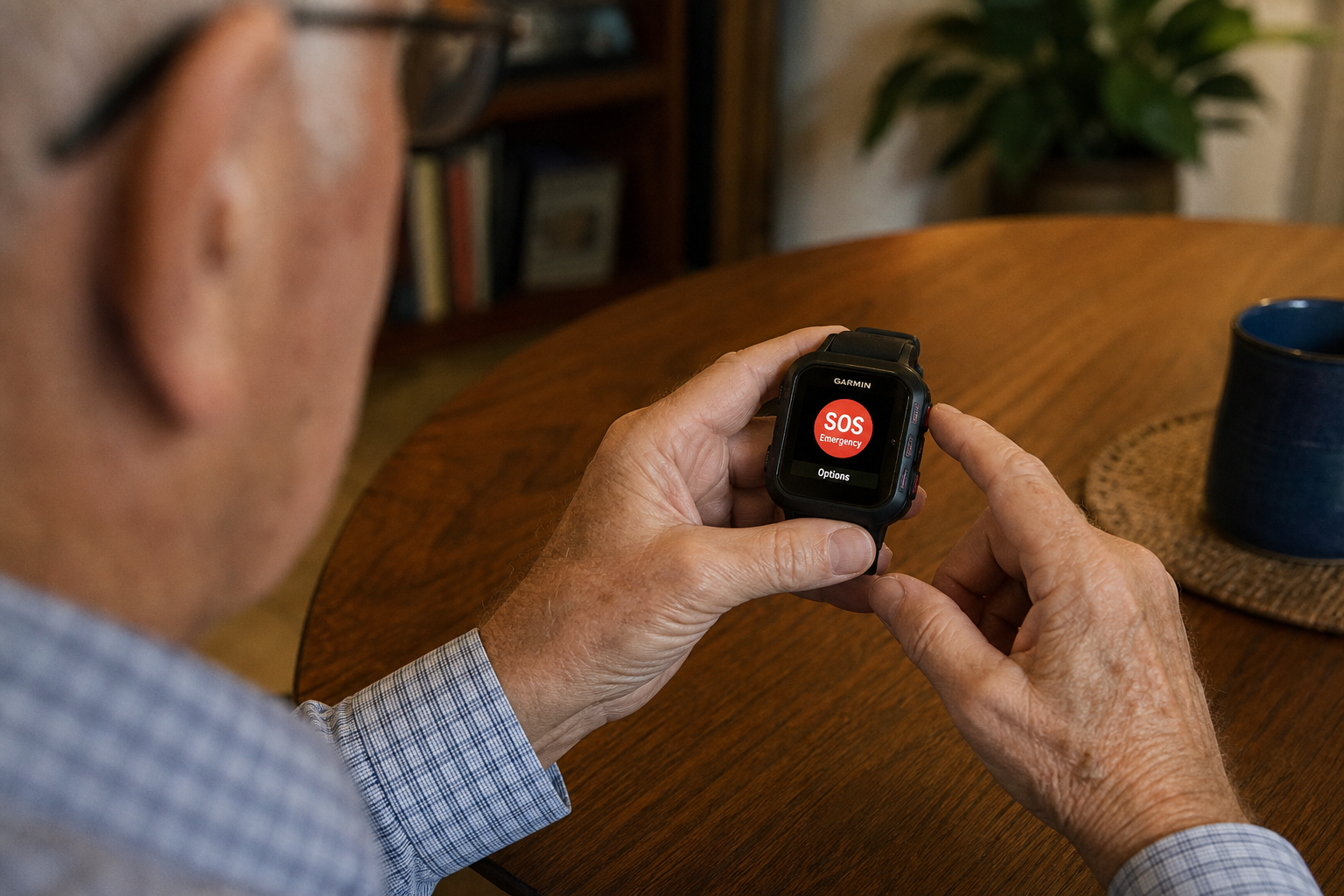
These features are only useful if they’re configured before you need them:
- Emergency contacts: Program at least 2-3 contacts who will receive alerts if the watch detects an incident. Include their phone numbers and relationship in the watch’s settings.
- LiveTrack/location sharing: Set up automatic location sharing that activates when you start a walking