An osteoporosis diagnosis can make exercise feel like walking through a minefield. You know you need to stay active, but the fear of fracturing a bone during a workout is real and paralyzing. Here’s the truth: the right exercises actually strengthen bones and reduce fracture risk, while inactivity accelerates bone loss. The key is knowing which movements help and which ones are genuinely dangerous.
Talk to your doctor before starting any new exercise program, especially with osteoporosis. Your bone density level (measured by T-score) and individual fracture risk determine which exercises are safe for you specifically.
How Exercise Builds Bone
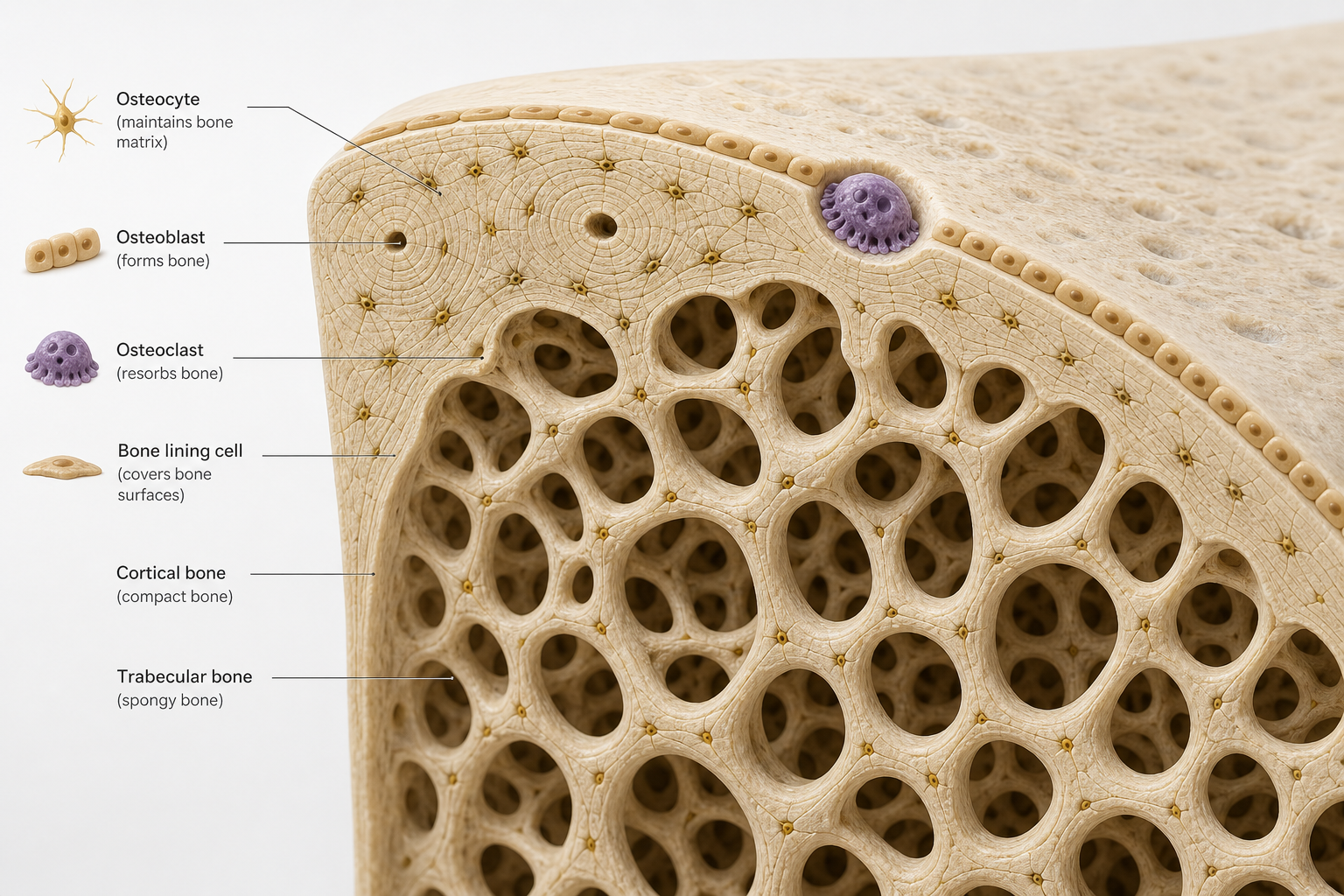
Bone is living tissue that responds to mechanical stress. When you place a load on a bone (through weight-bearing exercise or muscle pulling on bone during resistance training), specialized cells called osteoblasts deposit new bone material to handle the stress. Remove the load, and the bone weakens. This is why astronauts lose bone density in space and why bedrest causes rapid bone loss.
For exercise to stimulate bone growth, it needs to be weight-bearing (you’re supporting your body weight against gravity) or involve muscles pulling on bones through resistance training. Swimming and cycling, while excellent for cardiovascular fitness, don’t provide the mechanical stimulus bones need. The water supports your weight in swimming, and the bike supports you during cycling. These activities help maintain overall fitness and can be part of your routine, but they won’t build bone.
The load doesn’t need to be extreme. Research suggests that forces 1.5 to 2 times your body weight are sufficient to trigger bone building. Walking generates about 1.5 times body weight with each step. A controlled squat can reach 2 times body weight. You don’t need Olympic lifting to strengthen bone.
Consistency is what matters. Bones respond to regular loading over months and years, not occasional intense sessions. Think of bone building like compound interest. Small deposits made regularly accumulate into meaningful results.
Safe Exercises for Osteoporosis
Walking
The simplest and most accessible weight-bearing exercise. Walk on flat, even surfaces for 30 minutes, 5 days per week. Walking loads the spine, hips, and legs, which are the three areas most vulnerable to osteoporotic fractures. For greater bone stimulus, add brief intervals of brisk walking or walk on gentle inclines.
Vary your walking surface when you’re confident. Grass, packed dirt trails, and slight inclines provide different loading patterns that stimulate bone across a range of angles. Stay away from uneven terrain that increases fall risk.
If 30 minutes feels like too much, start with 10 minutes and build up. Three 10-minute walks spread through the day provide the same bone-building benefit as one continuous 30-minute walk. Do what fits your current fitness level.
Light Resistance Training
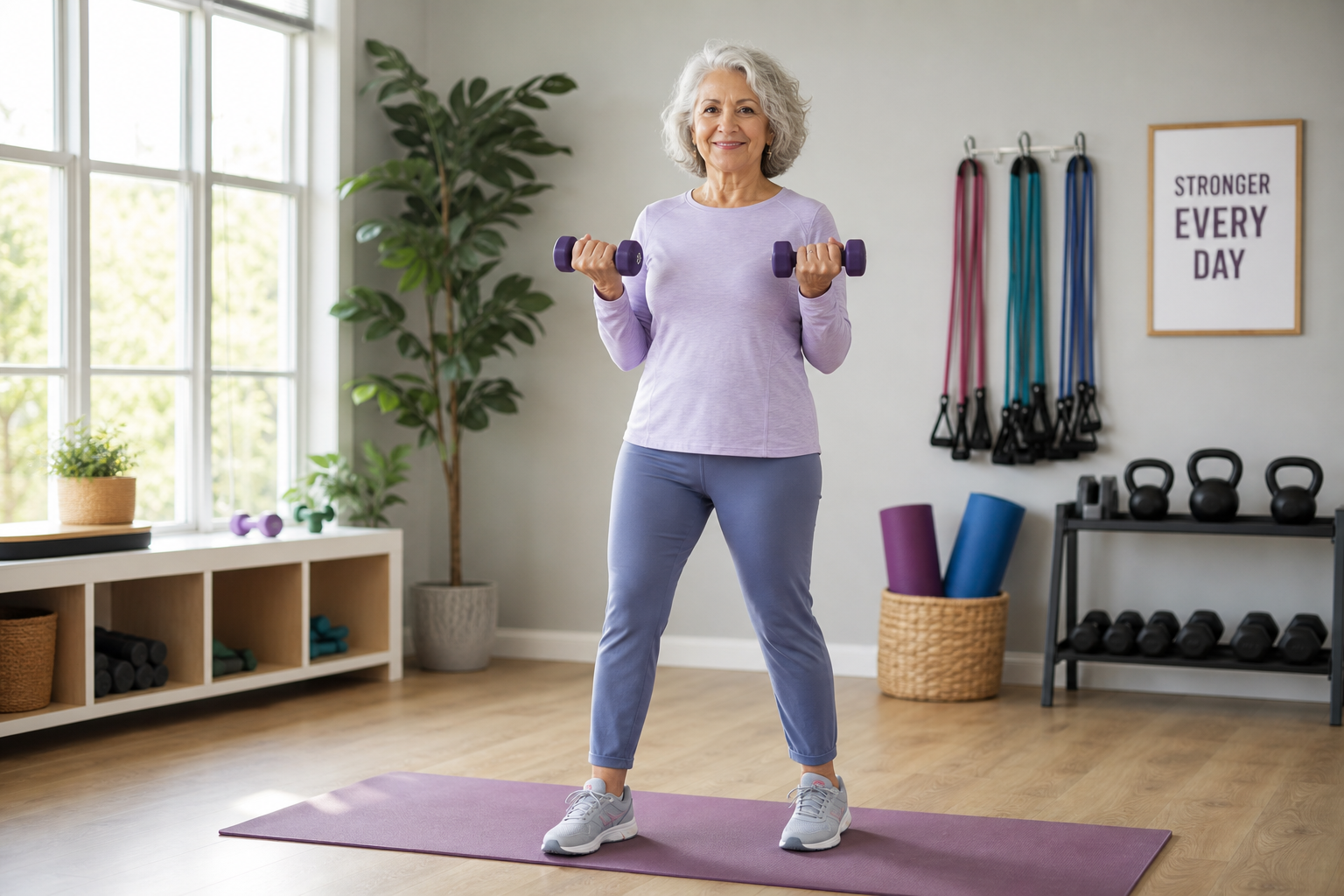
Strength training is the most effective exercise for bone density. Focus on exercises that load the spine, hips, and wrists: squats (chair squats for beginners), rows, shoulder presses, and wrist curls. Use resistance bands or light dumbbells. Perform 2-3 sets of 10-12 repetitions, 2-3 days per week.
Start lighter than you think you need to. A 2-pound dumbbell might feel pointless, but if you can perform 12 controlled repetitions with proper form, it’s working. Add weight gradually. Jumping from 3 pounds to 8 pounds is too big a leap. Move up in 1-2 pound increments.
Form matters more than weight. A chair squat performed with your chest up and knees tracking over your toes stimulates bone safely. The same squat performed with a rounded back and knees caving inward stresses the spine dangerously. If you’re new to resistance training, work with a physical therapist or qualified trainer for at least a few sessions to learn proper form.
Pay attention to your wrists. Wrist fractures are common with osteoporosis. Wrist curls (both palm-up and palm-down variations) strengthen the forearm muscles that support the wrist. Simple hand grip exercises with a soft ball also help.
Balance Training
Preventing falls is just as important as building bone. Balance exercises (single-leg stands, heel-to-toe walking, tai chi) reduce fall risk by 20-40%. Perform balance work daily for 10 minutes. Always exercise near a stable handhold.
Start with both hands on a countertop for support. Progress to fingertip contact, then one hand, then no hands. If you need two hands on the counter to feel stable, that’s where you start. There’s no award for rushing past your current ability.
Single-leg stands are deceptively challenging. Standing on one foot for even 10 seconds requires significant strength and coordination. Aim to build up to 30 seconds per leg. If you can’t do that yet, you’ve identified a fall risk factor worth addressing.
Tai chi deserves special mention. Multiple studies show that regular tai chi practice significantly reduces fall risk in older adults. The slow, controlled movements challenge balance while building leg strength and body awareness. Many community centers and senior centers offer tai chi classes designed for beginners.
Posture Exercises
Thoracic extension exercises (the opposite of hunching forward) help prevent the rounded upper back (kyphosis) that’s common with spinal osteoporosis. Wall angels, prone back extensions, and chin tucks strengthen the muscles that keep your spine upright.
Kyphosis isn’t just cosmetic. A rounded upper back shifts your center of gravity forward, making you more likely to fall. It also compresses the front of your vertebrae, exactly where osteoporotic compression fractures happen.
Wall angels: stand with your back against a wall, feet a few inches out. Raise your arms like goal posts, keeping your elbows, wrists, and back of your hands against the wall. Slide your arms up and down. This opens the chest and strengthens the muscles between your shoulder blades. Start with 8-10 repetitions.
Prone back extensions: lie face-down with a pillow under your hips. Lift your chest and shoulders a few inches off the floor, keeping your gaze down to avoid cranking your neck. Hold for 3-5 seconds. This strengthens the spinal extensors that keep you upright. Start with 6-8 repetitions.
Chin tucks: sit or stand tall. Glide your chin straight back without tilting your head up or down, like you’re making a double chin. This counteracts the forward head posture that often accompanies rounded shoulders. Do 10 repetitions several times per day.
Dangerous Exercises to Avoid
Forward Flexion Under Load
Bending forward at the waist while carrying weight compresses the front of the vertebral bodies, which is exactly where osteoporotic compression fractures occur. Avoid: Sit-ups, crunches, toe touches, loaded forward bends, and any exercise that rounds your spine under resistance. This includes bending to pick up heavy objects from the floor with a rounded back.
The risk isn’t theoretical. Studies of people with osteoporosis show that spinal compression fractures often occur during routine forward-bending activities: picking up groceries, making a bed, reaching into a low cabinet. Exercise that repeatedly loads the spine in this vulnerable position multiplies the risk.
Crunches and sit-ups are particularly problematic. Each repetition flexes the spine under the load of your upper body weight. Do 20 crunches and you’ve compressed your vertebrae 20 times. There are safer ways to strengthen your core.
Heavy Twisting
Rotational forces on an osteoporotic spine can cause vertebral fractures. Avoid: Golf swings (without modification), weighted Russian twists, and any exercise that combines rotation with compression. Gentle, unloaded spinal rotation (like seated twists without weights) is generally safe.
Notice the phrase “without modification.” You don’t necessarily have to quit golf, but you may need to modify your swing. A physical therapist who works with golfers can help you adapt your technique to reduce spinal rotation forces.
The dangerous combination is rotation plus compression. Twisting while bent forward (like a full golf swing) or twisting while holding weight creates shearing forces across the vertebrae. Gentle seated rotation without weight, performed slowly and within a comfortable range, helps maintain spinal mobility without risk.
High-Impact Jumping
Jumping, running, and high-impact aerobics generate forces that osteoporotic bones may not withstand. Avoid: Jump squats, box jumps, running, and high-impact dance classes. Brisk walking and low-step aerobics provide cardiovascular benefits without the fracture risk.
Landing from a jump generates forces 4-6 times your body weight. Those forces concentrate in the spine, hips, and ankles. If you have significant bone loss, that impact can fracture vertebrae or cause a stress fracture in your foot or ankle.
Running falls into a gray area. The impact forces from running are lower than jumping but higher than walking. Whether running is safe depends on your specific bone density and running form. Some people with mild osteopenia can run safely. Others can’t. This is a conversation to have with your doctor, ideally informed by your most recent bone density scan results.
Exercises with High Fall Risk
Any exercise that significantly challenges your balance without adequate support puts you at risk for a fall-related fracture. Avoid: Advanced yoga poses without modification, exercises on unstable surfaces without a handhold, and any activity that takes you far outside your balance comfort zone without safety precautions.
Balance boards, wobble cushions, and BOSU balls are popular in fitness circles. They’re also fall hazards if you have osteoporosis and compromised balance. You can challenge your balance safely by progressing standing exercises (reducing hand support on a counter) rather than standing on unstable surfaces.
Group fitness classes can be tricky. The instructor may demonstrate exercises that aren’t appropriate for you. Don’t feel pressured to keep up. Modify or skip anything that feels risky. A good instructor will support your modifications. If they don’t, find a different class.
Sample 3-Day Weekly Program
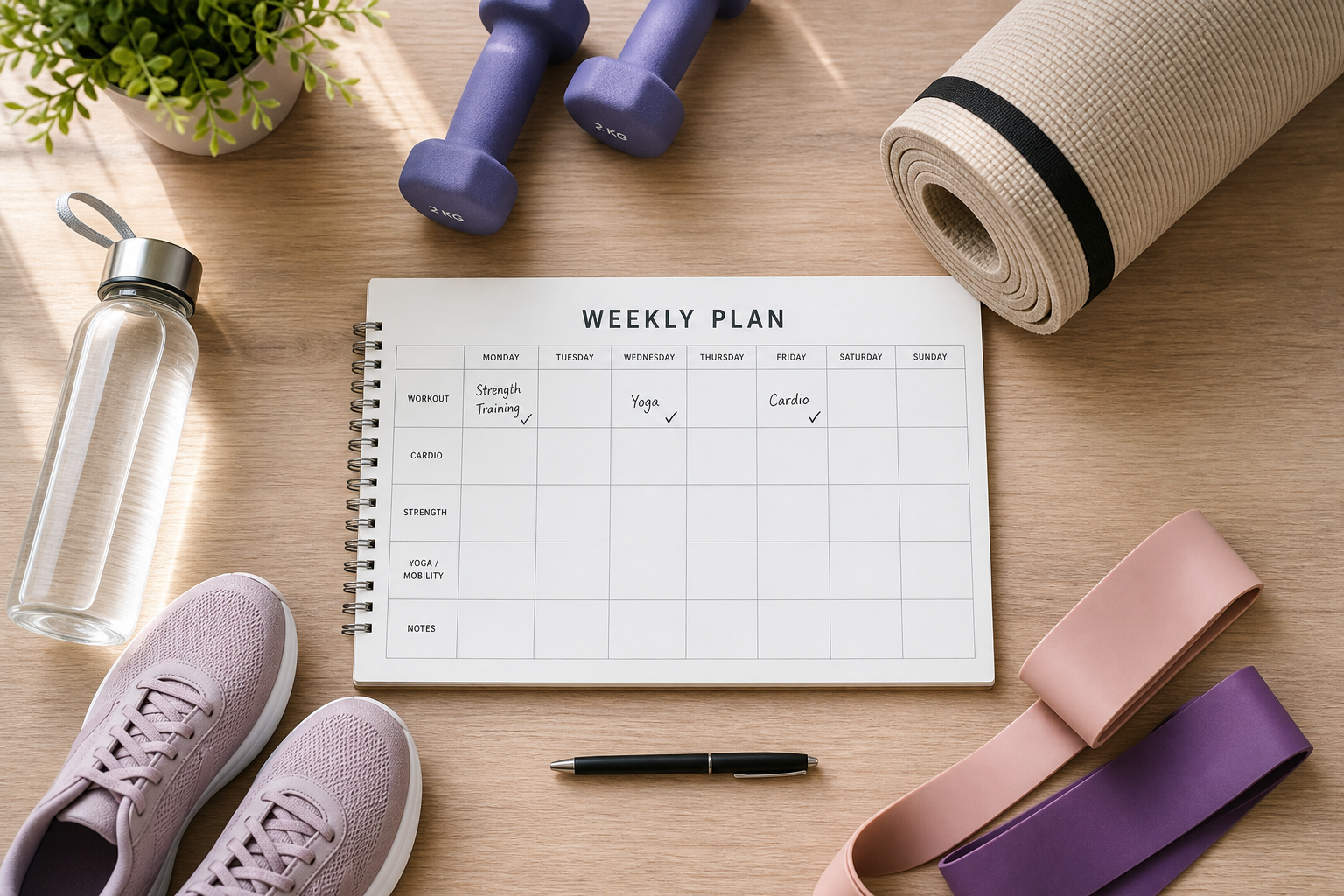
This program assumes you’re starting with basic fitness and cleared by your doctor to exercise. Adjust the sets, reps, and intensity to match your current ability.
Day 1 (Strength – Upper Body):
- Band rows: 3×12
- Dumbbell shoulder press: 3×10
- Wall push-ups: 3×12
- Wrist curls (palm up and palm down): 2×15
- Balance work: 10 minutes
Day 2 (Walking + Flexibility):
- 30-minute walk with 3-4 brisk intervals
- Stretching routine: 10 minutes
- Posture exercises (wall angels, chin tucks): 5 minutes
Day 3 (Strength – Lower Body):
- Chair squats: 3×10
- Band hip abduction: 3×12
- Calf raises: 3×15
- Step-ups (4-6 inch step): 2×8 per leg
- Balance work: 10 minutes
Rest at least one day between strength sessions. Your muscles need recovery time to adapt. You can walk on rest days if you feel good.
The brisk intervals on Day 2 are short bursts of faster walking (30-60 seconds) followed by your normal pace. These intervals increase the bone-building stimulus without the impact of running. Start with just one or two intervals. Add more as your fitness improves.
For stretching, focus on areas that tend to tighten: hip flexors, hamstrings, chest, and shoulders. Hold each stretch for 20-30 seconds. Stretching won’t build bone, but maintaining flexibility helps you move well and prevents compensatory movement patterns that increase injury risk.
Progression and Monitoring
Start conservatively. Spend the first 2-3 weeks learning the exercises and establishing the habit. Then gradually increase difficulty. Add a set, add a repetition, increase the weight slightly, or extend your walking time by 5 minutes. Small increases, applied consistently, produce results without overwhelming your body.
Keep a simple exercise log. Note what you did and how you felt. If an exercise causes sharp pain or pain that persists after the session, drop that exercise and talk to your doctor or physical therapist. Muscle fatigue and mild soreness the next day are normal. Sharp pain during the movement or lasting joint pain are not.
Your bone density won’t change quickly. Expect to wait a full year or more before a follow-up bone density scan shows measurable improvement. That’s normal. Bone remodeling is slow. Judge your progress by functional improvements: you can walk farther without fatigue, you can stand on one foot longer, you can lift a heavier grocery bag. These improvements matter just as much as bone density numbers.
If you’re interested in tracking your progress more systematically, consider using one of the many fitness tracking apps designed for seniors to monitor your walking sessions and exercise consistency.
Working with Healthcare Providers
A physical therapist who specializes in osteoporosis can design a program tailored to your specific bone density and abilities. They’ll assess your posture, balance, and movement patterns, then prescribe exercises that address your individual needs. If you can access a few sessions with a physical therapist, it’s worth it.
Some indicators you should work with a professional:
- You have very low bone density (T-score below -3.0)
- You’ve already had a fragility fracture
- You’re unsure about proper exercise form
- You have multiple health conditions that complicate exercise planning
- You want to return to a higher-risk activity (like golf or tennis) and need guidance on safe modifications
Your doctor should monitor your bone density every 1-2 years. Those scans, combined with your exercise consistency and any bone-strengthening medications you’re taking, guide your treatment plan. Exercise is part of the strategy, not the whole strategy.
Additional Resources for Bone Health
Building bone density requires a multi-faceted approach beyond just exercise. Maintaining bone density after 65 involves careful attention to nutrition, supplementation, and lifestyle factors.
For those interested in more structured programming, our 12-week progressive resistance training program offers a systematic approach to building strength that complements bone health goals.
Proper posture plays a critical role in preventing compression fractures. Learn more about correcting forward head posture and slouching to protect your spine during daily activities.
Climate considerations matter too. Whether you’re exercising in hot weather or dealing with cold weather conditions, adapting your routine to seasonal changes helps maintain consistency year-round.
Frequently Asked Questions