That sharp stab in your heel with the first steps of the morning is one of the most common foot complaints in adults over 60. It makes you dread getting out of bed and can turn a simple walk around the block into an exercise in pain management. The cause is almost always identifiable, and the right combination of stretching, strengthening, and footwear changes resolves most cases within 6-8 weeks.
Understanding what’s happening in your heel and which exercises target your specific condition makes the difference between spinning your wheels with generic advice and actually getting relief. This guide breaks down the most common causes of heel pain in older adults and gives you the exact exercises that work for each one.
The Most Common Causes
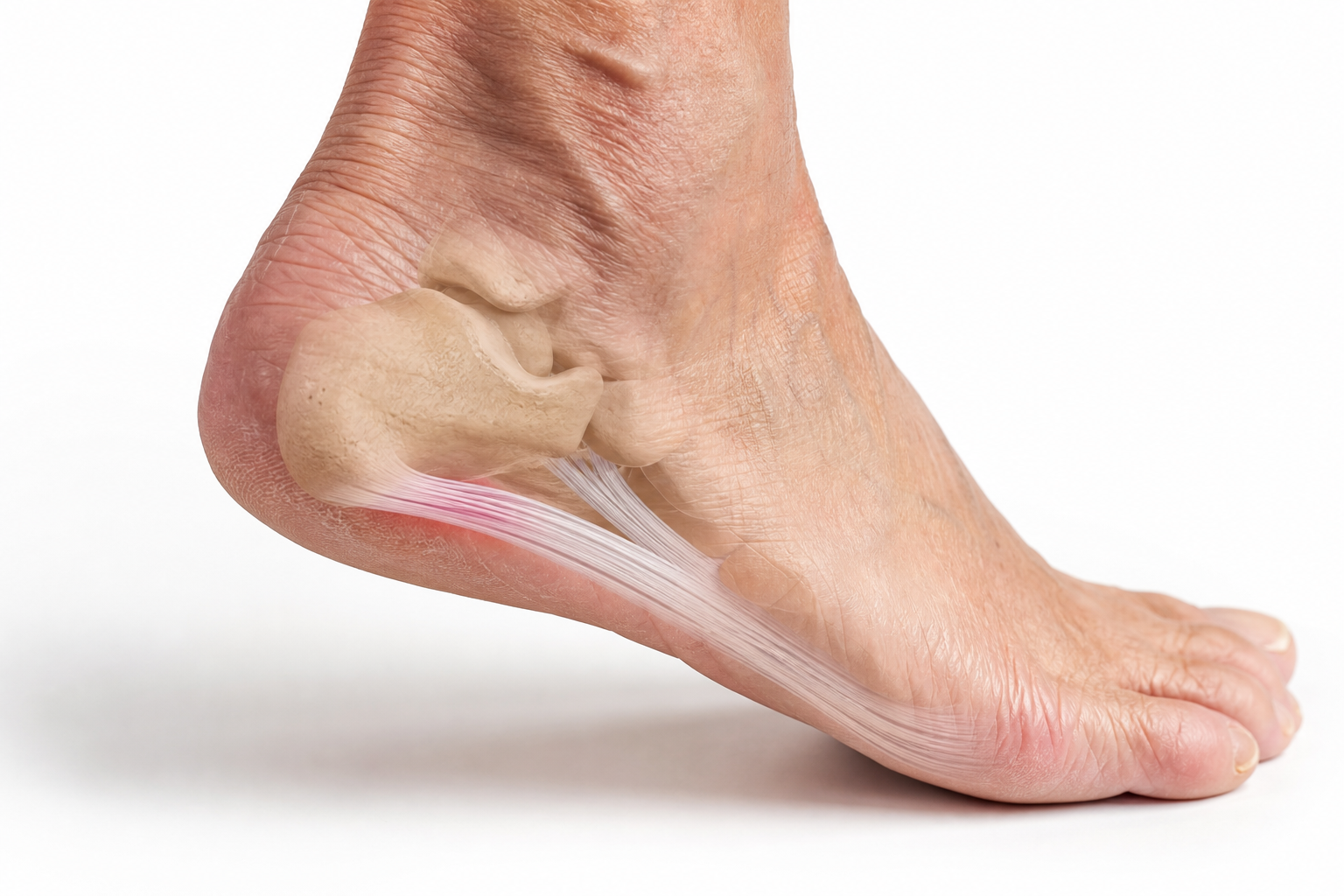
Plantar Fasciitis
The plantar fascia is a thick band of tissue running from your heel to your toes along the bottom of your foot. When it becomes inflamed or develops microtears (usually from overuse, tight calves, or unsupportive shoes), it produces a sharp, stabbing pain at the bottom of the heel. The hallmark symptom is pain with the first steps in the morning that improves after a few minutes of walking, then returns after prolonged standing or walking.
After 60, the plantar fascia loses elasticity and the fat pad under the heel thins, both of which increase vulnerability to this condition. Women are slightly more prone to plantar fasciitis than men, possibly due to footwear choices and hormonal changes that affect connective tissue. Carrying extra weight also increases your risk, since every pound of body weight translates to roughly three pounds of force on your foot with each step.
You’re more likely to develop plantar fasciitis if you recently increased your walking distance, started a new exercise routine, or spend long periods standing on hard surfaces. Switching from supportive shoes to flat sandals or going barefoot around the house can trigger symptoms within days.
Heel Spurs
A heel spur is a bony growth on the underside of the heel bone, often found alongside plantar fasciitis. Despite their alarming appearance on X-rays, heel spurs themselves are rarely the source of pain. Many people with large spurs have no symptoms, while people with tiny or no spurs can have severe plantar fasciitis. Treatment focuses on the soft tissue inflammation, not the spur.
The spur forms over months or years as the plantar fascia repeatedly pulls on the heel bone at its attachment point. This chronic tension causes calcium deposits to accumulate, creating the spur. Think of it as a scar from long-term stress rather than the injury itself.
Surgery to remove a heel spur is almost never necessary. If your doctor mentions a heel spur on your X-ray, it’s useful diagnostic information (it confirms chronic plantar fascia stress), but it doesn’t change your treatment plan.
Achilles Tendinopathy
The Achilles tendon connects your calf muscles to the back of your heel. Degeneration and inflammation of this tendon cause pain at the back of the heel (as opposed to the bottom, which is plantar fasciitis). The pain typically worsens with activity, especially walking uphill or climbing stairs, and may be accompanied by stiffness in the morning.
Achilles tendinopathy comes in two types. Insertional tendinopathy affects the spot where the tendon attaches to the heel bone. You’ll feel pain at the very back of the heel, sometimes with a small bump you can feel through the skin.
Non-insertional tendinopathy affects the middle portion of the tendon, a few inches above the heel. This type causes pain during or after activity and often feels like a tight, achy band.
The tendon degenerates with age as collagen fibers become disorganized and lose their ability to handle load efficiently. Small tears accumulate faster than the body can repair them. Sudden increases in walking distance or intensity are common triggers, as is starting activities that involve push-off (like cycling or stair climbing) after a long break.
Fat Pad Atrophy
The cushioning fat pad under your heel naturally thins with age. Without adequate natural cushioning, the heel bone absorbs more impact with each step, creating a deep, bruise-like ache (different from the sharp stab of plantar fasciitis). This type of heel pain is worse on hard surfaces and improves on softer ground.
The fat pad doesn’t thin evenly. Some people lose most of their cushioning by their mid-60s, while others maintain adequate padding into their 80s. Steroid injections for plantar fasciitis (a treatment that’s fallen out of favor) can accelerate fat pad atrophy, which is one reason doctors are more cautious about injections these days.
You can test for fat pad atrophy at home. Press firmly on the center of your heel with your thumb. If you can feel the heel bone easily through thin tissue (like pressing on your shin), your fat pad has thinned significantly. Healthy padding should feel thick and spongy.
Stress Fractures
Less common but worth mentioning: tiny cracks in the heel bone from repetitive impact. Stress fractures cause constant pain that worsens with any weight-bearing activity and doesn’t improve after a few minutes of walking (unlike plantar fasciitis). The pain is often diffuse across the heel rather than localized to one spot.
Risk factors include osteoporosis, sudden increases in activity, and poor footwear. This requires medical evaluation and typically means several weeks in a walking boot.
Exercises That Help
Talk to your doctor before starting these exercises if you have severe heel pain, diabetes with neuropathy, or balance issues that make standing exercises risky. Start gently. Stretching should produce a pulling sensation but never sharp pain. If you’re dealing with arthritis in addition to heel pain, these movements can be combined with arthritis-friendly exercises for a comprehensive pain management approach.
Plantar Fascia Stretch
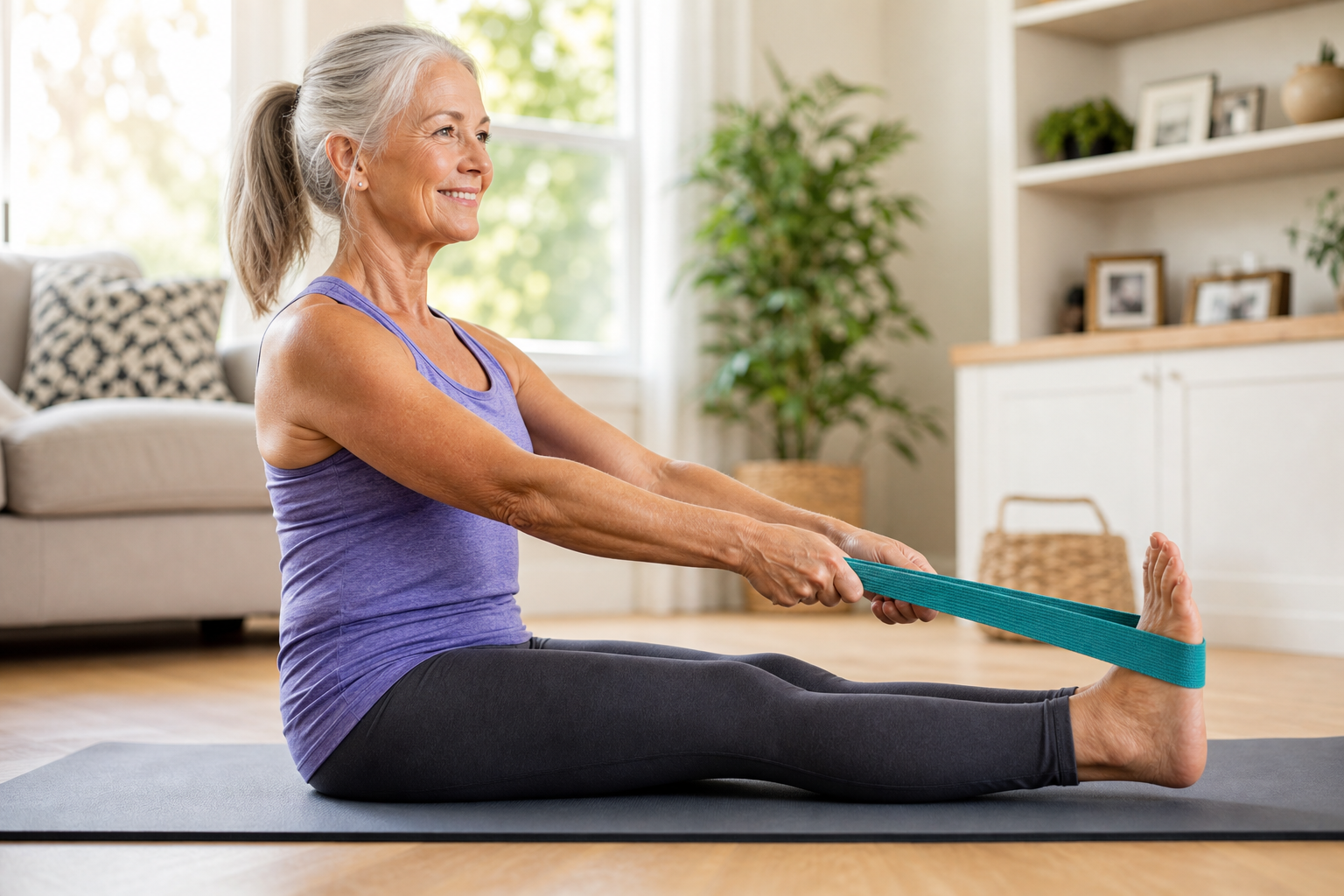
Sit and cross your affected foot over the opposite knee. Grab your toes and pull them back toward your shin until you feel a stretch along the arch of your foot. Hold for 30 seconds. Repeat 3 times.
Do this before getting out of bed each morning and 2-3 more times throughout the day. This is the single most effective exercise for plantar fasciitis.
The morning stretch is critical because the plantar fascia tightens overnight as you sleep with your foot pointed. That first step breaks the tightened tissue if you don’t stretch first, which is what causes that signature sharp pain. Doing the stretch before your foot hits the floor prevents that microtearing cycle.
If you can’t reach your toes comfortably, loop a belt or towel around the ball of your foot and pull the strap toward you. Same stretch, easier position for people with limited flexibility or knee issues. For those with knee discomfort, check out knee-friendly modifications that make these stretches more accessible.
Calf Stretch (Straight Knee)
Face a wall with one foot back, knee straight, heel pressed into the floor. Lean forward until you feel a stretch in the upper calf. Hold 30 seconds per side, 3 repetitions. Tight calves increase tension on the plantar fascia with every step, so loosening them is essential.
The back leg should be about two to three feet behind the front leg. If you’re too far back, you’ll struggle to keep your heel down. Too close and you won’t feel much stretch. Adjust until you feel a firm pull through the middle of your calf.
Don’t bounce. Hold steady. Bouncing can strain the muscle you’re trying to relax.
Calf Stretch (Bent Knee)
Same position, but bend the back knee slightly while keeping the heel on the floor. This targets the soleus muscle (deeper calf muscle) and the Achilles tendon. Hold 30 seconds per side, 3 repetitions.
The soleus doesn’t get stretched with a straight knee, so this second stretch is necessary. The soleus contributes significantly to Achilles tendon tension and plantar fascia load during walking. Many people skip this variation because they don’t feel as much stretch, but it’s just as important as the straight-knee version.
Towel Scrunches
Place a hand towel flat on the floor. Using only your toes, scrunch the towel toward you. Repeat 10 times per foot. This strengthens the intrinsic muscles of the foot that support the arch and reduce strain on the plantar fascia.
You can progress this exercise by placing a light weight (a can of soup, a small dumbbell) on the far end of the towel once scrunching becomes easy. The added resistance further strengthens those small foot muscles. Resistance band exercises can also complement your foot strengthening routine for overall joint health.
Do these while watching TV or reading. They don’t require much focus, so they’re easy to fit into your day.
Eccentric Heel Drops
Stand on a step with the balls of your feet on the edge and your heels hanging off. Slowly lower your heels below the step level over 3-4 seconds, then rise back up. Perform 3 sets of 12. This is the gold-standard exercise for Achilles tendinopathy and also benefits plantar fasciitis by strengthening the calf-to-foot chain.
Hold the railing or wall for balance. This is not a balance exercise. You’re targeting the calf and Achilles, so stabilize yourself and focus on slow, controlled lowering. The eccentric (lowering) phase is what stimulates tendon healing.
If you have significant Achilles pain, start with both feet and only lower down with the affected side. Use the non-affected leg to push back up. This reduces the load during the hardest part of the exercise. Progress to single-leg heel drops once pain decreases.
Expect some mild soreness after eccentric heel drops, especially in the first week. That’s normal. Sharp pain during the exercise means you’re going too deep or too fast. Reduce your range of motion and slow down.
Frozen Bottle Roll
Fill a water bottle and freeze it. While seated, roll the frozen bottle under your foot from heel to toes for 5-10 minutes. This combines ice therapy (reducing inflammation) with a gentle massage of the plantar fascia. Do this after walking or at the end of the day.
Apply moderate pressure. You should feel the bottle working into the arch, but you’re not trying to flatten your foot. If the ice feels too intense on bare skin, wear a thin sock for the first few minutes.
A lacrosse ball or tennis ball works for massage without the ice component. Use a ball for a mid-day massage when you can’t ice, and save the frozen bottle for post-activity inflammation control.
Toe Walks and Heel Walks
Walk on your toes for 30 seconds, then walk on your heels for 30 seconds. Repeat 3 times. This strengthens the muscles that stabilize your ankle and foot, improving overall foot mechanics and reducing strain on the plantar fascia.
Hold a countertop or wall if you need balance support. Move slowly and deliberately. This isn’t a speed drill. The goal is controlled muscle engagement through the full range of motion.
Skip heel walks if you have acute Achilles tendinopathy. Heel walking puts significant load on an already irritated tendon. Stick to toe walks until the Achilles pain subsides.
Footwear and Support
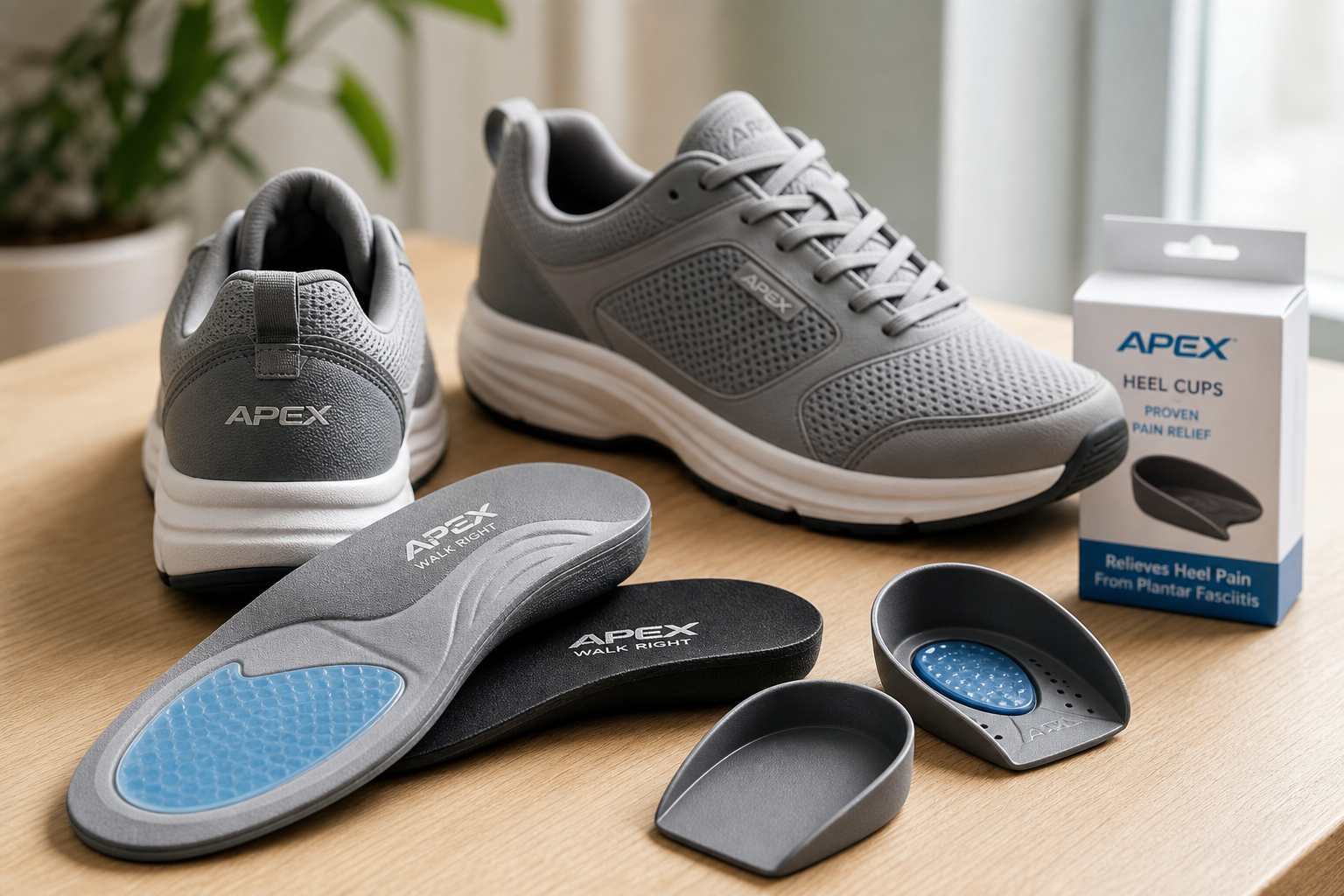
Shoes with firm arch support, a cushioned heel, and a slightly rigid midsole reduce plantar fascia strain. Avoid flat shoes (flip-flops, ballet flats) and going barefoot on hard surfaces. Plantar fasciitis insoles with deep heel cups and firm arch support can be inserted into your existing walking shoes for immediate relief.

Plantar Fasciitis Arch Support Insoles
Deep heel cups and firm arch support provide immediate relief in your existing shoes
The arch support should feel firm under your foot, not squishy. Soft, cushiony arches collapse under your weight and don’t provide structural support. You want a semi-rigid arch that holds its shape as you walk. The heel cup should be deep enough to cradle your heel and prevent it from rolling inward or outward with each step.
Replace insoles every six months if you walk regularly. They compress and lose support over time, even if they look fine on the surface.
For fat pad atrophy specifically, shoes with extra heel cushioning (like