For decades, stretching before exercise was considered essential injury prevention. Touch your toes, hold for 30 seconds, and you’re protected. The reality, according to the latest research, is more complicated.
Some types of stretching at certain times do reduce injury risk, while other types at the wrong time may actually increase it. For seniors, understanding this distinction matters because injury prevention is a top priority and the wrong approach wastes time or backfires.
The confusion comes from decades of mixing up short-term warm-up effects with long-term flexibility development. Both matter for injury prevention, but they work through different mechanisms and require different approaches. Getting the timing and type right makes the difference between an effective routine and one that leaves you more vulnerable.
What the Evidence Actually Shows
Static Stretching Before Exercise: Probably Not Helpful
Static stretching (holding a stretch for 15-60 seconds) before exercise was the standard recommendation for decades. Multiple large studies and meta-analyses have now concluded that pre-exercise static stretching does not reduce injury rates for most types of exercise.
A Cochrane review analyzing data from over 5,000 participants found no significant reduction in overall injury rates from pre-exercise stretching. The review included runners, military recruits, and athletes across multiple sports. The lack of protective effect held consistent across different populations and activity types.
The mechanism behind this finding makes sense. Static stretching temporarily lengthens muscle fibers and reduces tension, but it doesn’t increase muscle temperature, activate the nervous system, or prepare the cardiovascular system for exercise. You’re more flexible in the moment, but your body isn’t actually ready to move safely under load.
Worse, pre-exercise static stretching can temporarily reduce muscle strength and power by 5-10% for up to 30 minutes after stretching. For seniors, this means your muscles are slightly weaker during the first part of your workout, exactly when injury risk is highest because your body isn’t fully warmed up.
This strength reduction is particularly concerning for activities that require balance or quick stabilization, like navigating uneven surfaces or catching yourself if you stumble. If you’ve had recent surgery, such as hip replacement or knee replacement, this temporary weakness could be especially problematic during recovery.
The research doesn’t show that pre-exercise static stretching increases injury rates, just that it doesn’t reduce them and comes with a temporary performance cost. That’s enough reason to replace it with something that actually works.
Dynamic Warm-Up Before Exercise: Effective
Dynamic warm-ups (active movements that take joints through their full range of motion without holding a stretch) do reduce injury risk. These include leg swings, arm circles, hip circles, marching in place, and bodyweight squats.
Dynamic movements increase muscle temperature, improve blood flow, activate the nervous system, and prime your muscles for the specific movements you’re about to do.
Studies on older adults specifically show that a 5-10 minute dynamic warm-up reduces the incidence of muscle strains and joint sprains during subsequent exercise. The protective effect comes from preparing the body’s systems in the right sequence: circulation increases first, then core temperature rises, then the nervous system begins firing the motor patterns you’re about to use.
By the time you start your main workout, your body is ready to respond to demands safely.
Dynamic warm-ups also reveal restrictions and discomfort before you load them with resistance. If a hip circle feels stiff or a leg swing reveals tightness, you know to modify your workout or spend extra time on that area. Static stretching before exercise masks these warning signs by temporarily lengthening tissue without actually preparing it to work.
The movements themselves don’t need to be complicated. Simple bodyweight patterns that mimic the exercise you’re about to do provide the protective effect. If you’re going for a walk, marching in place and leg swings prepare the exact movement patterns you’ll use. If you’re lifting weights, bodyweight squats and arm movements prepare those patterns.
Static Stretching After Exercise: Beneficial
Post-exercise static stretching improves flexibility over time and may reduce muscle soreness. Muscles are warm, pliable, and more responsive to stretching after exercise.
Regular post-exercise stretching maintains and improves range of motion, which indirectly prevents injuries caused by compensatory movement patterns (when a stiff joint forces another joint to move beyond its comfortable range).
The timing matters because warm muscle tissue responds better to lengthening. Blood flow is elevated, the nervous system is less protective of the stretched tissue, and you’re more likely to notice the difference between productive tension and pain. Stretching cold muscles before exercise doesn’t offer these advantages and increases the risk of pushing too far without the feedback that keeps stretching safe.
Post-exercise stretching also serves as a cool-down, gradually bringing heart rate and breathing back to baseline rather than stopping abruptly. This transition reduces the light-headedness that can occur when blood pools in the legs after intense activity, particularly important for older adults who may have less flexible blood vessels.
The flexibility gains from consistent post-exercise stretching accumulate over weeks and months. A joint that moves through its full range without restriction requires less compensatory movement from neighboring joints.
Hip flexibility, for instance, reduces the demand on the lower back during bending and lifting. Ankle mobility reduces the strain on knees during stair climbing. These long-term adaptations reduce injury risk in ways that pre-exercise stretching never could.
What Should Seniors Actually Do?
Talk to your doctor before starting a new exercise routine, particularly if you have existing joint conditions, balance concerns, or cardiovascular issues. The recommendations below are general guidelines. Individual needs vary based on fitness level, medical history, and the specific activities you’re preparing for.
Before Exercise: Dynamic Warm-Up (5-10 Minutes)
Replace your pre-exercise static stretching routine with these dynamic movements. Start gently and increase range of motion gradually as your body warms up. Stop any movement that causes pain beyond mild muscle sensation.
- Walking in place: 2 minutes, gradually increasing pace. Gets blood flowing to the legs. If you have knee issues, march with smaller steps and avoid lifting knees high.
- Arm circles: 10 forward, 10 backward. Warms up the shoulders. Keep circles small if you have rotator cuff concerns, gradually widening as the joint loosens.
- Hip circles: 10 clockwise, 10 counterclockwise. Mobilizes the hip joints. Hold a counter or chair back for balance. Keep movements controlled rather than fast.
- Leg swings: Hold a counter, swing one leg forward and back 10 times per leg. Warms up the hip flexors and hamstrings. Swing only as high as feels comfortable. You’re not trying to kick high, just move through your available range.
- Bodyweight squats: 10 slow squats to a comfortable depth. Activates the glutes and quads. Use a chair for support if needed. Quarter squats are fine if full squats cause discomfort.
- Gentle trunk rotations: Arms extended, rotate torso 10 times per side. Mobilizes the spine. Keep movements smooth and controlled. Stop if you feel any pinching or sharp sensations.
The entire sequence takes 5-10 minutes. You should feel warmer and more awake by the end, but not tired. If you’re breathing hard or feeling fatigued, you’re working too intensely for a warm-up. Scale back the pace or range of motion.
After Exercise: Static Stretching (5-10 Minutes)
Hold each stretch for 20-30 seconds. Don’t bounce. Stretch to the point of mild tension, not pain. If you can’t hold a conversation comfortably while stretching, you’re pushing too hard. Focus on the muscles you just worked:
- Calf stretch: Wall lean, one foot back. Keep the back heel down and back knee straight. You should feel tension in the middle of the calf, not the Achilles tendon near the heel.
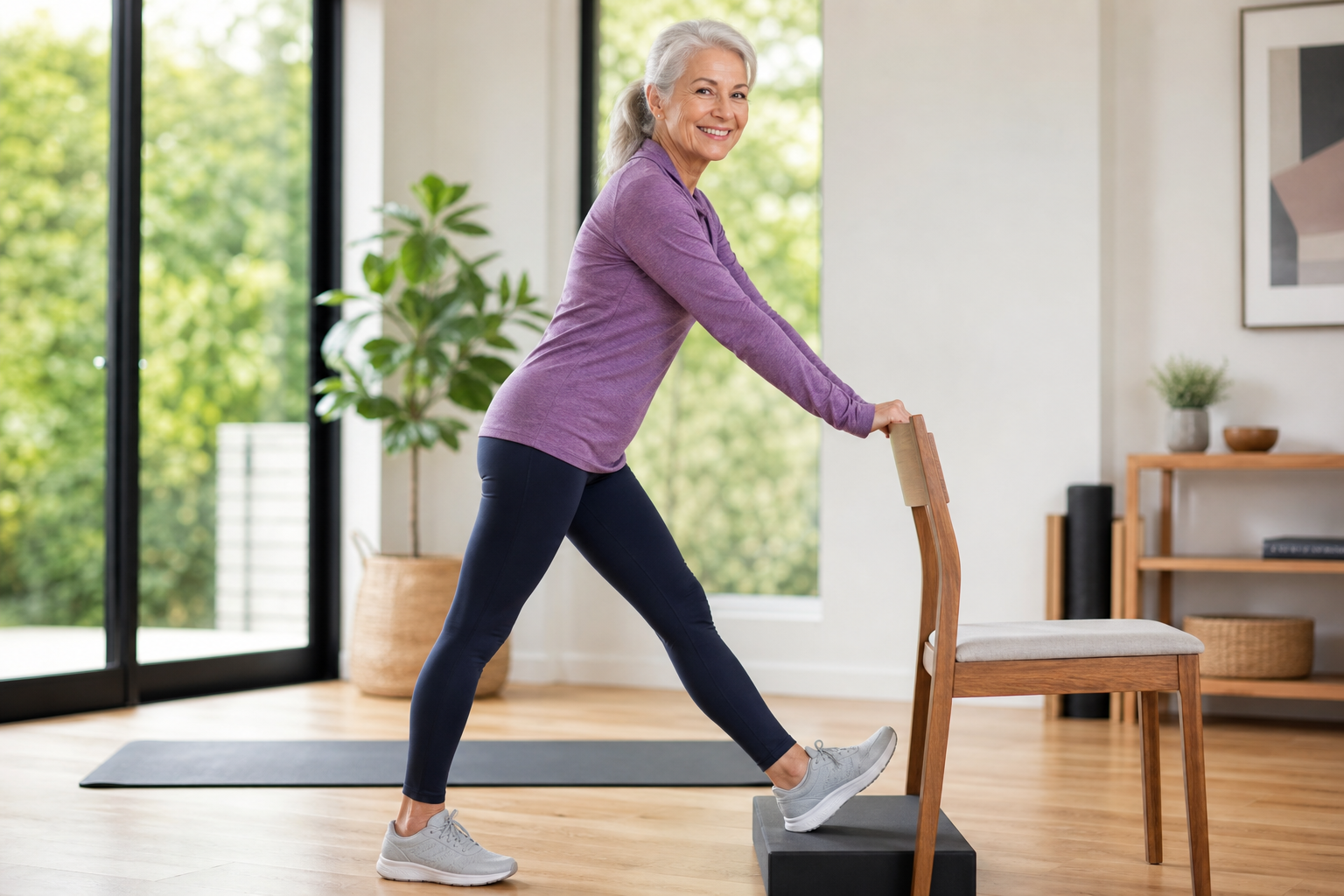
- Quad stretch: Standing, pull heel toward buttock (hold a chair for balance). Keep knees together and avoid arching your lower back. If you can’t reach your foot, loop a towel around your ankle.
- Hamstring stretch: Seated or standing, one leg extended. Hinge from the hips rather than rounding your spine. You should feel the stretch in the back of the thigh, not the lower back.
- Hip flexor stretch: Kneeling or standing lunge position. Squeeze the glute on the back leg side to increase the stretch across the front of the hip. If kneeling is uncomfortable, do this standing with the back foot elevated on a low step.
- Chest stretch: Hands clasped behind back, lift gently. Keep shoulders down and avoid jutting your chin forward. This counteracts the rounded-shoulder position many of us default to.
- Shoulder stretch: Cross one arm across your chest. Use the opposite hand to gently pull the arm closer. You should feel this in the back of the shoulder, not the front.
Some days you’ll be more flexible than others. That’s normal. Flexibility fluctuates based on hydration, temperature, activity level, and even time of day. Don’t force your body into yesterday’s range of motion if it’s not there today.
On Non-Exercise Days: Flexibility Work (10-15 Minutes)
Dedicated flexibility sessions on rest days maintain range of motion and reduce the chronic stiffness that contributes to poor movement patterns. This is where a longer stretching routine (holding stretches for 30-60 seconds) has its place.
Yoga and gentle tai chi also serve this purpose.
Rest day flexibility work lets you address areas that don’t get much attention during your regular workouts. Neck and shoulder mobility, for instance, rarely get targeted during walking or strength training but contribute significantly to daily function and comfort. A dedicated session gives you time to work through these areas without cutting into exercise time.
Longer hold times (30-60 seconds) during dedicated flexibility sessions produce greater improvements in range of motion than the shorter post-exercise stretches. Your nervous system gradually releases its protective tension when a stretch is held long enough, allowing tissue to lengthen more effectively.
This doesn’t work well before exercise because you need that protective tension during activity, but it’s ideal during a rest day session when you’re not about to load the joints.
Consider adding light resistance band work during flexibility sessions. Actively moving a joint through its full range against light resistance builds strength at the end ranges where injuries often occur. This combination of passive stretching and active strengthening is more effective than stretching alone for long-term joint health.
When Flexibility Itself Prevents Injury

While pre-exercise stretching doesn’t directly prevent injuries, maintaining adequate flexibility throughout the week does reduce injury risk by allowing joints to move through their intended range during exercise and daily activities, preventing compensatory movements that overload other joints, reducing the muscle tension that contributes to strains, and maintaining the ankle and hip mobility needed for stable walking and stair climbing.
The distinction is timing. Flexibility is a long-term quality you build through regular practice, not a pre-exercise checkbox that protects you in the moment.
Think of it this way: having good flexibility is like having a well-maintained car with properly inflated tires and aligned wheels. It handles better and wears more evenly. Static stretching before a workout is like checking the tire pressure right before you drive. It doesn’t hurt, but it’s not what keeps the car running smoothly over time. The dynamic warm-up is like warming up the engine before you drive hard. That’s what directly prevents immediate mechanical failure.
Restricted flexibility forces your body into compensation patterns that accumulate damage over time. If your hip flexors are tight, you’ll overextend your lower back to maintain stride length while walking. If your ankles are stiff, you’ll shift more load onto your knees during stairs.
These patterns don’t cause acute injuries immediately, but they create chronic overuse problems that eventually result in pain or tissue failure.
The injury-prevention benefit of flexibility comes from giving your joints the freedom to move properly, not from the act of stretching itself. You could theoretically maintain flexibility through daily movement alone if you naturally used your full range of motion in everything you did. Most of us don’t, which is why dedicated flexibility work matters.
Common Mistakes That Reduce Effectiveness
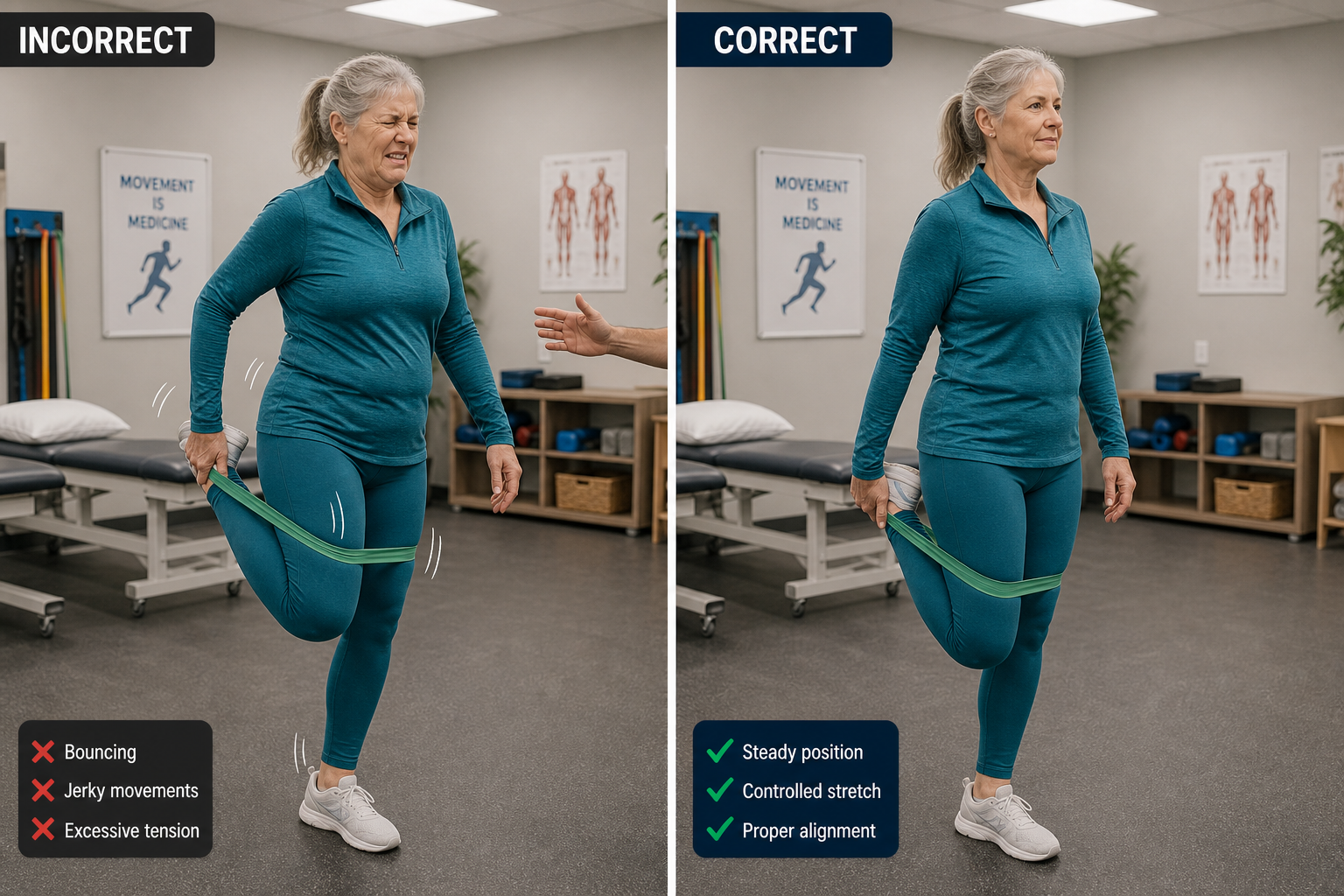
Rushing the warm-up: Five minutes feels long when you’re eager to start exercising. The temptation is to hurry through movements or cut them short. Rushing defeats the purpose. Your body needs time to increase circulation and core temperature. Fast, jerky movements during the warm-up create the injury risk you’re trying to avoid.
Skipping the warm-up on short or easy days: Light exercise days still benefit from a warm-up, even if abbreviated. A two-minute walk and some arm circles before a gentle stretching session prepare your body better than jumping straight into holds. The intensity matters less than the habit of preparing your system before asking it to work.
Stretching through pain: The “more is better” mindset that served you in other areas of life works against you in flexibility training. Pain is your body signaling that tissue is being damaged. Productive stretching feels like tension, mild pulling, or a deep ache in the muscle belly. Sharp pain, pain near joints, or pain that lingers after you release the stretch means you’ve gone too far.
Holding your breath during stretches: Breathing helps tissue relax and lengthen. Hold your breath and you trigger a stress response that tightens muscles. Take slow, deep breaths throughout each stretch. Exhale as you ease deeper into the position.
Static stretching specific muscles before working them hard: If you’re doing leg day at the gym, don’t statically stretch your quads and hamstrings beforehand. The temporary strength reduction puts those muscles at risk under heavy load. Dynamic warm-up, then lift, then static stretch afterward.
Comparing your flexibility to others: Flexibility is highly individual and depends on bone structure, connective tissue density, injury history, and genetics. Someone else touching their toes doesn’t mean you should be able to. Work within your own range and measure progress against where you started, not where other people are.
Frequently Asked Questions
Should I stop stretching before exercise entirely?
Replace static stretching with a dynamic warm-up before exercise. If you enjoy light stretching as part of your mental preparation for a workout, a few gentle stretches (held for 10-15 seconds, not forced) won’t cause harm, but they shouldn’t replace the dynamic warm-up. The warm-up is what actually prepares your body for safe exercise.
Is stretching a waste of time?
Absolutely not. Flexibility work is essential for joint health, movement quality, and long-term injury prevention. The research only questions the timing and type (pre-exercise static stretching specifically). Post-exercise stretching and dedicated flexibility sessions remain strongly recommended by virtually every expert in geriatric exercise science. For more detailed guidance on avoiding common errors, check out 5 flexibility mistakes seniors make during stretching.
What about foam rolling before exercise?
Foam rolling (also called self-myofascial release) before exercise improves range of motion without the strength-reducing effect of static stretching. Rolling tight muscles for 30-60 seconds per area before your dynamic warm-up is a good practice.
A soft-density foam roller provides the benefits without the bruising risk of firm rollers. Focus on muscles that feel dense or tender, not on joints or bony areas. Roll slowly, pausing on spots that feel particularly tight. You can learn more about proper technique in our