A recumbent exercise bike is one of the safest pieces of cardio equipment a senior can own. The reclined seating position supports your back, the step-through frame eliminates the climbing-over-a-bar hazard, and the pedaling motion is low-impact enough for arthritic knees and hips. If you want a way to get your heart rate up without the fall risk of a treadmill or the coordination demands of an elliptical, a recumbent bike is the answer.
Choosing the right model matters, though. Comfort, ease of use, and safety features vary dramatically between budget and mid-range options. Here’s what to look for and which models deliver the best experience for adults over 60.
Key Features for Seniors
Step-Through Frame Height
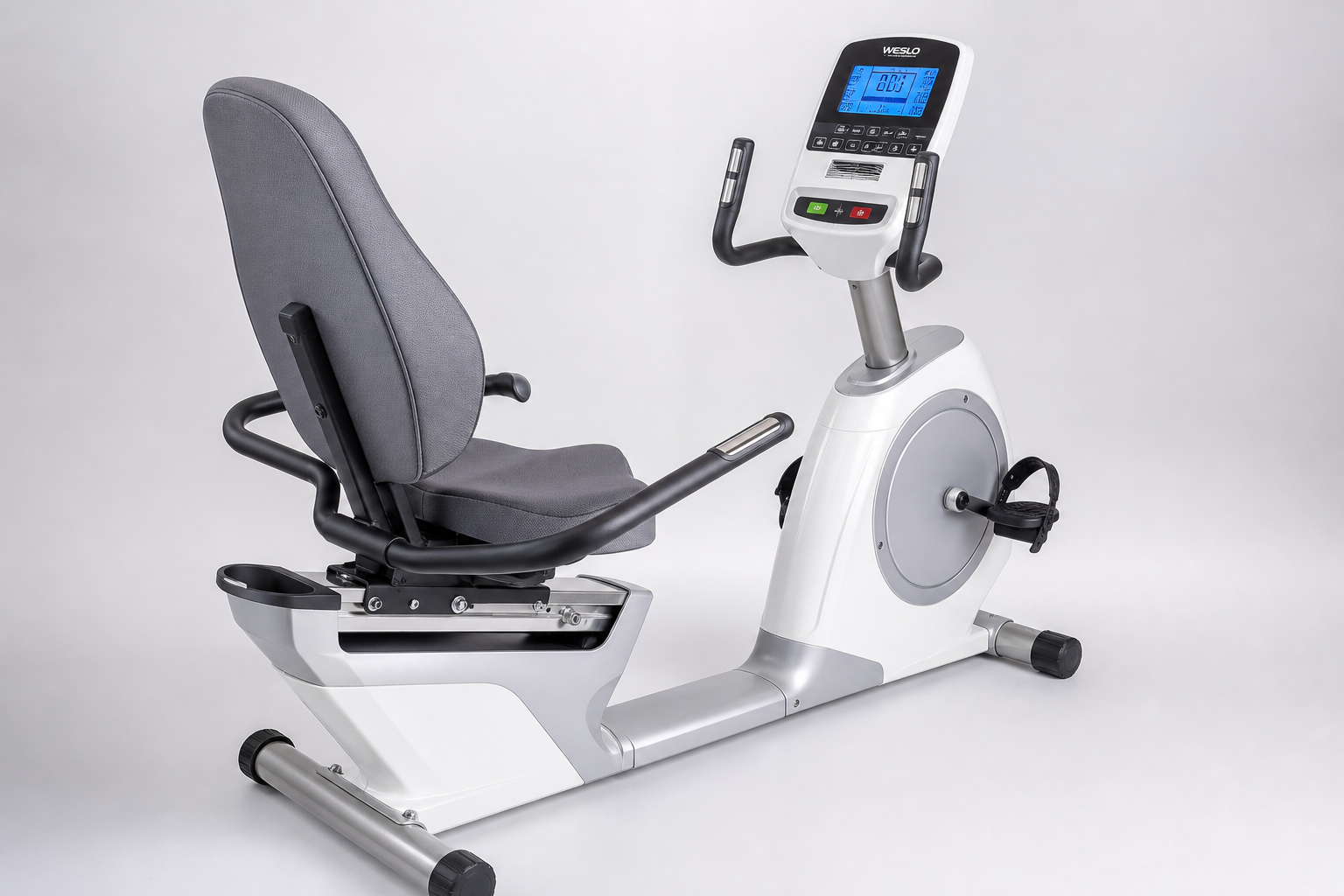
This is the single most important safety feature. The step-through height is the gap between the seat and the frame that you need to swing your leg through to get on the bike. Lower is better. Look for a step-through clearance of 15 inches or less. Some models require you to lift your leg nearly as high as getting on a regular bike, which defeats the purpose.
Budget bikes often skimp here. The frame design looks similar in photos, but when you stand next to the bike in person, you realize you need to lift your knee to mid-thigh height just to get your leg through. If you have hip flexor weakness, prior hip replacement, or significant arthritis, that high step-through becomes a barrier to actually using the bike. Measure if possible, or check user reviews for mentions of step-through difficulty.
Seat Comfort and Adjustability
You’ll be sitting in this seat for 20-45 minutes at a time. Look for a wide, padded seat with lumbar support. The seat should slide forward and backward easily (look for lever-operated rather than knob-twist adjustments, which are harder for arthritic hands). Mesh-backed seats stay cooler than solid plastic during longer sessions.
Seat width matters more than you’d expect. Narrow seats (under 12 inches wide) create pressure points on the sit bones that become painful after 15 minutes. Wider seats (14-17 inches) distribute your weight more evenly. Some models include cushioned armrests on either side of the seat, which provide useful support when getting on and off and give you something to brace against during higher-resistance intervals.
The backrest angle is another consideration. Most recumbent bikes position you at a 30-45 degree recline. Some people with certain back conditions prefer a more upright angle (closer to 30 degrees), while others find a deeper recline (closer to 45 degrees) more comfortable. This isn’t adjustable on most consumer models, so it’s worth checking the specs or sitting on a display model if you have strong preferences.
Console Readability
A console with large, high-contrast numbers is essential. Many otherwise excellent bikes have tiny displays that are impossible to read without glasses. Backlit LCD screens with numbers at least 1 inch tall are the minimum. Some newer models offer tablet holders that position your device at eye level, which is useful for following along with workout videos.
The console should show time, distance, calories, and current resistance level simultaneously without requiring you to cycle through screens. Having to press buttons mid-workout to see your heart rate or check how much time remains is annoying and breaks your rhythm. Some models display too much information in small print, which is just as bad as displaying too little. Simple and readable beats feature-packed and cluttered.
Button size and placement matter too. Large, well-spaced buttons are easier to hit accurately when your hands are sweaty or you’re wearing bifocals. Touch screens sound convenient but often require more precision and harder presses than physical buttons, which can be frustrating during a workout.
Resistance Range
Look for magnetic resistance with at least 16 levels. Magnetic systems are whisper-quiet (important if you exercise while watching TV) and provide smooth, consistent resistance. Having a wide range means you can start at a very low level if you’re deconditioned and have plenty of room to progress as your fitness improves.
Bikes with only 8 resistance levels often have too big a jump between settings. Level 3 feels too easy, level 4 feels too hard, and there’s no middle ground. With 16 or more levels, you can make smaller, more manageable increases as you build strength. This is particularly important for people recovering from cardiac events or managing conditions like COPD, where precise control over exercise intensity is necessary.
Magnetic resistance also requires zero maintenance. Older friction-based systems (felt pads pressing against the flywheel) wear out, create noise, and need periodic adjustment or replacement. Magnetic systems use, well, magnets, which don’t touch the flywheel and never wear out.
Pedal Design
Pedals should be large, weighted, and equipped with adjustable straps. Weighted pedals help keep your feet in position as the pedal rotates through the bottom of the stroke. Without counterweighting, your foot tends to slide forward on the downstroke and you waste energy repositioning it. Straps keep your feet secure and let you pull up on the pedal during the upstroke, which engages your hamstrings and makes the workout more efficient.
Some bikes offer pedals with heel cups in addition to toe straps. These are useful if you have neuropathy or reduced sensation in your feet, as they provide a physical boundary that prevents your foot from sliding out unexpectedly.
Heart Rate Monitoring
Built-in pulse sensors on the seat handles are standard on most mid-range and higher bikes. You grip the metal sensors for 10-15 seconds and the console displays your heart rate. This works well enough for casual monitoring but can be less accurate if your hands are sweaty or you have poor circulation in your hands.
Chest strap compatibility (via Bluetooth) provides more accurate continuous heart rate tracking. If you’re following a cardiac rehab protocol or need to stay within a specific heart rate zone, a chest strap is worth the extra investment. Some doctors recommend staying below a certain percentage of your max heart rate during exercise, and having real-time feedback makes that easier to manage.
Top Recumbent Bikes for Seniors
Schwinn 270

Schwinn 270 Recumbent Bike
Best all-around choice with 25 resistance levels, dual LCD screens, and excellent seat comfort
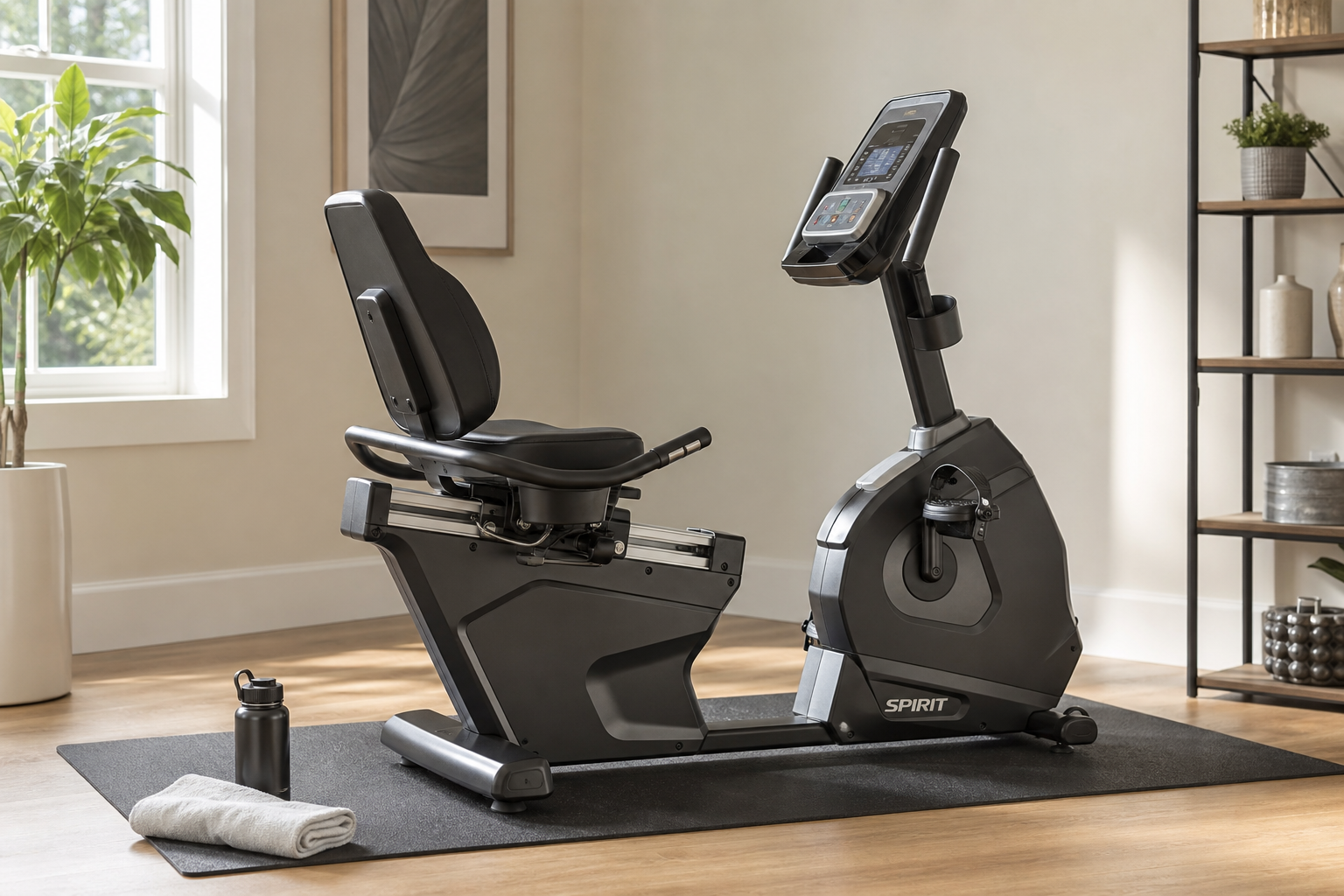
The Schwinn 270 is the best all-around choice for most seniors. It offers 25 resistance levels, a comfortable vented seat with lumbar support, a low step-through frame, and dual LCD screens that display workout metrics clearly. The built-in heart rate grips on the seat handles let you check your pulse without wearing a separate monitor. Bluetooth connectivity syncs with the Explore the World app for virtual rides.
The dual-screen setup puts your primary workout stats (time, distance, resistance) on one screen and secondary stats (calories, heart rate, RPM) on the other. You don’t need to toggle between views. The screens are backlit and readable in both bright rooms and dim basements.
The seat adjustment lever operates with one hand and locks securely. The vented mesh back prevents sweat buildup during longer sessions. The bike includes 29 preset workout programs, though most people stick to manual mode and adjust resistance themselves as they go. The built-in fan has three speeds and is positioned to blow directly at your torso.
At roughly 80 pounds, this bike is stable enough that it doesn’t rock or shift during hard pedaling. The transport wheels on the front let you tip the bike back and roll it to a new location, though it’s heavy enough that you’ll want help moving it if you have balance concerns.
Best for: Most seniors looking for a reliable, full-featured bike at a mid-range price point.
Marcy ME-709
Marcy ME-709 Recumbent Bike
Best budget option with exceptionally low step-through height for easy mounting
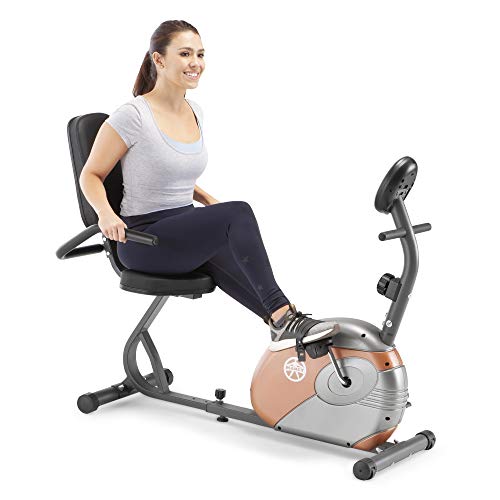
The Marcy ME-709 is the best budget option. It’s simpler than the Schwinn (8 resistance levels, basic LCD console), but it has an exceptionally low step-through height that makes getting on and off easy even for those with significant hip or knee limitations. The counterweighted pedals with adjustable straps keep your feet secure. For seniors who want basic cardiovascular exercise without complicated programming, this is a solid choice.
The console is basic: a single LCD screen that rotates through time, speed, distance, and calories. No Bluetooth, no preset programs, no frills. You adjust resistance with a tension knob located below the console. The 8 resistance levels provide enough range for light to moderate workouts, though serious cyclists will outgrow the upper end quickly.
The seat is padded but not as plush as higher-end models. Some users add a gel seat cover for extra cushioning during longer sessions. The backrest is fixed and doesn’t recline or adjust, but it provides adequate lumbar support for most body types.
The weight capacity is 300 pounds, same as the Schwinn. The overall footprint is slightly smaller (about 4 inches shorter), which can be useful if you’re tight on space. Assembly is simpler too, typically taking 45-60 minutes with basic tools.
Best for: Budget-conscious buyers, seniors with severe mobility limitations who need the easiest possible mount/dismount.
Nautilus R616
The Nautilus R616 sits between the Schwinn and Marcy in price and features. It offers 25 resistance levels, a large backlit display, and a 300-pound weight capacity. The seat is wider than average and the adjustment mechanism is easy to use. Bluetooth heart rate monitoring is available if you pair a chest strap.
The console includes 29 workout programs similar to the Schwinn, including interval programs, heart rate control programs, and custom programs where you manually set resistance levels for different time segments. The backlit display is one of the brightest in this price range, which is helpful if you exercise in a basement or garage with limited natural light.
The seat features adjustable lumbar support, a feature usually found only on bikes costing significantly more. You can increase or decrease the amount of lower back curve to match your preference. The seat cushion itself is about an inch thicker than the Schwinn’s.
One practical advantage: the resistance controls are mounted on the seat handles in addition to the console. You can bump resistance up or down without reaching forward, which is easier on your shoulders and maintains better posture during the workout.
Best for: Heavier seniors who need a higher weight capacity, people who want a step up from budget models without the full Schwinn price.
NordicTrack Commercial R35
The NordicTrack Commercial R35 is the premium option, featuring a 14-inch HD touchscreen with iFIT integration for guided workouts and virtual scenic rides. The auto-adjusting resistance changes during iFIT workouts, and the overall build quality is excellent. The downside is that iFIT requires a monthly subscription after the initial trial period.
The touchscreen rotates, so you can swivel it toward you for better viewing angles or turn it aside when you want to watch your own TV. The iFIT workouts include studio classes led by trainers, global rides filmed in locations like the French Alps or coastal California, and structured training programs designed by exercise physiologists. The bike automatically adjusts resistance to match the terrain in video rides (uphill = harder, downhill = easier).
The seat is the most comfortable of any bike in this comparison, with thick padding and excellent lumbar support. The step-through height is low, and the overall frame is commercial-gym quality. This bike will last 15-20 years of regular use.
Without the subscription, you lose the auto-adjusting resistance and access to the workout library. The bike works fine without the subscription, but you’re paying for features you don’t need.
Best for: Tech-savvy seniors who want guided workout programs and virtual riding experiences. If you’ll use the touchscreen and iFIT content, the investment makes sense.
Common Concerns Addressed
Back Support
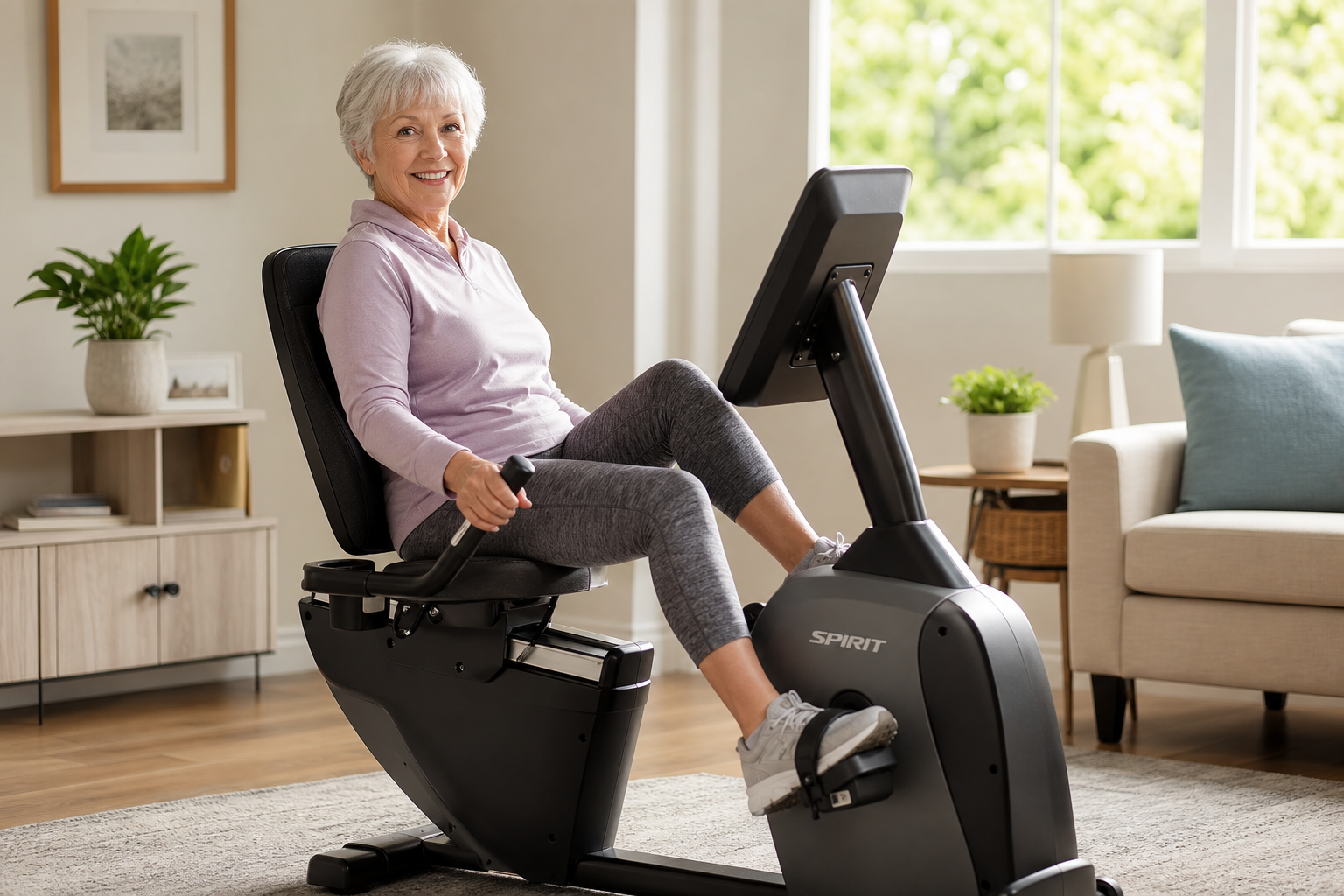
Recumbent bikes inherently support your back better than upright bikes or treadmills. The reclined position reduces spinal compression and lets you exercise comfortably even with lower back pain or spinal stenosis. If additional lumbar support is needed, a small rolled towel behind your lower back works as a simple addition.
The reclined position also reduces pressure on your hands and wrists. Upright bikes require you to lean forward and brace yourself on the handlebars, which can aggravate carpal tunnel syndrome or arthritis in the hands. On a recumbent bike, your arms rest naturally on the seat handles with minimal pressure.
Some people worry that the reclined position makes the workout too easy. It doesn’t. You’re still working your leg muscles just as hard, but you’re doing it with better spinal alignment and less strain on your joints. If anything, the comfort advantage lets you exercise longer, which burns more calories and improves cardiovascular fitness more than a shorter, uncomfortable workout.
Ease of Getting On and Off
The step-through design means you walk up to the bike, swing one leg through the opening, and sit down. You don’t need to lift your leg over a high bar. Place the bike near a wall or doorframe so you have something to hold during the transition if balance is a concern.
Practice getting on and off a few times when you first receive the bike, before you start a workout. Walk through the motion slowly. Some people find it easier to approach from the right side, others from the left. Figure out which feels more natural and stick with that approach.
If you use a cane or walker, position it within arm’s reach of the bike so you can grab it immediately after dismounting. Don’t try to rush the transition. Take your time standing up, let any dizziness pass if you’ve been exercising hard, then step through the frame opening.
Noise Level
Magnetic resistance bikes are virtually silent. The only sound is the faint whir of the flywheel and the soft click of your pedal strokes. You can exercise while watching TV at normal volume or during a phone conversation without disturbing anyone.
This is a real quality-of-life advantage if you live in an apartment, exercise early in the morning, or share space with someone who has different sleep or work schedules. Belt-driven bikes (which most magnetic recumbent bikes use) are quieter than chain-driven bikes. If the product description doesn’t specify, assume chain-driven and expect a bit more noise.
Space Requirements
Recumbent bikes have a larger footprint than upright bikes, typically 55-65 inches long and 25-30 inches wide. Measure your available space before ordering. Some models feature transport wheels on the front so you can tip the bike and roll it to a storage position when not in use