Heat therapy is one of the oldest and most effective non-drug treatments for arthritis stiffness and pain. Warmth increases blood flow to stiff joints, relaxes the surrounding muscles, and reduces the viscosity of synovial fluid (making the joint move more freely). A quality heating pad used for 15-20 minutes before exercise can transform a stiff, painful joint into one that moves well enough for a productive workout.
The right heating pad depends on your specific needs: where your arthritis affects you most, whether you need portability, how deep the joint sits beneath the surface, and whether you want something you can wear while moving around. What works beautifully for knee arthritis might be the wrong tool for hip or shoulder pain.
Types of Heating Pads
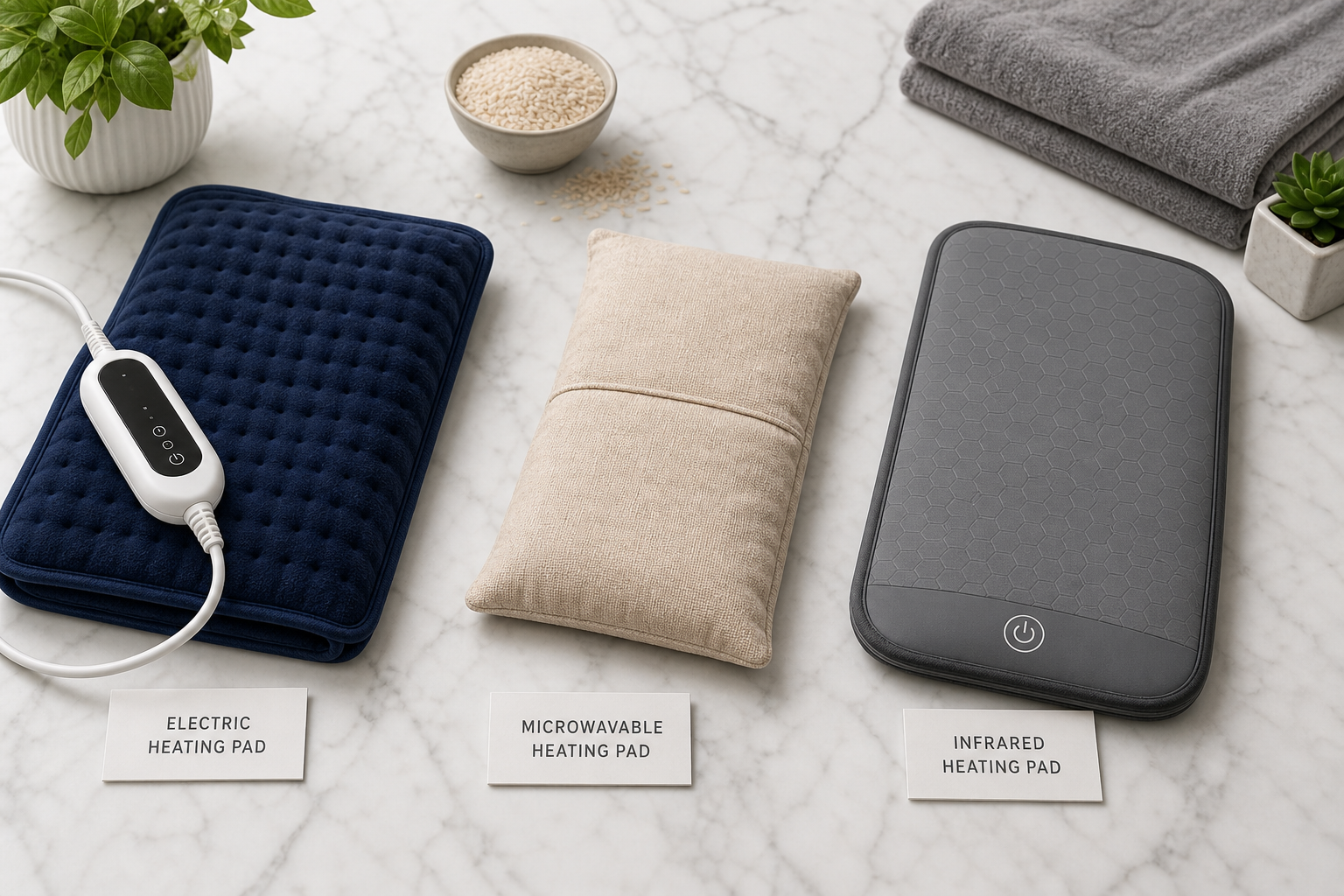
Electric Heating Pads
These plug into the wall and provide continuous, adjustable heat. They’re the most convenient option for home use because they maintain a constant temperature for as long as you need. Multiple heat settings let you customize the intensity. Most include an auto-shutoff feature (typically after 2 hours) for safety.
Electric pads range from basic 3-setting models to advanced units with digital controllers and 10+ temperature levels. If you’ll use the pad daily, the investment in a better model pays off quickly in comfort and durability.
The main limitation: you’re tethered to an outlet. That’s fine for pre-exercise warm-up at home, but it’s not practical if you need heat while cooking dinner or walking around the house.
Microwavable Heat Packs
Filled with rice, flaxseed, or clay beads, these are heated in a microwave for 1-3 minutes and retain warmth for 20-30 minutes. They conform better to joint contours than flat electric pads and provide a moist heat that penetrates more deeply. They’re portable and don’t require an outlet.
The conformable design matters for oddly shaped areas (shoulders, elbows, ankles) where a flat pad can’t make full contact. A microwavable pack molds around the joint, delivering heat to the entire surface. Many are filled with aromatherapy additions (lavender, chamomile) though the scent is optional and doesn’t affect therapeutic value.
Heat retention varies by fill material. Clay beads hold heat longest (30-40 minutes), rice or flaxseed for 20-30 minutes. Lighter fills like buckwheat hulls cool faster but weigh less, which matters if you’re draping the pack over a painful shoulder where excess weight causes discomfort.
Check the pack every few years for signs of deterioration. If the fabric smells musty or scorched after heating, or if the fill material has clumped into hard masses, replace it. A degraded pack heats unevenly and can develop hot spots that burn skin.
Infrared Heating Pads
Infrared pads use far-infrared technology to generate heat that penetrates deeper into tissue (up to 2-3 inches) compared to conventional pads (which warm the skin surface primarily). They’re more expensive but may provide better relief for deep joint pain. Some are embedded with jade or tourmaline stones that distribute infrared heat evenly.
The deeper penetration makes infrared pads particularly useful for large joints where the actual joint capsule sits well beneath the skin surface (hips, deep shoulder structures). Surface heat from a standard pad warms the skin and superficial muscle but may not reach the joint itself. Infrared heat travels further into tissue.
For some people with deep, stubborn joint pain, these pads provide enough additional benefit to justify the higher cost. For others with arthritis in smaller, more superficial joints (fingers, wrists, elbows), a standard moist-heat pad works just as well for much less.
Infrared pads take longer to reach operating temperature (10-15 minutes vs. 3-5 minutes for standard pads), so plan accordingly if you’re using one for pre-exercise warm-up.
Wearable Heat Wraps
Adhesive or Velcro-secured wraps that fit specific body parts (knee, shoulder, back) and provide heat through chemical reactions (single-use) or reusable electric elements. They allow you to move around while heating, which is useful for pre-exercise warm-up when you don’t want to sit still.
Single-use chemical wraps activate when exposed to air and produce 8-12 hours of low-level heat (around 104 degrees Fahrenheit). They’re convenient for travel or days when you’re out of the house, but the per-use cost adds up quickly if you need heat daily.
Reusable electric wraps use battery-powered heating elements or USB charging. Battery life varies: some provide 2-3 hours of heat per charge, others only 45-60 minutes. Check the specs before buying if you need longer heat sessions.
Wraps fit specific body parts, so you can’t reuse a knee wrap for your shoulder. If arthritis affects multiple joints, you’ll need multiple wraps or stick with a versatile flat pad you can reposition.
Top Heating Pads for Arthritis
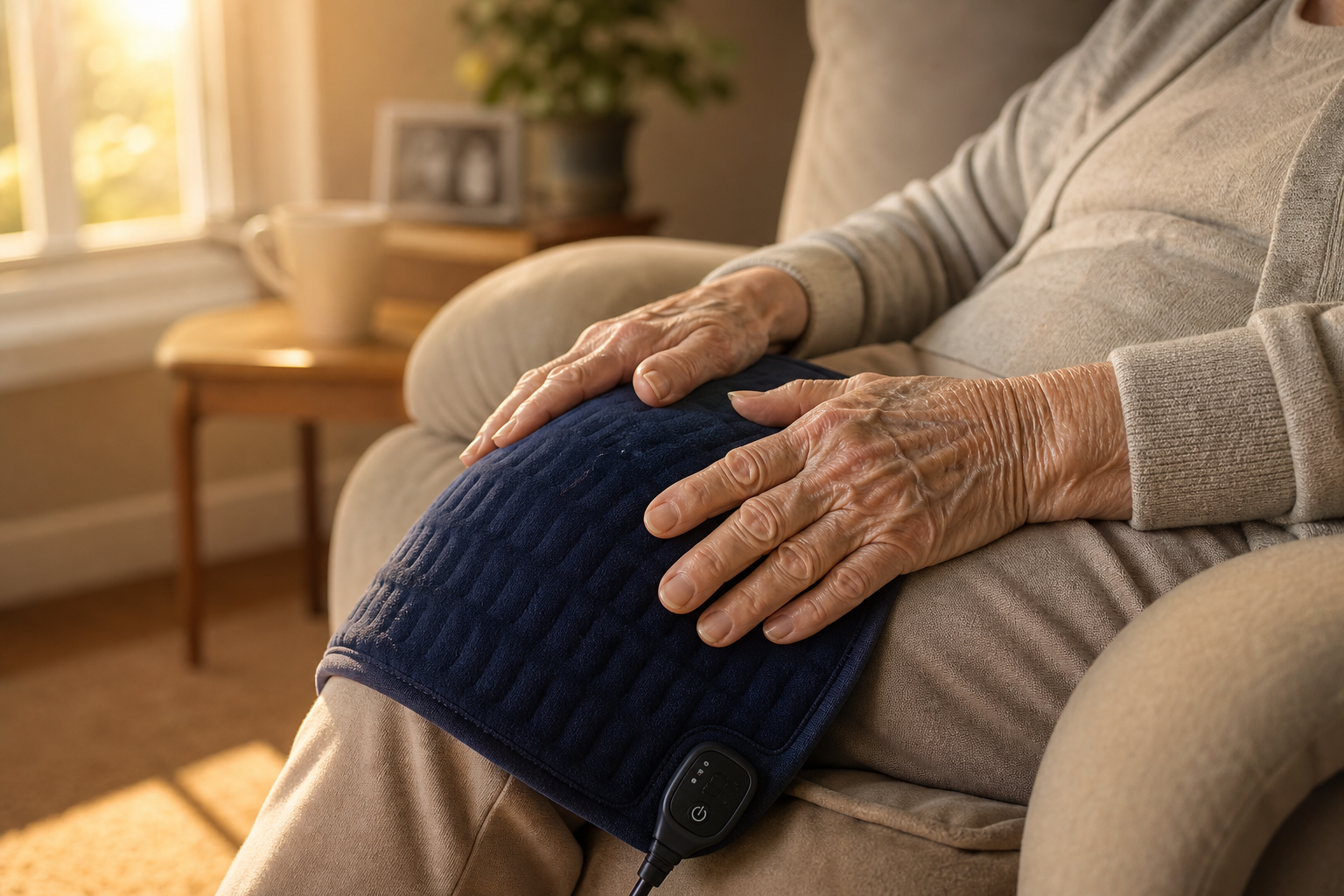
Sunbeam King-Size Heating Pad
The Sunbeam King-Size is the bestselling electric pad for a reason. The large 12×24 inch size covers entire joints (shoulder, knee, back) without repositioning. It offers moist heat capability (a removable sponge insert adds moisture for deeper penetration) and 6 heat settings. The auto-shutoff activates after 2 hours. The soft microplush cover is gentle on sensitive skin.

Sunbeam King-Size Heating Pad
Large coverage area with both moist and dry heat options, perfect for daily home use
The king-size format means you’re not constantly adjusting the pad to keep it centered on the painful area. You can cover your entire lower back, both knees simultaneously, or wrap it around a shoulder with room to spare. The extra coverage matters if your arthritis affects multiple adjacent joints. If you need to warm up before performing squats with knee pain, this pad provides the targeted heat necessary to prepare stiff joints for movement.
The moist heat sponge lives in a pocket on the pad. Wet it with tap water, wring out the excess, insert it, and the pad’s heat converts that moisture to therapeutic moist heat within a few minutes. When you want dry heat, remove the sponge. Having both options in one unit adds versatility without extra cost.
The 6 heat settings (many cheaper pads offer only 3) let you fine-tune the temperature. Setting 1-2 works for gentle all-day heat or for people with very heat-sensitive skin. Setting 4-5 reaches therapeutic temperature quickly for pre-exercise warm-up. Setting 6 is quite hot and rarely necessary; most users stick to 3-4 for arthritis relief.
The microplush cover is machine washable, though you’ll want to spot-clean it frequently rather than washing after every use (the wiring doesn’t love constant washing machine agitation). A washable cover matters for long-term hygiene, especially if you use topical arthritis creams that can transfer residue to the fabric.
Best for: General home use when you need reliable, adjustable heat for any joint.
Thermophore MaxHeat (Professional Grade)
The Thermophore MaxHeat is the pad used in physical therapy clinics. It generates moist heat automatically (pulling moisture from the air) without needing a wet sponge. The heat output is stronger than consumer models, reaching therapeutic temperature faster. It uses a press-and-hold switch (you must hold a button for the pad to stay on), which prevents burns if you fall asleep.
The automatic moist heat generation is the standout feature. You don’t wet a sponge or spray water on a cover. The pad draws ambient humidity from the air and converts it to moist heat within the first few minutes of operation. This works even in relatively dry indoor environments, though it’s more effective in normal household humidity levels (30-50%) than in very dry climates.
The press-and-hold safety switch requires you to keep your hand on a button for the pad to stay heated. Release the button and the heat shuts off immediately. This design prevents burns if you doze off, which is a real risk during extended heat therapy sessions. The tradeoff: you can’t set it and walk away. You’re holding the switch the entire time, which some people find annoying but others appreciate as a built-in session timer.
The Thermophore heats significantly faster and hotter than consumer-grade pads. Where a standard pad takes 5-8 minutes to reach therapeutic temperature, the Thermophore gets there in 2-3 minutes. The intense heat output means you use lower settings to achieve the same effect, extending the pad’s lifespan by reducing wear on the heating elements.
Available in multiple sizes: standard (13×13 inches), medium (14×27 inches), and large (14×27 inches with higher wattage). The standard size suffices for single joints (knee, elbow, shoulder). The medium and large sizes cover broader areas (entire back, both hips).
This is a serious therapeutic tool, not a casual comfort item. It’s built for daily clinical use. If you need aggressive heat therapy multiple times a day and standard pads aren’t cutting it, the Thermophore justifies its cost. If your arthritis responds well to gentler heat, save the money.
Best for: Seniors who want professional-grade heat therapy at home and need maximum heat output.
UTK Jade Far-Infrared Heating Pad
The UTK infrared heating pad uses natural jade stones to emit far-infrared heat that penetrates deeper than conventional pads. It heats to temperatures between 103-159 degrees Fahrenheit with adjustable settings. The deeper heat penetration may benefit seniors with arthritis in larger joints (hips, shoulders) where surface heat doesn’t reach the joint capsule effectively.

UTK Jade Far-Infrared Heating Pad
Deep-penetrating infrared heat for stubborn joint pain that doesn’t respond to standard pads
The jade stones cover the entire heating surface, giving the pad a distinct lumpy texture that some people find uncomfortable and others say provides a gentle massage effect as you shift position. The stones heat slowly but retain warmth exceptionally well, so the pad stays therapeutic for several minutes after you unplug it.
Temperature control is more precise than most pads, with a digital LED controller showing exact degrees rather than just low-medium-high settings. You can set it to hold 131 degrees for 20 minutes and it maintains that temperature consistently. The timer function (1 to 12 hours) lets you program extended sessions without worrying about auto-shutoff kicking in too early.
The UTK comes in multiple sizes and styles: flat pads (21×31 inches, 21×38 inches), wrap-style pads for joints, and even full-body mats. For arthritis-specific use, the medium flat pad (21×31 inches) hits the sweet spot of coverage and cost.
The main drawback besides price: weight. The jade stones make this