Weak grip is the bottleneck that limits everything else. Your legs can squat more, your back can row more, and your arms can press more than your hands can hold. For seniors with arthritis, neuropathy, or age-related grip decline, the hands give out before the target muscles are adequately challenged.
Grip aids and lifting gloves solve this by redistributing forces away from painful joints, increasing friction between your skin and the weight, and providing mechanical advantage that compensates for reduced grip strength.
This isn’t about cutting corners. It’s about training the muscles you intended to train rather than being stopped by a secondary limitation. A rowing exercise is supposed to work your back. If your hands open before your back muscles are fatigued, you didn’t get the workout you needed. Grip aids remove that barrier.
Types of Grip Aids
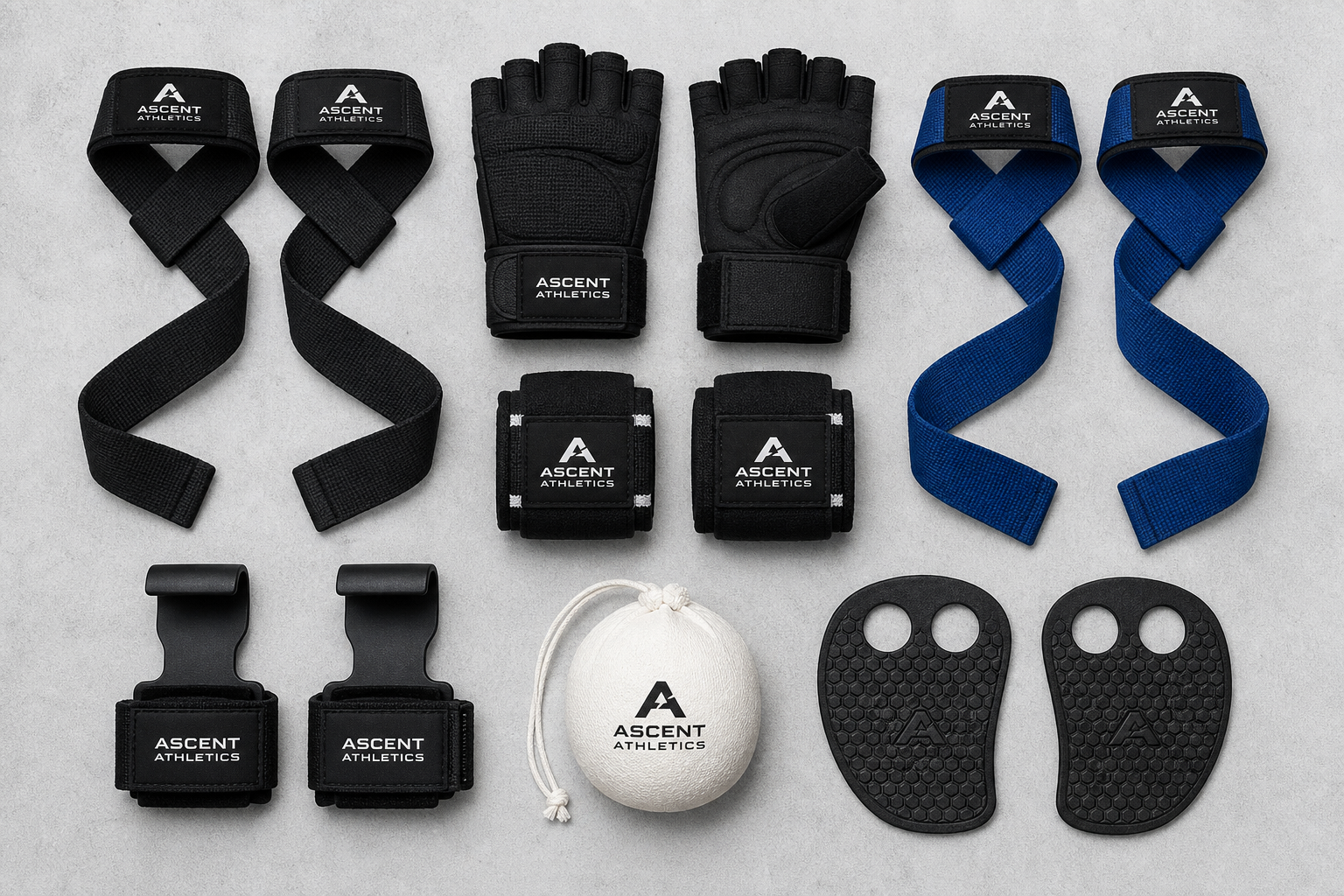
Lifting Gloves
Padded lifting gloves protect the palms from calluses and pressure pain while increasing friction against dumbbell handles. Look for gloves with open fingertips (for dexterity), padded palms (for pressure distribution), and wrist wraps (for wrist support during pressing movements). Gloves with silicone grip pads on the palm provide the most friction enhancement.

Padded Lifting Gloves with Wrist Support
Best all-around option for seniors who need palm cushioning and wrist stabilization in one product
Padding matters more than you’d expect. The cushion spreads compressive force across a wider area of your palm, which reduces hot-spot pain on the meaty part of your hand where the handle digs in. That single feature often makes the difference between completing a set and having to drop the weight early because your palms hurt.
Open fingertips give you tactile feedback when adjusting weights or re-racking dumbbells. Full-finger gloves muffle that feel and make small adjustments awkward. The trade-off is that your fingertips are exposed, so if you’re lifting in a cold garage gym, you’ll feel it. For more tips on managing temperature extremes during workouts, check out our guide on cold weather exercise tips for seniors.
Wrist wraps integrated into the glove stabilize the wrist joint during presses and overhead work. If you have wrist arthritis or a history of wrist pain, this feature is non-negotiable. The wrap prevents excessive extension or flexion under load.
Lifting Straps
Lifting straps wrap around your wrist and then loop around the dumbbell or barbell handle, transferring the weight from your fingers to your wrist. This allows you to hold heavier weights than your grip alone can manage. Straps are particularly useful for rows, deadlifts, and carries where grip is the limiting factor. Padded wrist straps reduce pressure on arthritic wrist joints.
The mechanics are simple. You wear the strap like a bracelet, wrap the loose tail around the bar or handle, and grip over the wrapped material. The weight now hangs from your wrist rather than your fingers. Your hand closes around the wrap to stabilize the weight, but it’s not bearing the load the way it does in an unassisted grip.
Straps come in cotton, nylon, and leather. Cotton is gentler on the skin but wears out faster. Nylon is durable and easy to clean but can dig into the wrist under heavy loads. Leather is the most durable and provides moderate cushioning, but it’s stiffer and takes longer to break in.
Figure-eight straps loop through themselves to lock around the bar, which means once they’re set, they won’t slip. Standard loop straps require you to re-wrap between sets, which is tedious but also gives you a quick release if you need to drop the weight in a hurry. For seniors, the figure-eight style is often easier because it eliminates the repeated wrapping.
Fat Grips / Grip Adapters
Fat grip adapters slide over dumbbell handles to increase the diameter. A thicker handle distributes gripping force across a wider area of the palm and fingers, which can reduce pain in arthritic finger joints that are overloaded by thin handles. Paradoxically, the thicker grip is easier on arthritic hands while also providing a grip-strengthening training stimulus for the forearm muscles.
Standard dumbbell handles are around one inch in diameter. Fat grips increase that to two or even two and a half inches. The wider diameter spreads the compressive load so no single knuckle joint takes excessive stress. If you’ve felt sharp pain in the first knuckle of your index or middle finger during lifts, the thin handle is concentrating too much force on that joint. A fat grip fixes it.
The downside is that fat grips do require more total gripping force because you’re closing your hand around a larger object. If you have severe grip weakness where you can barely hold a standard handle, adding thickness might make things worse rather than better. Test before committing.
Most fat grips are made from dense rubber or silicone. They’re easy to slide on and off, and they don’t damage the dumbbell’s finish. Some are textured on the outside for additional friction. The texture helps but also feels rough on bare hands, so you may still want gloves.
Hook Grips
Hook grip aids attach to your wrist and feature a metal or rigid hook that wraps under the bar or handle. They eliminate the need for finger gripping entirely, which is valuable for seniors with severe arthritis, neuropathy, or finger deformities that prevent a functional grip. These are the most accommodating grip aid for severe hand limitations.

Hook Grip Lifting Aids
Essential for seniors with severe grip limitations who cannot close their hands around handles
The hook does all the work. You slide your wrist through the padded cuff, position the hook under the handle, and lift. Your hand can stay relaxed or lightly closed for stability, but it’s not bearing load. This is the only option that works when your fingers genuinely can’t generate gripping force.
Hooks are most practical for pulling exercises like rows and lat pulldowns. They’re awkward for pressing movements because the hook orientation doesn’t align naturally with a press. You can make it work, but it requires more wrist adjustment and isn’t as stable.
The cuff must fit snugly without cutting off circulation. Too loose and the hook won’t stay aligned under the handle. Too tight and your hand goes numb after a set or two. Adjustable straps with Velcro closures give you fine control, but the Velcro wears out over time and loses grip. Ratcheting buckles are more durable but slower to adjust.
Choosing the Right Aid
- Mild grip weakness (can hold but fatigues): Lifting gloves with silicone grip pads. Increases friction so less gripping force is needed.
- Moderate grip weakness (hands open before muscles are done): Lifting straps for pulling exercises (rows, deadlifts) plus gloves for pushing exercises (presses, curls).
- Severe grip limitations (can’t close hand around handle): Hook grips or fat grip adapters that reduce the closing force required.
- Arthritic hand pain during lifting: Padded gloves plus fat grip adapters. The combination cushions the palm and distributes finger pressure across a wider area. For more guidance on managing arthritis during exercise, see our article on arthritis-friendly exercises for seniors.
- Neuropathy or numbness in hands: Straps or hooks. If you can’t feel the weight properly, relying on finger grip alone is risky. Transfer the load to your wrist where you have better proprioception.
- Wrist pain or instability: Gloves with integrated wrist wraps or padded lifting straps. The wrap stabilizes the joint and limits painful ranges of motion under load.
You may need different aids for different exercises. It’s common to use straps for heavy rows, gloves for lighter pressing work, and nothing at all for bodyweight exercises. Don’t feel locked into one solution.
Common Mistakes When Using Grip Aids
Over-Tightening Straps
Straps should be snug but not tourniquet-tight. If your hand turns red or you lose feeling in your fingers during the set, loosen them. The strap is supposed to transfer load, not cut off blood flow.
Test the tightness by wrapping the strap and then opening and closing your hand a few times. If it feels like your hand is being squeezed shut, back it off a notch.
Using Straps for Every Exercise
Straps are a tool for exercises where grip is the bottleneck, not a permanent replacement for your hands. If you strap in for every exercise including light work, your grip strength will decline because you’ve removed the training stimulus.
Use straps selectively for heavy pulling movements and go unassisted for lighter loads and accessory work. For a detailed program on building grip strength naturally, visit our guide on grip strength exercises for seniors.
Ignoring Proper Wrap Technique
Straps only work if the wrap is tight and secure around the handle. A loose, sloppy wrap will slip mid-set and dump the weight. Wrap direction matters too.
The tail should spiral around the bar in the same direction your fingers close, not against it. If you’re wrapping backward, the weight will unwind the strap as you lift.
Choosing the Wrong Glove Size
Gloves that are too large bunch up in your palm and reduce friction instead of increasing it. Gloves that are too small restrict circulation and make your hands cramp.
Measure your hand circumference at the widest part of your palm (usually just below the knuckles) and match it to the manufacturer’s size chart. If you’re between sizes, go with the larger size for comfort.
Using Fat Grips on Every Handle
Fat grips are a targeted tool for pain relief and grip strengthening, not a universal upgrade. They’re helpful on dumbbells and barbells where the standard handle is thin, but adding them to cable machine handles or resistance bands usually makes the grip awkward without providing benefit. Reserve them for free weights.
When to Skip Grip Aids
Not every situation calls for assistance. If you’re doing warm-up sets with light weights, your natural grip is probably sufficient. Grip aids shine when the load is heavy enough that your hands would fail before your target muscles are worked.
Bodyweight exercises like push-ups, planks, and pull-ups don’t require grip aids unless your hands hurt from pressing into the floor or bar. In those cases, padded gloves help, but straps and hooks are irrelevant.
If you’re rehabbing a hand or wrist injury, your physical therapist may want you to avoid aids temporarily so you rebuild natural grip strength as part of the recovery process. Follow their guidance. Once you’re cleared for normal training, aids become fair game again.
Building Grip Strength Alongside Using Aids
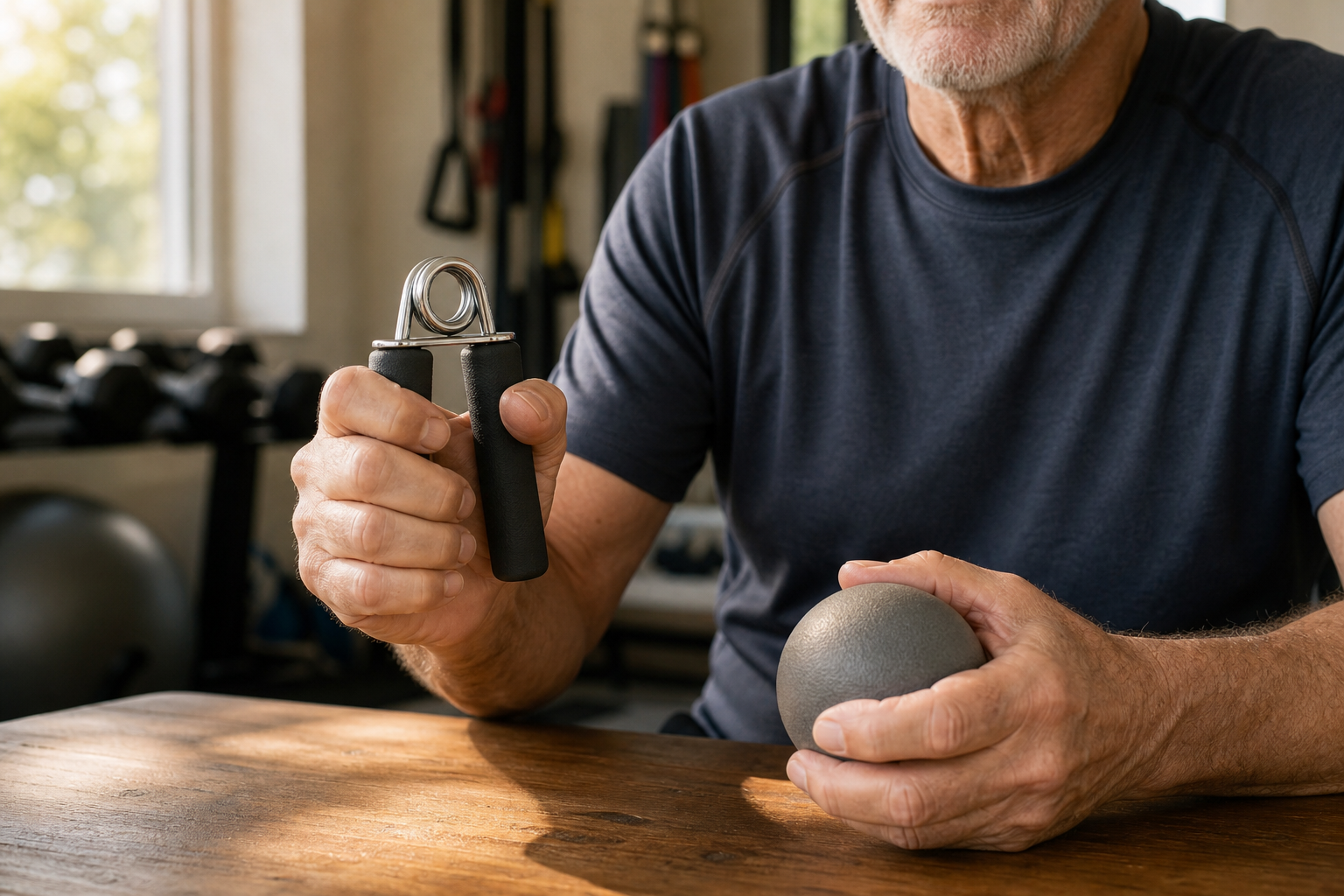
Dedicate five minutes after each workout to grip-specific exercises: hand gripper squeezes (10 per hand), towel wringing (30 seconds), and farmer’s holds (hold a moderate weight at your side for time). These targeted exercises build grip strength progressively while your aids handle the heavy lifting during the main workout.
Hand grippers come in different resistance levels. Start with a gripper you can close 10 times with moderate effort. Once you can do 20 reps, move up to the next resistance. Grippers isolate the finger flexors and thumb, which are the weakest links in most people’s grip.
Towel wringing works the rotational strength of the forearm. Soak a hand towel, wring it out as hard as you can, and hold the wring for five to 10 seconds. Repeat three or four times. This mimics the twisting forces you encounter when opening jars or turning doorknobs.
Farmer’s holds are simple. Pick up a moderately heavy dumbbell in each hand, stand tall, and hold them at your sides for as long as you can. When your grip starts to give out, set them down, rest, and repeat. This builds grip endurance, which is different from the explosive strength needed to close a gripper but just as important for everyday function.
For a complete strength training program that incorporates grip work alongside other muscle groups, check out our 12-week progressive resistance training program.
Alternative Training Methods for Grip Issues
Resistance bands require less gripping force than dumbbells because the resistance is distributed through the handle and wrist rather than concentrated in a dangling weight. For seniors with severe grip issues, resistance bands with padded handles may eliminate the need for grip aids entirely while providing progressive strength training.
The handle design matters. Bands with rigid plastic handles are easier to hold than bands with fabric loops, which require you to thread your hand through and grip the loop material. Padded handles further reduce the force needed by cushioning the palm.
Bands do have limits. They don’t load the bottom of the movement the way free weights do, so you lose some training stimulus there. They’re excellent for seniors with grip problems who need a lower barrier to entry, but they’re not a full replacement for weights if your goal is maximum strength development.
Cleaning and Maintaining Your Grip Aids
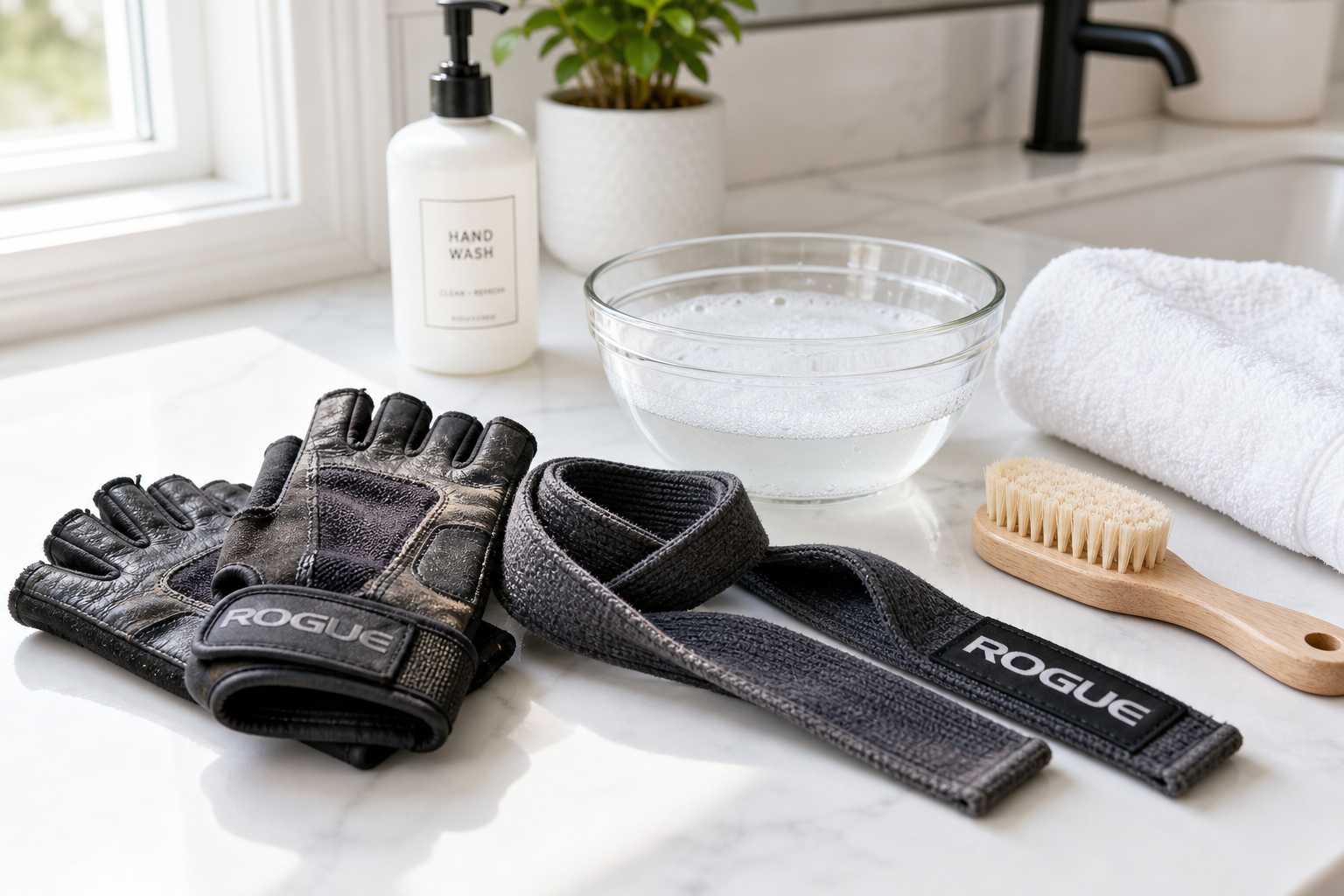
Gloves and straps get sweaty and start to smell if you don’t clean them. Toss fabric gloves and cotton straps in the washing machine on a gentle cycle, then air dry. Don’t put them in the dryer, as the heat breaks down the padding and elastic.
Leather gloves and straps should be wiped down with a damp cloth and occasionally treated with leather conditioner to prevent cracking.
Fat grips and hook cuffs can be wiped clean with a disinfectant wipe or soapy water. Let them air dry completely before storing. Rubber and silicone can develop a sticky residue if stored while damp.
Metal hooks should be inspected periodically for cracks or bends. A bent hook can slip off the bar mid-rep, which is dangerous. If the metal shows signs of fatigue, replace the aid.
Frequently Asked Questions
Will grip aids make my grip weaker over time?
Using straps for every exercise can reduce grip strengthening stimulus. The practical approach: use grip aids for exercises where grip limits