Ice packs from the freezer wrapped in a kitchen towel are better than nothing, but they’re clumsy, they slide off, and they don’t maintain consistent cold for the 15-20 minutes needed to effectively reduce inflammation. A purpose-built cold therapy wrap conforms to the joint, stays in place hands-free, and often integrates compression for combined benefits. For seniors dealing with post-exercise knee or shoulder pain, a quality wrap makes icing consistent enough to actually help.
Before starting any new cold therapy regimen, especially if you have circulation issues, neuropathy, or are on blood thinners, check with your doctor. Cold therapy is generally safe, but individual conditions affect how your body responds to extended cold exposure.
Types of Cold Therapy
Gel Pack Wraps
Flexible gel packs that are stored in the freezer and inserted into a neoprene or fabric sleeve with straps. They conform to body contours better than rigid ice packs and typically maintain therapeutic cold for 20-30 minutes. Most are reusable for hundreds of cycles.
The gel compound stays pliable at freezing temperatures, which matters more than you’d think. A rigid ice pack creates pressure points and gaps where the joint isn’t making full contact. Gel molds to the knee’s curves or shoulder’s complex topography, maximizing the surface area receiving cold therapy. Better contact means more effective inflammation reduction.
Storage is simple: keep the gel pack in the freezer between uses. It needs at least two hours to refreeze fully after a session. Many users keep two packs on hand so one is always ready while the other refreezes.
Cryo-Cuff Systems
These use a gravity-fed cooler connected to a cuff that wraps around the joint. Ice water circulates through the cuff, providing continuous cold and compression simultaneously. They’re the most effective option for post-surgical recovery but are bulkier and more expensive than gel wraps.
The cooler sits on a table or nightstand above the level of your knee or shoulder. Gravity pulls ice water through a tube into the cuff, then back into the cooler as it warms. This circulation maintains a more consistent temperature than a static gel pack, which gradually warms during the session.
Cryo-cuff systems are a significant investment compared to basic gel wraps. That expense makes sense for post-surgical use (knee replacement, rotator cuff repair) where you’re icing multiple times daily for weeks. For routine post-exercise inflammation, a gel wrap handles the job at a fraction of the cost.
Instant Cold Packs
Single-use chemical packs that activate when squeezed. Useful for travel or emergency use but not economical for daily post-exercise icing. They don’t get as cold as frozen gel packs and have a shorter effective duration (10-15 minutes).
The chemical reaction inside the pack produces cold without refrigeration, which is their main advantage. Keep one in your gym bag or car for situations where you need immediate icing away from a freezer. However, they generate less intense cold than frozen gel (typically 50°F versus 32°F for frozen gel), which means less effective inflammation reduction. They’re backup tools, not primary solutions.
Top Cold Therapy Wraps
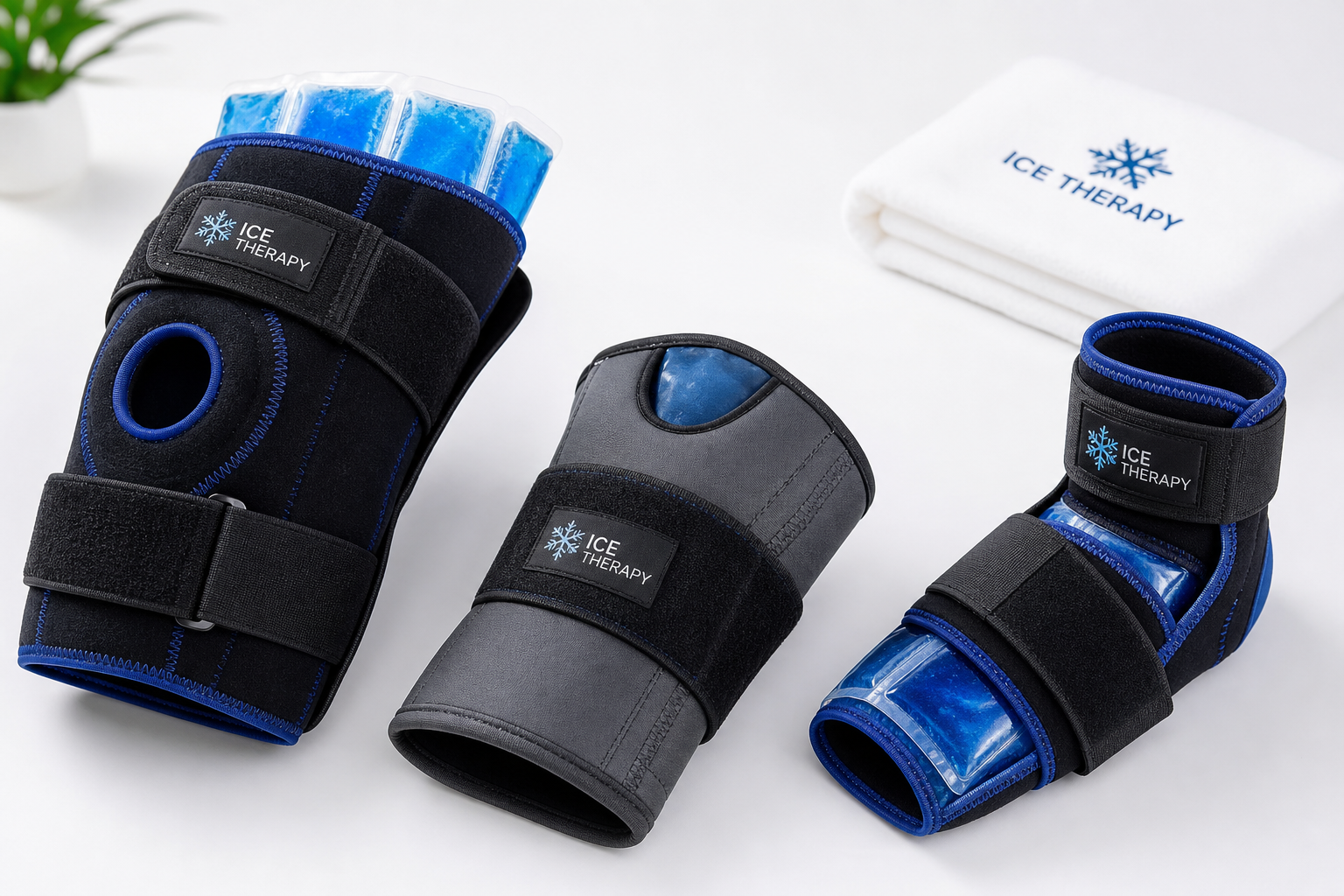
NatraCure Gel Ice Pack Wrap (Knee)

NatraCure Gel Ice Pack Wrap
Full knee coverage with flexible gel that stays pliable when frozen, plus dual hot/cold capability
The NatraCure knee wrap features a large gel pack that covers the entire knee area (front, sides, and behind) with adjustable Velcro straps for compression. The gel stays flexible even when frozen, conforming to the knee’s shape. It can also be microwaved for heat therapy, making it a dual-purpose tool.
The wrap’s dimensions matter: it’s roughly 11 inches wide by 14 inches long, which provides full circumferential coverage around most knees. Smaller wraps only target the kneecap, missing inflammation along the sides or behind the joint where ligaments and tendons attach.
The dual hot/cold capability means you can heat the same gel pack in the microwave for pre-exercise warmup. Heat for 30-second intervals until it reaches a comfortable warmth (test it first to avoid burns). This versatility reduces clutter if you’re managing both pre-workout stiffness and post-workout inflammation.
The Velcro straps adjust from about 12 inches to 24 inches in circumference, accommodating a range of leg sizes. Straps that are too short create frustration; straps that are excessively long create dangling tails that catch on furniture. This wrap falls in the practical middle ground for most users.
SimplyJnJ Shoulder Ice Wrap

SimplyJnJ Shoulder Ice Wrap
Specifically designed for shoulder anatomy with secure hands-free straps for rotator cuff coverage
The SimplyJnJ shoulder wrap is designed specifically for the shoulder’s complex shape, with straps that secure around the arm and chest for hands-free use. This is critical for shoulder icing because holding a pack against your shoulder for 20 minutes is impractical. The wrap includes a reusable gel pack that provides full rotator cuff coverage.
Shoulder anatomy creates unique icing challenges. The joint is curved, mobile, and surrounded by muscle groups that need coverage (rotator cuff, deltoid, upper trapezius). Generic wraps slide off or leave gaps. This wrap’s strap system includes a chest strap and an upper arm strap that create a stable anchor point. Once secured, the gel pack stays put through normal seated movement.
The gel pack dimensions (roughly 10 by 12 inches) provide coverage from the top of the shoulder down to mid-bicep and across to the shoulder blade. That’s the zone where rotator cuff inflammation and tendinitis typically concentrate.
One practical note: the chest strap crosses the opposite armpit, which can feel awkward initially. Position it so it sits comfortably without digging in. Once adjusted properly, you can wear the wrap while reading, watching TV, or doing other seated activities that don’t require significant arm movement.
Vive Knee Ice Wrap with Compression
The Vive knee wrap combines cold therapy with adjustable compression. The wide Velcro straps provide uniform pressure around the knee while the gel pack cools the joint. The compression component adds swelling reduction beyond what cold alone provides.
Compression works by reducing fluid accumulation in the joint space. When you exercise hard or aggravate arthritis, inflammatory fluid builds up, causing that puffy, tight feeling. Compression mechanically limits how much fluid can pool. Combined with cold (which constricts blood vessels and reduces fluid leakage), you get faster swelling reduction than either therapy alone.
The Vive wrap uses three separate straps: one above the knee, one across the kneecap, and one below. This three-point system distributes pressure more evenly than a single wide band. You can adjust each strap independently, which matters if you want more compression above the knee (common for quad tendon issues) or below the knee (patellar tendon area).
The wrap is bulkier than the NatraCure because of the additional strap architecture, but it’s easier to put on with one hand. The extra straps give you more grip points and leverage during application.
Chattanooga ColPac (Professional Grade)
The Chattanooga ColPac is the cold pack used in most physical therapy clinics. It stays cold longer than consumer gel packs (up to 30 minutes of therapeutic temperature), stays flexible when frozen, and comes in multiple shapes for different body parts. It doesn’t have a built-in strap, so you’ll need to secure it with an elastic bandage or hold it in place, but the cold quality is superior.
The ColPac’s gel formula uses a higher concentration of silica gel mixed with water, which absorbs and releases cold more slowly than cheaper gel compounds. This slower thermal transfer means the pack maintains therapeutic temperature (below 50°F) for a longer duration. Consumer gel packs often warm to ineffective temperatures after 15 minutes; the ColPac typically lasts 25-30 minutes.
Physical therapists stock these because they endure heavy daily use for years. The outer vinyl is thick enough to resist punctures from repeated freezing and thawing cycles. Consumer gel packs sometimes develop leaks after 6-12 months of regular use; ColPacs routinely last five years or more in professional settings.
The trade-off is application. Without integrated straps, you need to wrap an elastic bandage around the pack to hold it in place, or position yourself so gravity keeps it against the joint (lie down with the pack under your knee, lean back in a recliner with it against your shoulder). This works fine if you’re comfortable managing your own compression wrap. If dexterity or one-handed use is a concern, the strap-integrated wraps above are easier.
ColPacs come in shapes like contoured knee, large universal (14 by 11 inches), and half-size (7 by 11 inches). The contoured knee shape has a curved profile that hugs the joint better than a flat rectangle.
Optimal Icing Protocol for Seniors
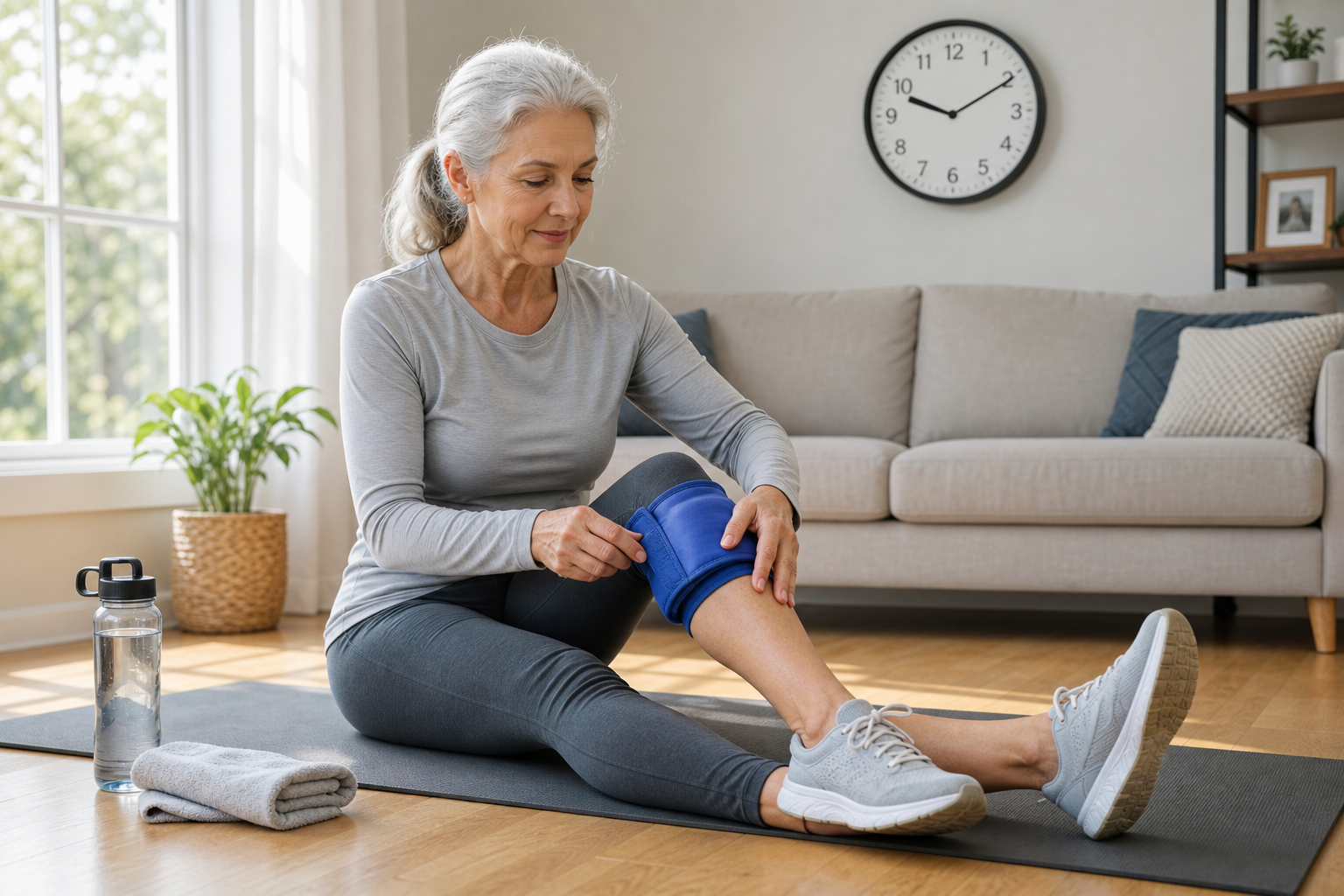
Duration: 15-20 minutes per session. Longer than 20 minutes risks skin damage, especially for seniors with thinner skin or circulation issues. Older skin has reduced subcutaneous fat insulation and slower capillary refill, which means cold penetrates deeper faster and warming afterward takes longer. Extended cold exposure can cause ice burns (frostbite) or temporary nerve dysfunction.
Frequency: Every 2-3 hours for the first 48 hours after a pain flare or hard workout. After that, 2-3 times daily as needed. The acute inflammatory response peaks in the first two days after injury or overexertion. Frequent icing during this window has the biggest impact on swelling and pain. After 48 hours, inflammation typically plateaus, and less frequent icing maintains progress.
Skin protection: Always place a thin fabric barrier (a pillowcase or the wrap’s built-in sleeve) between the ice and your skin. Seniors on blood thinners bruise more easily and have reduced skin resilience. Check the skin after each session for excessive redness. Normal: mild pink color that fades within 10 minutes. Warning sign: deep red patches, white spots, or numbness lasting more than 20 minutes after you remove the pack. If that occurs, use a thicker barrier layer next session.
Timing relative to exercise: Ice within 30 minutes of finishing exercise for best anti-inflammatory effect. Don’t ice before exercise; cold muscles are more injury-prone. Cold reduces muscle elasticity and nerve conduction speed. Warming up prepares muscles for work; cooling them beforehand increases strain risk. Save ice for afterward.
Elevation: Whenever practical, elevate the iced joint above heart level. Prop your leg on pillows if you’re icing your knee. Elevation plus cold plus compression (the “ICE” protocol, though it’s sometimes called RICE with Rest added) creates the most effective swelling reduction. Gravity helps drain fluid away from the joint when it’s elevated.
When Cold Therapy Helps Most
Acute inflammation responds better to ice than chronic stiffness does. If your knee is swollen and warm to the touch after a long walk, ice will help. If your knee is stiff and achy first thing in the morning but not swollen, heat before activity is often more useful than ice after.
Osteoarthritis flare-ups benefit from ice when the joint is inflamed. Between flares, when you’re managing baseline stiffness, heat is typically more comfortable and effective. Many people with arthritis use heat before exercise to loosen up and ice after exercise if they overdid it.
Tendinitis (inflamed tendons) responds well to ice, especially in the first few weeks of symptoms. Patellar tendinitis below the kneecap or rotator cuff tendinitis in the shoulder both benefit from consistent post-activity icing.
Bursitis (inflamed fluid sacs around joints) also improves with ice. Prepatellar bursitis (swelling at the front of the kneecap) and subacromial bursitis (shoulder) both involve fluid-filled sac inflammation, which ice helps reduce.
One-Handed Application Tips
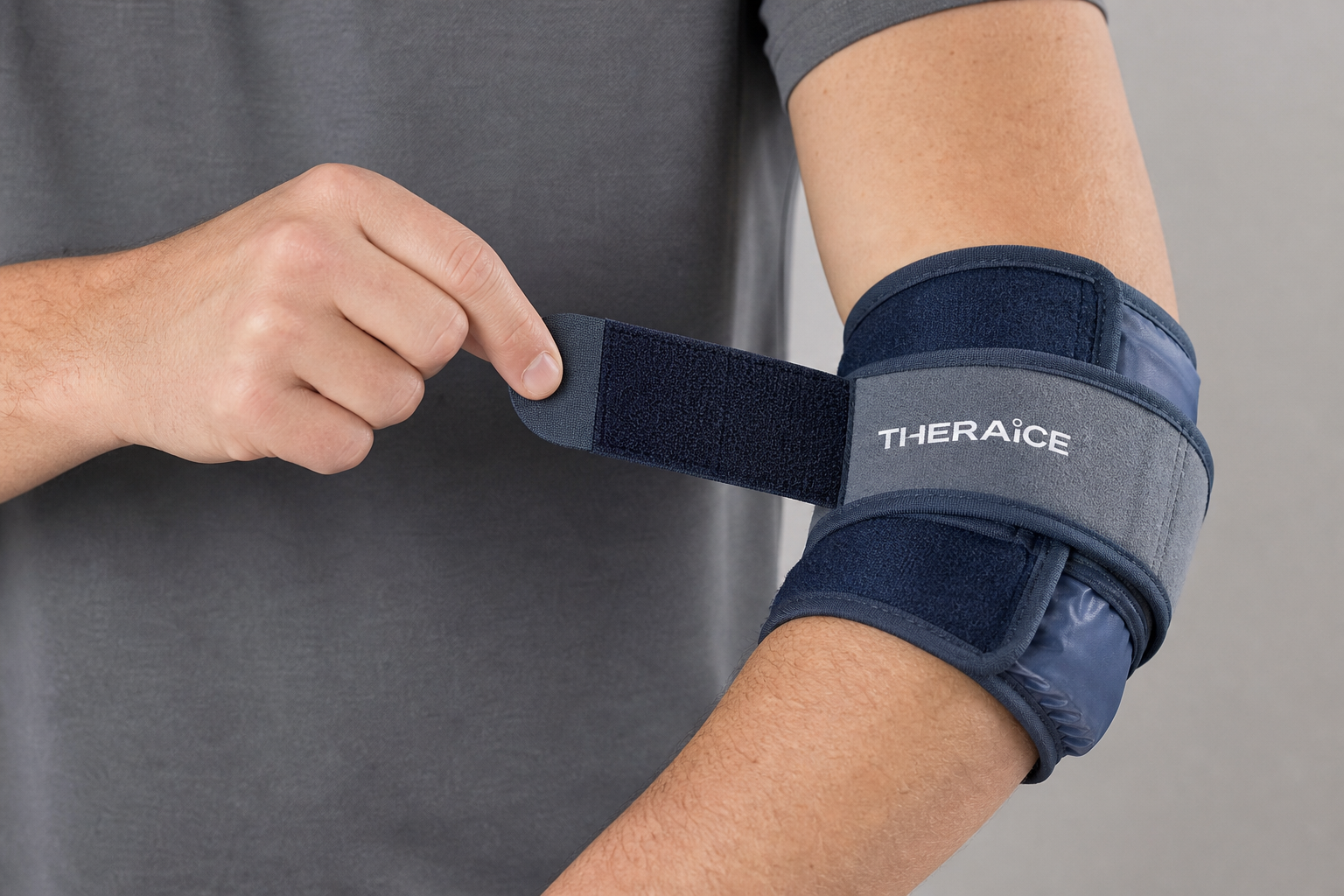
Many seniors need to apply ice wraps without assistance, which is challenging for shoulder wraps in particular. Here are strategies that help:
Pre-position the wrap with straps partially opened before pulling it from the freezer. Fumbling with frozen Velcro while holding a cold pack is frustrating. Lay the wrap out, open all straps to near-maximum extension, insert the gel pack, then put the whole assembly in the freezer. When you pull it out, it’s ready to wrap around your joint immediately.
Drape the shoulder wrap over the back of a chair, sit in front of it, and lean back into the wrap before securing the straps. This technique uses the chair as a third hand. Position the gel pack section against the chair back at shoulder height, sit down, lean back so the pack contacts your shoulder, then reach around to grab the straps and secure them.
For knee wraps, sit in a chair and prop your leg on an ottoman so both hands are free for strap adjustment. Trying to hold your leg up while wrapping it creates unnecessary struggle. A stable platform makes strap tensioning much easier.
Velcro closures are far easier to manage one-handed than clip or buckle systems. Velcro provides infinite adjustability and requires less fine motor control. Buckles demand precise alignment of male and female parts, which is difficult when you can’t see what you’re doing (as with shoulder wraps behind your back).
Consider keeping a small step stool near your freezer if the gel packs are stored on a high shelf. Bending and reaching overhead while handling a cold, slippery pack increases drop risk. Store packs at waist to chest height for easiest retrieval.
Common Mistakes to Avoid
Icing too long. Twenty minutes is the safe maximum for most people. Setting a timer prevents accidental over-icing if you doze off or get distracted. Prolonged cold exposure can cause cold-induced nerve damage or tissue injury, especially in areas with less muscle coverage like the outside of the knee.
Skipping the barrier layer. Direct ice-to-skin contact causes ice burns faster than most people expect. Even with a gel pack that doesn’t feel extremely cold to your hand, sustained contact against thinner skin over a bony area (kneecap, shoulder bone) can cause damage. Always use at least a thin cotton layer.
Inconsistent use