Living with osteoporosis means you need to be smart about exercise. You want to build bone density without putting yourself at risk for fractures. Resistance bands offer a unique middle ground because they provide progressive resistance while keeping impact low and letting you control the tension throughout every movement.
The key difference with band training for osteoporosis is that you’re creating bone-loading stimulus through muscle pull rather than impact. When your muscles contract against resistance, they pull on your bones, which signals your body to maintain or even increase bone density. Let’s look at how to do this safely and effectively.
Why Bands Work for Bone Health
Resistance bands create what exercise physiologists call “mechanical loading” on your bones. Unlike walking or jogging, which primarily load your lower body through impact, bands let you target specific areas where osteoporosis typically causes problems: your spine, hips, and wrists.
The tension increases as you stretch the band, which means your muscles work harder at the end of each movement. This progressive resistance pattern actually mimics how your muscles naturally generate force, making it joint-friendly while still challenging your skeletal system.
You’ll want to start with light resistance bands that provide enough challenge without requiring you to strain or compensate with poor form. Color coding varies by brand, but most systems start with yellow or tan bands for lighter resistance.

Theraband Resistance Bands Set
These professional-grade bands come in clearly marked resistance levels, perfect for progressive training.
Essential Safety Guidelines
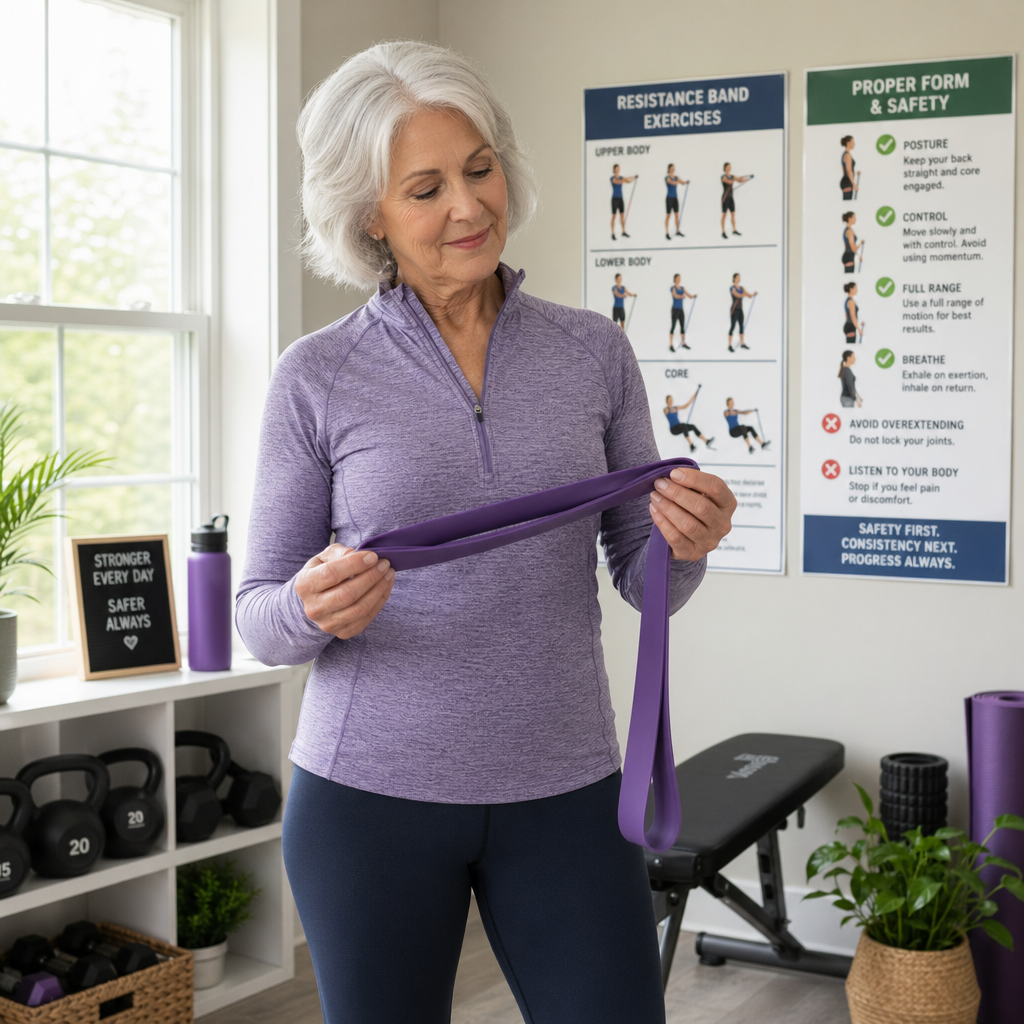
Before you start any strength training for osteoporosis, you need medical clearance from your doctor. This isn’t optional. Some people with severe osteoporosis may need to avoid certain movements entirely, and only your healthcare provider can tell you where you stand.
Never perform exercises that involve forward spinal flexion or twisting under load. This means skip any band exercises where you’re bending forward at the waist or rotating your torso while holding tension. These movements create compression forces on your vertebrae that can lead to fractures.
Always secure your bands properly. A band snapping back can cause injury, so check for wear before each session and anchor them to stable furniture or use a door attachment designed for resistance bands. Loop bands are generally safer than tube bands with handles because they’re less likely to slip.
Start every session with a gentle warmup. Five minutes of walking or arm circles gets blood flowing to your muscles and prepares your body for loaded movements.
Core Band Exercises for Bone Loading
Focus on exercises that load bones in multiple directions. Standing chest presses work your arms, shoulders, and upper spine. Stand on the middle of the band, hold the ends at chest height, and press forward while keeping your core engaged and spine neutral.
Lateral raises target your shoulder joints and upper arm bones. Stand on the band and lift both arms out to the sides until they’re parallel to the floor. Control the descent to maintain tension throughout the movement.
Rows are excellent for your spine and arms. Secure the band at chest height, step back to create tension, and pull the ends toward your ribs while squeezing your shoulder blades together. Keep your back straight and avoid hunching forward.
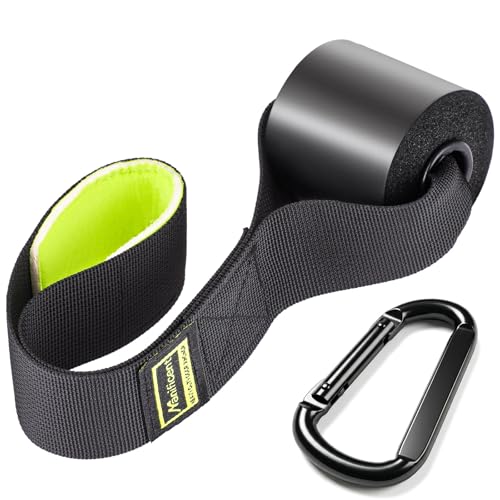
Door Anchor for Resistance Bands
Essential for safely performing rows and other exercises that need a stable anchor point.
Hip abductions strengthen your hip bones and the muscles that stabilize your pelvis. Loop a band around your ankles, hold onto a chair for balance, and lift one leg out to the side. This exercise directly loads the femoral neck, a common fracture site.
Perform 2-3 sets of 10-12 repetitions for each exercise, three times per week. Rest at least one day between sessions to allow your bones to adapt.
Progression Strategy

Your bones adapt slowly, so patient progression is critical. Spend at least 4-6 weeks with your starting resistance level before moving to a heavier band. You should feel challenged but never strain or compensate with poor form.
When you can complete all sets with good form and the last few reps feel moderate rather than difficult, it’s time to progress. Move to the next resistance level and drop back to 8-10 reps per set while you adjust.
Track your workouts in a simple notebook. Write down which band color you used, how many sets and reps you completed, and how you felt. This record helps you see progress and prevents you from advancing too quickly. For a structured approach, consider following a progressive resistance training program.
Frequently Asked Questions
Can resistance bands actually improve bone density or just maintain it?
Research shows that progressive resistance training can increase bone mineral density, not just slow its decline. A 2018 study in the Journal of Bone and Mineral Research found that postmenopausal women who performed regular resistance training showed measurable increases in hip and spine bone density over 12 months. Bands can provide sufficient load, especially when combined with proper nutrition and any medications your doctor prescribes.
How long before I see results in my bone density scans?
Bone remodeling is a slow process. You typically need 6-12 months of consistent training before changes show up on a DEXA scan. Don’t get discouraged if your first follow-up scan doesn’t show dramatic improvement. Stable bone density is actually a success when you have osteoporosis, since the disease typically causes progressive loss. You’ll likely notice improvements in strength, balance, and confidence much sooner, usually within 4-6 weeks. For a comprehensive approach to bone health, explore exercise plans designed specifically for bone strength.
This article contains affiliate links. We may earn a small commission at no extra cost to you.