Water workouts offer a perfect solution for seniors looking to stay active without putting stress on their joints. The buoyancy of water supports your body weight, reducing impact by up to 90% while still providing natural resistance for building strength. This makes pool exercise an ideal choice if you’re dealing with arthritis, recovering from surgery, or simply want a safer alternative to land-based fitness.
You can burn calories, build muscle, and improve balance all while staying cool and comfortable. Plus, the warm water helps relax stiff joints and sore muscles, making movement easier and more enjoyable than traditional exercise routines.
Health Benefits for Arthritis and Joint Pain
Water exercise delivers unique advantages for anyone dealing with joint issues. The hydrostatic pressure from being submerged helps reduce swelling and inflammation in your knees, hips, and ankles. Many people find they can move through ranges of motion in the pool that would be painful or impossible on land.
Studies show that regular aquatic exercise can reduce arthritis pain by 30-40% while improving joint flexibility. The warmth of heated pools (more on ideal temperatures below) increases blood flow to stiff areas, providing natural pain relief without medication.
Beyond joint relief, you’ll also build bone density, improve cardiovascular health, and boost your mood. The social aspect of group water aerobics classes adds mental health benefits too.
Essential Pool Exercise Routines
Cardio Workouts
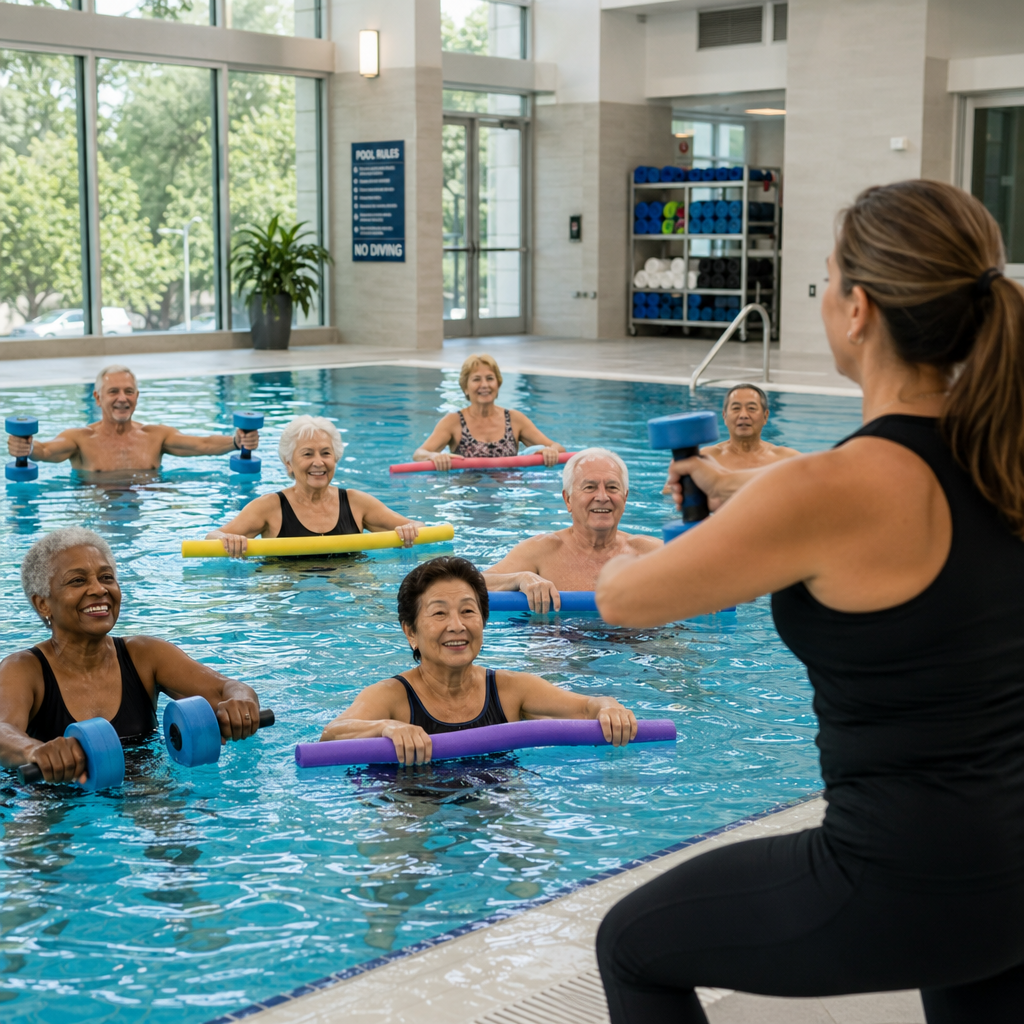
Start with walking laps in chest-deep water. Walk forward for two minutes, then backward for one minute to engage different muscle groups. Increase intensity by using water resistance gloves to push against the water.
Try water jogging in place for 30-second intervals, followed by 30 seconds of rest. Repeat 8-10 times. You’ll get your heart rate up without the joint impact of regular jogging. If you’re looking for additional low-impact cardio options outside the pool, chair-based workouts can also help you burn calories safely.

TheraBand Aquatic Resistance Gloves
These webbed gloves increase water resistance for better cardio and strength training results.
Strength Training
Foam noodles aren’t just for kids. Use a pool noodle under your arms for support while doing leg lifts. Hold the wall and lift each leg to the side 10 times, then to the back 10 times.
Water dumbbells add resistance for upper body work. Perform bicep curls, chest presses, and shoulder raises with 12-15 reps each. The water provides constant resistance in all directions, working both the lifting and lowering phases. Similar to how ankle weights provide progressive resistance on land, water dumbbells allow you to safely build strength at your own pace.
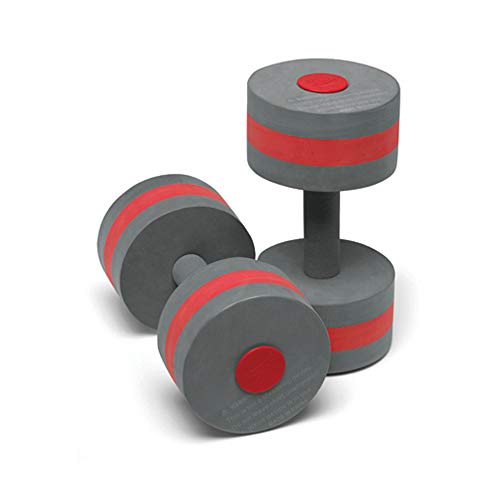
Speedo Aquatic Fitness Barbells
Lightweight out of water but provide excellent resistance when submerged, perfect for building upper body strength safely.
Flexibility and Balance
Stand on one leg while moving the other in slow circles. The water’s resistance makes this more challenging than it looks, improving both balance and hip flexibility. Do 10 circles each direction per leg.
Stretch your hamstrings by placing one heel on the pool edge (or a lower step) and gently leaning forward. Hold for 20-30 seconds. The warm water allows for deeper, more comfortable stretches than you might achieve on land. Just as modified yoga poses help protect your joints during flexibility work, the buoyancy of water makes stretching gentler and safer.
Ideal Water Temperature and Safety Tips
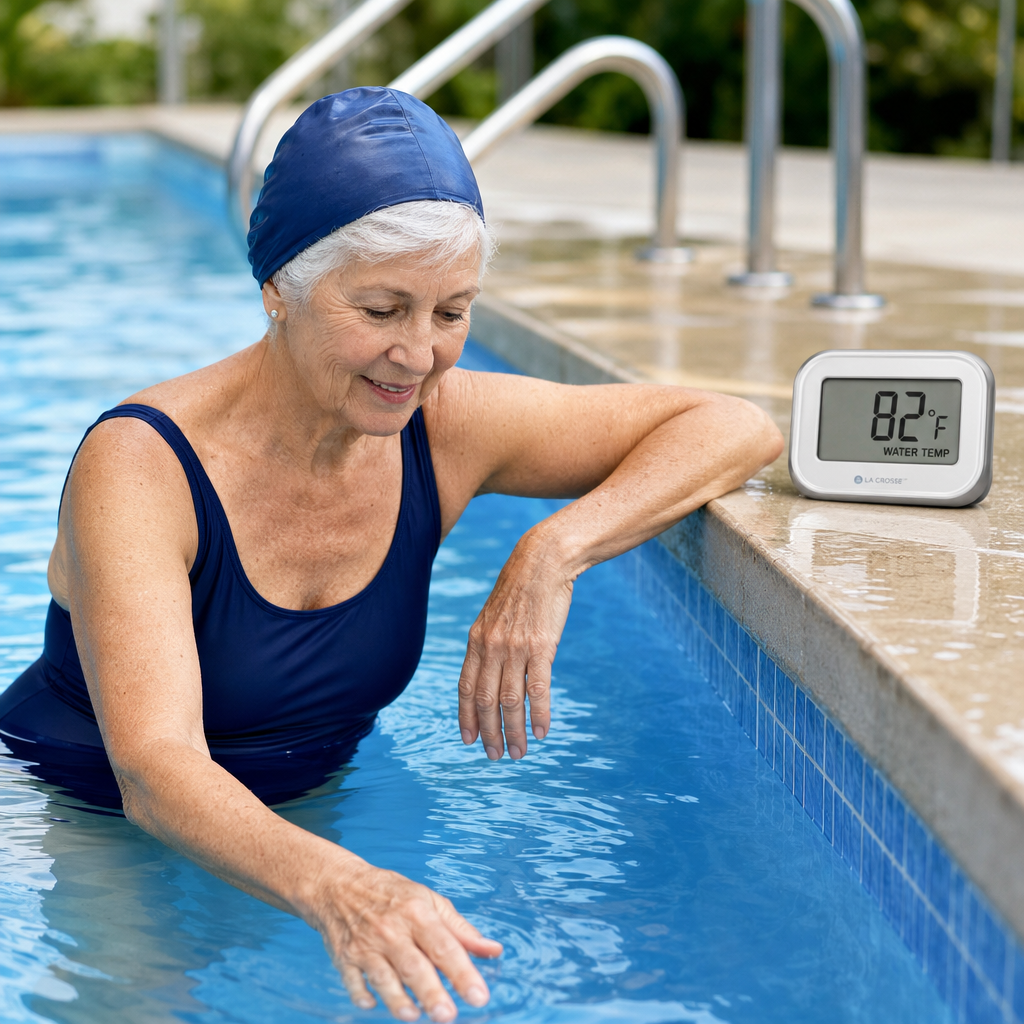
The best water temperature for senior aquatic exercise falls between 83-88°F. This range is warm enough to soothe joints and prevent muscle cramping, but cool enough to allow for vigorous exercise without overheating.
Pools below 80°F can stiffen arthritic joints and make movement uncomfortable. Temperatures above 90°F increase the risk of dizziness and fatigue, especially if you have heart conditions or high blood pressure.
Always enter and exit the pool using stairs with handrails, never dive or jump. Wear water shoes with non-slip soles to prevent falls on wet surfaces. Stay hydrated by drinking water before, during, and after your workout, even though you won’t feel as sweaty as land exercise.
Check with your doctor before starting any new exercise program, particularly if you have heart disease, breathing problems, or uncontrolled diabetes. Consider working with a certified aquatic fitness instructor for your first few sessions to learn proper form.
Frequently Asked Questions
How often should seniors do water exercises?
Aim for 2-3 sessions per week, with each workout lasting 30-45 minutes. This frequency allows for adequate recovery time while providing enough consistency to see improvements in strength, flexibility, and cardiovascular fitness. You can gradually increase to 4-5 times weekly as your endurance builds.
Do I need to know how to swim for aquatic fitness classes?
Most senior water exercise programs take place in shallow water where you can comfortably stand with your head above water. Swimming skills aren’t required for these classes. However, wearing a flotation belt can provide extra security and confidence if you’re nervous in the water, and it’s essential for deep-water running exercises.
Related Articles
- Knee-Friendly Yoga Modifications for Seniors Over 60
- Safe Weight Guidelines and Usage Tips for Ankle Weights
- 30-Minute Chair Exercise Routine for Weight Loss
- Chair Exercises That Help Lower Blood Sugar
This article contains affiliate links. We may earn a small commission at no extra cost to you.