Starting tai chi after 60 might feel intimidating, but this ancient practice was practically designed for exactly where you are right now. The slow, flowing movements build strength and balance without jarring your joints, and the best part is you can start today with zero equipment and no prior experience.
This 30-day program breaks down the essentials into manageable daily sessions that gradually build your confidence and coordination. You’ll learn the foundational movements, understand how breathing ties everything together, and discover why thousands of seniors credit tai chi with keeping them steady on their feet.
Your 30-Day Tai Chi Progression
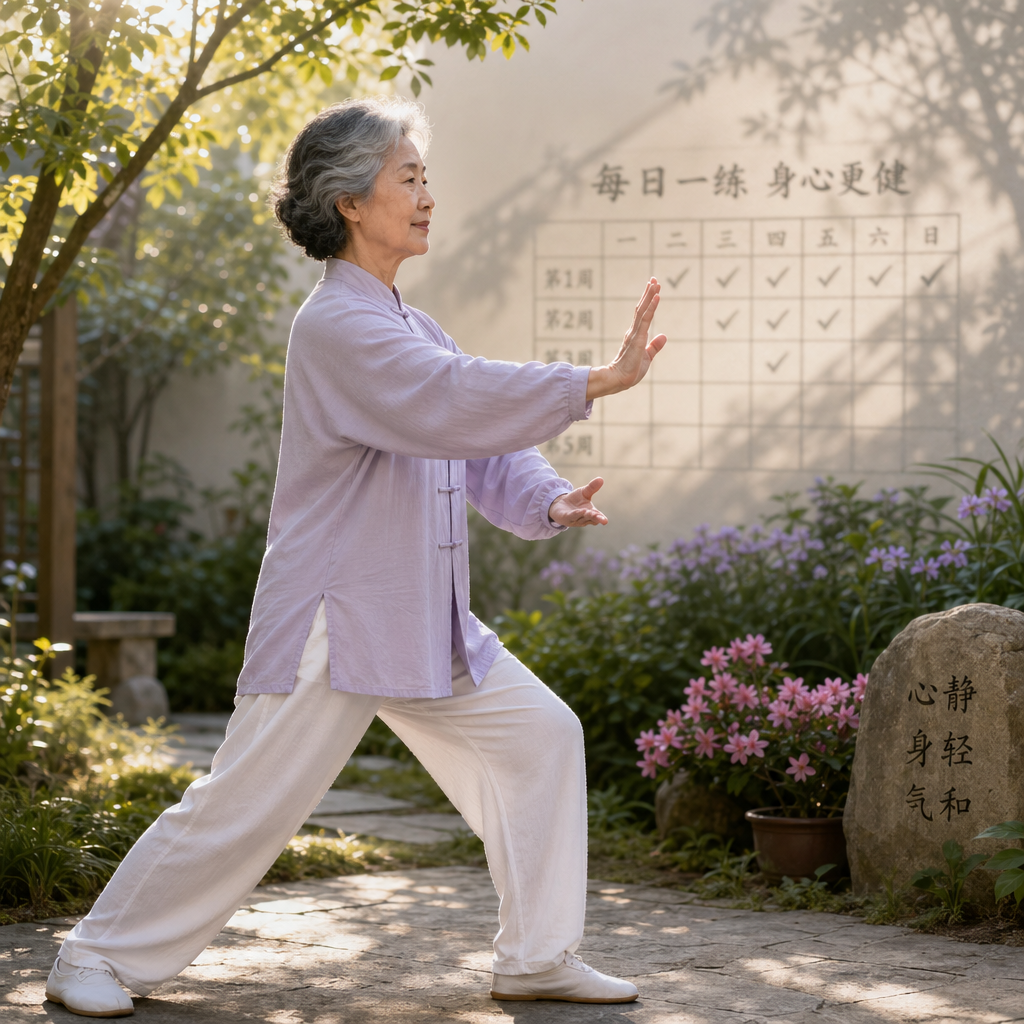
The first week focuses entirely on stance and weight shifting. You’ll spend 10-15 minutes daily practicing the horse stance (feet shoulder-width apart, knees slightly bent) and learning to shift your weight smoothly from one leg to the other. This sounds simple, but it’s the foundation for everything else.
Week two introduces arm movements while maintaining your stance work. You’ll learn basic positions like “holding the ball” and simple pushing movements. Keep sessions to 15-20 minutes, and don’t worry about perfection. Your body needs time to absorb these new movement patterns.
During week three, you’ll combine what you’ve learned into your first complete form: the simplified 8-movement sequence. This takes most beginners about 3-4 minutes to complete once they know it. Practice it twice daily, focusing on smooth transitions rather than speed.
The final week emphasizes breathing coordination. You’ve been breathing naturally up until now, which is fine. Adding the traditional breathing pattern (inhale on gathering movements, exhale on extending movements) makes everything click together. You’ll also work on holding your form for longer periods, building up to two 20-minute sessions daily.
Classes vs. Home Learning: Making the Right Choice
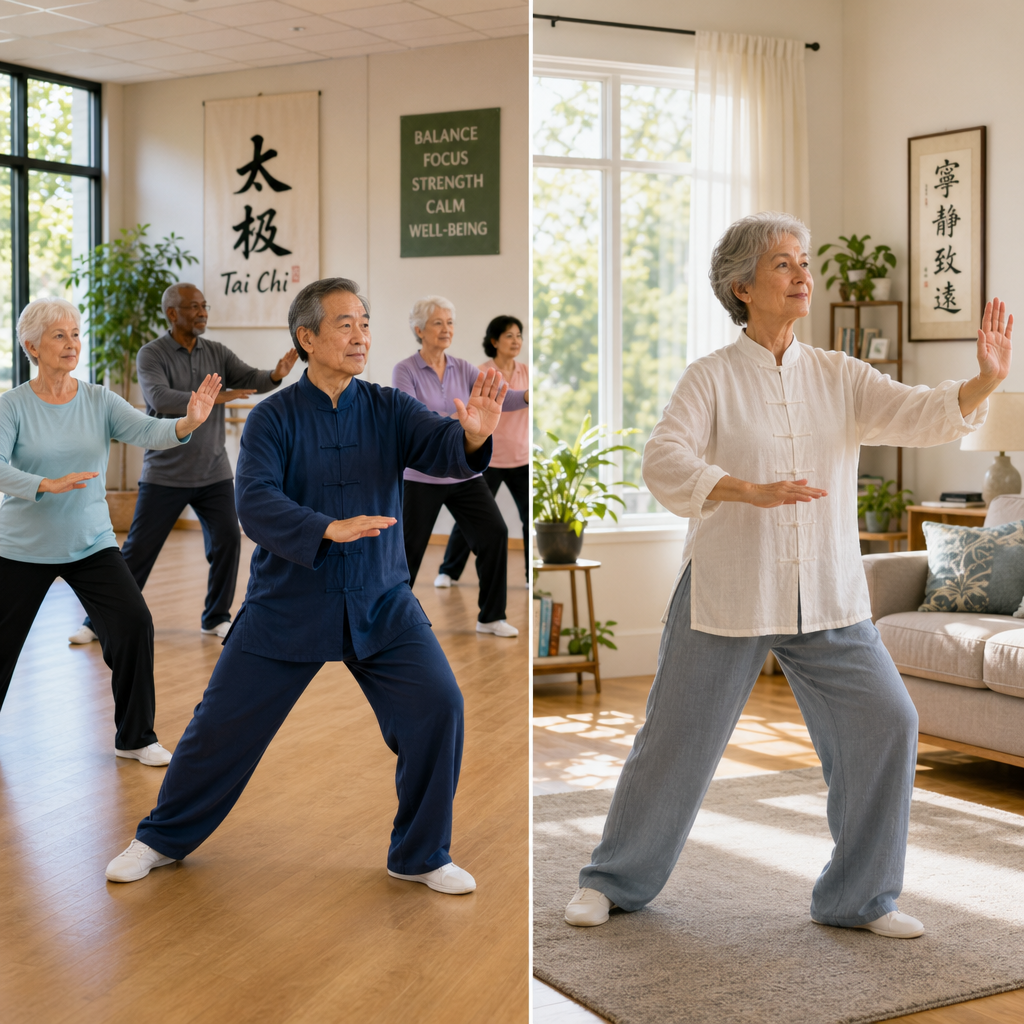
Local classes offer immediate feedback and social connection, which matters more than you might think. A good instructor spots balance issues or improper weight distribution that you’d never catch on your own. Check your local senior center, YMCA, or community college for beginner-friendly options.
Learning at home works if you’re self-motivated and comfortable with video instruction. The tai chi instructional DVDs designed for seniors often include modifications for limited mobility and detailed explanations of each movement.

Tai Chi for Seniors DVD
Dr. Paul Lam’s programs are specifically designed with fall prevention and joint health in mind for older adults
Many people find that starting with a few in-person classes, then supplementing with home practice using videos, gives them the best of both approaches. You learn proper form from a live instructor, then reinforce it daily at home.
Essential Gear and Safety Considerations
Forget the flowing silk pajamas you’ve seen in movies. You need comfortable, loose-fitting clothes that let you move freely. Regular athletic wear or even soft pajama pants work perfectly.
Footwear matters more than clothing. Flat-soled tai chi shoes with thin, flexible soles give you the best ground feel, but clean sneakers with minimal cushioning work too. Avoid thick-soled running shoes since they interfere with balance awareness. Some people practice in non-slip socks on carpet, which is fine once you’re comfortable with the movements.
Practice on a flat, non-slip surface with enough space to extend your arms fully in all directions. Clear away coffee tables, pet toys, and anything else you might stumble over. Good lighting prevents trips and helps you see instructional videos clearly.
How Tai Chi Prevents Falls
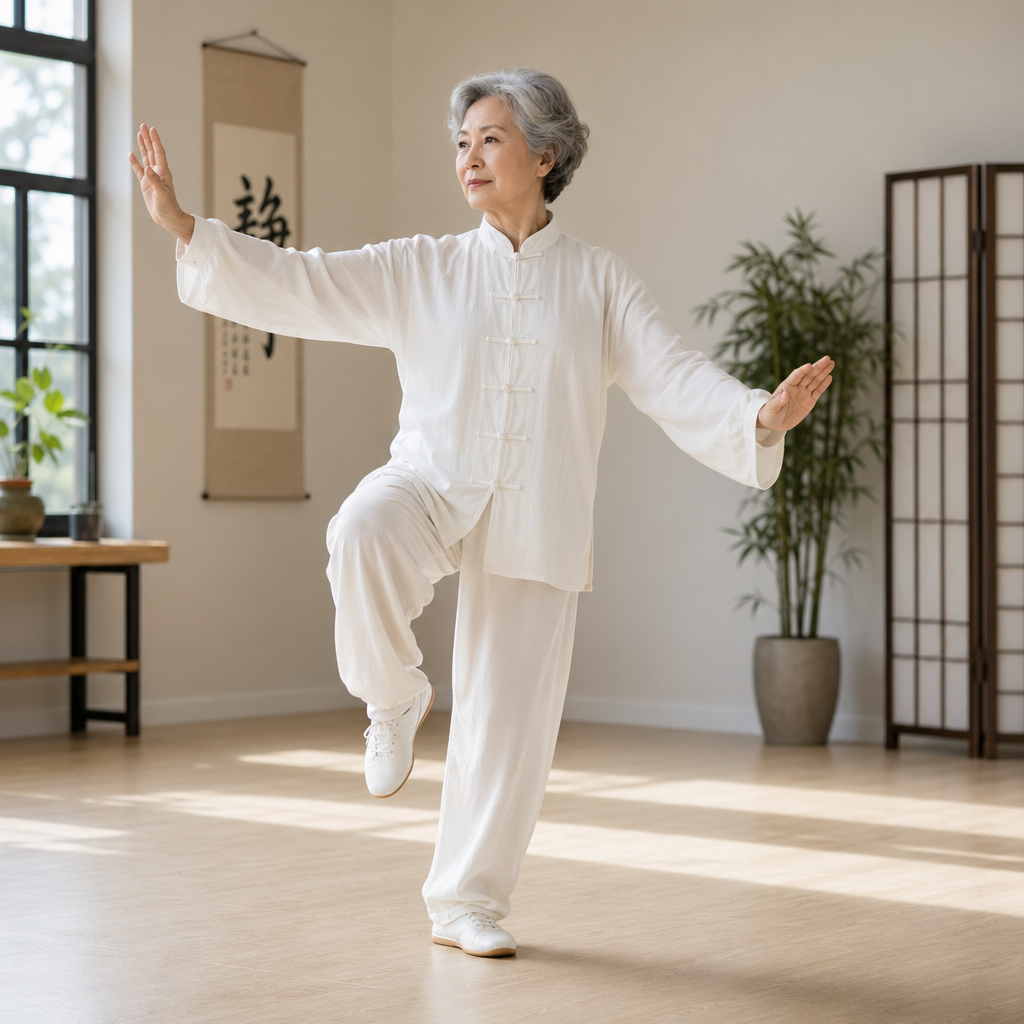
The fall prevention benefits aren’t mystical or theoretical. Studies show that seniors who practice tai chi regularly reduce their fall risk by up to 45%. This happens through three specific mechanisms.
First, the weight-shifting practice strengthens the small stabilizer muscles in your ankles and feet that keep you upright when you hit an uneven sidewalk or stumble on a rug. These muscles rarely get worked in normal daily activities.
Second, tai chi improves proprioception (your body’s awareness of where it is in space). Better proprioception means your body reacts faster and more accurately when you start to lose balance. You develop this through the slow, controlled movements that force your brain to track exactly where each body part is at all times.
Third, the practice builds confidence in your movement. Many falls happen because people freeze or panic when they feel unsteady. Regular tai chi practice teaches you to stay calm and make small adjustments rather than jerky overcorrections.
Frequently Asked Questions
How long before I notice balance improvements?
Most people report feeling more stable within 3-4 weeks of daily practice. Your leg strength builds relatively quickly, but the deeper proprioceptive benefits develop over 2-3 months. Consistency matters more than duration. Fifteen minutes daily beats an hour-long session once a week.
Can I do tai chi if I already have balance problems?
Absolutely, but start with wall support or practice near a sturdy chair you can grab if needed. Many senior-focused tai chi programs include modified versions of movements that you can do while lightly holding a counter or chair back. As your confidence grows, you’ll gradually need the support less. Just check with your doctor first if you have a history of serious falls or vertigo. If you’re looking for additional low-impact options, you might also consider aqua fitness for seniors, seated resistance training, or comparing yoga vs tai chi to determine which practice best fits your needs. For those just starting any exercise routine, a walking program for complete beginners can also complement your tai chi practice.
This article contains affiliate links. We may earn a small commission at no extra cost to you.