You’ve probably heard that you need to slam a protein shake within thirty minutes of finishing a workout or you’re wasting your effort. It’s one of the most repeated rules in fitness, and for seniors trying to hold onto muscle, it can feel like one more thing to stress about. Here’s what actually matters when it comes to timing, and where the “anabolic window” myth falls apart for older adults.
Does the “Anabolic Window” Actually Exist?
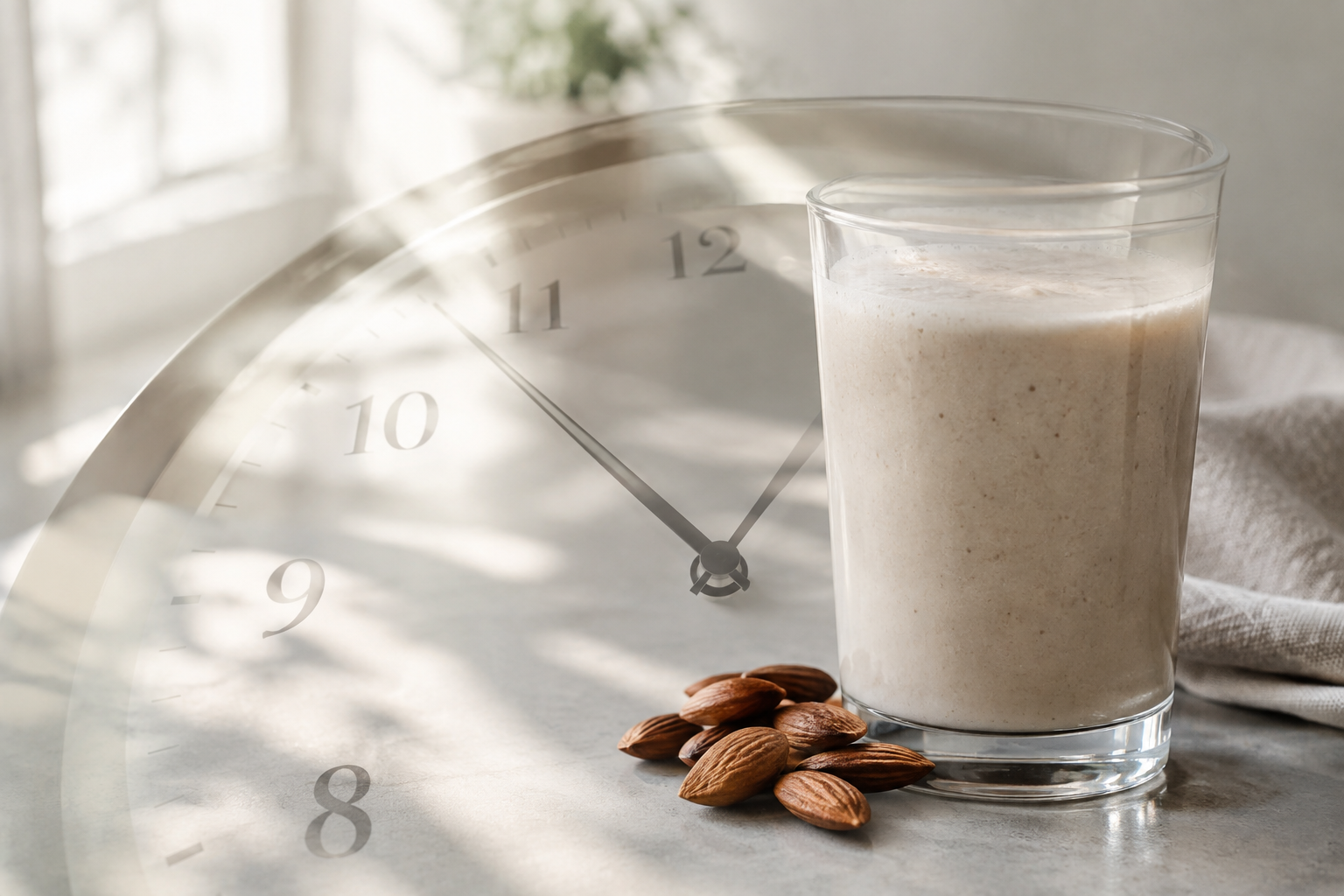
The idea of a narrow post-workout window where your muscles are uniquely primed to absorb protein was based on early research in young athletes doing fasted training. More recent studies looking at resistance training and muscle protein synthesis have found that window is much wider than thirty minutes, more like several hours before and after a session.
For seniors, this is good news. If you had a meal with protein two or three hours before your strength workout, your muscles already have amino acids circulating when you train. You don’t need to rush a shake down the moment you put your dumbbells away.
What tends to matter more than exact timing is whether you’re getting enough protein spread across the whole day, and whether you’re actually doing the resistance training that gives your body a reason to use it. If you’re still figuring out how much lifting you should be doing, our guide on sets and reps for strength training is a good place to start.
What the Research Actually Suggests for Older Adults

Aging muscle responds to protein a bit differently than younger muscle. Researchers call this “anabolic resistance,” meaning it often takes a larger dose of protein in one sitting to trigger the same muscle-building response you’d get at a younger age. This is one reason many geriatric nutrition experts recommend seniors aim for a meaningful serving of protein at each meal, rather than saving it all for dinner.
In practical terms, that might mean 20 to 40 grams of protein in the meal closest to your workout, whether that’s before or after. The exact number depends on your body size, how much muscle you’re trying to maintain or build, and your total daily calorie intake. A 130-pound woman doing chair-based strength work has very different needs than a 220-pound man doing weighted vest walks.
Some studies suggest spreading protein into your pre-workout and post-workout meals (rather than one giant dose) may help older adults absorb and use it more efficiently, but this isn’t a strict rule. If you already eat a solid breakfast or lunch with eggs, yogurt, chicken, or fish before you train, you’re likely covering your bases without needing a special pre-workout protocol.
Before vs. After: A Practical Comparison
- Protein before exercise: Helpful if you train fasted or first thing in the morning, since it gives your muscles amino acids to draw on during the session. A small serving, like a glass of milk or a hard-boiled egg, is usually enough.
- Protein after exercise: Useful for muscle repair and recovery, especially if your last meal was several hours before your workout. This is when many people reach for a shake simply because it’s easy to digest.
- Either works fine: If you eat regular meals with protein every three to five hours, you’re very likely getting enough around your workout without needing to time it precisely.
If mixing a shake feels like one more chore on workout days, a basic protein powder with minimal ingredients can simplify things. For a deeper breakdown of what to look for on labels, our protein supplements buying guide for seniors covers that in detail.
Orgain Organic Protein Powder
A mild-tasting, easy-to-digest option that works well mixed into milk or a smoothie before or after a workout.
Whatever you choose, pair it with consistent training. Timing your protein perfectly won’t do much if your strength routine isn’t progressing. If you’ve been doing the same light dumbbells for months, take a look at how to increase your weights safely after 60 to keep making progress.
Factors That Change the Answer for You

There’s no single number that applies to everyone, and anyone telling you otherwise is oversimplifying. A few things shift how much protein you need and when it matters most:
- Body size and muscle mass: Larger frames and higher muscle mass generally need more total protein per day.
- Activity level: Someone doing weighted vest walking four times a week has different needs than someone doing gentle chair exercises twice a week.
- Total calorie intake: If you’re eating fewer calories overall, protein timing becomes more important because there’s less margin for error.
- Kidney function: Higher protein intake isn’t appropriate for everyone. If you have kidney disease or have been told to watch your protein intake, follow your clinician’s guidance rather than general fitness advice.
- Illness or recovery from surgery: Protein needs often go up temporarily during recovery, but this should be guided by your doctor or a dietitian, not a blog post.
If you’re on a medically restricted diet, please treat this article as general background information and not a substitute for what your clinician has recommended for your specific situation.
Frequently Asked Questions
Do I need a protein shake right after strength training?
Not necessarily. If you eat a protein-containing meal within a few hours before or after your workout, you’re likely covering what your muscles need. A shake is convenient, not mandatory, and whole foods like eggs, yogurt, chicken, or beans work just as well.
What if I work out first thing in the morning on an empty stomach?
Having a small amount of protein before a fasted morning workout, even just a glass of milk or a spoonful of peanut butter, can help reduce muscle breakdown during exercise. If that’s not practical, eating protein soon after your workout is the next best option.
Getting the timing roughly right matters far less than showing up consistently and doing resistance work your muscles have to adapt to. Pair reasonable protein habits with a progressive strength routine, and you’ll get more out of both than obsessing over a thirty-minute window ever could.
This article contains affiliate links. We may earn a small commission at no extra cost to you.