Power is the ability to generate force quickly. It’s what determines whether you can catch yourself during a stumble, step up a curb without losing momentum, or stand from a chair without rocking forward three times. Power declines twice as fast as strength after 60, which is why many seniors have adequate strength for daily tasks but lack the speed to perform them safely under time pressure. Gentle power training restores the quick-force capacity that real-world movements demand.
The Difference Between Strength and Power
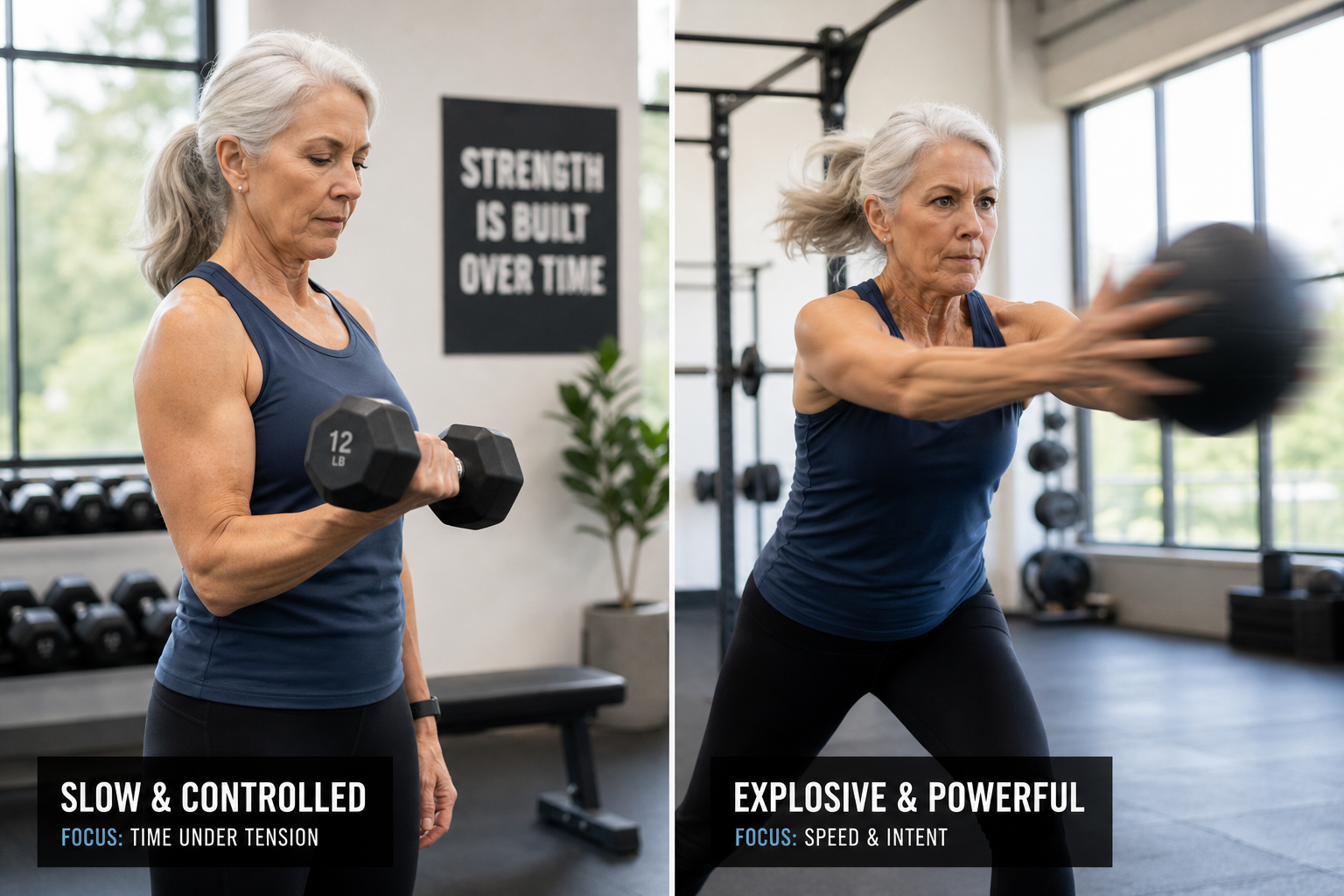
Strength is how much force you can generate regardless of speed (lifting a heavy bag slowly). Power is how quickly you can generate that force (standing from a chair rapidly, stepping quickly to catch your balance). Traditional strength training (slow, heavy lifts) builds strength but doesn’t adequately build speed. Power training adds the speed component.
This distinction matters for daily function. You might have the strength to lower yourself into a chair slowly and controlled, but lack the power to stand up quickly when the doorbell rings. You might be able to lift a gallon of milk with ease, but struggle to catch it when it slips. The explosive muscle activation that power requires uses different neural pathways and fiber types than pure strength work. Fast-twitch muscle fibers, which handle rapid movements, atrophy more quickly with age than slow-twitch fibers. Without specific training, these fibers weaken disproportionately.
Research shows that power output declines 3.5% per year after age 65, compared to 1.5% for strength. This accelerated loss explains why many older adults feel strong in controlled situations but vulnerable when speed matters. A simple test: time yourself standing from a chair five times. If it takes more than 12 seconds total, your power output has likely declined enough to affect functional independence.
Why Power Training Matters More Than You Think
Falls don’t happen in slow motion. When you trip on a rug edge, your body has roughly 400 milliseconds to execute a corrective response before momentum wins. That response requires power. Your ankle needs to flex quickly to adjust foot position. Your leg needs to swing forward rapidly to catch your weight. Your arms need to shoot out fast enough to brace impact if the step fails.
Slow strength training doesn’t prepare these systems for real-world demands. A study tracking adults over 70 found that leg power predicted fall risk better than leg strength. Two people with identical quad strength had dramatically different fall rates based on how quickly they could generate that force. The person who could contract their leg muscles explosively had lower fall risk regardless of absolute strength numbers.
Power also determines independence in time-sensitive tasks. Crossing a street before the light changes. Getting out of a car before the automatic door closes. Rising from a low seat without multiple attempts. These aren’t optional conveniences. They’re gatekeepers to independent living.
Gentle Power Exercises for Seniors

These exercises emphasize controlled speed over maximal effort. The goal is quick movement execution, not chaotic flailing. Quality beats intensity here.
Quick Chair Stands
Sit in a chair with your feet flat and hip-width apart. Cross your arms over your chest or rest your hands lightly on your thighs. Stand up as quickly as you can with control, driving through your heels. Don’t rock forward or use momentum. Sit down slowly over 3-4 seconds, lowering with control. The fast standing phase trains power. The slow sitting phase trains eccentric strength and balance.
Start with 3 sets of 5 reps. Rest 60 seconds between sets. As this becomes easier, increase speed on the ascent rather than adding reps. The movement should feel explosive but never uncontrolled. If you lose balance or sit down hard, you’re moving too fast.
Chair height matters. A standard dining chair (17-18 inches) works for most people. If you need assistance standing even slowly, start with a higher surface like a kitchen counter stool (24 inches) until you build base strength.
Rapid Calf Raises
Stand facing a counter with your fingertips resting lightly on the surface for balance. Feet hip-width apart. Rise onto your toes as quickly as possible, pushing through the balls of your feet. Pause briefly at the top. Lower slowly over 3 seconds with control. The fast rise trains the explosive ankle power needed for quick corrective steps during balance perturbations.
Perform 3 sets of 10. Rest 45 seconds between sets. The speed on the upward phase should be genuinely quick, not a normal tempo rise. Your calves should feel fatigued by the last few reps of each set.
Common mistake: rolling outward onto the pinky-toe side of the foot during the rise. Keep weight distributed evenly across the ball of the foot. The big toe, little toe, and center should all press the ground equally at the top position.
Quick Step-Outs
Stand at a counter with your hands resting lightly on the surface. Step to the right as quickly as you can, covering 12-18 inches. Return to center with normal speed. Step left quickly, return. Step forward quickly, return. Step backward quickly, return. Complete 5 reps per direction (20 total steps per set). Rest 60 seconds. Repeat for 2-3 sets.
This trains the rapid stepping response that prevents falls from unexpected pushes, slips, and trips. Real-world stumbles demand immediate lateral, forward, or backward steps. This drill rehearses that neural pathway at functional speed.
Focus on the first 6 inches of the step. That initial explosive push-off generates the corrective momentum you need when balance fails. The landing can be controlled and deliberate. Speed matters most in the departure, not the arrival.
Ball Toss and Catch
Hold a light ball (1-2 pounds or a standard rubber ball) at chest height. Toss it upward 12-18 inches and catch it with both hands. The toss requires quick arm extension. The catch requires rapid hand closing and impact absorption. Perform 2 sets of 10 tosses. Rest 60 seconds between sets.
This trains upper body power and hand-eye coordination simultaneously. The catch phase is particularly valuable because it rehearses the rapid grip closure needed when you grab a railing during a stumble. That reflex weakens with age unless specifically maintained.
Progress by tossing slightly higher (increasing demand on arm power) or using a 2-3 pound medicine ball. Don’t exceed 3 pounds. The goal is speed of movement, not heavy resistance.

Medicine Ball 2-3 Pound
Soft, gripable option for controlled ball toss exercises that build upper body power and reaction time
Seated Rapid Arm Punches
Sit in a sturdy chair with your back supported and feet flat. Make loose fists. Punch forward alternating fists as quickly as possible for 15 seconds. Focus on speed, not force. Rest 15 seconds. Repeat 4 times.
The rapid arm movement generates speed-dependent muscle activation in the shoulders, arms, and core. Your trunk muscles fire quickly to stabilize against the arm movement, training core power indirectly.
After mastering bodyweight punches, add 1-pound hand weights for increased power demand. Hold the weights loosely. Don’t exceed 2 pounds. Heavier loads force you to slow down, defeating the purpose.
Box Step-Ups (Advanced Option)
If you have solid balance and can perform quick chair stands easily, add step-ups to a 4-6 inch box or sturdy platform. Place one foot on the box. Step up quickly by driving through the elevated heel. Step down with control. Alternate legs. Perform 2 sets of 8 per leg.
This adds a height component to rapid standing movements, increasing power demand. It also trains single-leg power, which matters for stair climbing and curb navigation. Only attempt this near a wall or railing you can grab if needed.
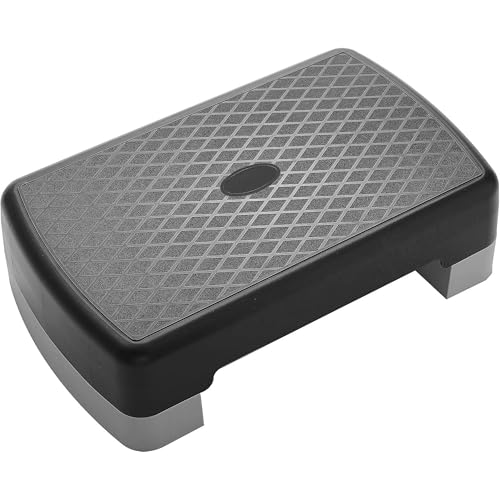
Aerobic Step Platform 4-inch
Low-height platform with non-slip surface, perfect for safe power training progressions without excessive fall risk
How to Structure a Power Training Session
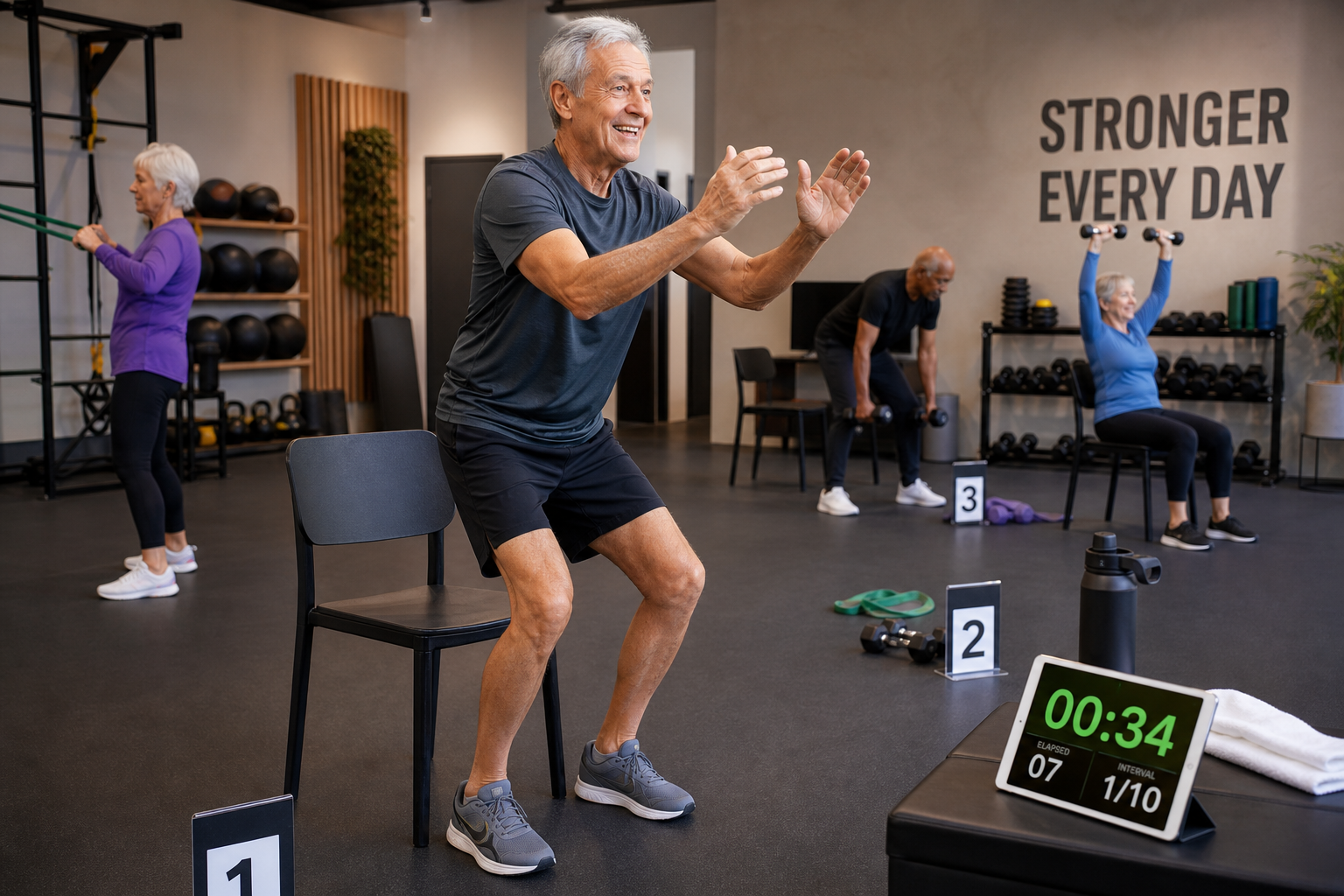
Power training sessions should be short and focused. Fatigue compromises speed, so stop before you slow down. A complete session takes 15-20 minutes.
Sample session structure:
- Warm up with 3-5 minutes of walking or marching in place
- Quick step-outs: 2 sets
- Quick chair stands: 3 sets
- Rapid calf raises: 3 sets
- Ball toss and catch: 2 sets
- Seated rapid arm punches: 4 rounds
- Cool down with gentle stretching for major muscle groups
Rest 45-60 seconds between sets. This allows partial recovery while keeping your nervous system engaged. If you feel winded or your movements slow significantly, rest longer.
Progression Guidelines
Power training responds to increased speed, not just increased resistance. As movements become easier, focus on executing them faster rather than immediately adding weight or reps.
Week 1-2: Learn the movement patterns at moderate speed. Focus on form and control.
Week 3-4: Increase speed on the concentric (lifting/rising) phase. Keep the eccentric (lowering) phase slow and controlled.
Week 5-6: Add 1-2 reps per set if speed remains high quality. If you slow down to complete the reps, maintain current volume and focus on speed.
Week 7-8: Add light resistance (1-2 pound weights for upper body, weighted vest for lower body) only if you can maintain speed with the added load.
Don’t rush progression. Power development takes 6-8 weeks of consistent training to produce measurable changes in muscle fiber recruitment and neural efficiency. Pushing too hard too soon leads to joint strain or muscle pulls.
Safety Guidelines
Power training carries different risks than traditional strength work. The speed component demands extra caution.
Always perform power exercises near a counter or wall for balance support. Even if you don’t need it currently, keep it available. A rapid movement can shift your center of gravity unexpectedly.
Start with bodyweight only. Add resistance only after the movement is controlled at speed. “Controlled” means you can stop the movement instantly if needed. If momentum carries you through the finish, you’re not ready for added weight.
The “quick” phase should be fast but controlled, not reckless. Think “explosive” rather than “violent.” Your muscles should drive the movement, not gravity or momentum.
The “slow” phase (lowering, returning) should always be deliberate. This eccentric portion builds strength and protects joints from impact stress. Don’t let gravity drop you. Control the descent.
Power training twice per week is sufficient. More frequent sessions increase injury risk from cumulative fatigue. Fast-twitch muscle fibers need 48-72 hours to recover from power work. Three times per week only works if you alternate muscle groups (lower body one day, upper body the next).
Stop immediately if you feel joint pain during or after rapid movements. Sharp knee pain during quick chair stands, ankle pain during rapid calf raises, or shoulder pain during ball tosses indicates excessive load or poor movement pattern. Drop back to slower tempo work and consult a physical therapist if pain persists.
Avoid power training on days when you feel unusually tired or unstable. Neural fatigue compromises the quick reflexes that keep rapid movements safe. If you slept poorly or feel off-balance, skip the session.
Common Mistakes and How to Fix Them
Confusing speed with chaos. Power is controlled explosiveness, not flailing. Every rep should have a clear start and stop. If you can’t halt the movement mid-rep, you’re using too much momentum.
Adding resistance too soon. The exercise should feel easy at bodyweight before you add load. “Easy” means 10 perfect reps with explosive speed and zero balance wobbles. If you’re still working on form, you’re not ready for weights.
Skipping the slow eccentric phase. The lowering portion isn’t filler. It builds eccentric strength, which protects joints and prevents injury during rapid movements. Always lower slowly even when rising quickly.
Training to failure. Power training stops when speed drops, not when muscles quit. If rep 8 is noticeably slower than rep 1, end the set. Grinding out slow reps defeats the purpose and increases injury risk.
Neglecting rest between sets. Power demands a fresh nervous system. Cutting rest from 60 seconds to 30 saves time but eliminates the speed training effect. You end up doing slow strength work instead.
Equipment Recommendations
Most power exercises require minimal equipment. A sturdy chair, a countertop, and a light ball cover the basics.
For ball tosses, a standard rubber playground ball (8.5 inches, under 1 pound) works well. If you want a purpose-built option, a 2-pound soft medicine ball provides better grip and controlled bounce.
For weighted arm punches, 1-pound hand weights work best. Neoprene-coated dumbbells are easier on arthritic hands than bare metal. Buy a matched pair so weight distribution stays even.
For advanced step-up work, a 4-inch aerobic step platform with non-slip surface beats makeshift options like stair steps or wooden boxes. The low height minimizes fall risk while still providing training stimulus. Adjustable platforms let you increase height as power improves, but start low.
A weighted vest (5-10 pounds) can add resistance to chair stands and step-outs once bodyweight movements become too easy. Choose a vest with removable weight packets so you can progress gradually. Fit matters: the vest should sit high on your torso, not sag onto your hips.
You don’t need all this equipment immediately. Start with bodyweight and household items (a rolled towel for light weight, a dining chair, a kitchen counter). Add purpose-built gear only when you’ve exhausted bodyweight progressions.

Adjustable Weighted Vest 5-10 lb
Removable weight packets allow gradual progression for chair stands and step exercises without compromising movement speed
Frequently Asked Questions
Is power training safe for seniors?
Yes, with appropriate exercise selection and progression. The exercises above use bodyweight or very light loads at speed, which produces far less injury risk than heavy weight training. Studies on power training in adults over 80 show significant improvements in functional performance (chair stand speed, stair climbing speed, walking velocity) with low injury rates when properly supervised.
Talk to your doctor before starting if you have unstable joints, uncontrolled heart conditions, recent fractures, or severe balance imp