When your feet can’t feel the ground properly, the shoes you wear become your first line of defense against injuries you won’t detect. Neuropathy-appropriate shoes need to protect your feet from external hazards (sharp objects, hot pavement, friction), provide structural stability that compensates for lost proprioception, and accommodate the foot changes (swelling, deformity, sensitivity) that often accompany nerve damage. Standard athletic shoes often fail on one or more of these criteria.
If you have peripheral neuropathy from diabetes, chemotherapy, spinal injuries, or other causes, you’re already familiar with the numbness, tingling, and loss of sensation that make simple tasks risky. A small pebble in your shoe, a wrinkle in your sock, or a seam pressing against your toe can cause tissue damage before your brain registers a problem. The right shoes reduce these risks substantially.
What Makes Neuropathy Different
Healthy feet provide constant sensory feedback. You feel when your shoe is too tight, when a wrinkle forms in your sock, when you step on something sharp, when your heel is rubbing. Your feet adjust their position automatically to maintain balance on uneven ground. Neuropathy disrupts all of this.
Lost sensation means lost warnings. A blister forms and you don’t feel it. A cut bleeds into your sock and you don’t notice. A nail punctures your sole and you keep walking. Reduced blood flow (which often accompanies neuropathy) slows healing, turning minor injuries into infections that can become serious. The Charcot foot changes that sometimes develop with advanced neuropathy alter the foot’s structure entirely, creating pressure points in unexpected places.
Your shoes need to compensate for what your nerves can no longer do. They must act as a surrogate nervous system, protecting your feet from damage you can’t detect and providing the stability your impaired proprioception no longer delivers. Maintaining proper balance becomes crucial when sensory feedback is compromised, which is why daily balance exercises can complement protective footwear for overall stability.
Essential Features for Neuropathy Shoes
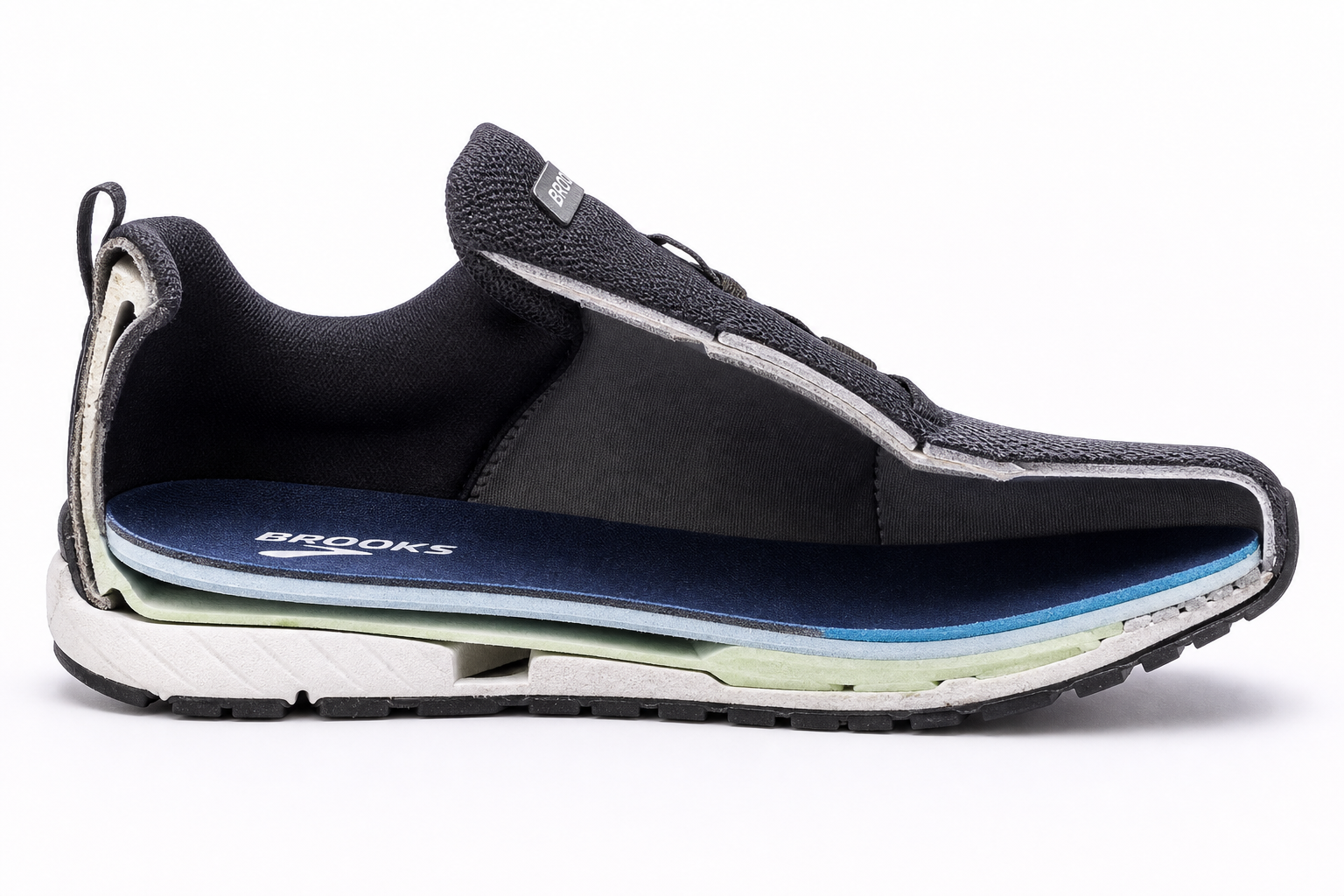
Extra Depth
Standard shoes are built for standard feet. Neuropathy often comes with foot changes (hammertoes, bunions, Charcot foot) that require more room inside the shoe. Extra-depth shoes have a deeper toe box that accommodates deformities and custom insoles without crowding the toes. Crowded toes in numb feet develop pressure sores and blisters that you can’t feel forming.
The typical extra-depth shoe offers 5/16 to 1/2 inch more depth than a standard shoe. This extra space matters when you’re wearing custom orthotics or thick diabetic insoles. It also matters if your toes have curled or if you’ve developed bunions that push the big toe inward. Any shoe that forces your foot into an unnatural shape creates sustained pressure on tissue that can’t signal distress.
Seamless Interior
Interior seams, stitching, and fabric ridges create pressure points that healthy feet barely notice. Numb feet can’t detect these irritants, so a minor seam can rub a blister without any pain signal. The best neuropathy shoes have a smooth, seamless interior lining that eliminates friction points entirely.
Some manufacturers achieve this with heat-bonded construction rather than stitched seams. Others use soft fabric linings with flat-stitched seams positioned away from high-pressure areas. The goal is a perfectly smooth interior surface from heel to toe. Run your hand inside any shoe you’re considering. If you feel bumps, ridges, or rough spots, your numb foot will encounter those same irritants with every step.
Rigid or Semi-Rigid Sole
A flexible sole bends and conforms to objects underfoot (pebbles, uneven surfaces, sharp edges). A rigid sole acts as a protective platform that shields your foot from ground irregularities. For neuropathy, you want a sole stiff enough that you don’t feel individual stones through it but flexible enough at the toe for a natural walking motion.
This balance is tricky. Too flexible and you’ll step on something sharp without knowing it. Too rigid and the shoe won’t allow the forefoot to bend naturally during the push-off phase of walking, which creates an awkward gait and puts abnormal stress on joints. The sweet spot is a sole that’s firm through the midfoot and heel but allows controlled flex at the ball of the foot.
A rocker bottom sole, which curves upward at the toe, reduces the amount of forefoot bending needed during walking. This design appears on many diabetic and neuropathy-specific shoes. It feels odd initially but protects the metatarsal heads (the bony bumps behind your toes) from excessive pressure.
Wide Toe Box
Neuropathic feet often swell during the day and need room to expand. A wide toe box prevents the compression that causes blisters and ulcers. Your toes should be able to spread naturally inside the shoe without pressing against the sides.
Many people with neuropathy require shoes in 2E or 4E widths (or wider) even if they wore standard D or B width shoes before developing nerve damage. Swelling patterns can be unpredictable. One foot may swell more than the other. Mornings may be fine but afternoons require extra room. A wide toe box accommodates this variability without creating fit problems elsewhere in the shoe.
Cushioned Midsole
Extra cushioning compensates for the reduced natural padding (fat pad atrophy) that often accompanies neuropathy. The cushioning also absorbs impact forces that numb feet can’t brace against, protecting the bones and joints of the foot.
Look for multi-density midsoles that combine soft cushioning under high-pressure areas (heel, ball of foot) with firmer support under the arch. Pure soft cushioning feels pleasant but doesn’t provide the stability neuropathic feet need. Pure firm support protects structure but doesn’t absorb shock. The combination does both.
Secure Closure
Shoes that slip or shift on numb feet increase fall risk. A secure closure (Velcro straps, elastic laces, or traditional laces) keeps the shoe firmly on your foot during walking. Slip-on shoes are risky because you can’t feel if they’re loose.
Velcro straps work well for people with limited hand dexterity or arthritis. They allow precise adjustment and stay put once fastened. Elastic laces (laces that stretch rather than requiring tying) offer convenience without sacrificing security. Traditional laces provide the most adjustability but require the hand strength and coordination to tie them properly.
A padded heel counter (the stiff cup that surrounds your heel) prevents the shoe from sliding off during walking. Some neuropathy-specific shoes include extra padding around the ankle collar to reduce friction without creating pressure points.
Top Shoes for Neuropathy
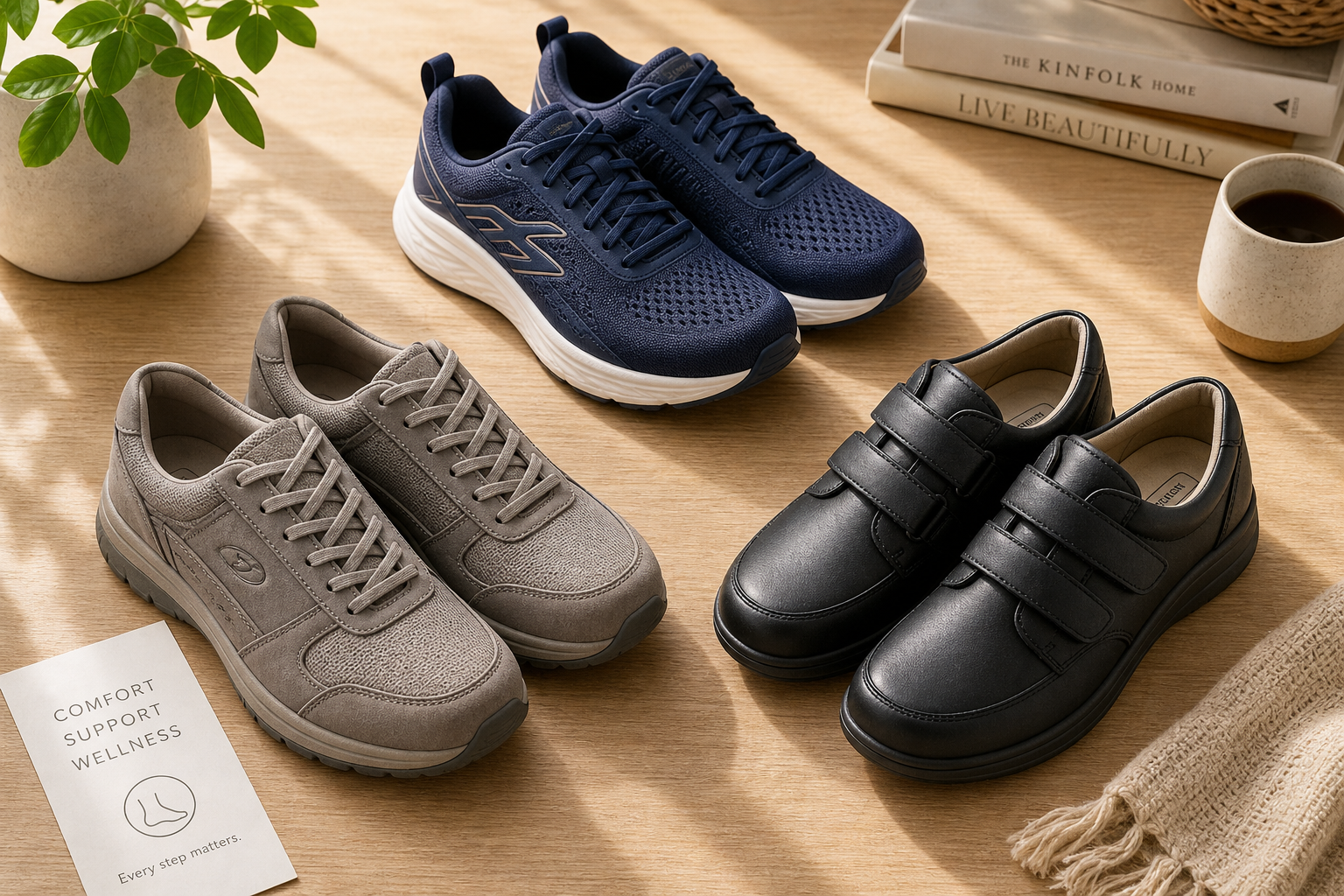
Dr. Comfort Performance-X

Dr. Comfort Performance-X
Medicare-approved diabetic shoe with extra depth, seamless interior, and removable insoles for custom orthotics
The Dr. Comfort Performance-X is specifically designed for diabetic and neuropathic feet. Extra depth, seamless interior, a lightweight rigid sole, and a removable insole (replaceable with custom orthotics) check every box. The shoe comes in multiple widths and has a padded collar that reduces rubbing around the ankle. Medicare may cover these shoes with a prescription.
The Performance-X uses a mesh upper with minimal seams and a gel insert in the heel for shock absorption. The sole has a mild rocker design that reduces forefoot pressure during push-off. The insole is heat-moldable, conforming to your foot shape over the first few wearings. If you need custom orthotics, the insole removes completely to accommodate them.
Fit runs true to size in length but generous in width. If you’re between sizes, go with the larger size rather than cramming into a shoe that’s marginally too small. Your numb feet won’t warn you about the fit problem until damage has already occurred.
New Balance 928v3

New Balance 928v3
Popular walking shoe with extra depth, wide toe box, and available in multiple widths including extra-wide options
The New Balance 928v3 is a popular walking shoe with extra depth, a wide toe box, and ABZORB cushioning. The rollbar technology stabilizes the heel and midfoot. Available in multiple widths from narrow to extra-extra-wide. While not marketed specifically as a diabetic shoe, its features align well with neuropathy needs. The removable insole accommodates custom orthotics.
The 928v3 has a leather upper that’s durable and easy to clean. The internal structure includes reinforcement around the heel and arch to prevent the shoe from collapsing inward (overpronation). This matters for neuropathy because your feet can’t make the micro-adjustments healthy feet use to maintain balance. The shoe’s structure has to compensate.
The cushioning is firm rather than plush. This won’t feel as soft as a running shoe but provides better stability for walking. The outsole is non-marking rubber with a deep tread pattern that grips well on smooth indoor surfaces and wet pavement.
Orthofeet Proven Series
The Orthofeet Proven series features a stretchable knit upper that conforms to foot deformities without creating pressure points. The ergonomic sole has arch support and cushioning. The seamless interior and extra-wide widths make these particularly suitable for feet with bunions, hammertoes, or significant swelling. Multiple closure options are available (lace, Velcro, and slip-on with secure heel grip).
The knit upper stretches in all directions, accommodating irregular foot shapes that rigid leather can’t handle. This is particularly valuable if you have significant bunions or if one part of your foot swells more than another. The stretch fabric adapts without creating tight spots.
Orthofeet includes premium orthotics with the shoe (rather than making them an add-on purchase). The orthotics have anatomical arch support, a deep heel cup, and cushioning layers designed to redistribute pressure away from vulnerable areas. If the included orthotics don’t work for you, they remove easily to make room for custom orthotics.
Propet Stability Walker