A lumbar support cushion is one of the cheapest, simplest tools for reducing back pain during prolonged sitting. Whether you’re in a car, at a desk, or in a recliner watching TV, the right cushion maintains the natural curve of your lower back that flat-backed chairs eliminate.
For seniors who sit for extended periods between exercise sessions, a quality lumbar cushion prevents the stiffness and pain that makes getting up and moving feel harder than it should.
The mechanics are simple. Your lower spine has a natural inward curve called lordosis. Most chair backs are flat or slightly reclined, which flattens this curve and forces the muscles and ligaments around your spine to work constantly just to hold you upright.
Over time, this sustained tension leads to muscle fatigue, stiffness, and pain. A properly placed lumbar support fills the gap between your back and the chair, allowing your spine to rest in its natural position without muscular effort. The result is less fatigue, reduced pain, and easier transitions from sitting to standing.
Before investing in any cushion, check with your doctor if you have diagnosed spinal conditions, recent back injuries, or pain that radiates into your legs. What feels supportive to one person might aggravate another’s specific condition, and a healthcare provider can guide you toward the support level and placement that matches your situation.
Types of Lumbar Supports
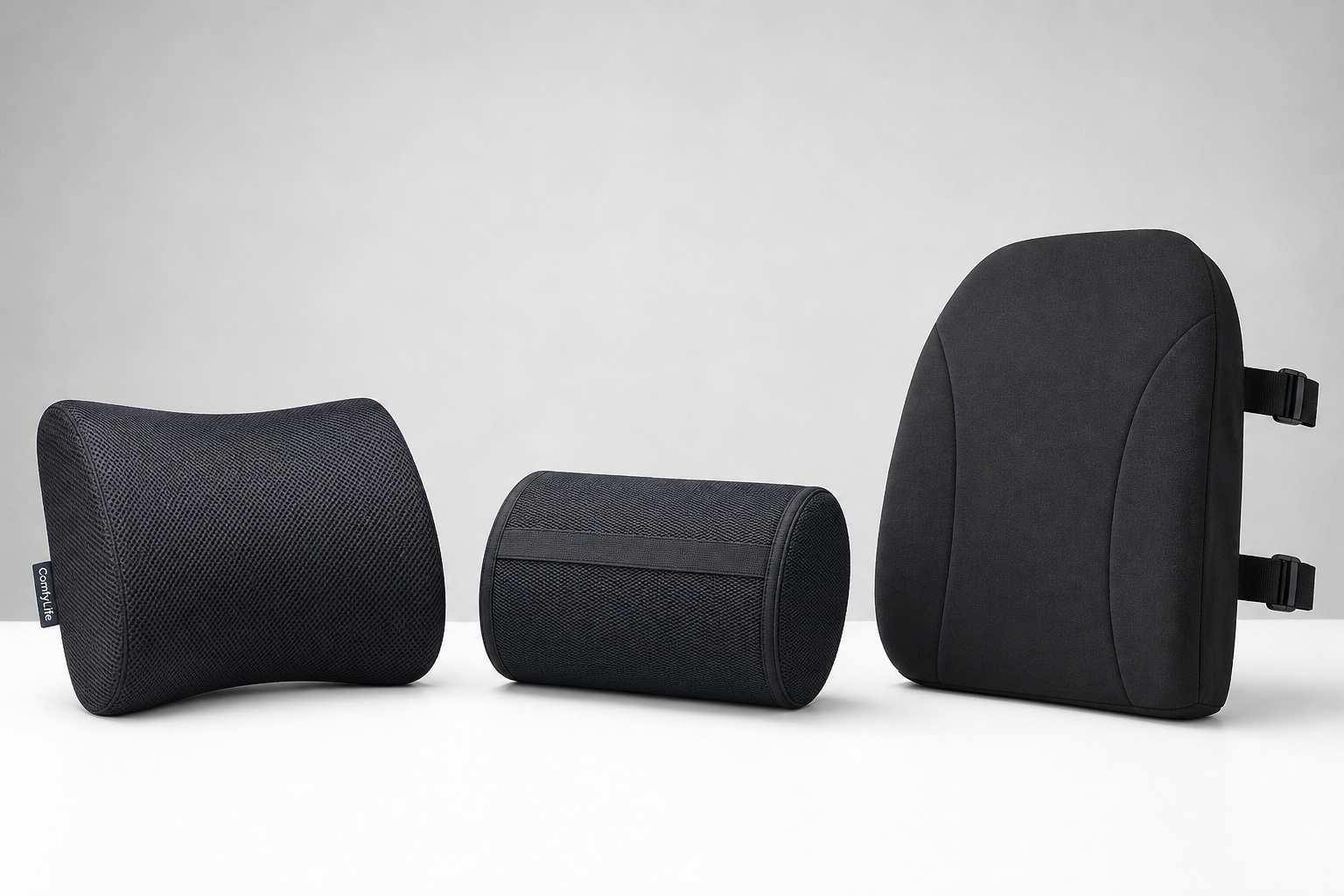
Memory Foam Cushions
Memory foam conforms to the shape of your spine, providing customized support. It softens with body heat, which means it molds to your unique curve rather than imposing a generic shape.
The downside: memory foam retains heat, which can be uncomfortable during warm weather or in heated car seats. Higher-density foam provides firmer support that doesn’t flatten out over months of use.
Density matters more than thickness. A 3-inch cushion made from low-density foam will compress to less than an inch within a few weeks. Look for foam rated at 3-5 pounds per cubic foot for the right balance between comfort and durability.
The initial firmness may feel aggressive, but memory foam softens as it warms to your body temperature.
Gel-Infused Cushions
Gel-infused foam combines the conforming properties of memory foam with better temperature regulation. The gel layer disperses heat, keeping the cushion cooler than pure memory foam. These are a good compromise between support and comfort for people who find standard memory foam too warm.
The gel component works by conducting heat away from the contact surface and spreading it across a wider area. This doesn’t make the cushion cold, but it prevents the concentrated warmth buildup that happens with pure foam.
If you live in a warm climate, run hot naturally, or use the cushion in a car with heated seats, gel-infused options are worth the modest increase in cost.
Inflatable Cushions
Air-filled lumbar supports let you adjust firmness by adding or releasing air. This is the most customizable option and the best choice for people whose support needs change throughout the day (firmer in the morning, softer by evening). Inflatable cushions are also the most portable, deflating flat for travel.
The adjustment range is significant. You can inflate an air cushion to provide aggressive support that pushes your spine into a pronounced curve, or you can soften it to barely-there firmness for minimal support.
This flexibility is useful for people recovering from back injuries who need to gradually increase support levels, or for those whose pain levels vary day to day. The trade-off is durability. Inflatable cushions with repeated inflation cycles may develop slow leaks over time.
McKenzie Lumbar Rolls
Developed by physical therapist Robin McKenzie, these cylindrical rolls are specifically designed to support the lower back curve. They’re the simplest design (just a firm foam cylinder) and are recommended by many physical therapists for their effectiveness. They attach to chairs with a strap and maintain a consistent support position.
The roll’s narrow profile targets support precisely at the deepest point of your lumbar curve, roughly at the L4-L5 level. This concentrated support is more aggressive than a full-surface cushion.
It works well for maintaining lordosis during active sitting tasks like working at a desk, but some people find it too firm for relaxed sitting like watching television. Physical therapists often prescribe McKenzie rolls specifically for patients with disc problems because the targeted support helps maintain the spinal position that reduces pressure on discs.
Top Lumbar Cushions for Seniors
Everlasting Comfort Lumbar Support Pillow
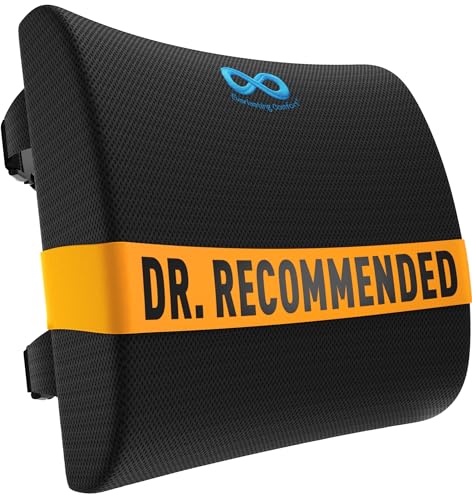
Everlasting Comfort Lumbar Support Pillow
Bestselling memory foam option with breathable mesh cover and adjustable straps that fit any chair
The Everlasting Comfort is one of the bestselling memory foam lumbar supports. Its ergonomic shape matches the natural curve of most spines, and the breathable mesh cover reduces heat buildup.
Two adjustable straps keep it positioned correctly on any chair. The foam is dense enough to maintain its shape for 12+ months of daily use.
The cushion measures roughly 13 inches wide by 12 inches tall with a 4-inch projection at the thickest point. This full-surface design distributes support across a wider area of your back compared to narrower rolls.
The elastic straps adjust from 20 to 50 inches, fitting everything from compact car seats to oversized recliners. The mesh cover is removable and machine washable, a practical feature when the cushion sees daily use.
LoveHome Memory Foam Lumbar Cushion
The LoveHome is a budget-friendly option with a wider profile that supports more of the back surface. The memory foam is slightly softer than the Everlasting Comfort, which some people prefer for extended sitting. The removable, washable cover is a practical feature for daily use.
At roughly 14 inches wide, the LoveHome offers more lateral support than narrower cushions. This extra width is useful if you tend to shift side to side during sitting or if you want support that extends beyond just the central spine area.
The softer foam compresses more under body weight, which reduces the aggressive push you feel with firmer options but also means the cushion may flatten sooner with daily use. Expect 8-12 months of effective support before replacement.
Xtreme Comforts Lumbar Support Cushion
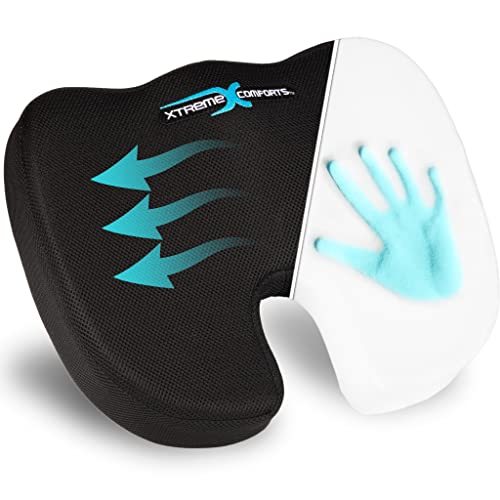
Xtreme Comforts Lumbar Support Cushion
Gel-infused memory foam stays cooler with non-slip backing and multiple size options including slim car seat version
The Xtreme Comforts uses a gel-infused memory foam that stays cooler than standard foam. It’s available in multiple sizes, including a slimmer profile for car seats.
The non-slip back surface grips upholstery well, keeping the cushion in place without constant readjustment.
The standard size projects about 4 inches at the thickest point, while the slim car seat version measures closer to 3 inches. The difference matters in vehicles where a thicker cushion pushes you too far forward from the seat back, creating an uncomfortable gap.
The gel infusion reduces surface temperature by several degrees compared to pure foam, noticeable during long sitting sessions. The non-slip backing uses a rubberized texture that grips fabric upholstery without leaving residue.
McKenzie Original Lumbar Roll
The McKenzie Lumbar Roll is the physical therapy standard. It’s a firm, cylindrical roll that provides concentrated support at the deepest part of your lumbar curve.
The strap attachment keeps it in position. It’s less cushioned than memory foam options but more targeted in its support. Many back pain specialists recommend this as their first-line sitting aid.
The roll measures 11 inches long and 4-5 inches in diameter depending on the model. The cylindrical shape creates a narrow band of firm support rather than distributing pressure across a broad surface.
This focused support maintains lordosis effectively but feels more intrusive than a full cushion. If you’re working with a physical therapist for back issues, ask whether a McKenzie roll or a full cushion better matches your treatment plan. The roll is often prescribed as part of a broader program to retrain sitting posture.
Proper Placement
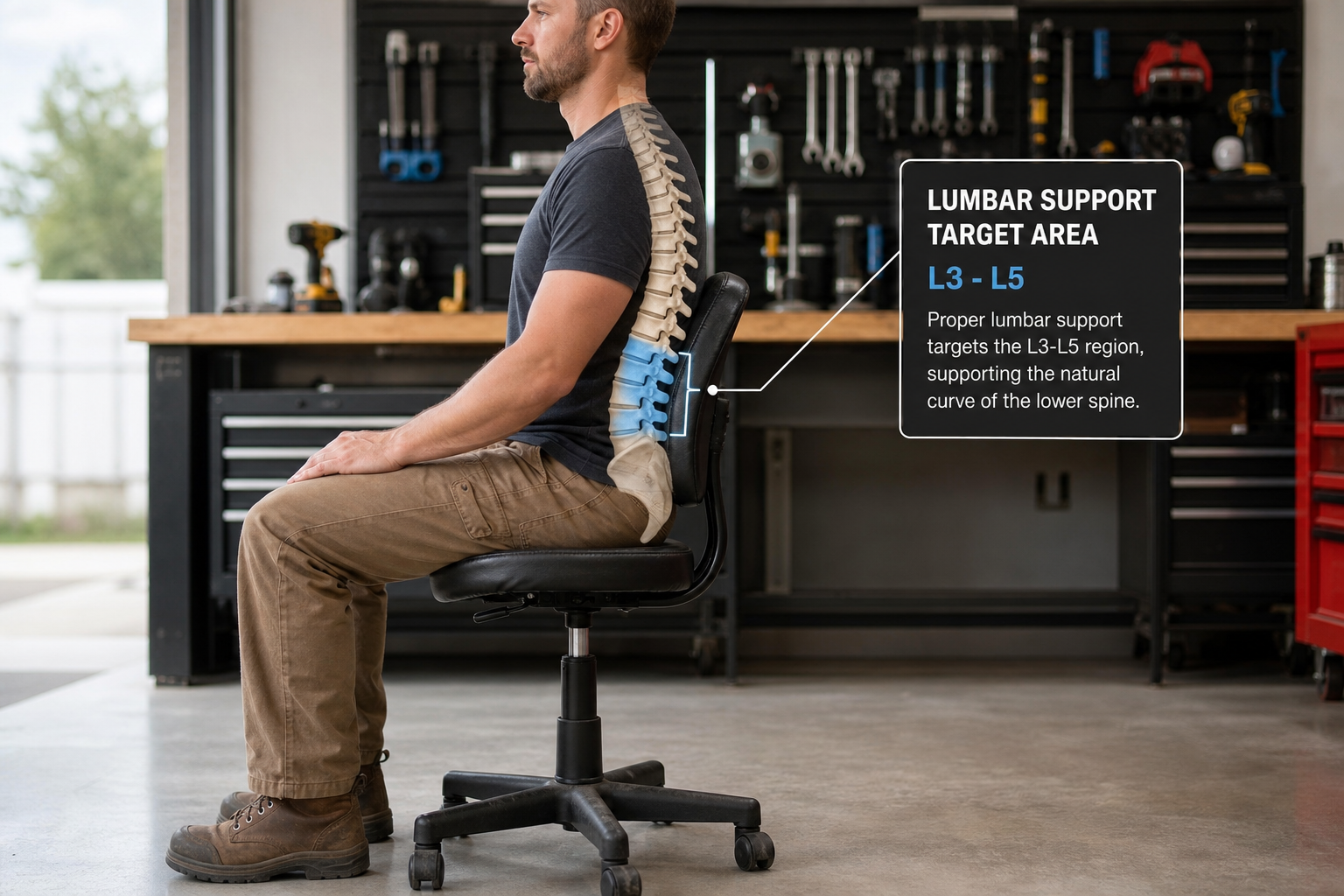
Correct positioning is the difference between a cushion that helps and one that makes things worse. The cushion should sit in the curve of your lower back, roughly at belt level (the L3-L5 vertebrae).
Too high and it pushes your upper back forward. Too low and it creates an exaggerated arch. The goal is to fill the gap between your lower back and the chair so your spine maintains its natural S-curve without effort.
Start by sitting all the way back in your chair with your buttocks against the seat back. Place the cushion behind your lower back and adjust the vertical position until it fills the hollow space you feel when you press your hand between your back and the chair.
The cushion should provide gentle resistance, not aggressive forward pressure. You should be able to sit upright without leaning heavily into the cushion or feeling pushed forward.
Test the placement by sitting for 15-20 minutes. Correct positioning feels supportive but not intrusive. You shouldn’t feel constant pressure or the need to shift away from the cushion.
If you find yourself repeatedly leaning forward to escape the support, the cushion is either too thick, positioned too high, or too firm for your tolerance. Adjust position first, then consider whether you need a thinner or softer cushion.
For car seats, placement is trickier because seat angles vary. Start with the cushion at belt level and make small adjustments up or down until you find the spot where you can sit for a 20-30 minute drive without discomfort.
Many car seats recline more than office chairs, which means the cushion may need to sit slightly higher to match where your back naturally contacts the seat.
Choosing by Condition
Spinal stenosis: A softer cushion that allows slight flexion is usually more comfortable than a very firm one. Avoid aggressively arched supports that extend the spine, as this narrows the spinal canal.
Many people with stenosis find relief by sitting slightly hunched forward, which is the opposite of what firm lumbar supports encourage. A thin, soft cushion provides comfort without forcing extension. Gel-infused foam or low-density memory foam works better than McKenzie rolls.
Disc issues (herniation, bulging): A firm support that maintains lordosis (the natural inward curve) is important. The McKenzie roll is often recommended specifically for disc patients.
Maintaining the lumbar curve reduces forward pressure on discs, which can help minimize bulging. However, some disc herniations respond better to flexion than extension, so check with your doctor or physical therapist before committing to a firm support. The wrong choice can aggravate symptoms.
Muscle fatigue and general stiffness: Any quality lumbar cushion helps. Memory foam is the most comfortable option for general use.
If your back pain comes primarily from tired muscles rather than structural problems, support level is less critical than consistency. Pick a cushion that’s comfortable enough to use every day without thinking about it.
Arthritis: Gel-infused cushions provide gentle support without the firmness that can aggravate arthritic facet joints. Arthritis in the facet joints (the small joints along the back of the spine) often worsens with extension, which means very firm supports that push your spine into a pronounced curve can increase pain.
A softer cushion that maintains a neutral position is usually better tolerated. For more information on managing arthritis discomfort, see our guide on arthritis-friendly exercises for seniors.
Osteoporosis: Softer supports reduce pressure points. Aggressive firm cushions can create concentrated pressure against weakened vertebrae.
If you have significant osteoporosis, especially with a history of compression fractures, prioritize cushions with broader, gentler support rather than narrow, firm rolls. Consider pairing proper sitting support with our safe bone-building exercises for better overall bone health.
When a Cushion Is Not Enough
A lumbar cushion addresses sitting posture, but it can’t fix underlying problems. See a doctor or physical therapist if back pain continues despite proper sitting support, pain radiates down your leg (sciatica), you have numbness or weakness in your legs, or pain is progressively worsening over weeks.
A cushion is a tool for comfort and prevention, not a treatment for structural spinal conditions.
Red flags that require immediate medical attention include sudden loss of bladder or bowel control, progressive leg weakness, severe pain that doesn’t respond to rest or position changes, or pain accompanied by unexplained weight loss or fever. These symptoms suggest conditions that need diagnostic imaging and professional treatment, not a sitting aid.
A cushion works best as part of a broader back health approach. Combine it with regular movement breaks (stand and walk for a few minutes every 30-60 minutes), core-strengthening exercises approved by your doctor, and attention to overall sitting ergonomics.
If your chair seat is too deep, your feet don’t touch the floor, or your desk height forces you to hunch, a lumbar cushion alone won’t solve the problem. Our lower back pain exercises can help strengthen the muscles that support your spine.
If sciatic pain is a concern, you might benefit from our guide to managing sciatica through exercise.
Cushions for Specific Chairs
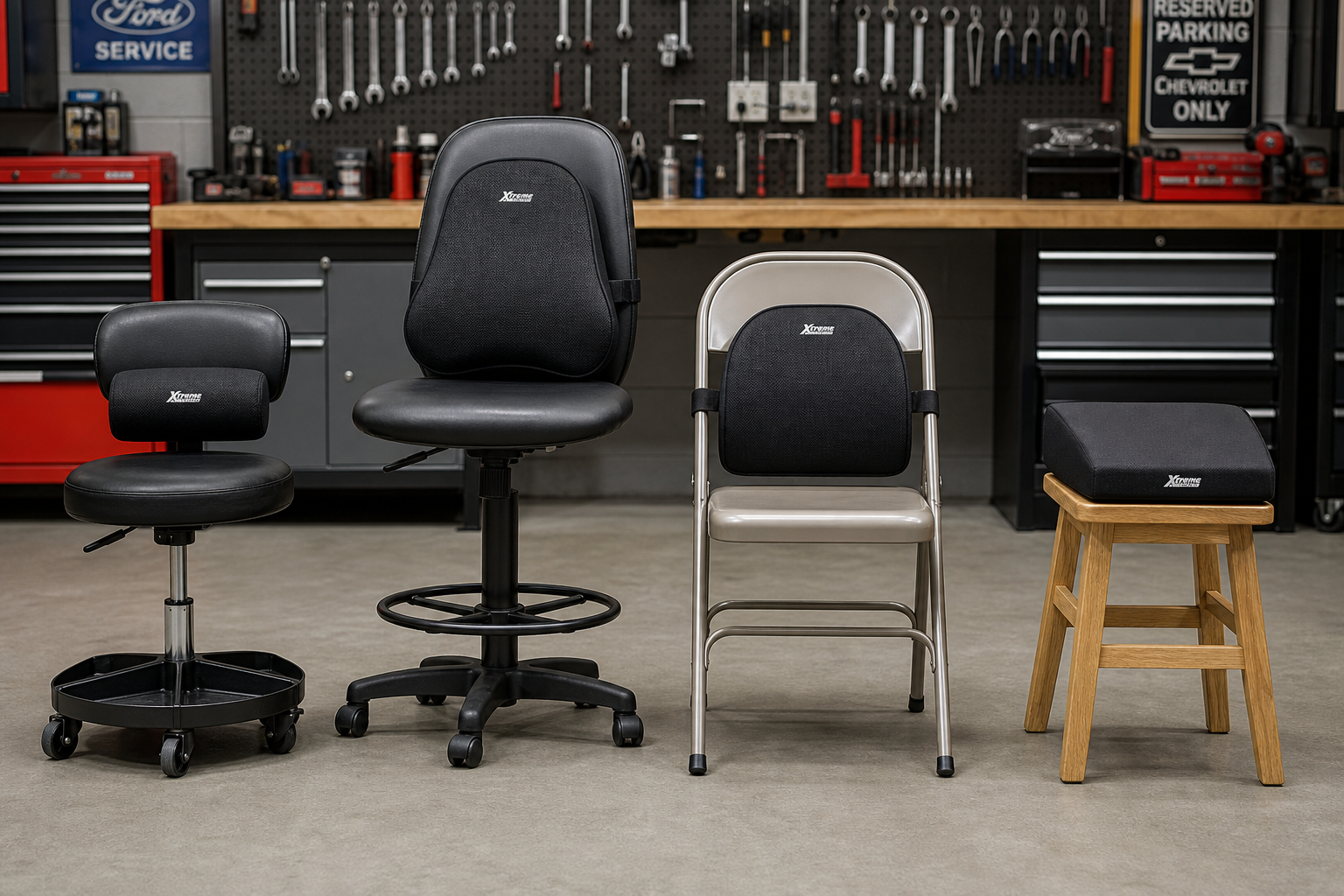
Office chairs with built-in lumbar support may not need an additional cushion, or they may work better with a thin cushion that fine-tunes the existing support. Test the chair’s built-in adjustment first.
If it doesn’t provide enough support even at maximum setting, add a slim cushion (2-3 inches thick) rather than a full-size one.
Recliners present a challenge because the seat back angle changes as you recline. A cushion that works in the upright position may feel wrong when reclined.
Some people use two cushions: a firmer one for upright sitting and a softer one for reclined positions. Alternatively, choose an inflatable cushion and adjust firmness based on recline angle.
Car seats vary widely in lumbar support. Bucket seats in sports cars often have aggressive built-in bolsters that don’t need additional support