Foam rolling isn’t just for athletes and gym enthusiasts. As we age, maintaining muscle flexibility and managing soreness becomes more important than ever. Foam rolling, or self-myofascial release, offers a gentle way to work out muscle tension, improve circulation, and support your body’s natural recovery process. The key for seniors is choosing the right equipment and using proper technique to avoid discomfort or injury.
Unlike the firm rollers you might see younger athletes using, seniors benefit from softer foam rollers that provide effective muscle release without excessive pressure on sensitive areas or aging skin. With the right approach, foam rolling can become a valuable part of your wellness routine, taking just 10-15 minutes a few times per week.
Choosing the Right Foam Roller for Senior-Friendly Exercise
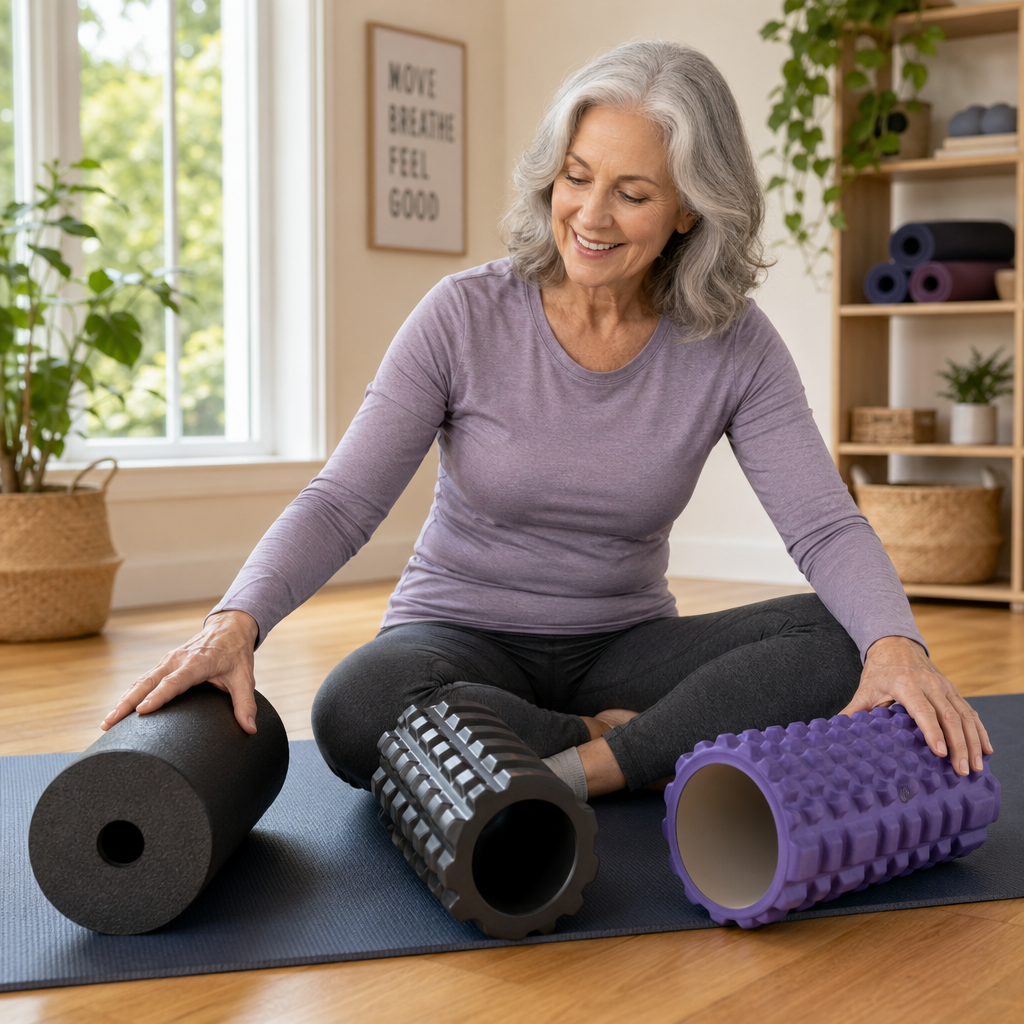
Not all foam rollers are created equal. The density of the foam makes a huge difference in how comfortable and effective your rolling sessions will be. For seniors, a low to medium-density roller is typically the best choice.
Look for rollers specifically labeled as “soft” or “low-density.” These provide enough pressure to release muscle tension without creating bruising or excessive discomfort. White or light-colored foam usually indicates a softer density, while black or dark-colored rollers tend to be much firmer.
Standard foam rollers measure 36 inches in length and 6 inches in diameter. This size works well for most exercises, but you might also consider a shorter 18-inch roller if you have limited floor space or want something more portable. Some seniors find that a soft foam roller with a smooth surface is easier on sensitive skin than textured versions.

LuxFit Foam Roller
An excellent soft-density option that provides effective muscle release without excessive pressure.
Safe Foam Rolling Techniques for the Back
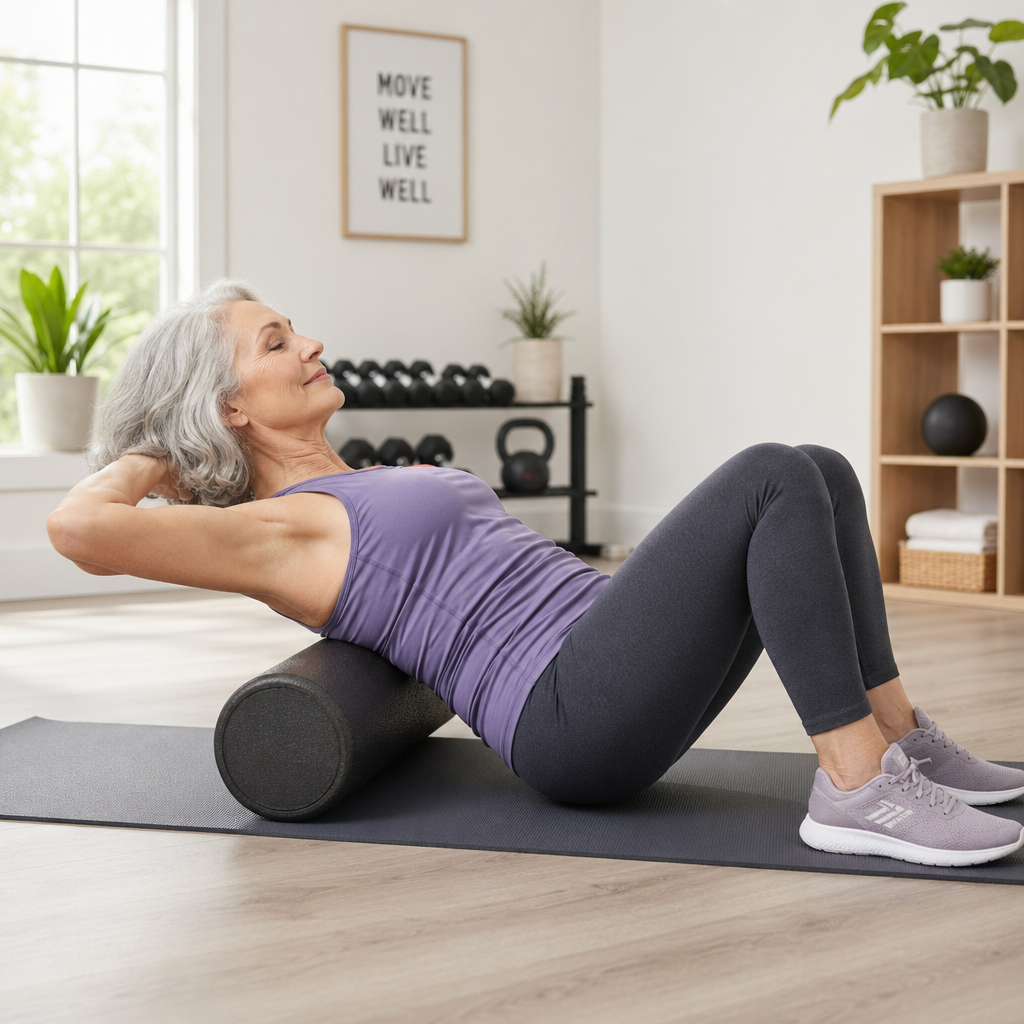
Your back is one area where foam rolling can provide significant relief, but it requires careful technique to avoid strain or injury. Always support your head with your hands and avoid rolling directly on your spine.
To roll your upper back, sit on the floor with the roller positioned behind you at mid-back level. Place your hands behind your head for support and lean back onto the roller. Using your legs, slowly push yourself forward and backward so the roller moves across your upper back muscles on either side of your spine. Keep your core engaged and avoid arching your back excessively.
For your lower back, it’s better to use the roller passively rather than actively rolling. Lie on your back with the roller positioned under your lower back area. Simply rest in this position for 30-60 seconds, allowing your muscles to relax. Rolling aggressively on the lower back can strain vulnerable muscles and isn’t recommended for seniors.
Always move slowly and deliberately. Speed doesn’t improve effectiveness and can lead to injury. When you find a tender spot, pause for 20-30 seconds to allow the muscle to release naturally.
Leg Rolling Techniques for Improved Flexibility
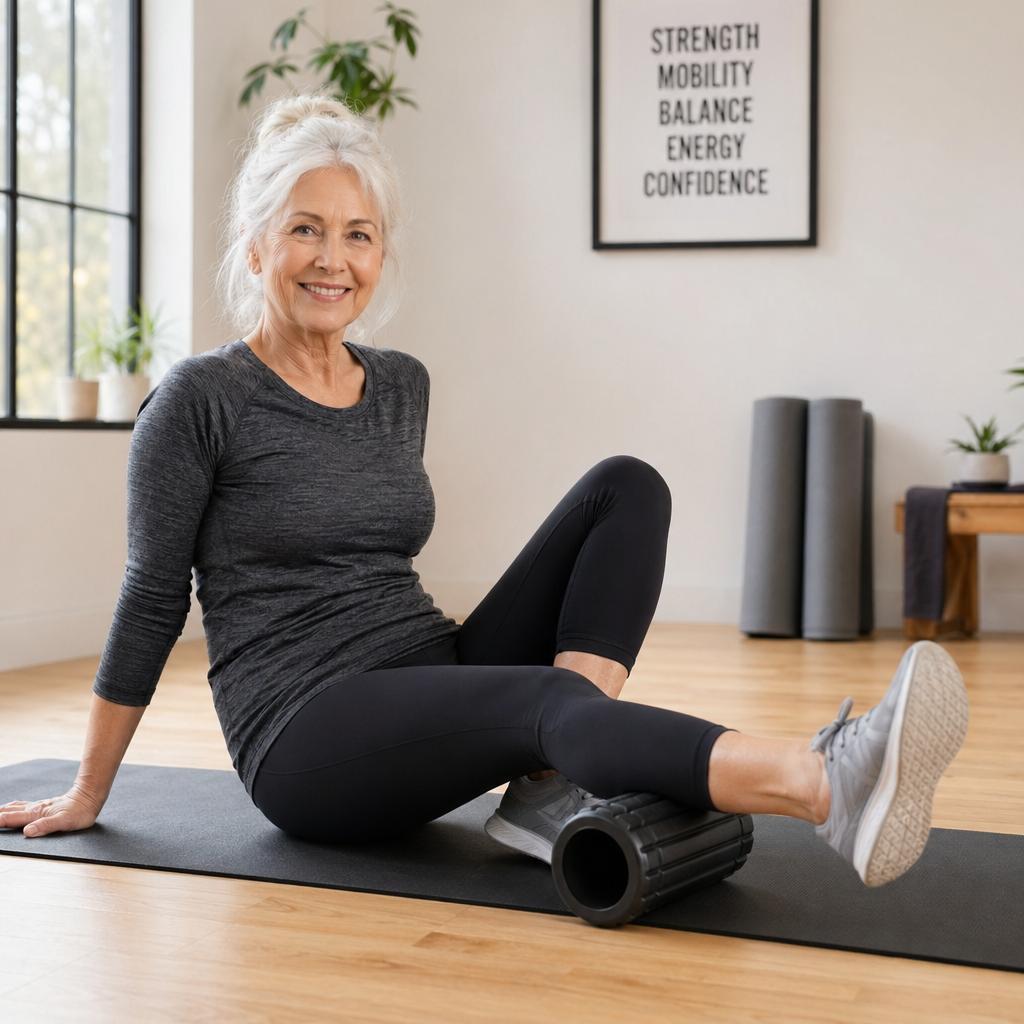
Your legs carry you through life, and foam rolling can help maintain their flexibility and reduce common aches. The calves, hamstrings, and outer thighs respond particularly well to gentle rolling.
For your calves, sit on the floor with your legs extended and place the roller under one calf. Support yourself with your hands behind you. Use your arms and other leg to lift your hips slightly off the ground, then roll slowly from your ankle to just below your knee. You can increase pressure by stacking one leg on top of the other, but start light.
Rolling your hamstrings follows a similar pattern. Sit with the roller under your thighs and use your hands to lift your hips. Roll from just above your knees to just below your glutes. This technique helps with leg stiffness and can improve your walking comfort.
The IT band, which runs along the outer thigh, often holds tension but requires caution. Lie on your side with the roller under your outer thigh. Use your bottom arm and top leg to control pressure and speed. This area can be quite tender, so start with very light pressure and short sessions of 30-60 seconds per leg.
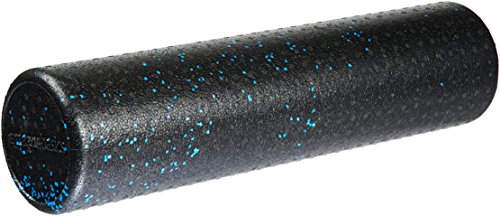
AmazonBasics Foam Roller
A reliable budget-friendly option that offers consistent quality and appropriate firmness for older adults.
Shoulder and Upper Body Relief
Shoulder tension affects many seniors, especially those who spend time at computers or have postural concerns. Foam rolling can address the muscles around your shoulders and upper arms effectively.
For your shoulders, lie on your side with the roller positioned under your armpit area, targeting your lat muscles. This might feel unusual at first, but these muscles contribute significantly to shoulder mobility. Keep your bottom arm extended and roll gently for 30-45 seconds per side.
You can also address chest tightness by lying face-down with the roller positioned at an angle under one side of your chest. Turn your body slightly to control the pressure and breathe deeply as the muscle releases. This technique helps counteract the forward shoulder posture common in older adults.
For the upper trapezius muscles that run from your neck to your shoulders, place the roller horizontally on the floor and lie on your back with it positioned at the base of your skull. Gently turn your head from side to side. This passive technique relieves neck tension without requiring strength or flexibility.
Benefits You Can Expect from Regular Foam Rolling
Consistency matters more than intensity when it comes to foam rolling. Most seniors notice improvements within 2-3 weeks of regular practice, typically 3-4 times per week.
Improved flexibility is often the first benefit you’ll notice. Regular rolling helps maintain the pliability of your fascia, the connective tissue surrounding your muscles. This translates to easier movement during daily activities and better range of motion in your joints.
Many seniors report reduced muscle soreness, particularly delayed-onset soreness after physical activity or gardening. Foam rolling increases blood flow to your muscles, which supports natural recovery processes and helps clear metabolic waste products that contribute to soreness.
Better posture often develops as you release chronic tension patterns. When tight muscles relax, your body can return to more natural alignment. This is especially beneficial for the chest, shoulders, and hip flexors, which tend to tighten with age and sedentary habits.
Sleep quality sometimes improves as well. The relaxation response triggered by gentle foam rolling can reduce overall body tension and promote better rest, particularly when done in the evening as part of a wind-down routine.
When to Avoid Foam Rolling
While foam rolling offers many benefits, certain conditions require caution or complete avoidance. Always consult your doctor before starting any new physical practice, especially if you have pre-existing health concerns.
Avoid foam rolling if you have osteoporosis or severe bone density loss. The pressure involved could increase fracture risk. Similarly, those with blood clotting disorders or taking blood thinners should consult their physician first, as foam rolling can potentially cause bruising.
Never roll over joints, bones, or areas with varicose veins. Focus only on the soft tissue of your muscles. Active injuries, recent surgeries, or areas with bruising should be avoided entirely until fully healed.
Those with acute inflammation or severe arthritis should proceed cautiously and potentially seek guidance from a physical therapist. While gentle rolling may help some arthritic conditions, aggressive rolling could worsen inflammation.
Stop immediately if you experience sharp pain, numbness, or tingling. Mild discomfort is normal when working on tight muscles, but pain signals that you’re using too much pressure or rolling an inappropriate area. A foam roller instruction guide can help you distinguish between productive discomfort and harmful pain.
Getting Started with Your Foam Rolling Practice
Begin with just 5-10 minutes per session, focusing on one or two body areas. As your body adapts, you can gradually extend your sessions and include more muscle groups. Creating a simple routine helps maintain consistency.
Consider pairing your foam rolling with other gentle activities you already do. Many seniors find that rolling before stretching enhances flexibility, while others prefer rolling after walks to prevent next-day soreness.
Keep your foam roller visible in your living space rather than tucked away in a closet. Seeing it regularly serves as a reminder and makes it easier to squeeze in short sessions. Some people keep a compact foam roller near their favorite chair for convenience.
Track how you feel before and after rolling sessions for the first few weeks. This helps you identify which techniques provide the most benefit and adjust your routine accordingly. Most seniors find that their preferred techniques and pressure levels evolve as they become more experienced.
Frequently Asked Questions
How often should seniors foam roll?
Three to four times per week is ideal for most seniors. This frequency provides consistent benefits without overdoing it. You can foam roll daily if desired, but allow at least one rest day per week. Sessions should last 10-15 minutes, focusing on the areas that feel tightest or most uncomfortable. Listen to your body and adjust frequency based on how you feel.
Is foam rolling supposed to hurt?
You should feel pressure and mild discomfort when rolling over tight muscles, but not sharp or intense pain. Think of it as a “good hurt,” similar to stretching. If you experience significant pain, reduce pressure by supporting more of your body weight with your hands or legs. As your muscles release tension over time, the discomfort typically decreases. Sharp, shooting, or burning pain indicates you should stop immediately.
Can foam rolling help with arthritis pain?
Foam rolling can help reduce muscle tension around arthritic joints, which may provide indirect relief. However, avoid rolling directly over inflamed joints or during arthritis flare-ups. Focus on the muscles surrounding affected areas using gentle pressure. Many seniors with arthritis find that foam rolling helps maintain mobility and reduces compensatory tension in other body areas. Always discuss new exercise practices with your rheumatologist or physician first.
This article contains affiliate links. We may earn a small commission at no extra cost to you.