Menopause brings a host of changes to your body, but one of the most significant is what happens to your muscles and bones. You’re losing muscle mass at an accelerated rate, your bone density is declining, and suddenly that strength you took for granted feels like it’s slipping away. But here’s what most women don’t realize: strength training after 50 isn’t just helpful, it’s essential. And with the right approach, you can actually build muscle and strengthen bones during and after menopause.
The drop in estrogen during menopause accelerates muscle loss by up to 10% per decade if you’re not actively working against it. Your bones are losing density faster too, increasing your risk for osteoporosis and fractures. The good news is that progressive strength training directly combats both of these issues better than any other form of exercise. Let’s look at how to make it work for your changing body.
Why Strength Training Changes Everything During Menopause
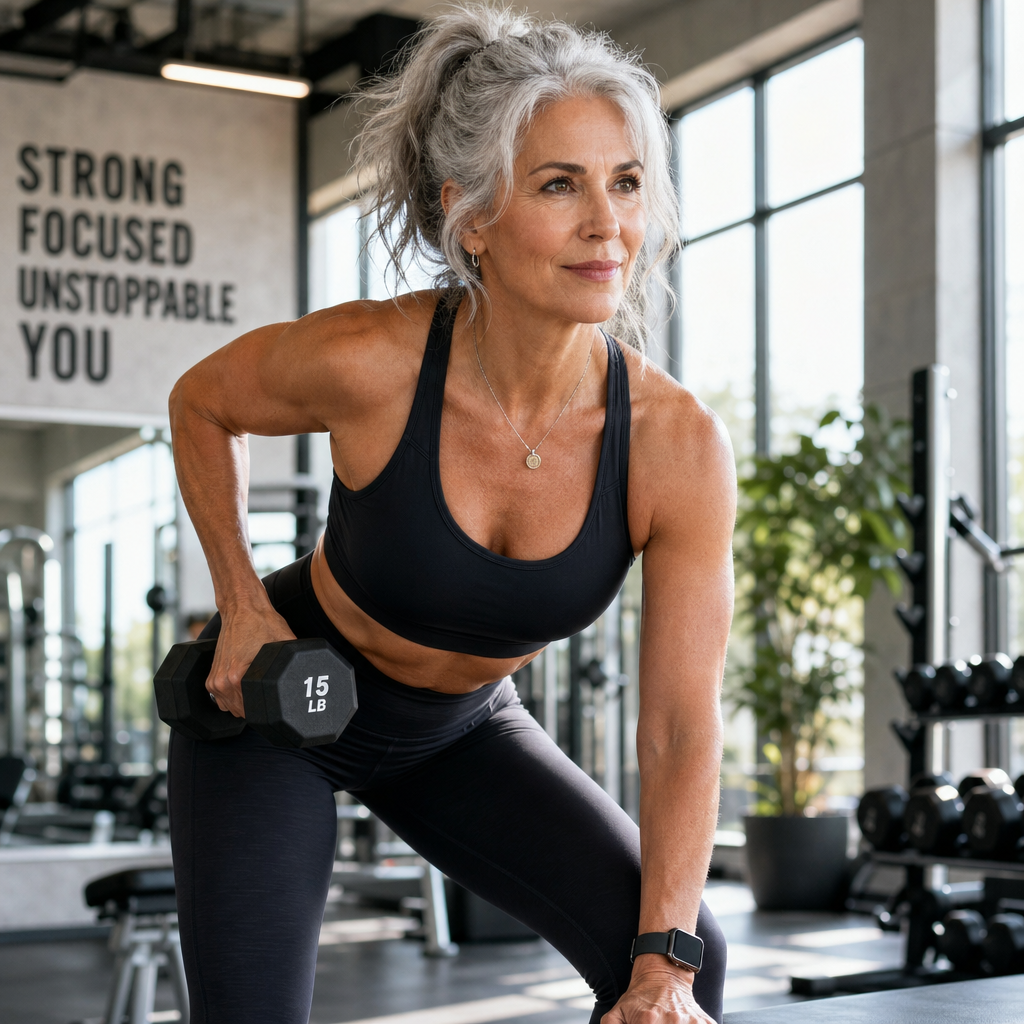
Your body responds differently to exercise after menopause, but it still responds. Studies show that women over 50 who engage in regular resistance training can gain muscle mass and increase bone density, even years after their final period. The key is understanding what triggers these adaptations.
Lifting weights creates tiny tears in your muscle fibers that repair stronger than before. It also puts controlled stress on your bones, signaling them to maintain and even build density. Both processes require adequate protein and progressive overload, meaning you need to gradually increase the challenge over time.
You’ll also see improvements in balance, joint stability, and metabolic rate. Many women find that regular strength training helps with hot flashes, improves sleep quality, and boosts mood. These aren’t minor side benefits; they’re life-changing adaptations that help you maintain independence and quality of life as you age. If balance is a concern, incorporating a daily balance routine alongside your strength work can help prevent falls and improve stability.
Optimal Training Frequency and Structure
For building muscle after 50, you want to train each major muscle group at least twice per week. This could mean three full-body sessions or splitting your routine into upper body, lower body, and a combined session. Full-body workouts three times per week work particularly well for most women in this age group because they provide adequate recovery time between sessions.
Each session should last 45 to 60 minutes and include compound movements that work multiple muscle groups. Think squats, deadlifts, rows, presses, and lunges rather than isolated movements. These exercises give you more bang for your buck and better mimic real-world movements.
A basic starting template might look like this: 3 sets of 8 to 12 repetitions for each exercise, with 90 seconds to 2 minutes rest between sets. Start with weights that feel challenging by the last 2 reps of each set. When you can complete all sets with good form, increase the weight by 5 to 10 percent.
Recovery matters more now than it did in your 30s. Your body needs 48 to 72 hours to repair and build muscle after a challenging session. Don’t fall into the trap of thinking more is better. Quality sessions with adequate rest will always outperform daily workouts that don’t allow for proper recovery.

Resistance Bands Set for Women
Perfect for starting strength training at home with adjustable resistance levels
Protein Needs and Nutritional Considerations
Your protein requirements actually increase during and after menopause, not decrease. You need more protein to maintain and build muscle because your body becomes less efficient at using it. Research suggests women over 50 should aim for 1.2 to 1.6 grams of protein per kilogram of body weight daily, spread across all meals.
For a 150-pound woman, that translates to roughly 80 to 110 grams of protein per day. Many women struggle to hit these numbers, especially if they’ve spent years eating lower-protein diets. Each meal should include a palm-sized portion of protein-rich food like chicken, fish, eggs, Greek yogurt, or legumes.
Protein timing matters too. Having 25 to 30 grams of protein within a few hours of your strength training session helps maximize muscle protein synthesis. A quality protein powder can be helpful for meeting your needs, particularly right after workouts when you might not feel like eating a full meal.
Don’t neglect calcium and vitamin D either. Your bones need both to maintain density, especially when you’re putting new demands on them through strength training. Aim for 1,200 mg of calcium and 800 to 1,000 IU of vitamin D daily through food and supplements as needed.
Managing Joint Sensitivity and Adaptation
Joint pain and stiffness affect many women during menopause due to reduced estrogen’s effect on collagen and joint lubrication. This doesn’t mean you can’t strength train; it means you need to be smarter about it. Start with a thorough warm-up that includes 5 to 10 minutes of light cardio and dynamic stretching before touching any weights.
Choose exercise variations that feel good in your joints. Goblet squats might feel better than barbell back squats. Dumbbell chest presses on a slight incline might work better than flat bench presses. There’s no rule saying you must do the exact exercises everyone else does.
Using adjustable dumbbells instead of barbells gives you more freedom of movement and allows your joints to move through more natural ranges of motion. Many women find this reduces stress on wrists, elbows, and shoulders while still providing excellent resistance. If you prefer not to invest in equipment yet, you can get started with household items for strength training until you’re ready to upgrade.
Consider adding collagen supplementation and omega-3 fatty acids to your routine. While the research is mixed, many women report reduced joint discomfort with consistent use. More importantly, these supplements support overall connective tissue health as you increase your training demands.
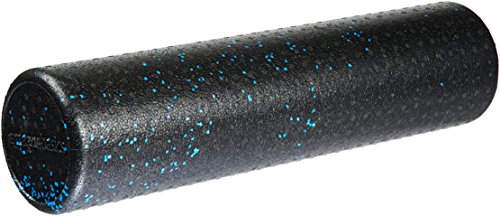
Foam Roller for Muscle Recovery
Essential for managing muscle soreness and improving mobility between training sessions
Working with Energy Fluctuations
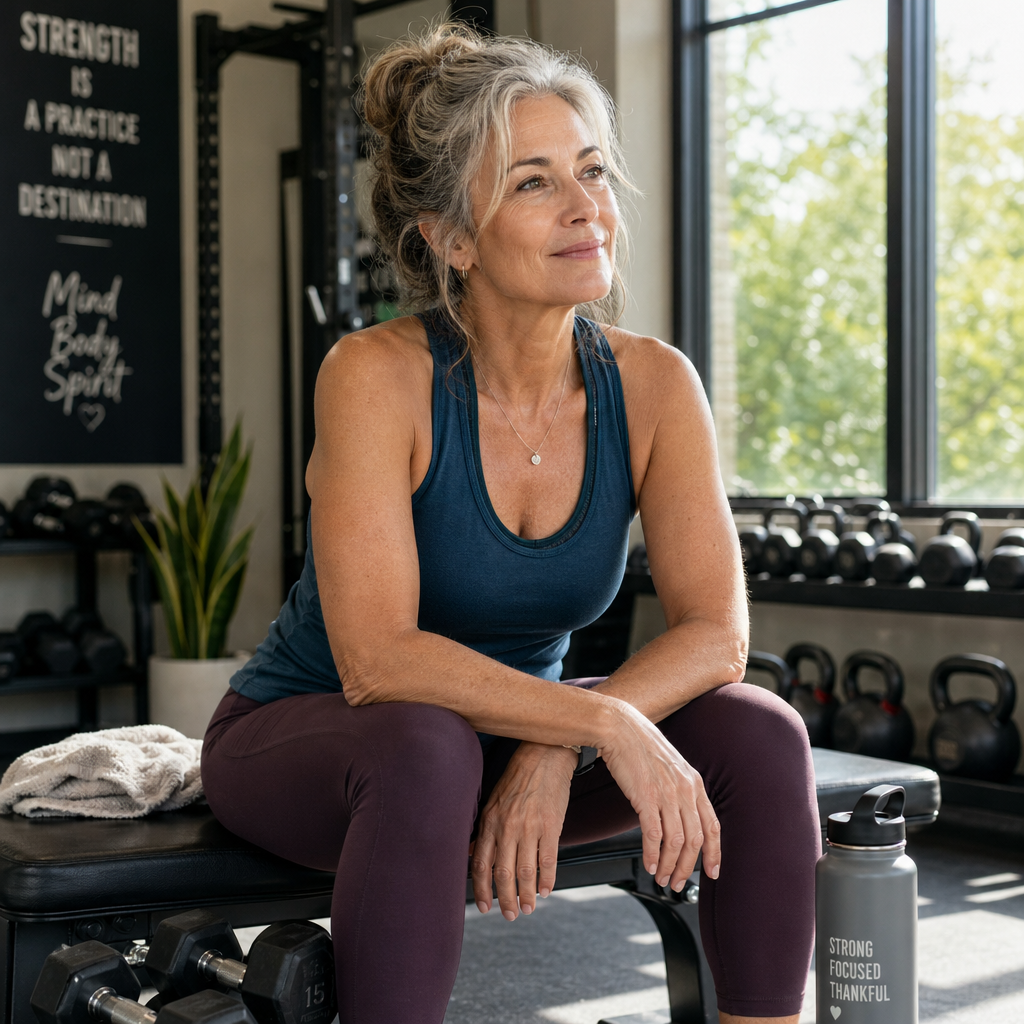
Your energy levels might vary wildly from day to day during perimenopause and early post-menopause. Some days you’ll feel ready to conquer the gym; others you’ll struggle to get through a basic workout. This is normal and expected.
Build flexibility into your training plan. Have a primary workout planned, but also keep a scaled-back version ready for low-energy days. On tough days, you might reduce the number of sets, use lighter weights, or shorten your rest periods to get through the workout faster. Moving your body is still beneficial even when you can’t hit peak performance.
Pay attention to patterns in your energy. Many women find they have more strength and endurance during certain times of the month if they’re still having periods, or at specific times of day. Schedule your hardest training sessions when you typically feel best.
Sleep quality directly impacts your recovery and energy for training. If you’re dealing with insomnia or disrupted sleep, address this alongside your training program. Regular exercise helps improve sleep, but you might need additional strategies like keeping your bedroom cool, maintaining consistent sleep schedules, or talking to your doctor about sleep support.
Progressive Overload Without Overdoing It
Building muscle requires progressive overload, which means gradually increasing the demands on your muscles over time. For women over 50, this needs to happen more slowly and deliberately than it might have when you were younger. You’re looking for steady progress, not rapid gains that come with injury risk. Following a structured 12-week program can help you implement progressive overload safely and effectively.
Track your workouts in a simple notebook or app. Record the exercises, weights, sets, and reps for each session. This lets you see patterns and plan small increases. When an exercise starts feeling too easy, you have several options: add 5 to 10 pounds, add one more rep to each set, add an extra set, or slow down your tempo to increase time under tension.
A dedicated workout journal helps you stay consistent and motivated. Seeing your progress on paper reinforces that you’re getting stronger, even when the changes feel gradual.
Don’t increase everything at once. Change one variable at a time so your body can adapt. You might increase weight on your squats one week while keeping everything else the same, then increase volume on your upper body exercises the following week.
Common Questions About Menopause Strength Training
How long before I see results from strength training after menopause?
You’ll notice improvements in how you feel within 2 to 3 weeks as your nervous system adapts and movements become easier. Visible muscle changes typically take 8 to 12 weeks of consistent training. Bone density improvements show up on scans after 6 to 12 months of regular weight-bearing exercise. The timeline is longer than when you were younger, but the results are just as real.
Can I start strength training if I’ve never lifted weights before?
Absolutely. You might actually have an advantage because you don’t have old movement patterns or injuries to work around. Start with bodyweight exercises and light dumbbells to learn proper form. Consider working with a trainer for a few sessions to build a solid foundation. Many women find that starting with 5 to 10-pound dumbbells for upper body and 15 to 20 pounds for lower body works well for the first few weeks.
What if I’m dealing with osteoporosis or osteopenia?
Strength training is actually one of the best interventions for improving bone density, but you need to work with your doctor and potentially a physical therapist to ensure you’re exercising safely. Avoid exercises that involve spinal flexion or twisting if you have significant bone loss. Focus on weight-bearing exercises that load your bones safely, like squats, lunges, and overhead presses with appropriate weights. Many women with osteopenia successfully strength train and see improved bone density markers over time. Resistance band workouts can be particularly effective for building bone strength while minimizing joint stress.
This article contains affiliate links. We may earn a small commission at no extra cost to you.