Walking for exercise can feel like a chore, especially when you’re circling the same neighborhood streets or mall corridors. But what if you could turn that daily walk into something you actually looked forward to? Disc golf gives you a reason to explore local parks while getting 60 to 90 minutes of varied terrain walking without even thinking about the exercise.
This flying disc sport combines the strategy of traditional golf with the accessibility of a neighborhood park. You’ll walk several miles per round, navigate hills and natural obstacles, and enjoy the mental challenge of improving your throws. Best of all, after a small initial investment in a few discs, it’s completely free to play at most courses.
Getting Started With Basic Equipment
You don’t need much to begin playing disc golf. Start with three basic discs: a putter, a mid-range, and a driver. A beginner disc golf set typically includes all three types at an affordable entry point.
The putter handles short, controlled throws near the basket. Your mid-range disc works for straight, predictable flights of 150 to 250 feet. The driver covers longer distances but requires more technique. As a senior player, you’ll probably use your putter and mid-range disc most often since accuracy matters more than distance.
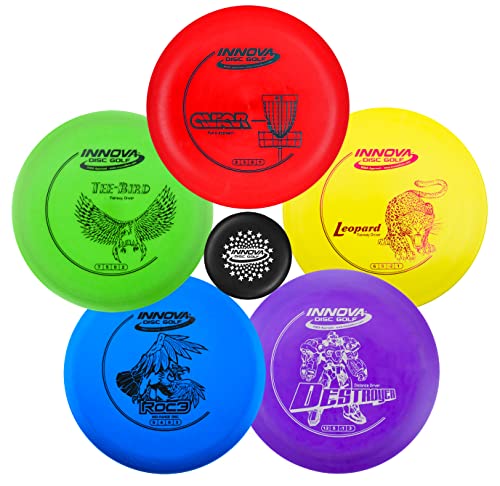
Innova Disc Golf Starter Set
This set includes the three essential disc types and is specifically designed for new players learning proper form
Lighter weight discs (around 165-170 grams) are easier on your joints and require less arm strength. Many experienced senior players prefer these lighter options because they fly just as far with less physical strain.
Finding Courses Near You
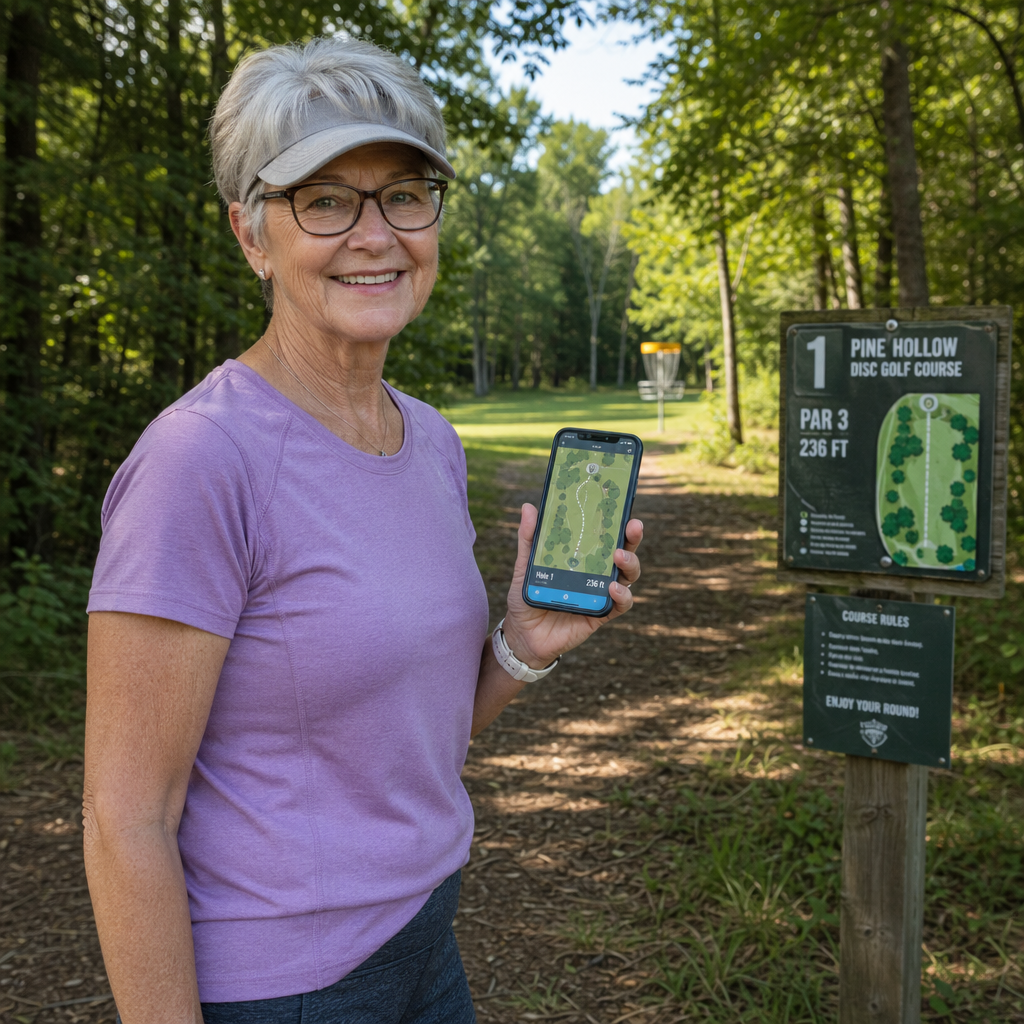
Most disc golf courses are located in public parks and are completely free to use. The DG Course Review website and the UDisc app both maintain searchable databases of over 10,000 courses across the country. You can filter by difficulty level, number of holes, and distance.
Look for courses marked as “beginner-friendly” or “recreational” for your first few outings. These typically feature shorter holes (under 250 feet), minimal elevation changes, and wider fairways with fewer obstacles. Many parks have 9-hole courses that take 45 to 60 minutes to complete, perfect for building up your walking stamina gradually.
Visit your chosen course on a weekday morning when it’s less crowded. Walk the layout once without playing to familiarize yourself with the terrain and identify any challenging areas like steep slopes or uneven ground.
Simple Throwing Techniques and Safety
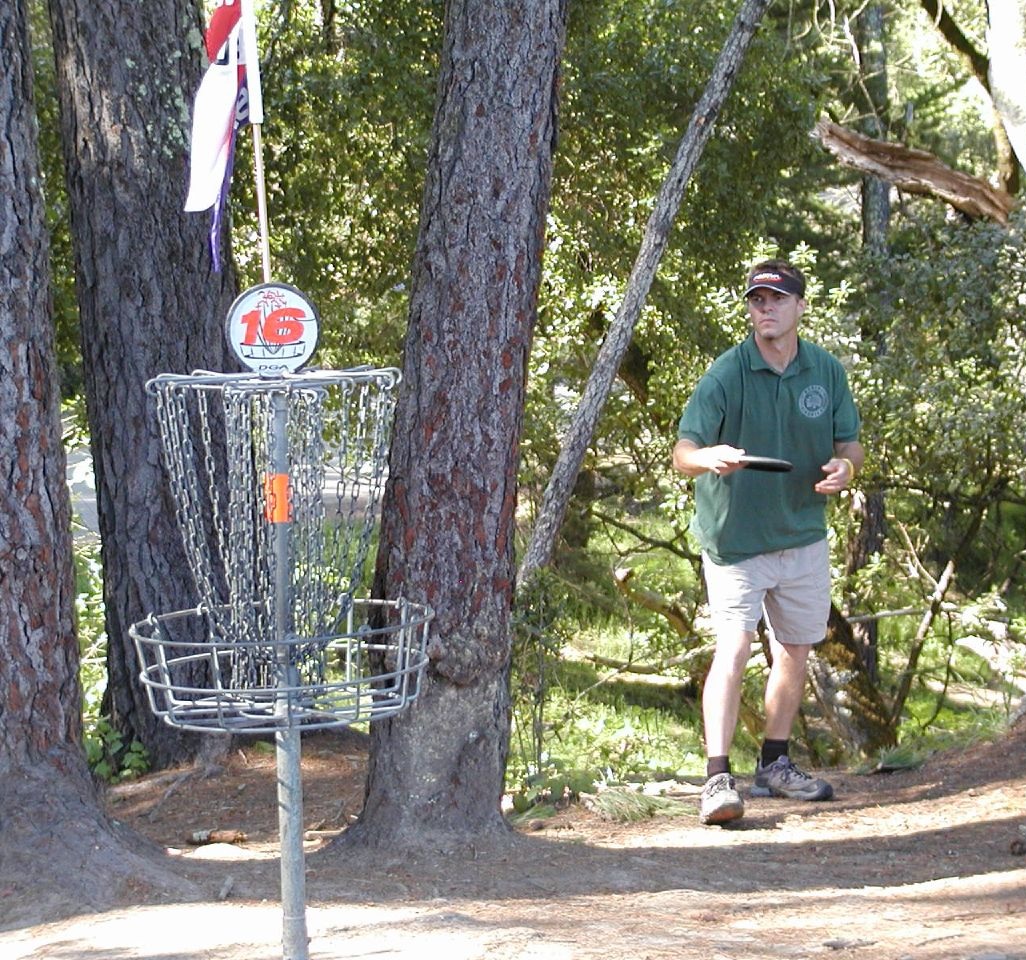
Forget about copying the powerful drives you see younger players attempt. Focus on controlled, smooth throws that you can repeat comfortably. The standing throw works perfectly for seniors since it keeps your feet planted and reduces twisting stress on your back and knees.
Hold the disc with your thumb on top and fingers underneath, gripping firmly but not tightly. Step forward with your opposite foot (left foot if you’re right-handed), rotate your shoulders slightly, and release the disc smoothly at chest height. Your arm should feel like a pendulum, not a whip.
Practice your putting motion first since you’ll use it most often. Stand 15 to 20 feet from a basket or target, and work on consistent, gentle tosses. This builds confidence and gives you an easy win each time you sink a putt.
Always wear supportive walking shoes with good traction. Courses often cross grassy areas, wood chips, and dirt paths that can be slippery after rain. Bring water, especially during warmer months. A small disc golf bag keeps your hands free and holds your water bottle along with your discs.
Watch for other players and wait until they’ve completed their throws before walking onto a fairway. If you’re playing slowly, wave faster groups through. Disc golf has a friendly culture, and most players are happy to offer tips if you ask.
Building Your Walking Routine
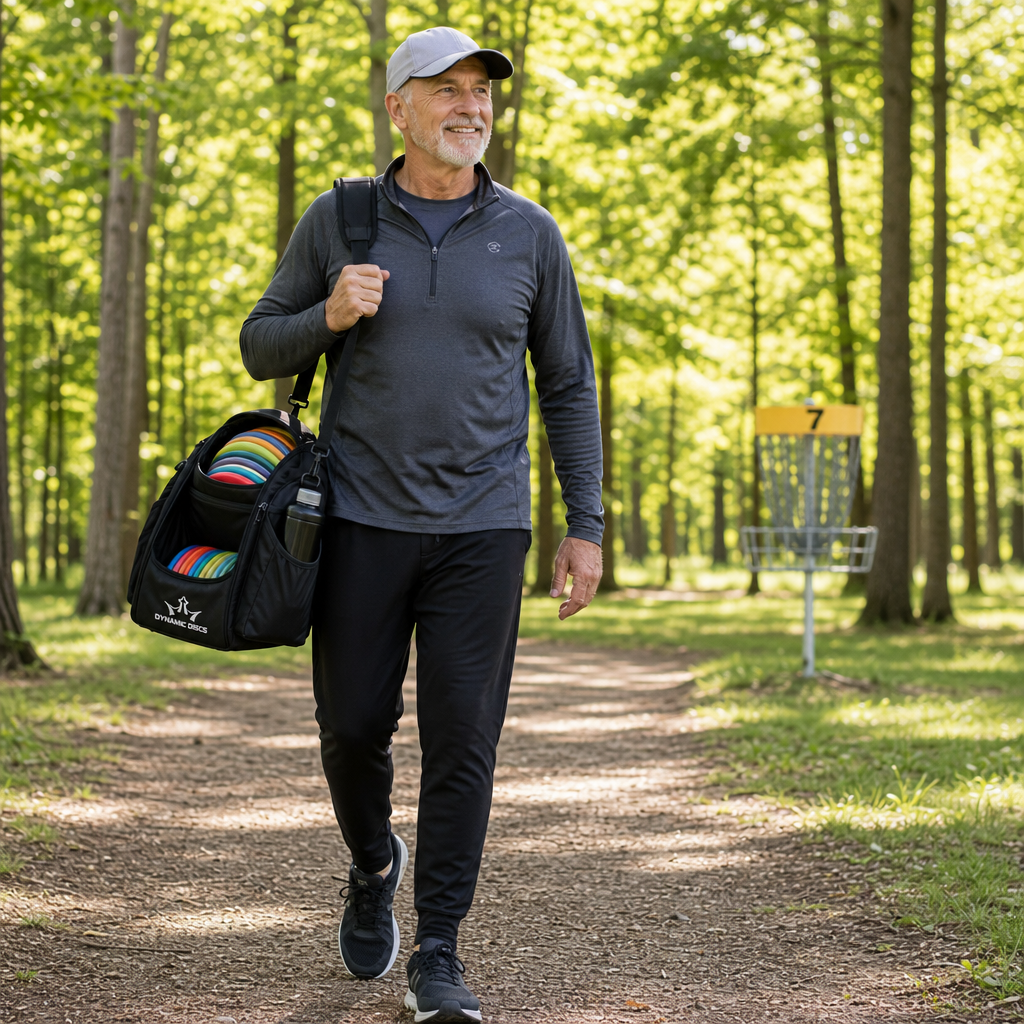
Start by playing just 6 or 9 holes, two or three times per week. Pay attention to how your body responds. The varied terrain naturally works different muscle groups compared to flat surface walking, which actually benefits your balance and joint stability.
As you get comfortable, work up to full 18-hole rounds. Most standard courses cover 2 to 3 miles of walking, but you’ll add extra distance retrieving errant throws (which happens to everyone). This adds up to an excellent cardiovascular workout without the monotony of traditional walking routes.
Track your scores if you enjoy seeing progress, but don’t stress about them. The real victory is spending 90 minutes outdoors, moving your body, and maybe meeting a few friendly people who share your new hobby.
Frequently Asked Questions
Do I need to be athletic or have a strong throwing arm?
Not at all. Disc golf relies more on technique than strength. Many successful senior players focus on accuracy and consistency rather than distance. Lighter discs and proper form let you enjoy the sport without straining your shoulders or elbows. You’ll naturally build some upper body strength over time, but it’s not a requirement to start.
Can I play disc golf alone or do I need a group?
You can absolutely play solo. Many seniors prefer playing alone at their own pace, especially when first learning. Solo rounds typically take less time and let you practice throws without feeling rushed. Once you’re comfortable, joining a casual league or finding a regular playing partner adds a social element that makes the activity even more enjoyable.
This article contains affiliate links. We may earn a small commission at no extra cost to you.