Foam rolling shouldn’t feel like punishment, especially when you’re dealing with sensitive muscles and joints that have earned their tenderness through decades of life. Many seniors try foam rolling once, wince at the discomfort, and never touch one again. That’s usually because they’re using the wrong type of roller.
The good news is that foam rollers designed for senior muscle recovery come in much softer densities than those rock-hard cylinders you see at the gym. These gentler versions provide all the myofascial release benefits without the bruising sensation. Let’s look at which rollers work best for senior bodies and how to use them safely.
Understanding Foam Roller Density for Sensitive Bodies
Foam rollers come in three main density categories, and choosing the right one makes all the difference. Low-density (soft) rollers provide gentle pressure perfect for sensitive areas or beginners. Medium-density offers moderate resistance as you build tolerance. High-density rollers deliver intense pressure that most seniors should avoid entirely.
For senior muscle recovery, stick with low to medium density options. Your muscles need gentle encouragement to release tension, not aggressive pounding that can cause more harm than good. Softer rollers still provide effective myofascial release while protecting fragile skin and sensitive joints.
The soft foam roller category includes several excellent options specifically marketed for therapeutic use. These typically have a white or light-colored foam that compresses more easily under body weight.

LuxFit Soft Foam Roller
Extra-soft density perfect for seniors just starting foam rolling routines
Best Foam Roller Types for Senior Use
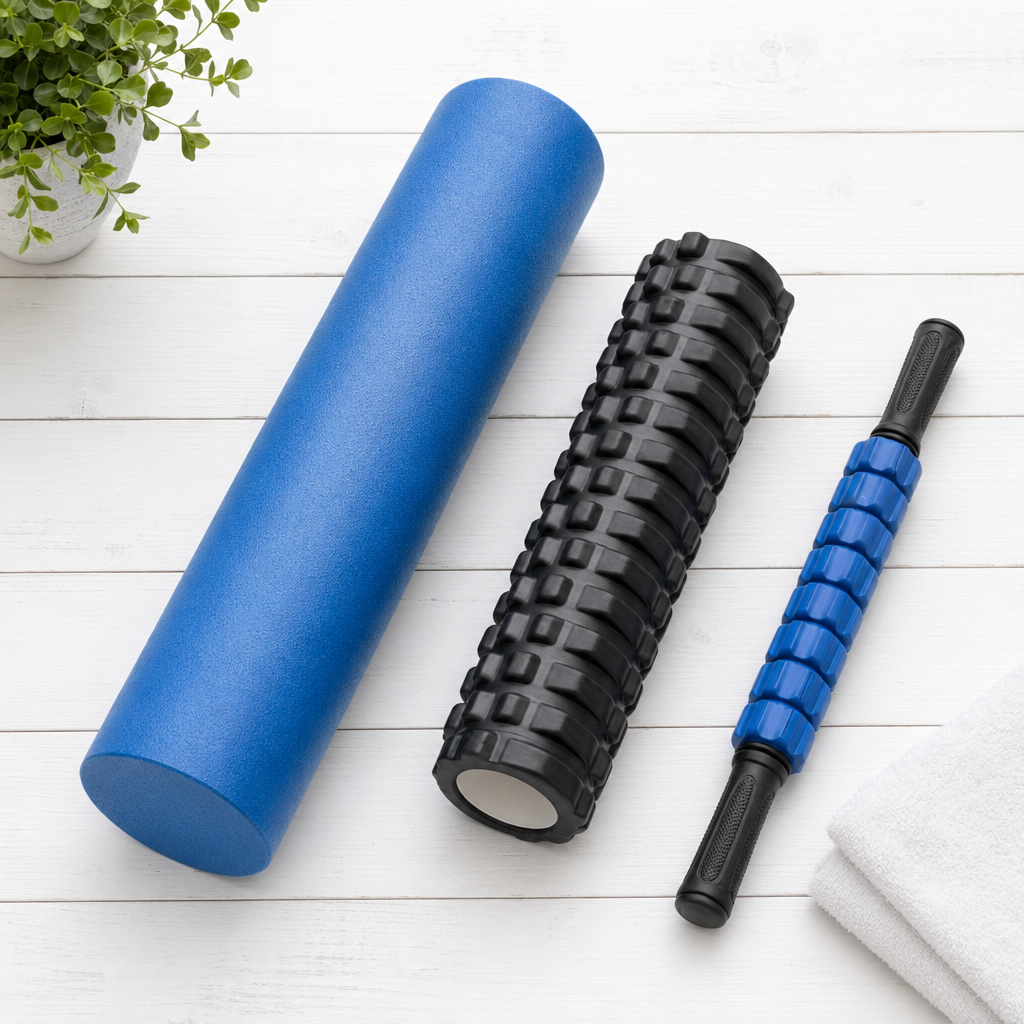
Standard Smooth Rollers
Smooth-surface rollers in 12 to 18-inch lengths work wonderfully for seniors. They distribute pressure evenly without the aggressive texture of knobbed or ridged versions. A 12-inch roller provides targeted relief for smaller muscle groups and is easier to store and transport.
For full-body rolling, an 18-inch roller gives you more surface area to work with. This length accommodates your entire back width and provides better stability during exercises. Many seniors prefer this size for back rolling while lying down.
Half-Round (Semicircle) Rollers
These flat-bottomed rollers offer extra stability that’s valuable when balance is a concern. You can place the flat side down for gentle calf or hamstring rolling while seated. They’re also excellent for balance exercises and gentle stretching routines.
Half-round rollers reduce the fear of rolling off or losing control during exercises. The semicircle design lets you progress at your own pace without worrying about stability issues.
Foam Roller Balls and Smaller Tools
For targeted relief in hard-to-reach areas, soft massage balls work wonders. These smaller tools address specific trigger points in your shoulders, hips, and feet without requiring you to get on the floor.
A 4 to 5-inch diameter ball lets you lean against a wall to work shoulder and upper back tension while standing. This approach eliminates the need to lie on the floor, making foam rolling more accessible for those with mobility limitations.

TriggerPoint GRID Foam Roller
Medium-density option with hollow core that’s lighter to move and offers graduated pressure zones
How to Foam Roll Major Muscle Groups Safely
Back and Shoulders
Place the roller perpendicular to your spine while lying on your back with knees bent and feet flat on the floor. Keep your core engaged and slowly roll from your mid-back to just below your shoulder blades. Never roll directly on your lower back or neck, as this can strain sensitive spinal areas.
For shoulder relief, position the roller vertically along your spine and gently roll side to side. This mobilizes the muscles around your shoulder blades without direct spine pressure. Hold any tender spots for 20 to 30 seconds rather than rapidly rolling back and forth.
Legs and Hips
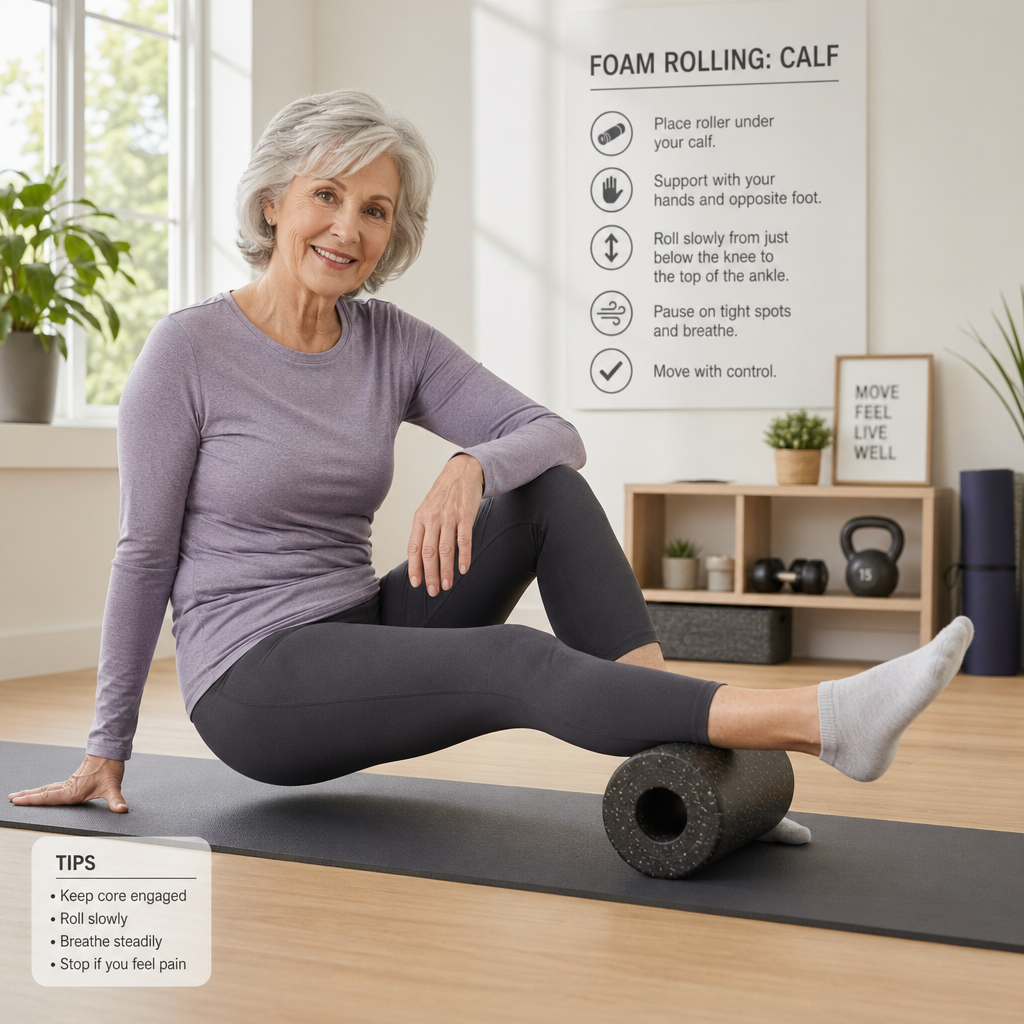
For calf muscles, sit on the floor with the roller under one calf and the other leg crossed over for gentle pressure. Roll slowly from your ankle to just below your knee. You can also do this seated in a chair with the roller on the floor if getting down is difficult.
Hip and outer thigh rolling works best when you lie on your side with the roller positioned under your hip. Use your bottom forearm for support and control the pressure with your top leg. This area often holds significant tension and responds well to gentle, sustained pressure.
Hamstrings respond nicely to seated rolling. Sit on the floor with the roller under your thighs and use your hands behind you for support. Roll from just above your knees to below your glutes, pausing on tight spots.
Feet and Ankles
A small massage ball works better than a full roller for feet. While seated or standing (hold onto something for balance), roll the ball under your arch from heel to toes. This relieves plantar fascia tension and improves foot flexibility.
Spend 60 to 90 seconds per foot, applying just enough pressure to feel a gentle stretch. This simple practice can reduce foot pain and improve your walking comfort throughout the day.
Frequency and Duration Guidelines
Start with just 5 to 10 minutes of foam rolling, two to three times per week. Many seniors overdo it initially, leading to increased soreness that discourages continued use. Your body needs time to adapt to this new stimulus.
You can gradually increase to daily rolling sessions of 10 to 15 minutes as your tolerance builds. Some people enjoy brief morning sessions to reduce stiffness and evening sessions to relax tight muscles before bed. Listen to your body and adjust accordingly.
Spend about 30 to 60 seconds on each muscle group, focusing more time on areas that feel particularly tight. Avoid rapid back-and-forth rolling, which can irritate rather than relax muscles. Slow, controlled movements with brief pauses on tender spots work best.
Rolling is most effective when your muscles are warm. Consider doing it after a short walk, warm shower, or gentle stretching routine. Cold muscles resist the pressure and you’ll get less benefit from your efforts.
OPTP PRO-ROLLER Soft Density
Professional-grade soft roller that maintains shape better than budget options while staying gentle on sensitive areas
When to Avoid Foam Rolling
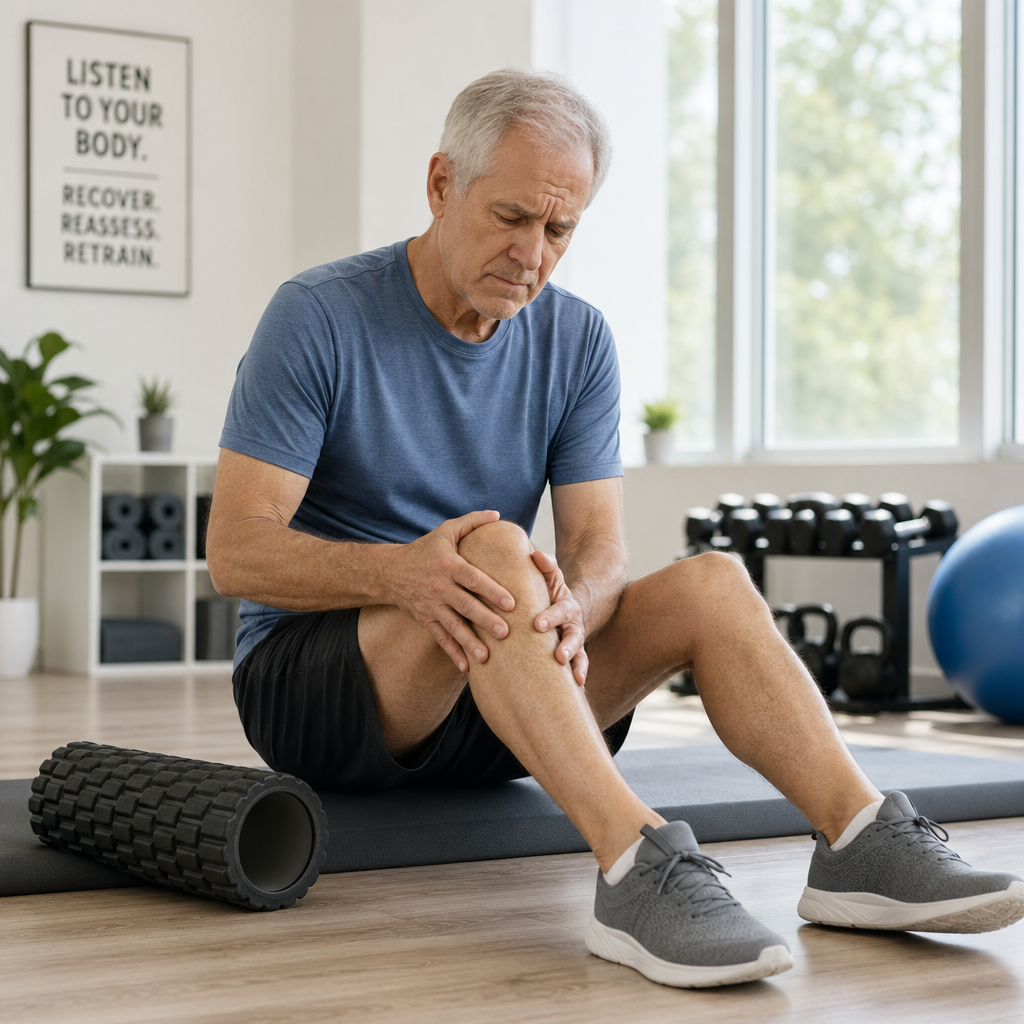
Don’t foam roll over joints, bones, or directly on your spine. These areas lack the protective muscle tissue that benefits from rolling and you risk causing injury. Focus only on muscular areas with adequate soft tissue.
Skip foam rolling if you have acute injuries, recent surgeries, or severe bruising in an area. Wait until you’re cleared by your healthcare provider before introducing foam rolling to your recovery routine. Active inflammation also needs rest rather than manipulation.
Those taking blood thinners or who bruise easily should consult their doctor before foam rolling. Even gentle pressure can cause bruising in some individuals, particularly on thinner skin common with aging.
Avoid rolling if you experience sharp pain rather than the dull discomfort of muscle tension. Sharp pain signals something more serious that needs medical attention, not self-treatment. Similarly, if rolling consistently makes your pain worse rather than better, stop and consult a physical therapist.
People with osteoporosis should use extra caution and may need to stick with gentler alternatives like therapy canes or professional massage instead.
Frequently Asked Questions
How firm should a foam roller be for seniors?
Seniors typically do best with soft to medium-density foam rollers. If you can easily compress the foam with your hand, it’s probably soft enough for sensitive muscles. Avoid rollers marketed as “extra firm” or “deep tissue” unless you’re already experienced with foam rolling and have no significant joint issues. You can always progress to firmer densities later, but starting too firm often leads to abandoning the practice entirely due to discomfort.
Can foam rolling help with arthritis pain?
Foam rolling can help relieve muscle tension around arthritic joints, which often reduces overall discomfort. However, never roll directly on inflamed joints. Focus on the surrounding muscles to improve circulation and reduce compensatory tightness. Many people with arthritis find that gentle foam rolling improves their range of motion and makes daily activities more comfortable. Always check with your rheumatologist or physical therapist about appropriate techniques for your specific condition.
Is it normal to feel sore after foam rolling?
Mild soreness similar to post-exercise muscle tenderness is normal, especially when you first start. This should fade within 24 to 48 hours. If you experience increased pain, significant bruising, or soreness lasting several days, you’re applying too much pressure or rolling too aggressively. Reduce your pressure, shorten your sessions, and consider switching to a softer roller. Foam rolling should ultimately make you feel better, not worse.
This article contains affiliate links. We may earn a small commission at no extra cost to you.