Walking is one of the best low-impact exercises you can do, but knee pain can turn this simple activity into a frustrating experience. Many people assume knee pain while walking is just part of aging or something they have to live with, but often it’s the result of poor form, weak muscles, or other factors you can actually control.
The good news is that most walking-related knee pain is preventable. By understanding proper biomechanics, strengthening key muscle groups, and making smart choices about footwear and walking surfaces, you can keep your knees healthy and pain-free for years to come.
Understanding Proper Walking Biomechanics
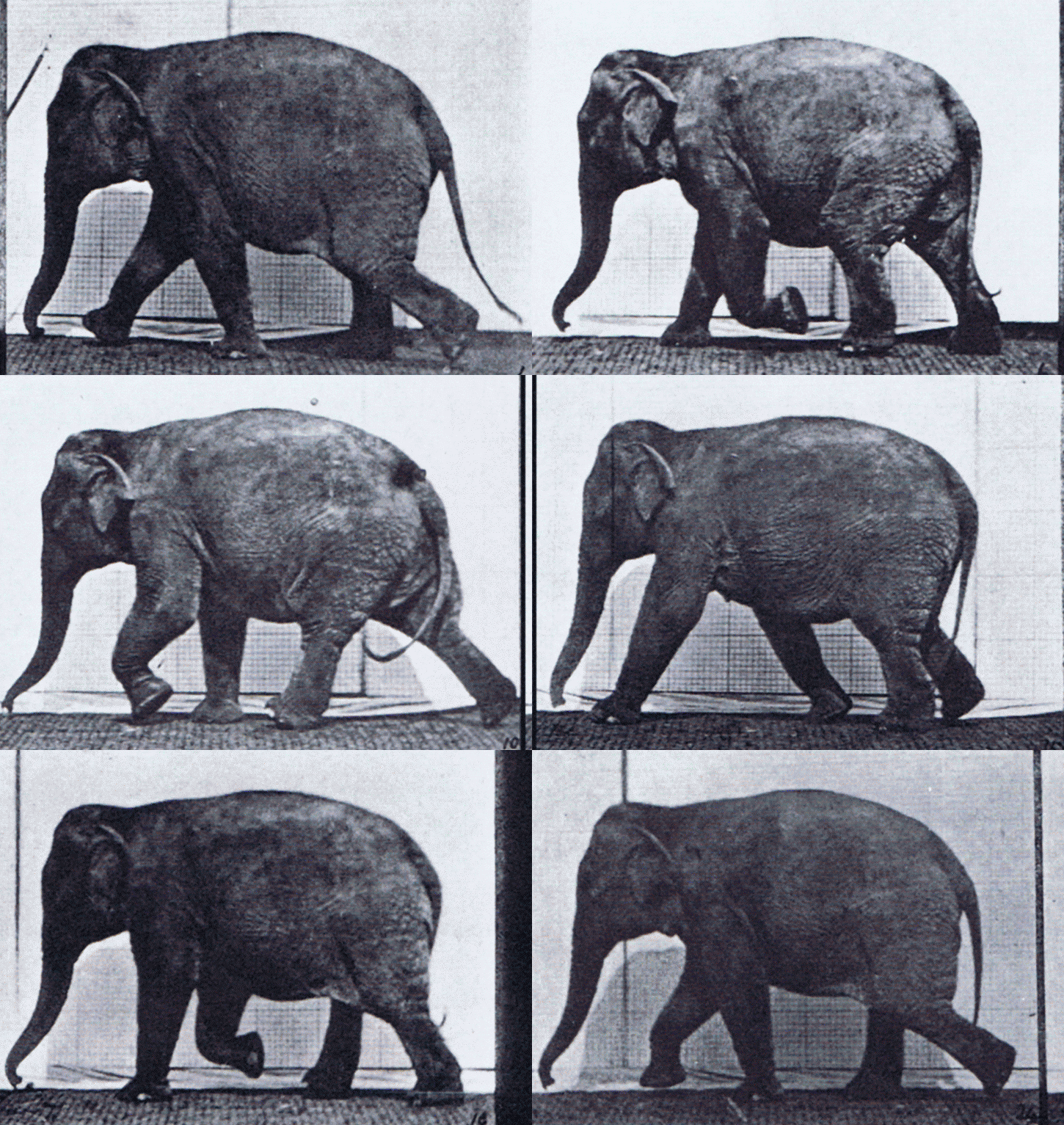
Your walking form matters more than you might think. When you walk with proper biomechanics, you distribute force evenly across your joints instead of overloading your knees.
Start by focusing on your posture. Keep your head up and eyes forward, not down at your feet. Your shoulders should be back and relaxed, not hunched forward. Engage your core muscles slightly to support your spine and maintain alignment.
Your foot strike pattern plays a crucial role in knee health. Most people do best with a heel-to-toe roll, where your heel touches down first, then you roll through the midfoot and push off with your toes. Avoid landing flat-footed or on your toes, both of which can increase stress on your knee joint.
Stride length is another common culprit behind knee pain. Many walkers overstride, reaching too far forward with each step. This creates a braking force that jams into your knee with every footfall. Instead, take shorter, quicker steps where your foot lands roughly under your body, not way out in front. Understanding these walking form elements that reduce joint pain is essential for long-term knee health, especially as we age.
Strengthening Exercises for Knee Support
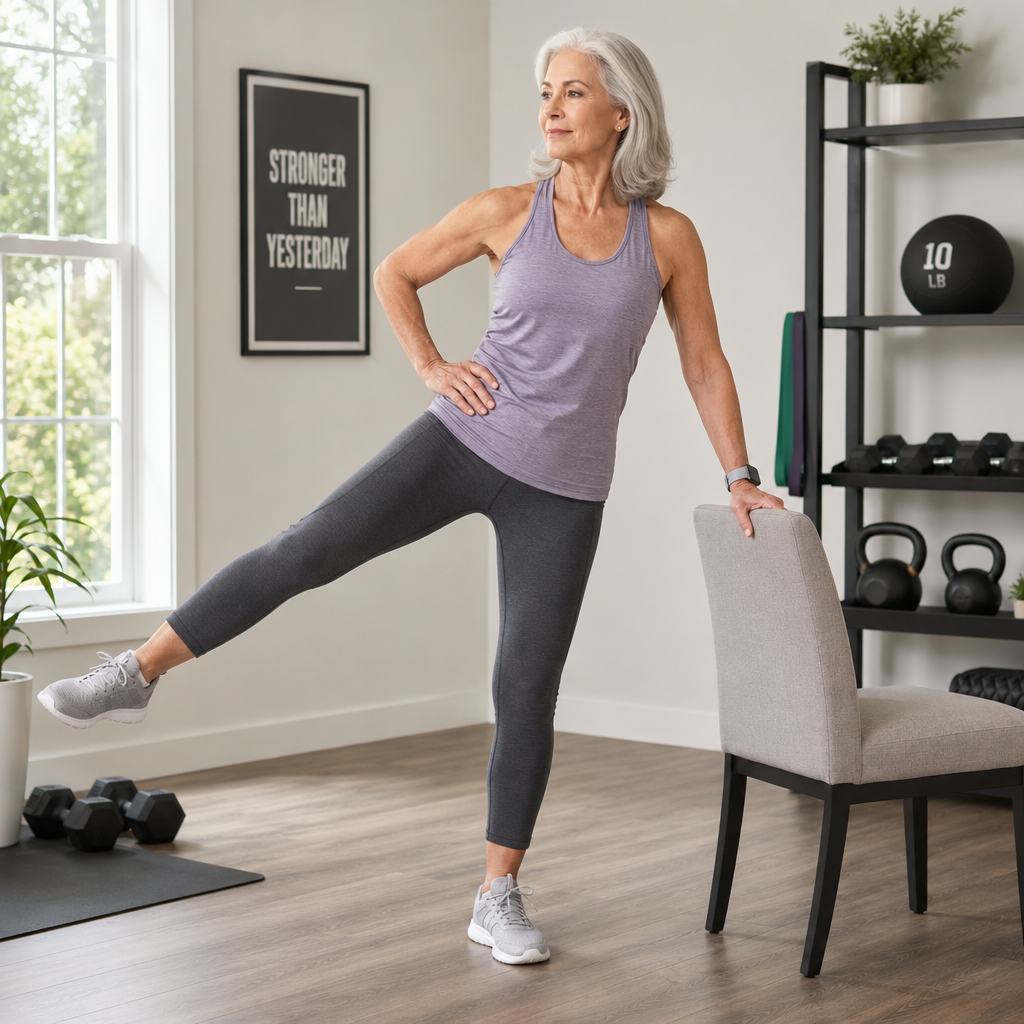
Strong muscles around your knee act like shock absorbers, protecting the joint from excessive stress. Your quadriceps and hamstrings are particularly important for knee stability during walking.
Quadriceps Exercises
The quadriceps on the front of your thigh help control your knee during the landing phase of each step. Weak quads force your knee to absorb more impact directly.
Try straight leg raises: Lie on your back, bend one knee with foot flat on the floor, and keep the other leg straight. Lift the straight leg to about the height of the bent knee, hold for 3 seconds, then lower. Do 10-15 reps on each side. You can add ankle weights as you get stronger.
Wall sits are another excellent quadriceps builder. Stand with your back against a wall and slide down until your thighs are parallel to the floor, as if sitting in an invisible chair. Hold for 20-30 seconds, working up to a minute as you get stronger.

ProSource Resistance Loop Bands
Perfect for adding resistance to leg exercises and building knee-supporting muscles at home
Hamstring Exercises
Your hamstrings on the back of your thigh work with your quads to stabilize your knee. Hamstring curls are simple but effective: Stand holding a chair for balance, bend one knee to bring your heel toward your buttocks, then lower slowly. Do 15-20 reps per leg.
Bridges work both hamstrings and glutes. Lie on your back with knees bent and feet flat. Lift your hips until your body forms a straight line from shoulders to knees. Hold for 5 seconds, then lower. Start with 10 reps and build up to 20. These exercises are particularly beneficial and can be incorporated into step workouts for additional health benefits.
Choosing the Right Footwear
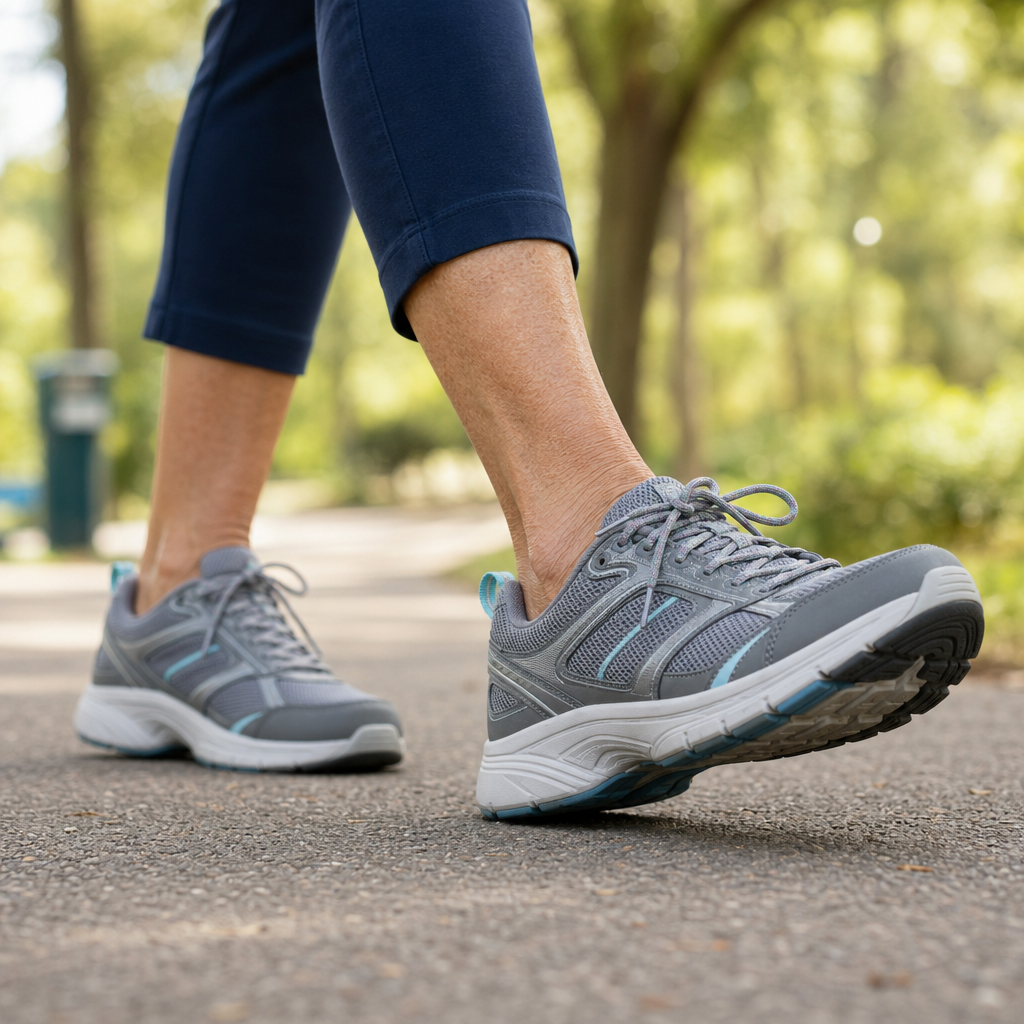
Your shoes create the foundation for every step you take. Worn-out or improper footwear can throw off your entire gait pattern and contribute to knee pain.
Replace your walking shoes every 300-500 miles. Even if they look fine on the outside, the cushioning and support break down over time. A good rule of thumb is to replace them every 6 months if you walk regularly.
Look for shoes with adequate arch support that matches your foot type. People with flat feet often need motion-control shoes, while those with high arches typically do better with cushioned neutral shoes. Visit a specialty running or walking store for a gait analysis if you’re unsure what you need.
The heel-to-toe drop matters too. Most walking shoes have an 8-12mm drop, which works well for heel-strikers. A moderate drop helps facilitate the natural heel-to-toe roll without forcing your foot into an awkward position.
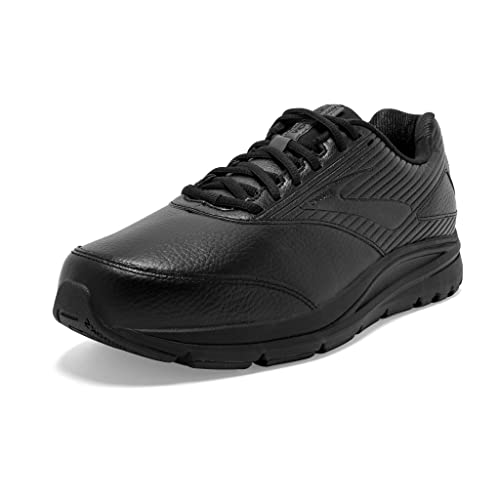
Brooks Addiction Walker Walking Shoes
Excellent motion control and support for walkers who overpronate or have flat feet
When to Use Knee Support
Knee compression sleeves and braces can provide extra stability and pain relief during walking, especially if you’re recovering from an injury or dealing with chronic conditions like arthritis.
Compression sleeves work by improving circulation and providing gentle support to the entire knee area. They’re ideal for mild knee pain or as a preventive measure during long walks. Look for sleeves made from breathable materials with non-slip silicone grips to keep them in place.
More structured knee braces with hinges or straps offer targeted support for specific issues. These work better for moderate to severe pain or instability, but you should consult with a physical therapist or doctor about the right type for your situation.
Don’t rely on knee support as a substitute for proper form and muscle strengthening. Think of it as a helpful tool while you address the underlying causes of your knee pain.

Physix Gear Knee Compression Sleeve
Provides comfortable support without restricting movement during walks
Selecting the Best Walking Surfaces
Where you walk affects how much stress your knees absorb. Hard surfaces like concrete sidewalks create more impact with each step, while softer surfaces provide natural cushioning.
Grass, dirt trails, and rubberized tracks are gentler on your knees than pavement. The slight give in these surfaces reduces the shock that travels up through your legs. Just watch for uneven ground that could cause you to twist your knee. If you have concerns about balance on uneven surfaces, you may benefit from specific exercises to improve stability.
If you must walk on concrete, choose well-maintained sidewalks over cracked or uneven surfaces. Avoid cambered roads where one side is higher than the other, as this forces one leg to work differently than the other and can create imbalances.
Treadmills offer a more cushioned surface than outdoor pavement, and many models let you adjust the incline. A slight incline of 1-2% actually mimics outdoor walking and can be easier on your knees than walking on a completely flat surface.
Additional Tips for Pain-Free Walking
Warm up before your walks with 5 minutes of easy movement. March in place, do some gentle leg swings, or walk slowly for the first few minutes. This gets blood flowing to your muscles and prepares your joints for activity.
Pay attention to your cadence. Aim for about 170-180 steps per minute, which you can track with a fitness watch or smartphone app. This quicker turnover naturally shortens your stride and reduces impact on your knees.
Maintain a healthy weight. Every extra pound you carry adds roughly 4 pounds of pressure to your knees during walking. Even losing 5-10 pounds can make a noticeable difference in knee pain.
Listen to your body. Some mild muscle soreness is normal when you’re building strength, but sharp or persistent knee pain is a warning sign. Rest when you need to, and don’t push through pain that gets worse during your walk. Consider what time of day works best for your exercise routine, as your energy levels and joint stiffness may vary throughout the day.
Frequently Asked Questions
How long does it take to fix walking form?
Most people can start to improve their walking form within 1-2 weeks of conscious practice, but it takes about 4-6 weeks for new movement patterns to become automatic. Focus on one element at a time, like posture or stride length, rather than trying to change everything at once. Regular practice during short walks works better than occasional attention during long ones.
Should I keep walking if my knee hurts?
Mild discomfort or stiffness that improves as you warm up is usually fine to walk through, but sharp pain, swelling, or pain that worsens during your walk means you should stop. Rest for a few days and use ice if there’s swelling. When you resume walking, start with shorter distances and slower speeds. If pain persists for more than a week, see a healthcare provider.
Can walking actually make my knees stronger?
Yes, regular walking strengthens the muscles around your knees and can improve joint health by promoting circulation and maintaining cartilage. Studies show that moderate walking can reduce arthritis symptoms and improve knee function over time. The key is walking with proper form, gradually increasing distance, and combining walking with targeted strengthening exercises for best results.