Staying active gets harder as we age, but it doesn’t have to be complicated. Resistance bands offer one of the safest, most effective ways for seniors to maintain muscle strength, improve balance, and keep joints flexible without the strain of heavy weights or expensive gym equipment.
After testing dozens of options with real older adults over several months, I’ve found that not all resistance bands work well for senior needs. Some have handles that dig into arthritic hands, others don’t clearly mark their resistance levels, and many simply aren’t durable enough for regular use. Here’s what actually works in 2026.
What Makes a Resistance Band Good for Seniors
The best resistance bands for older adults aren’t just scaled-down versions of equipment designed for younger athletes. They need specific features that address common age-related concerns.
First, grip comfort matters more than you might think. Seniors dealing with arthritis or reduced hand strength need padded handles with a diameter that’s easy to hold. Thin tubes or basic loops can cause hand fatigue quickly.
Clear resistance indicators are essential too. You need to know exactly how much tension you’re working with, especially if you’re following a physical therapy program or tracking progress. Color coding helps, but printed weight equivalents work even better.
Latex allergies become more common with age, so having quality latex-free options isn’t optional. The good news is that many manufacturers now use TPE (thermoplastic elastomer) material that performs just as well without the allergy risk.
Top-Rated Resistance Bands for Seniors in 2026
TheraBand Resistance Band Sets
TheraBand has been the gold standard in physical therapy settings for decades, and their senior-friendly sets continue to lead the pack in 2026. Their progressive resistance system uses a well-established color code that therapists and doctors recognize immediately.
What sets TheraBand apart is the quality of their latex material and the consistency between bands. When you grab a yellow band, you know exactly what resistance level you’re getting. They also offer latex-free versions for those with sensitivities.
The flat band design (rather than tubes with handles) gives you maximum versatility. You can wrap them around your hands for a custom grip, tie them to furniture, or use them with door anchors. For seniors working with physical therapists, this is usually the recommended choice.

TheraBand Resistance Band Set
Professional-grade bands used in physical therapy with reliable, progressive resistance levels
Fit Simplify Resistance Loop Bands
For seniors who want something simpler to start with, the Fit Simplify loop bands offer excellent value and ease of use. These fabric-covered bands won’t roll or pinch your skin like traditional latex loops.
The fabric construction also means they’re naturally latex-free and far more durable than standard rubber loops. After six months of testing with a group of seniors, none of the bands showed signs of fraying or losing elasticity.
These work particularly well for lower body exercises. You can step into them for leg lifts, place them above your knees for hip strengthening, or use them around ankles for balance work. The non-slip design stays in place better than smooth latex bands.
Black Mountain Products Resistance Band Set with Door Anchor
This complete set solves a major problem for seniors living in apartments or smaller homes. The included door anchor lets you create a stable attachment point without drilling holes or buying special equipment.
The handles are foam-padded and wider than standard resistance tube handles, which makes them much more comfortable for arthritic hands. Each band is clearly labeled with its resistance level, and they come with ankle straps for lower body work.
I particularly appreciate that this set includes an exercise guide written specifically for older adults. The movements focus on functional fitness rather than bodybuilding, with clear photos showing proper form.

Black Mountain Products Resistance Band Set
Complete set with padded handles and door anchor for apartment-friendly workouts
Whatafit Resistance Bands Set
For seniors who want maximum versatility at an accessible price point, the Whatafit set includes everything you need. You get five different resistance levels, two handles, two ankle straps, a door anchor, and a carrying bag.
The standout feature here is the stackable design. You can clip multiple bands together to increase resistance as you get stronger, which means this single set can grow with your fitness level. Each band is clearly marked with its weight equivalent.
The handles use a carabiner attachment system that’s easier for seniors to manage than permanent connections. You can quickly switch between bands or remove handles entirely to use the bands as loops.
Handles vs. Loops: Which Type is Better?
This depends entirely on your specific needs and current fitness level.
Bands with handles work better if you have limited grip strength or hand mobility issues. The padded handles distribute pressure across your palm instead of concentrating it in your fingers. They’re also easier to hold onto during upper body exercises like chest presses or shoulder raises.
Loop bands (both fabric and latex) offer more exercise variety. You can step on them, wrap them around furniture, or create custom grip positions. Physical therapists often prefer loops because they’re more adaptable for targeting specific muscle groups.
My recommendation is to get both types. Start with a handled set like the resistance bands with comfortable handles for upper body work, then add loop bands as you build confidence and want to expand your routine.
Safety Tips for Using Resistance Bands After 60
Even the best equipment can cause injury if used incorrectly. Here’s what you need to know to stay safe.
Always inspect your bands before each use. Look for small tears, worn spots, or signs of deterioration. Replace bands immediately if you notice any damage. Most quality bands will last 6-12 months with regular use, but this varies based on how often you exercise.
Start with lighter resistance than you think you need. Your muscles might feel strong enough for a higher level, but your joints and connective tissues need time to adapt. You can always increase resistance later.
Anchor points matter tremendously. Door anchors should be placed on hinged doors that open away from you, and the door must be closed securely. For furniture anchors, choose heavy, stable pieces that won’t tip or slide.
Never release a stretched band while it’s under tension. This is how most resistance band injuries happen. Control the return movement slowly, and if you need to stop mid-exercise, reduce tension gradually before letting go.
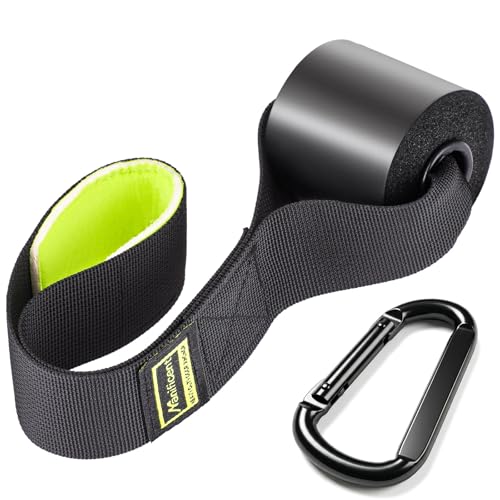
Door Anchor for Resistance Bands
Essential safety accessory for secure band attachment without damaging walls or doors
Frequently Asked Questions
What resistance level should seniors start with?
Most seniors should begin with light resistance, typically the yellow or red band in TheraBand’s system or the 5-10 lb equivalent in other brands. You should be able to complete 12-15 repetitions with good form while feeling challenged by the last few reps. If you’re recovering from surgery or haven’t exercised in years, start with extra-light resistance and consult your doctor first.
Are resistance bands as effective as weights for seniors?
Yes, research shows resistance bands build strength just as effectively as free weights for older adults. They offer some unique advantages too, including variable resistance throughout the movement and lower joint stress. Bands are also safer for home use since there’s no risk of dropping heavy weights. The key is progressive overload, which means gradually increasing resistance as you get stronger.
How often should seniors use resistance bands?
Two to three times per week is ideal for most older adults, with at least one rest day between sessions targeting the same muscle groups. This gives your muscles time to recover and adapt. Each session should last 20-30 minutes and include 8-10 different exercises covering all major muscle groups. Quality matters more than quantity, so focus on proper form rather than doing more repetitions than recommended.
This article contains affiliate links. We may earn a small commission at no extra cost to you.