You’re 15 minutes into a treadmill walk when it starts: a tingling sensation in your toes that progresses to full numbness across the balls of your feet. You wiggle your toes, shift your weight, and try to walk through it, but the feeling only gets worse. This happens to a surprising number of people over 60, and it’s rarely caused by something dangerous. Most of the time, it’s a mechanical problem with a mechanical solution.
Once you identify which factor is triggering your numbness, you can usually fix it with simple adjustments to your shoes, posture, or walking routine. Multiple factors can overlap, so you may need to test a few changes before finding what works for your specific situation.
5 Common Causes of Numb Feet on the Treadmill
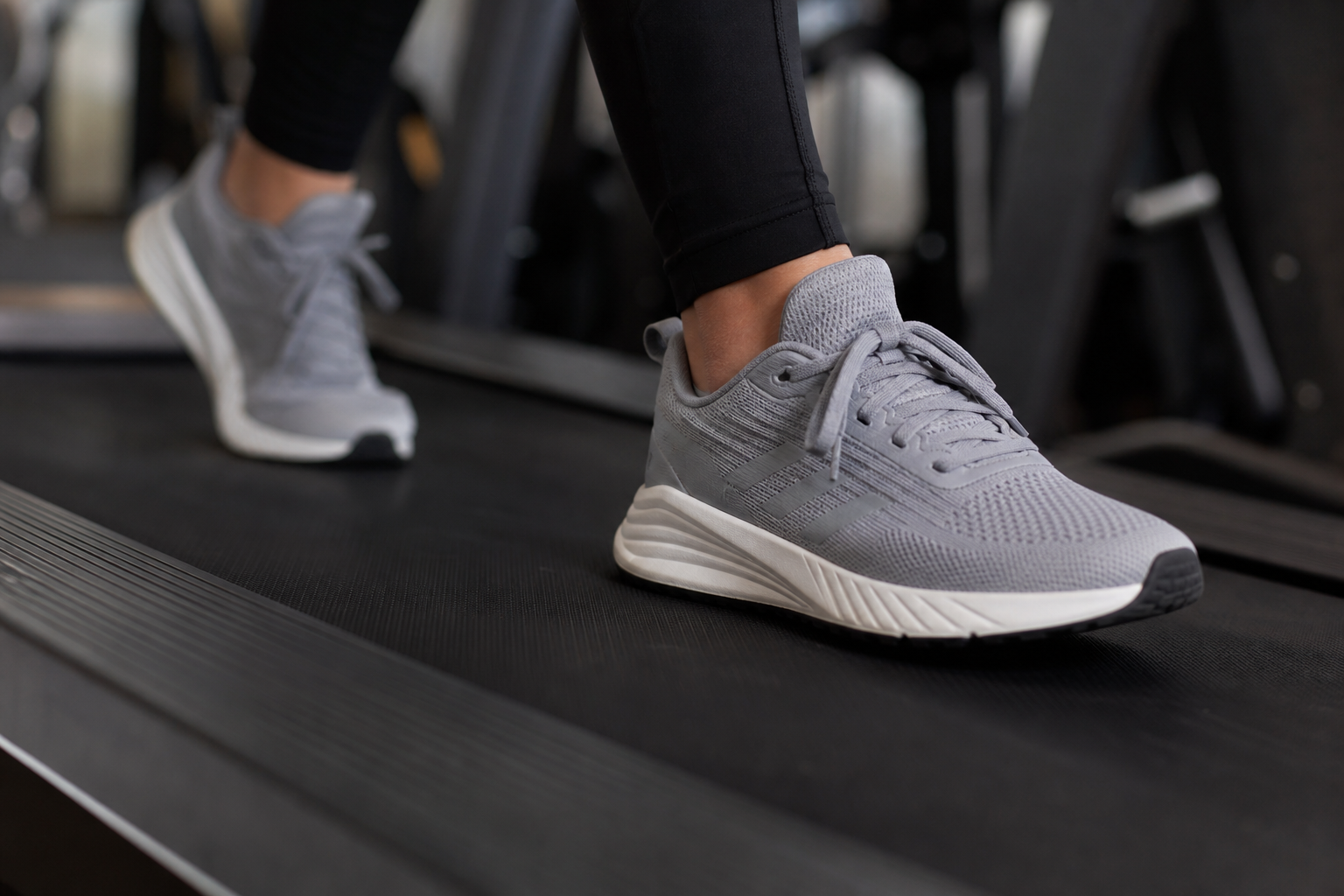
1. Peripheral Neuropathy
Nerve damage in the feet (most often from diabetes, B12 deficiency, or long-term medication use) reduces sensation and blood flow to the extremities. The repetitive impact of treadmill walking can aggravate already-compromised nerves, triggering numbness faster than outdoor walking on softer surfaces.
Neuropathy doesn’t announce itself with obvious symptoms at first. Many people discover they have it only after noticing that their feet go numb during activities that didn’t bother them before. The nerve damage makes your feet less resilient to sustained pressure and impact, so the consistent, unchanging surface of a treadmill becomes a problem where varied outdoor terrain might not.
The fix: If you haven’t been evaluated for neuropathy, ask your doctor for a simple nerve conduction test and blood work (fasting glucose, HbA1c, and B12 levels). Managing the underlying cause is essential. In the meantime, reduce treadmill speed and incline, and consider wearing shoes with extra cushioning in the forefoot to dampen impact.
Keep sessions shorter (10-15 minutes) and break them into intervals with rest periods. Some people with neuropathy find that alternating 5 minutes on the treadmill with 2 minutes of seated ankle circles and foot stretches prevents numbness from building up. Pay attention to your feet after exercise too. If numbness lingers for more than 30 minutes post-workout, mention it to your doctor.
2. Tight or Poorly Fitting Shoes
This is the most common and most easily fixable cause. Feet swell during exercise as blood flow increases, and shoes that fit fine when you put them on can become too tight after 10-15 minutes of walking. Narrow toe boxes compress the nerves between your metatarsal bones (the bones in the ball of your foot), causing numbness and tingling.
The specific nerve most often affected is the digital nerve, which runs between the third and fourth metatarsals. When a tight shoe squeezes these bones together, the nerve gets pinched. This is called Morton’s neuroma when it becomes chronic, but the occasional numbness you feel on a treadmill is usually just temporary compression.
Laces matter more than you might think. Tying your shoes too tight across the top of your foot can compress the superficial peroneal nerve, which runs along the top of the foot and ankle. This causes numbness in the toes and top of the foot rather than the ball. Loosen your laces by one eyelet and see if that helps.
The fix: Buy your walking shoes in the afternoon or evening, when your feet are at their largest. Leave a thumb’s width of space between your longest toe and the end of the shoe. Choose shoes with a wide toe box, which is especially important for seniors with bunions or hammertoes.
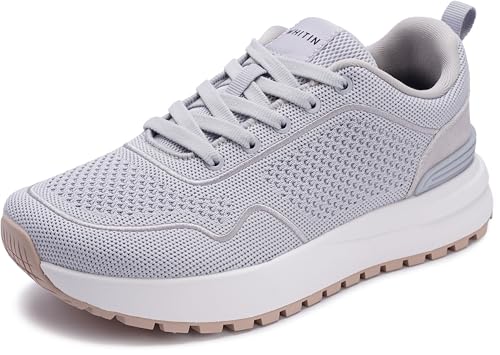
Wide Toe Box Walking Shoes
Brands like New Balance, Brooks, and HOKA consistently perform well for preventing forefoot compression
Try this test: after 10 minutes on the treadmill, stop and press your thumb firmly into the top of your shoe over the ball of your foot. If it leaves a dent in the upper material that stays visible for a few seconds, your shoe is compressing your foot too much. You need a roomier fit.
Replace your walking shoes every 300-500 miles. The midsole cushioning compresses over time, which shifts more impact to your forefoot and can trigger numbness even in shoes that used to work fine.
3. Gripping with Your Toes
Many people unconsciously grip the treadmill surface with their toes while walking, especially if they feel unsteady or are holding the handrails and leaning forward. This clenching compresses the small nerves and blood vessels in the forefoot, cutting off circulation and sensation.
You probably don’t realize you’re doing it. Toe gripping is a reflexive stability response, and it happens most often when you’re walking faster than feels comfortable or when you’re distracted by a TV show and not paying attention to your gait. The problem compounds itself: as your feet start to tingle, you grip harder trying to “feel” the belt better, which makes the numbness worse.
The fix: Consciously relax your toes every few minutes. Think about spreading them wide inside your shoes rather than curling them. Check your posture: stand upright rather than leaning forward, and reduce your grip on the handrails. Rest your fingers lightly on them rather than gripping tightly.
Slow down your walking speed by 0.3-0.5 mph. Many people walk faster on a treadmill than they would naturally walk outdoors because the moving belt pulls their feet backward, creating a rushed feeling. A slightly slower pace often eliminates the stability anxiety that triggers toe gripping.
Practice this drill off the treadmill first: stand barefoot and consciously lift just your toes off the floor while keeping the balls of your feet and heels down. Hold for 5 seconds, relax, and repeat 10 times. This teaches you what it feels like to keep your toes relaxed during weight-bearing activity. Once you can do it standing still, try it while walking slowly on the treadmill.
4. Poor Circulation
Peripheral artery disease (PAD) or general circulation issues common after 60 can limit blood flow to the feet, especially during exercise when muscles demand more oxygen. The treadmill’s flat, consistent surface doesn’t engage your foot and ankle muscles the same way uneven outdoor terrain does, which means less muscle-pump action to push blood back up from your feet.
Circulation problems often show up as a pattern: numbness starts at a predictable point in your workout (say, 12 minutes in) and improves quickly when you stop. When you have PAD, you might also notice that your feet feel colder than the rest of your body, or that they turn pale or bluish during exercise.
Medications can affect circulation too. Beta blockers, commonly prescribed for high blood pressure, reduce heart rate and can limit blood flow to the extremities during exercise. Mention the timing to your doctor if you started a new medication around the time foot numbness began.
The fix: Warm up for 5 minutes at a very slow pace before increasing speed. Avoid locking your knees, which restricts blood flow to the lower legs. Every 5 minutes, do 10-15 toe raises (lifting your toes while keeping heels down) to activate the calf muscles that pump blood back up. Mention it to your doctor if numbness is accompanied by cramping calf pain that stops when you rest, as it’s a classic PAD symptom.
Compression socks rated at 15-20 mmHg can help improve circulation during treadmill walking. They support venous return (blood flow back to the heart) and reduce the pooling of blood in your feet. Put them on before your workout, not after numbness has already started.

15-20 mmHg Compression Socks
Help improve circulation and reduce blood pooling during treadmill exercise
Stay hydrated. Dehydration thickens your blood slightly, which makes it harder for your cardiovascular system to push blood through small capillaries in your feet. Drink 8-12 ounces of water 30 minutes before getting on the treadmill.
5. Incline Settings
Walking at a steep incline shifts your body weight forward onto the balls of your feet. This sustained forefoot pressure compresses the nerves and blood vessels in exactly the area where numbness occurs. Many seniors set the treadmill to a high incline thinking it’s a better workout, without realizing the trade-off.
The angle changes your gait mechanics. On flat ground, your weight rolls smoothly from heel to toe with each step. At a steep incline, you land more on your midfoot and forefoot, which loads those nerves and blood vessels continuously rather than in brief pulses. Over 10-15 minutes, that constant pressure triggers numbness.
Incline also shortens your stride length, which means you take more steps to cover the same distance. More steps equals more repetitive compression cycles on the nerves in your forefoot.
The fix: Keep incline at 2% or lower when you’re experiencing numbness. A 1-2% incline mimics outdoor walking conditions without the excessive forefoot loading. Boost your speed slightly rather than adding incline if you want to increase intensity, or alternate between flat walking and brief incline intervals (1 minute at 3-4% followed by 3 minutes flat).
Try reverse walking on a flat or very slight incline. Walking backward on the treadmill (hold the handrails and go very slowly, 0.5-1.0 mph) shifts weight to your heels and gives your forefoot a break. Just 2 minutes of reverse walking every 10 minutes can prevent numbness from building up. Check with your doctor or physical therapist before trying this if you have balance concerns.
When Treadmill Design Matters
Belt cushioning varies significantly between treadmill models. Older or budget treadmills often have thin belts over rigid decks, which transmit more impact to your feet. Higher-end models use multi-ply belts and shock-absorption systems that reduce stress on your feet and joints.
Try a different machine when you’re using a gym treadmill and experiencing numbness. Some gyms have a mix of older and newer models. Newer machines with better cushioning may solve the problem without any other changes.
For home treadmills, you can add a dense rubber treadmill mat underneath the machine. This won’t change the belt itself, but it dampens vibration and reduces the overall impact transmitted through the frame to the deck and belt.
Belt speed calibration can drift over time, especially on older machines. A treadmill displaying 3.0 mph might actually be running at 3.3 mph if the belt has stretched or the motor controller is off. That extra speed forces you to walk faster than intended, which can trigger toe gripping and numbness. Gyms rarely recalibrate their machines, which is why numbness may be worse on one specific treadmill.
Foot-Strengthening Exercises
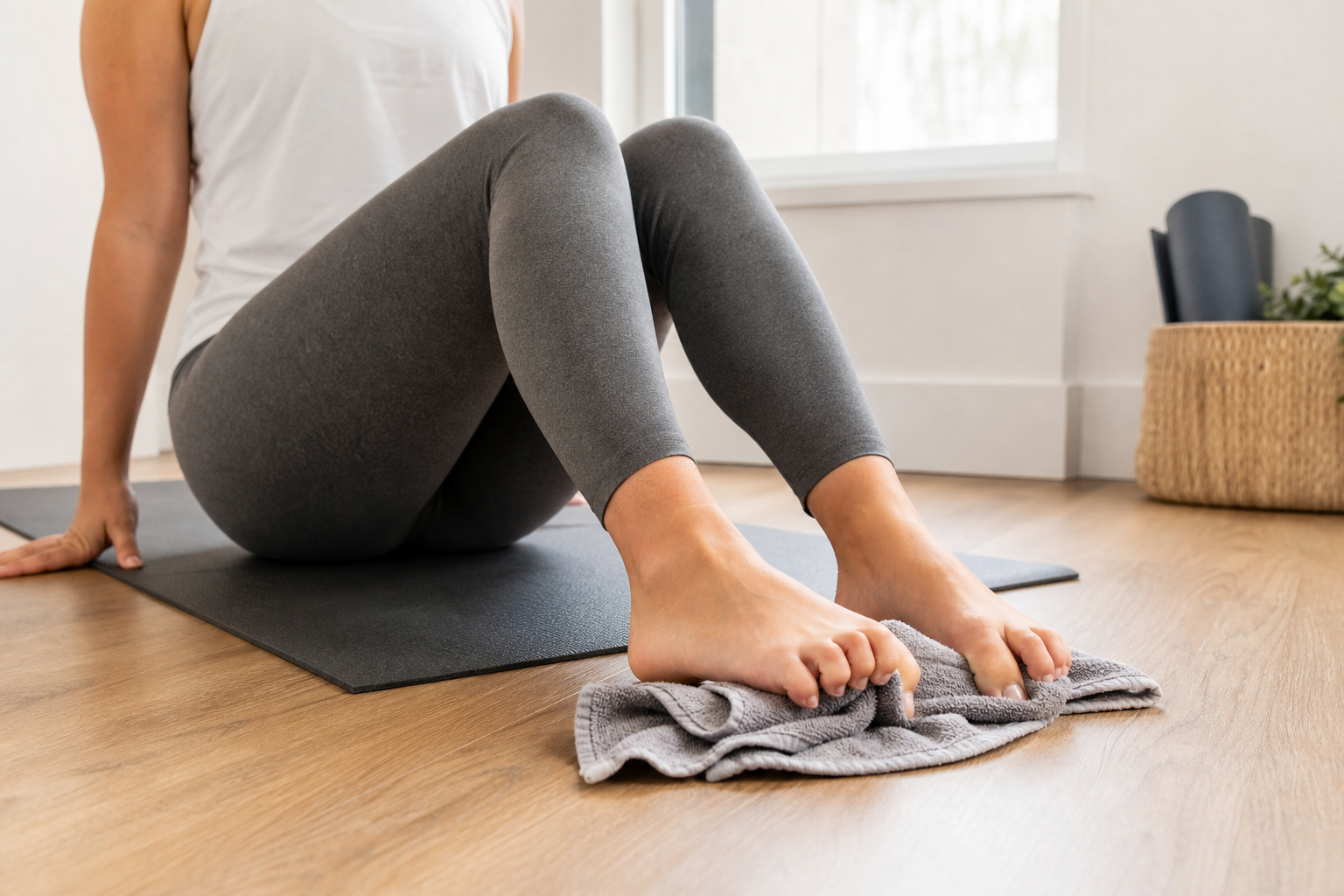
Stronger foot muscles improve circulation, reduce nerve compression, and help prevent numbness. These exercises take 5-10 minutes and can be done while watching TV or sitting at the kitchen table.
- Towel scrunches: Place a hand towel flat on the floor. Using only your toes, scrunch the towel toward you. Repeat 10 times per foot. This strengthens the small intrinsic muscles of the foot that support your arch and prevent excessive pronation, which can compress nerves.
- Marble pickups: Place 10-15 marbles on the floor and pick them up one at a time with your toes, placing them in a cup. Great for toe dexterity and strength. Use larger objects like dice or small foam balls if marbles are too small or difficult.
- Calf raises: Stand holding a counter. Rise up on your toes, hold for 3 seconds, and lower slowly. Perform 3 sets of 10. Strong calves improve the muscle pump that circulates blood through your feet. For an added challenge, do single-leg calf raises or pause at the top position for 5 seconds.
- Ankle circles: Sit with one leg crossed over the other. Rotate the ankle slowly, 10 circles in each direction per foot. This improves ankle mobility and blood flow. Make the circles as large as possible to work through the full range of motion.
- Toe spreads: Sit barefoot and consciously spread your toes as wide apart as possible. Hold for 5 seconds, relax, and repeat 10 times per foot. This counters the toe-gripping reflex and strengthens the muscles that control individual toe movement.
- Arch doming: Sit with your foot flat on the floor. Without curling your toes, try to shorten your foot by pulling the ball of your foot toward your heel, which raises your arch. Hold for 5 seconds and repeat 10 times per foot. This is subtle and takes practice, but it strengthens the deep intrinsic muscles that support your foot structure.
Do these exercises 4-5 days per week. Results aren’t immediate, but most people notice improved foot strength and reduced numbness within 3-4 weeks of consistent practice.
Adjusting Your Walking Technique
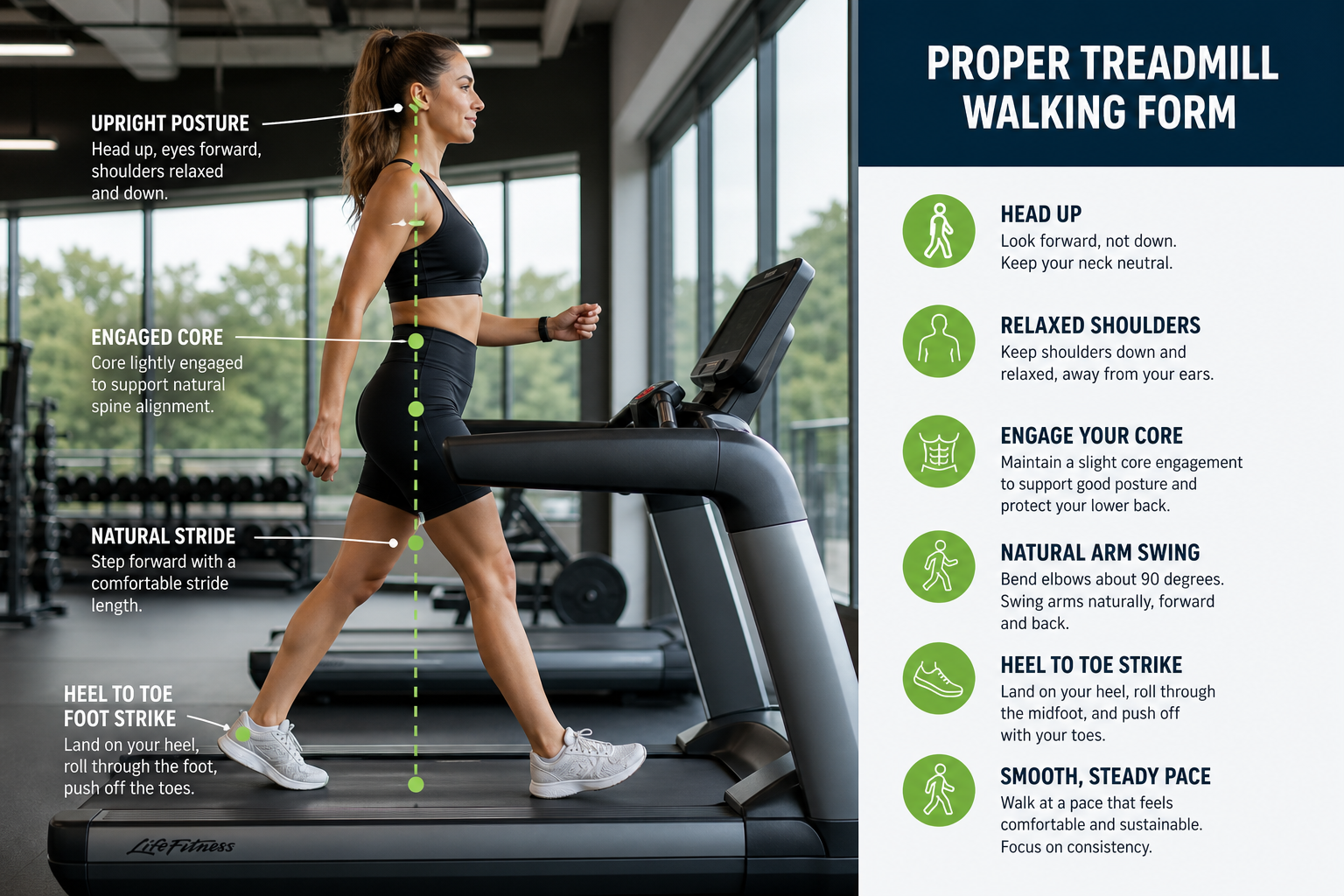
Your gait pattern on a treadmill might differ from your outdoor walking stride, and those differences can contribute to numbness.
Shorten your stride slightly. Overstriding (reaching too far forward with each step) increases impact on your forefoot when your foot lands. A shorter, quicker stride distributes force more evenly across your whole foot.
Land with your foot underneath your body rather than in front of it. This keeps your weight centered and prevents the forward-leaning posture that loads your forefoot excessively.
Engage your core. A weak or disengaged core forces your lower body to work harder for stability, which often shows up as toe gripping and altered gait mechanics. Think about pulling your belly button toward your spine gently while you walk.
Swing your arms naturally. Many people stiffen their arms while holding treadmill handrails, which creates tension that travels down through your torso and legs into your feet. Let your arms swing in opposition to your legs (right arm forward when left leg steps forward) if you can walk without holding on. This natural arm swing improves balance and reduces overall tension.
Alternatives When Numbness Persists
Consider these lower-impact alternatives that maintain cardiovascular fitness without the specific forefoot loading that triggers numbness if you’ve tried the fixes above and still experience it.
Recumbent bike: The seated position with back support eliminates all weight-bearing on your feet. Resistance comes from your leg muscles pushing the pedals, which actually improves circulation through active muscle contraction. Most people with treadmill foot numbness have zero issues on a recumbent bike.
Elliptical machine: Your feet stay on the pedals throughout the motion, which means no repetitive impact. The gliding motion distributes pressure more evenly across your whole foot rather than concentrating it in the forefoot. Start with low resistance and a moderate pace. Learn more about choosing between these cardio options.
Swimming or water walking: Water buoyancy removes impact entirely. Walking in chest-deep water provides cardiovascular benefit and muscle engagement without any nerve compression. Many community pools and YMCAs have dedicated water walking times for seniors.
Outdoor walking on varied terrain: The changing surface (grass, dirt trails, slight hills) engages different foot and ankle muscles with each step, which prevents the sustained compression that happens on a treadmill’s unchanging belt. Outdoor walking also doesn’t have the psychological pressure to maintain a set speed, so you’re less likely to grip with your toes. Check out our