You don’t need to stand, kneel, or get down on the floor to build serious strength. Seated resistance training offers a complete full-body workout that’s just as effective as traditional standing exercises, especially when you’re dealing with limited mobility, recovering from surgery, or using a wheelchair. With nothing more than resistance bands and light weights, you can target every major muscle group while staying safely seated.
This approach isn’t about settling for less. It’s about working smarter with what you’ve got. Many people find seated workouts more comfortable and sustainable, which means you’ll actually stick with them long enough to see real results.
Essential Equipment for Seated Resistance Training
You’ll need a stable chair without wheels and armrests that might get in your way. A kitchen chair or sturdy dining chair works perfectly. Make sure it doesn’t slide around on your floor.
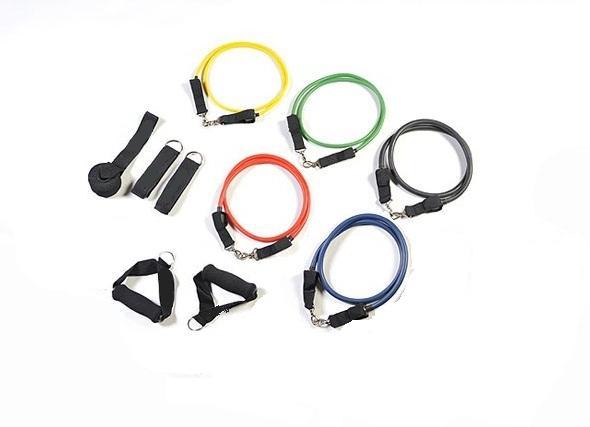
For resistance bands, look for sets that include multiple resistance levels. Bands with handles give you better grip options than loop bands alone. You’ll want at least three resistance levels so you can progress as you get stronger.

Resistance Bands with Handles Set
Look for sets that include door anchors and ankle straps for maximum exercise variety
Light dumbbells in 2, 5, and 8-pound weights cover most seated exercises. You can always use adjustable dumbbells if storage space is tight. Start lighter than you think you need. Proper form matters more than heavy weight. If you prefer equipment that provides both cardio and strength benefits in one package, rowing machines offer excellent full-body resistance training as another seated option.
Upper Body Exercises You Can Do From Your Chair
Seated rows work your back muscles and improve posture. Loop a resistance band around a sturdy object at chest height or use a door anchor. Pull the handles toward your ribs, squeezing your shoulder blades together. Start with 2 sets of 10 reps, working up to 3 sets of 15.
Chest presses target your pectorals and triceps. Wrap the band behind your chair back or around your shoulder blades. Press forward until your arms are straight, then control the return. Maintain tension throughout the movement instead of letting the band go slack.
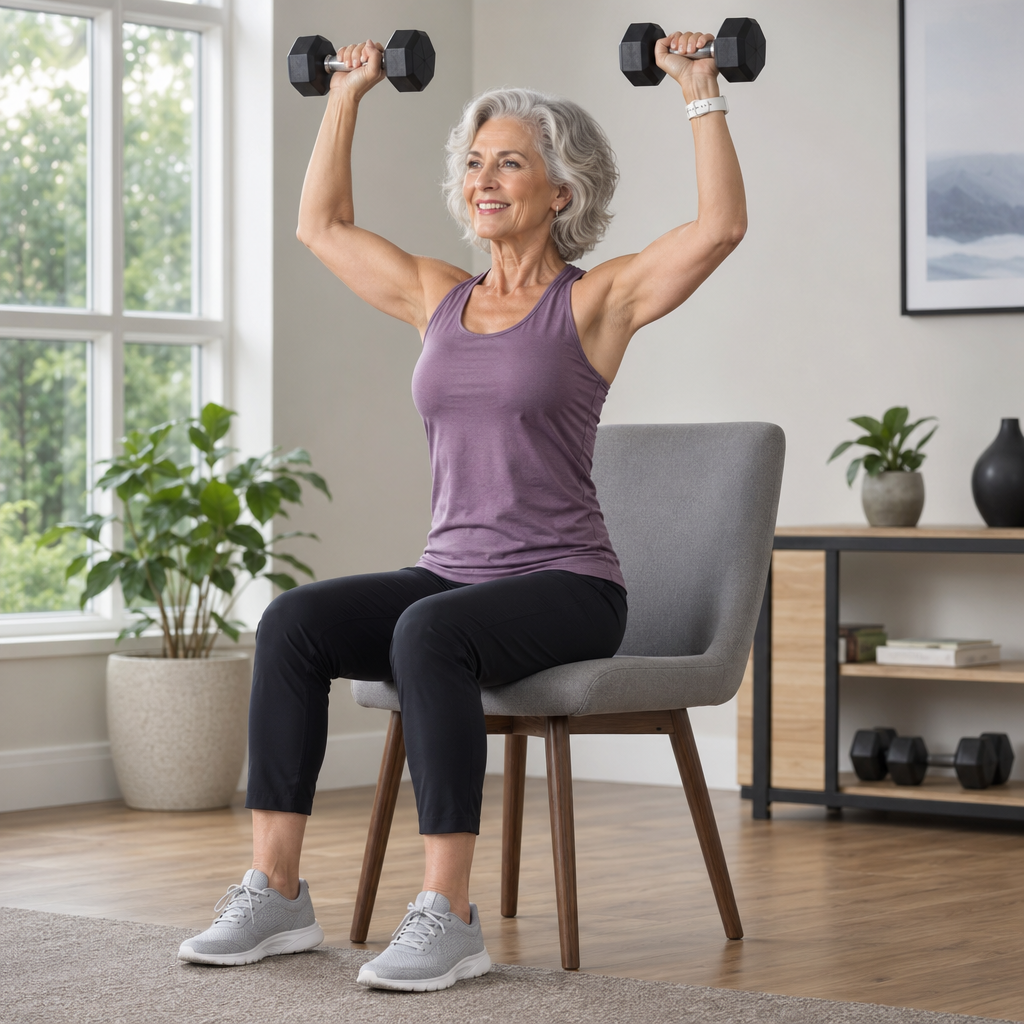
Shoulder raises build deltoid strength. Hold light dumbbells at your sides and lift them out to the side until they reach shoulder height. Lower slowly. These tire quickly, so 2 sets of 8-10 reps is plenty when starting out.
Bicep curls and tricep extensions round out your arm work. For curls, sit on the middle of a resistance band and curl the handles up. For triceps, hold one end overhead and press upward against the resistance. Keep your movements controlled to avoid momentum cheating.
Lower Body Work Without Standing
Seated leg extensions strengthen your quadriceps. Loop a resistance band around one ankle and the chair leg. Straighten your leg fully, hold for a second, then lower. Complete all reps on one side before switching. Aim for 2-3 sets of 12 reps per leg.
Seated leg curls target your hamstrings. Use the same band setup but curl your heel back toward the chair. Keep your thigh pressed against the seat for better isolation. These muscles often get neglected, so don’t skip them.
Hip abduction and adduction work your outer and inner thighs. For abduction, loop the band around both legs just above your knees and press outward. For adduction, place a small pillow or yoga block between your knees and squeeze. Hold each squeeze for 3-5 seconds.

Resistance Band Loop Set
Fabric loops stay in place better than rubber and won’t roll or pinch during leg exercises
Ankle circles and flexes improve circulation and maintain ankle mobility. Point and flex your feet 15-20 times, then rotate your ankles 10 circles in each direction. These seem simple but matter for maintaining lower leg strength and preventing stiffness.
Core Strengthening While Seated
Seated marches engage your lower abs and hip flexors. Lift one knee toward your chest while keeping your back straight. Alternate legs for 20-30 total reps. Add ankle weights when this becomes too easy.
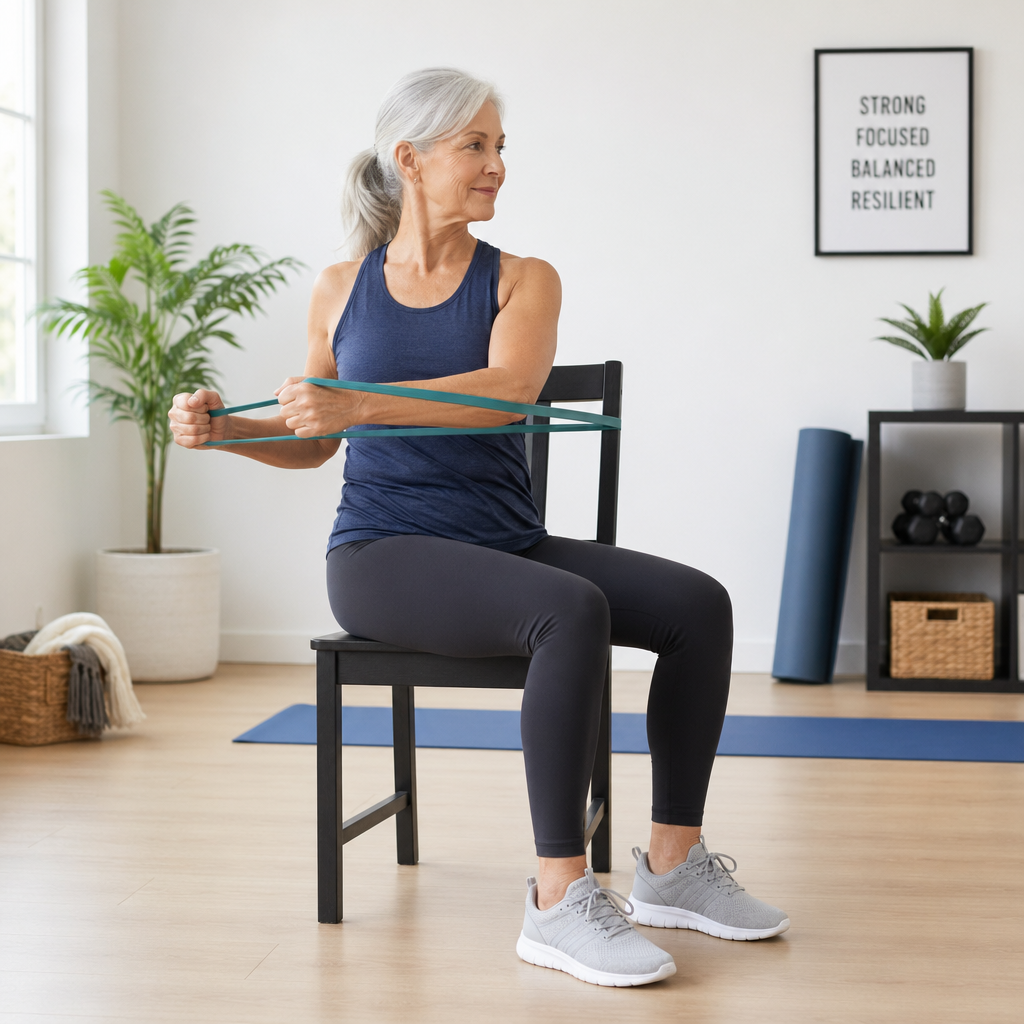
Torso rotations work your obliques. Hold a light weight or medicine ball at chest height and rotate side to side. Keep your hips facing forward so the movement comes from your core, not your legs. Complete 15-20 rotations per side.
Seated crunches still challenge your abs. Lean back slightly (keeping your back straight), extend your legs out, then pull your knees toward your chest while crunching forward. This takes practice to coordinate but delivers solid core work. For more variety in your core routine, you can explore additional seated exercises that target your abdominal muscles.
Building Your Workout Routine
Start with 2-3 sessions per week, giving yourself at least one rest day between workouts. Your muscles need recovery time to adapt and strengthen. Working out every day actually slows your progress.
A basic routine includes 2 upper body exercises, 2 lower body exercises, and 1 core exercise per session. Rotate which specific exercises you choose to keep things interesting. One day might focus on rows and chest presses, while the next uses shoulder raises and tricep extensions.
Begin every session with 5 minutes of gentle movement. Shoulder rolls, arm circles, and ankle pumps get blood flowing and reduce injury risk. Skip this and you’ll feel stiff during your first set.
Track your sets and reps in a simple notebook or phone app. When you can complete 3 sets of 15 reps with good form, increase resistance. For bands, move to the next color. For weights, add 1-2 pounds. Small increases add up faster than you’d think. If you want to expand beyond seated work, you can incorporate these exercises into a complete home workout routine that requires no gym equipment.
Progression Strategies That Actually Work
Add reps before adding resistance. Going from 10 to 15 reps builds endurance and perfects your form. Only then should you increase the challenge with heavier weights or stronger bands.
Slow down your tempo for instant difficulty. Take 3 seconds to lower each rep instead of 1 second. This time under tension builds more strength without requiring heavier equipment. Try it with chest presses and you’ll feel the difference immediately.
Reduce rest time between sets once exercises feel comfortable. Cutting from 90 seconds to 60 seconds between sets increases the cardiovascular challenge and keeps your heart rate elevated. This turns strength training into conditioning work too.
Introduce unilateral exercises where you work one side at a time. Single-arm rows and single-leg extensions force your core to stabilize and prevent muscle imbalances. They’re harder than bilateral versions even with the same resistance.
Common Mistakes to Avoid
Slouching ruins the effectiveness of every exercise and strains your back. Sit tall with your core engaged and shoulders back. Imagine a string pulling the top of your head toward the ceiling. Check your posture between every set.
Holding your breath during exertion spikes blood pressure and makes you dizzy. Exhale during the hard part of each movement and inhale during the easy part. For example, exhale while pressing a chest press and inhale while returning to start.
Skipping lower body work because it feels less important than upper body training creates imbalances. Your legs contain the largest muscles in your body and burn the most calories. They deserve equal attention in your routine.
How long before I see results from seated resistance training?
Most people notice improved energy and better posture within 2-3 weeks. Visible muscle definition and measurable strength gains typically appear after 6-8 weeks of consistent training. Keep a simple log of how many reps you complete. Seeing those numbers increase provides motivation when physical changes feel slow.
Can I build real strength with just bands and light weights?
Absolutely. Resistance is resistance, whether it comes from bands, dumbbells, or barbells. Research shows that muscle growth responds to effort and fatigue, not the source of resistance. As long as you progressively challenge your muscles and work close to fatigue, you’ll build strength. Many physical therapy programs rely exclusively on bands and light weights to rebuild strength after serious injuries. The benefits of resistance training for older adults are well-documented regardless of equipment type.
What if certain exercises cause pain?
Stop immediately if you feel sharp pain during any exercise. Muscle burn and fatigue are normal, but joint pain or shooting sensations are warning signs. Modify the exercise by reducing resistance, decreasing range of motion, or switching to a different movement that targets the same muscle group. Always consult your doctor or physical therapist before starting a new exercise program, especially if you have existing health conditions or recent injuries.
This article contains affiliate links. We may earn a small commission at no extra cost to you.
Related Articles
- Complete Home Workout Routine After 60: No Gym Needed
- Best Rowing Machines for Seniors: Low-Impact Full-Body Exercise
- Benefits of Resistance Training for Seniors Over 65
- Learn About 8 Effective Yet Easy Seated Core Workout for Seniors