Falls become a serious concern after 60, but the right exercises can make a dramatic difference in your stability and confidence. Balance naturally declines with age due to changes in muscle strength, vision, inner ear function, and reflexes. The encouraging news is that balance is a skill you can improve at any age with consistent practice.
These seven exercises progress from basic stability work to more challenging single-leg movements. Start with the first few exercises and gradually advance as your balance improves. Always practice near a sturdy chair or counter so you can grab support if needed.
1. Chair Stands (Foundation Exercise)
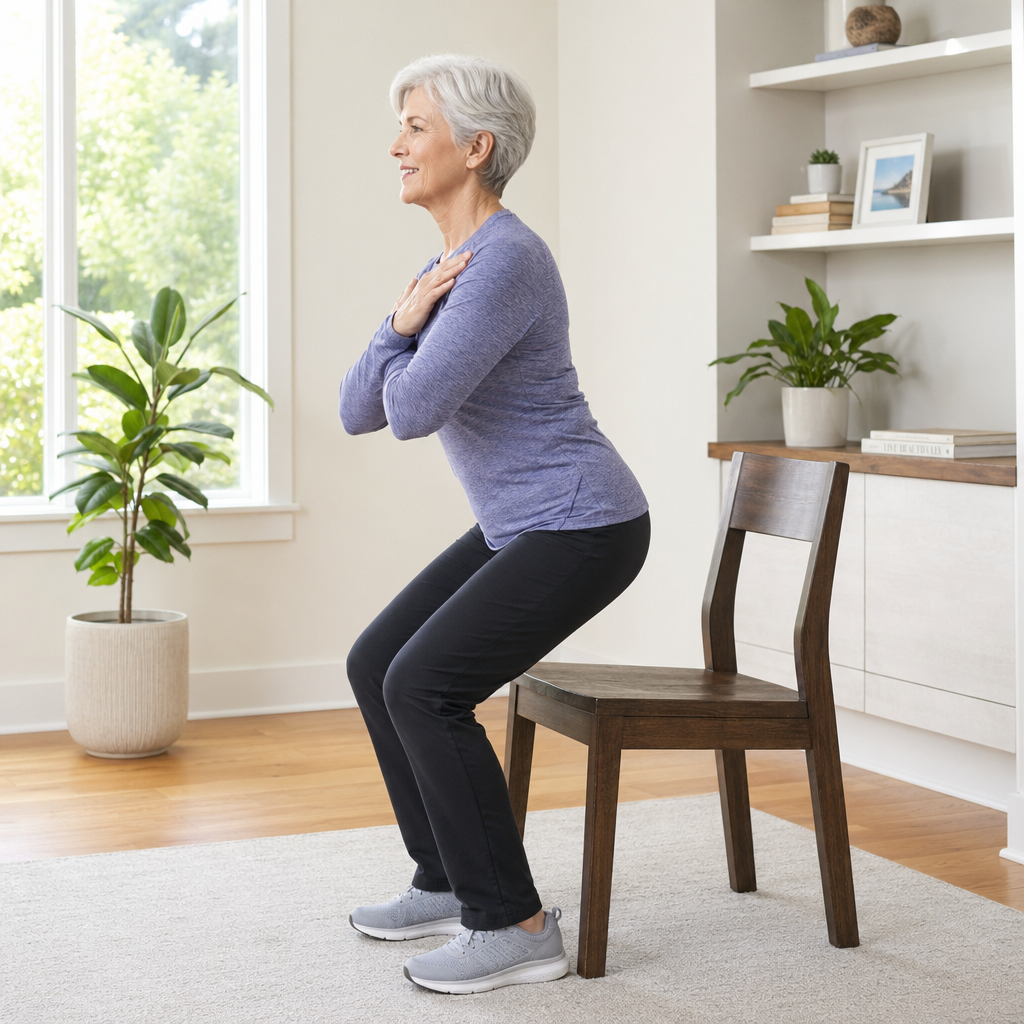
Chair stands build the leg strength essential for all other balance work. Sit in a sturdy chair with your feet flat on the floor, hip-width apart. Cross your arms over your chest and stand up without using your hands for support. Lower back down with control.
Aim for 10 repetitions, three times daily. This exercise strengthens your quadriceps, glutes, and core muscles, which are critical for maintaining stability during everyday activities like getting up from the toilet or out of bed.
If standing without hand support feels too difficult initially, use your hands on the armrests or seat to assist. Gradually reduce how much you rely on your hands as you get stronger. For those interested in chair-based exercises, this foundational movement can be incorporated into a broader cardio routine.
2. Heel-to-Toe Walk (Tandem Walking)
This exercise mimics walking a tightrope and challenges your balance in a functional way. Place your right heel directly in front of your left toes, then bring your left heel to your right toes. Continue for 20 steps along a straight line.
Walk along a wall or counter so you can reach out for support if you wobble. Keep your eyes focused on a point ahead of you, not down at your feet. This gaze strategy improves your balance by training your vestibular system.
Many people find this surprisingly challenging at first. Practice daily, and you’ll notice improvement within two to three weeks. Your gait will become more stable, reducing your risk of tripping over uneven surfaces.
3. Single-Leg Stance
Standing on one leg is one of the most effective balance exercises you can do. Stand near a counter or sturdy chair. Lift your right foot off the ground by bending your knee. Hold this position for 30 seconds, then switch legs.
If 30 seconds feels too long, start with 10 seconds and gradually increase your time. You can also hold onto your support surface lightly with one finger rather than gripping it fully.
Research shows that the ability to stand on one leg for 10 seconds or more correlates with lower fall risk and better overall health outcomes. Work up to 60 seconds on each leg for optimal benefits.

Balance Pod Set for Seniors
These provide an unstable surface that enhances balance training once you master basic exercises
4. Clock Reaches
This exercise improves your ability to shift your weight in multiple directions. Stand on your right leg near a support. Imagine you’re standing in the center of a clock face. Reach your left leg toward 12 o’clock (straight ahead), then return to center. Next, reach toward 3 o’clock (to the side), then 6 o’clock (behind you).
Perform 5 reaches in each direction, then switch to standing on your left leg. Keep your standing knee slightly bent and your core engaged. The reaching motion trains your body to recover when your center of gravity shifts unexpectedly.
This exercise directly translates to real-world scenarios like reaching for items on shelves or turning to look behind you while standing. The functional movements in this exercise also complement strength training for everyday activities like carrying groceries.
5. Side Leg Raises
Strong hip muscles are essential for side-to-side stability. Stand behind a chair, holding it for support. Lift your right leg out to the side, keeping your toes pointing forward and your back straight. Lower with control.
Complete 10 repetitions on each side, working up to three sets. Don’t lean toward the chair or lift your leg too high. A lift of 6 to 12 inches is sufficient to strengthen your hip abductors.
Weak hip muscles contribute significantly to falls because they reduce your ability to catch yourself when you step sideways or stumble laterally. This exercise addresses that vulnerability directly.
6. Toe and Heel Stands
This exercise strengthens your ankles and improves your ability to adjust your balance quickly. Stand behind a chair for support. Rise up onto your toes, hold for 5 seconds, then lower. Next, rock back onto your heels, lifting your toes off the ground.
Repeat 10 times in each direction. Strong ankles help you navigate uneven terrain like gravel paths, grass, or thick carpeting without losing your balance.
As you improve, try performing this exercise while holding the chair with just one hand, then with no hands at all. You can also add foam balance pads underneath your feet to increase the challenge.
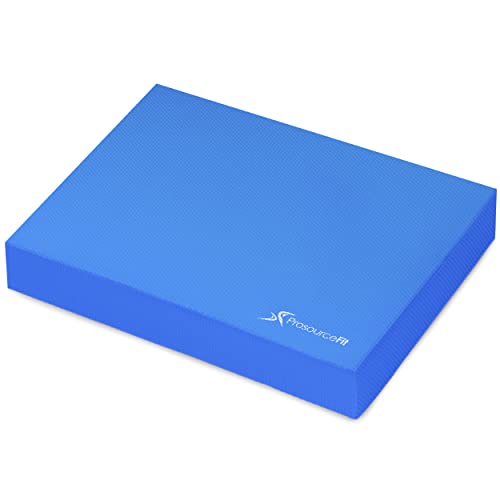
Foam Balance Pad for Stability Training
Creates an unstable surface that forces your ankles and core to work harder during standing exercises
7. Single-Leg Balance with Head Turns
This advanced exercise challenges your vestibular system by adding head movements. Stand on your right leg near support. Once stable, slowly turn your head to look right, then left. Repeat 5 times, then switch legs.
Many falls occur when people turn their heads while walking or standing. This exercise trains your brain to maintain balance even when your visual input changes rapidly.
Start with slow head turns and progress to faster movements as your confidence builds. You can also try closing your eyes briefly while standing on one leg, though this should only be attempted once you’ve mastered the basic single-leg stance. If you experience dizziness during head movements, consider exploring specialized exercises for vertigo and balance issues.
Progression Tips and Safety Guidelines
Practice these exercises daily for best results. Balance improvements typically become noticeable within three to four weeks of consistent training. Five to ten minutes of practice per day is more effective than longer, infrequent sessions.
Always exercise near a stable surface you can grab if needed. Never practice balance exercises in socks on slippery floors. Wear supportive athletic shoes or go barefoot on carpet or exercise mats.
Once you can perform all seven exercises confidently, add progression tools like balance boards or balance pods. These create unstable surfaces that force your stabilizer muscles to work harder. Start with balance pods, which offer a gentler challenge than full balance boards.
Track your progress by timing how long you can hold single-leg stances or counting how many chair stands you can complete without rest. Seeing measurable improvement will keep you motivated. For additional bodyweight exercises for seniors that complement balance training, consider incorporating strength-building movements into your routine.
Frequently Asked Questions
How long should I practice balance exercises each day?
Ten to fifteen minutes daily is ideal for most people over 60. You can split this into two shorter sessions if that fits your schedule better. Consistency matters more than duration. Practicing five minutes every day beats a 30-minute session once weekly.
What should I do if I feel dizzy during balance exercises?
Stop immediately and sit down. Dizziness can indicate inner ear issues, blood pressure changes, or other medical concerns. Consult your doctor before continuing balance training. They may refer you to a physical therapist who specializes in vestibular rehabilitation.
How quickly will I see improvements in my balance?
Most people notice increased stability within three to four weeks of daily practice. Your improvements might include feeling steadier on stairs, more confident walking on uneven surfaces, or finding it easier to bend down and stand back up. Keep practicing even after you see results, since balance requires ongoing maintenance. For more comprehensive fall prevention exercises, explore additional strategies to enhance your stability and confidence.
Related Articles
- Beginner-friendly workout routines for seniors focused on strength and wellness
- Building functional strength for carrying groceries as a senior
- Vertigo and balance exercises for seniors
- Chair cardio for seniors over 70: 4-week beginner program
This article contains affiliate links. We may earn a small commission at no extra cost to you.