Strength training transforms lives at any age, but older adults need a different approach than college athletes. You can’t jump straight into heavy weights after years away from the gym. Your body needs time to adapt, your connective tissues need to strengthen, and your nervous system needs to relearn movement patterns.
This 12-week program builds strength systematically, starting where you are right now and progressing safely toward meaningful goals. You’ll begin with bodyweight exercises or minimal resistance and gradually increase the challenge as your body adapts.
Program Structure and Progression Principles
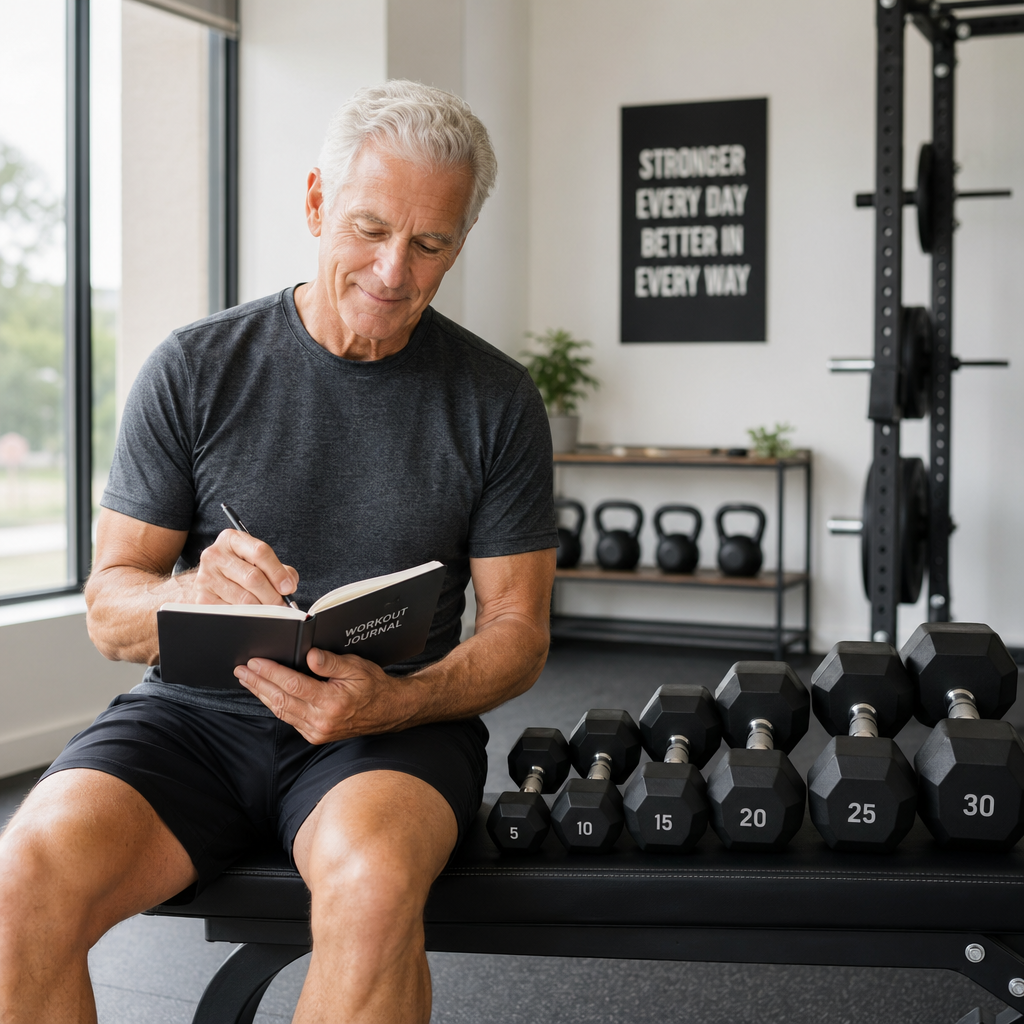
The program divides into three 4-week phases. Each phase increases complexity and load while maintaining proper recovery. You’ll train three days per week on non-consecutive days, giving your body 48 hours between sessions to rebuild stronger.
Phase 1 (Weeks 1-4) focuses on bodyweight exercises and learning proper form. You’ll master basic movement patterns like squats, hinges, pushes, and pulls. Start with 2 sets of 8-10 repetitions for each exercise.
Phase 2 (Weeks 5-8) introduces external resistance using resistance bands or light dumbbells. Increase to 3 sets of 10-12 repetitions. Week 7 is your first deload week, where you reduce volume by 40% to allow recovery.

Adjustable Dumbbells for Seniors
Perfect for progressive loading as these allow you to increase weight in small increments without cluttering your space
Phase 3 (Weeks 9-12) adds more complex variations and heavier loads. You’ll perform 3-4 sets of 8-10 repetitions with increased resistance. Week 11 includes your second deload before finishing strong in week 12.
Your Week-by-Week Workout Plan

Each workout follows this structure: warmup (5 minutes of light movement), main exercises (30-40 minutes), and cooldown (5 minutes of stretching). Keep a simple log tracking exercises, sets, reps, and resistance used.
Weeks 1-4 Sample Workout:
- Sit-to-stand squats: 2×10
- Wall pushups: 2×10
- Assisted lunges: 2×8 per leg
- Seated rows with band: 2×10
- Standing shoulder press (no weight): 2×10
- Dead bug core exercise: 2×8 per side
If you prefer training at home without gym equipment, this complete home workout routine can be adapted to fit this progressive framework while using minimal equipment.
Weeks 5-8 Sample Workout:
- Goblet squats with light dumbbell: 3×12
- Pushups from knees or incline: 3×10
- Reverse lunges holding support: 3×10 per leg
- Single-arm dumbbell rows: 3×12 per side
- Overhead press with bands or light weights: 3×10
- Plank holds: 3×20-30 seconds
Weeks 9-12 Sample Workout:
- Bulgarian split squats: 3×8 per leg
- Standard pushups or chest press: 4×8-10
- Romanian deadlifts with dumbbells: 3×10
- Bent-over rows: 3×10
- Arnold press variation: 3×8
- Side plank: 3×20 seconds per side
Track your workouts using a simple notebook or the fitness journal specifically designed for this purpose. Record how each exercise felt, any modifications needed, and your energy levels. For those looking to add cardiovascular conditioning alongside strength work, incorporating a barbell HIIT workout once per week can enhance both strength and fat loss.
Progression Rules and Safety Guidelines
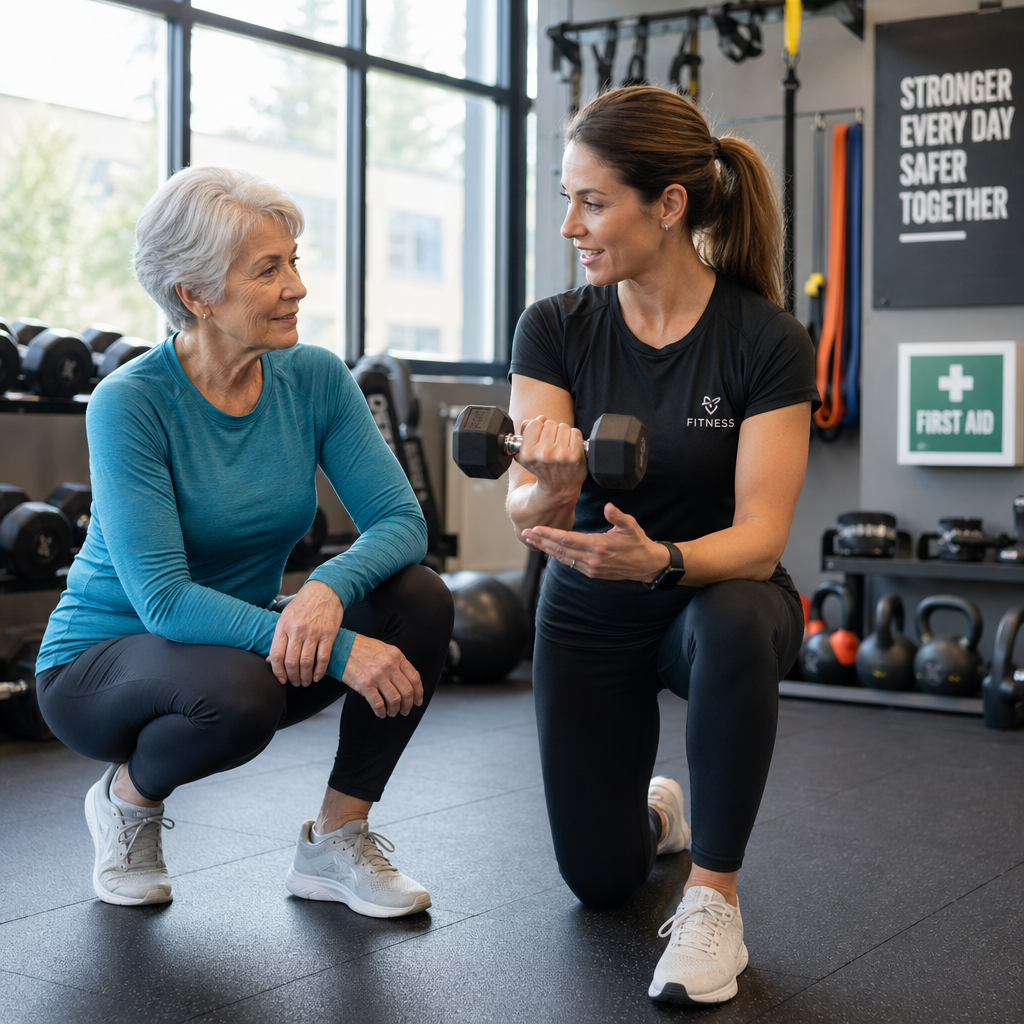
Only increase resistance when you can complete all prescribed sets and reps with good form and moderate effort. A rep should feel challenging on the last 2-3 reps but never impossible. Rate your difficulty on a scale of 1-10. You want to work at 6-7 out of 10.
Increase load by the smallest increment possible. For bodyweight exercises, progress to harder variations. For bands, move to the next resistance level. For dumbbells, jump up by 2-5 pounds maximum.

Resistance Band Set with Handles
These provide variable resistance that’s easier on joints than free weights while still building real strength
Rest at least 90 seconds between sets during Phase 1, reducing to 60 seconds as you adapt in Phases 2 and 3. Listen to your body. Pain is different from muscle fatigue. Sharp pain means stop immediately.
Deload weeks are mandatory, not optional. Reducing training volume every 3-4 weeks allows your body to fully recover and come back stronger. Don’t skip these or you’ll risk overtraining and potential injury. If you experience unusual symptoms like numbness in your arms after upper body workouts, consult with a healthcare professional before continuing.
Realistic Strength Goals for 12 Weeks
Expect to increase your working resistance by 50-100% over 12 weeks for upper body exercises and 100-150% for lower body movements. A 65-year-old starting with 5-pound dumbbells might progress to 10-12 pounds for pressing movements.
Beyond weight numbers, functional improvements matter more. You should find stairs easier, carrying groceries less taxing, and getting up from chairs effortless. These real-world benefits prove your program works better than any number on a dumbbell. For women over 50, understanding how to build muscle during menopause can help set realistic expectations and optimize results during this program.
Frequently Asked Questions
What if I miss a workout during the week?
Simply continue where you left off. Don’t try to cram two workouts into consecutive days. Missing a session occasionally won’t derail your progress. Consistency over weeks matters more than perfection every single week. Just get back on schedule with your next planned workout day.
How do I know if I’m progressing too fast?
Warning signs include persistent soreness lasting more than 3 days, decreased performance, poor sleep, or joint pain. Your muscles should feel worked but recover between sessions. Back off 10-20% on load if you experience these symptoms and add an extra rest day before resuming.
Related Articles
- How to Build Muscle After 50: Strength Training During Menopause
- Combine Strength and Cardio with Barbell HIIT Workouts
- Effective Home Workout Routine for Seniors Over 60
- Understanding Arm Numbness After Upper Body Training
This article contains affiliate links. We may earn a small commission at no extra cost to you.